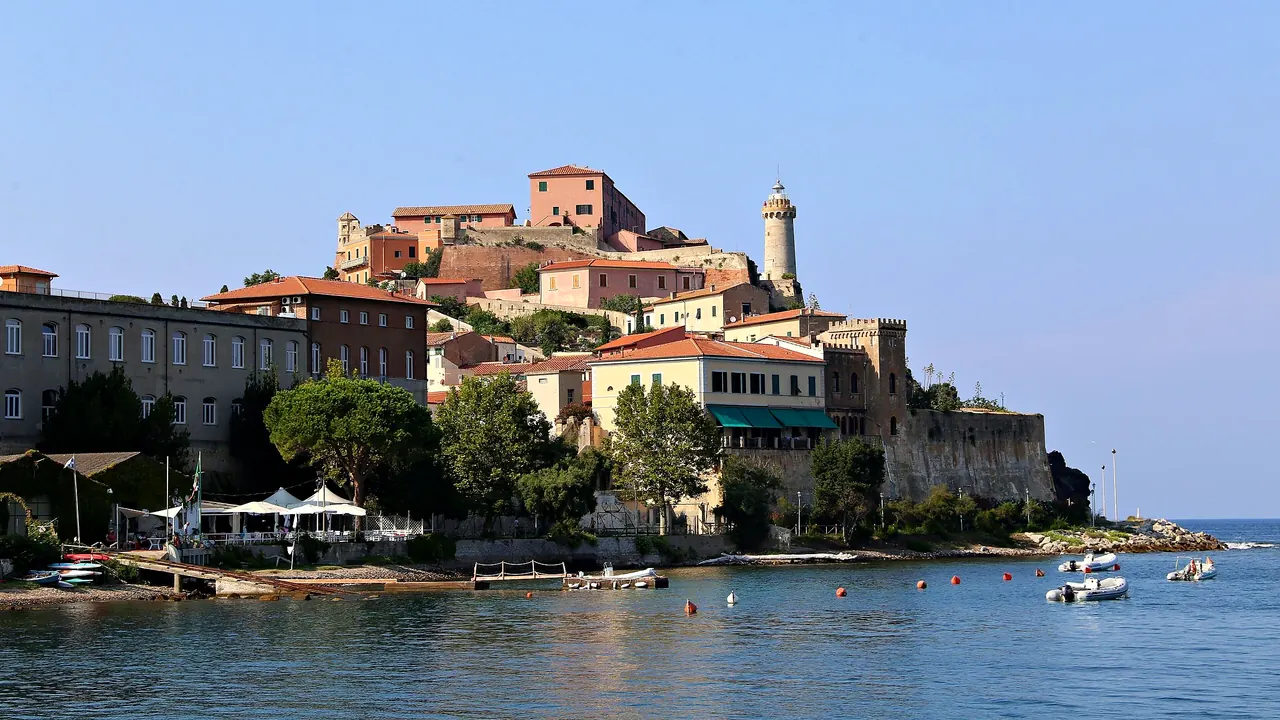
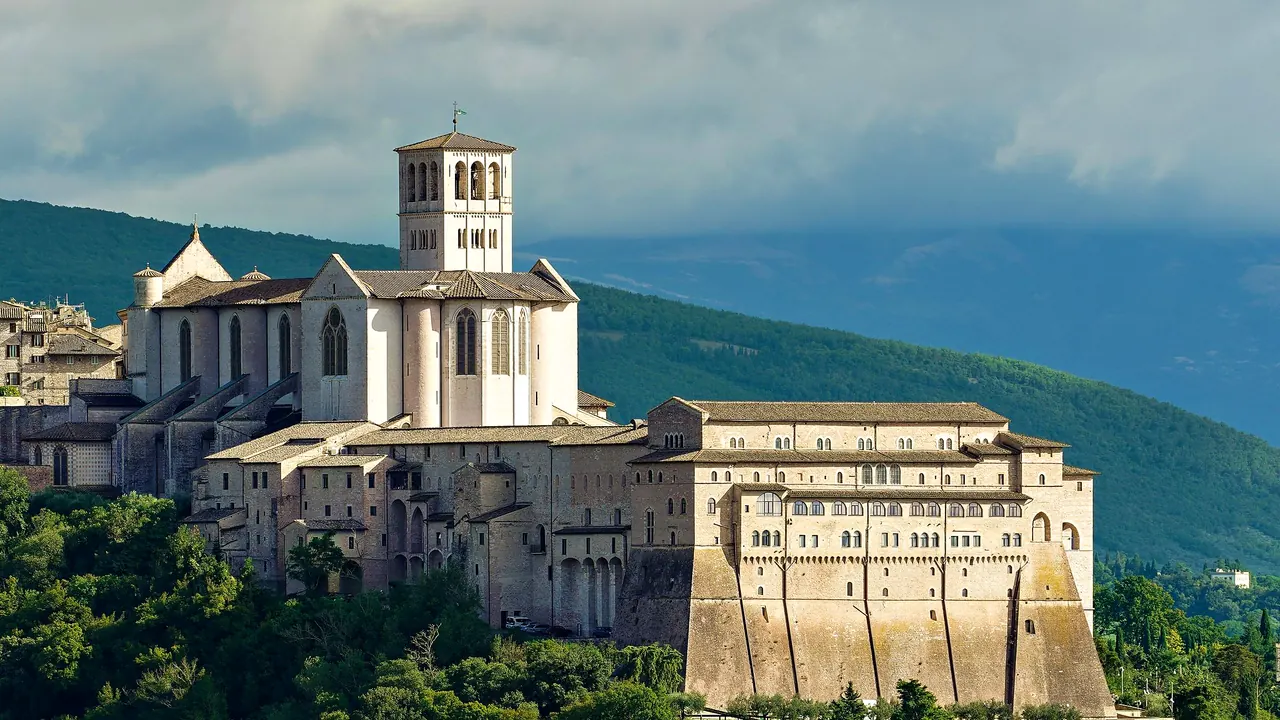
Photos: Elba by Sailko, CC BY 3.0, cropped; Umbria by Tagooty, CC BY-SA 4.0, cropped.
Elba or Umbria?
Our verdict in twelve categories, each scored against the same fixed benchmark cities, and the climate month by month, so you can choose for your trip.
Choose Elba for
- beaches
- families
Elba is the choice for a sea vacation. Its granite bays in the south-west, the long sand at Marina di Campo and the white pebble coves near Portoferraio give a summer of swimming that landlocked Umbria cannot match. It also suits families who want gently shelving water and an easy routine of beach, lunch and an evening walk, with walks on Monte Capanne or a dive among the reefs between swims. What you give up is much else to see: the sights fill half-days, and the mainland is a ferry away.
Choose Umbria for
- day trips
- culture and sights
- live music and the arts
Umbria rewards travellers who want art, food and a new town every day. Giotto in Assisi, Signorelli in Orvieto and the hill towns of Gubbio, Todi and Spello sit close enough together to visit one after another from a farmhouse base, with Sagrantino estates, truffle trattorie and the Tuscan border all within reach. It costs less than Elba in high season and has real summer festivals. You trade the sea for a swimming pool and a muddy-bottomed lake.
Scoreboard
Twelve categories on one fixed scale from 0 to 100. The shaded stretch is the gap between the two.
Your match
Pick a travel style or drag the sliders, and both match scores follow your weighting.
Wins on beaches and families with your weighting.
Wins on day trips and culture and sights with your weighting.
What matters to you?
Category by category
What the scores mean for a trip.
Beaches & swimming
This is Elba's whole reason for being, and Umbria cannot compete. Elba offers granite bays with clear turquoise shallows in the south-west, long sandy beaches at Marina di Campo, Lacona and Biodola, and pebble coves under the cliffs near Portoferraio, with quieter spots at the end of a footpath even in August.
Umbria has no coast. Lake Trasimeno's lidos are warm and calm for paddling, but the water is often murky over reeds and mud, and for most visitors swimming means the farmhouse pool.
Food & drink
Umbria eats better. Black truffle on strangozzi, Norcia's pork butchery, porchetta from market vans and Castelluccio lentils make a strong country cuisine, and Sagrantino and Orvieto whites give wine lovers estates to visit. Perugia adds the widest choice of restaurants.
Elba's strength is the sea: cacciucco, stuffed squid, local sea bream and a glass of Ansonica, best in the hill villages of Capoliveri and Marciana. But resort waterfronts are predictable and many places close after summer, which is exactly where Umbria, short on seafood, holds steady all year.
Culture & sights
Umbria is one of Italy's great art regions; Elba is a beach island with some history. In Umbria you can see Giotto and Cimabue at Assisi, Signorelli's Last Judgement at Orvieto, Perugino at Perugia and Pinturicchio at Spello, and the towns around them are works of art in their own right.
Elba's sights revolve around Napoleon's brief exile, his Palazzina dei Mulini and San Martino villa, plus the Medici bastions of Portoferraio and Porto Azzurro's star-shaped fortress. They make fine half-days, not a week.
Nightlife
Neither is a place to go out, and both are built around dinner and a stroll. On Elba the summer evenings are seaside ones: Capoliveri's piazza and the harbours of Porto Azzurro and Marina di Campo stay busy past midnight, and a few open-air discos run on weekends. Umbria's version is Perugia's student scene, with wine bars and the cathedral steps, and it carries on outside the beach season, when Elba goes quiet.
Nature & outdoors
Both are good for the outdoors, but in different ways. Elba combines mountain and sea: the ridge walk of the Grande Traversata, the open lift up Monte Capanne with views towards Corsica, mountain-bike tracks in the iron-red east, and snorkelling, diving and kayaking off the granite coast.
Umbria is all land and goes higher. The Monti Sibillini top 2,000m above the flowering Castelluccio plain, the Valnerina has rafting and canyoning, and the Marmore Falls, the Spoleto to Norcia rail path and paragliding slopes add variety. Spring and autumn suit both.
Day trips
Umbria is made for day trips, and Elba is not. From a base near Perugia or Spoleto, Gubbio, Todi, Bevagna, Norcia and the Montefalco wine hills are each a short drive, and Cortona, Montepulciano and Siena over the Tuscan border are close, with Rome a train ride from Orvieto.
From Elba, every outing starts with an hour's ferry to Piombino before you reach Populonia, Campiglia Marittima or Bolgheri, or a boat out to Pianosa or Capraia. Most visitors manage one or two and stay on the island.
Good for families
Elba is the easier family choice, because the beach does the work. The shallow sandy bays at Lacona, Biodola and Procchio are safe for small children, there are family campsites and apartments, and a small aquarium and coastal boat trips fill the gaps, though winding roads can upset car-sick children.
Umbria works for a slower family stay at a farmhouse with a pool and animals, with Trasimeno's warm shallows, the Marmore Falls and an amusement park near Perugia. Its main sights, though, are frescoes and steep, cobbled lanes that children tire of quickly.
Getting around
Umbria is the easier place to get around. Its roads are good and quiet, and a rail line links Perugia, Assisi, Spello and Spoleto, with Orvieto on the main Rome line, though you park below the hill towns and ride up by escalator or funicular.
Elba is small, but its narrow, twisting roads make drives slower than the map suggests, its buses are sparse, and in August traffic backs up into Portoferraio and beach car parks fill early. The ferry from Piombino needs booking ahead in summer.
Shopping & style
Neither is a shopping destination, but Umbria gives you more to bring home. There is Deruta's painted majolica, hand-loomed linen from Montefalco and Bevagna, cashmere outlets around Perugia, and Norcia's hams and truffles.
Elba's shopping is an evening wander past linen and beachwear boutiques in Capoliveri and Porto Azzurro, plus summer markets. Its best souvenirs are Aleatico wine, honey, schiaccia briaca and minerals from the old mines.
Affordability
Umbria is the cheaper of the two. Farmhouse stays and small hotels cost less than across the Tuscan border, set lunches and local wine are good value, and most sights are churches that cost little to enter. Hire cars and peak rooms in Assisi and Orvieto are the main costs.
Elba charges summer prices in the only season people come, highest in August. The car ferry, car hire, parking and sunbeds all add up. Campsites, self-catering and a June or September visit soften the bill.
Live music & performing arts
Umbria is by far the stronger choice for anyone who travels for music or the stage. On Elba, a performance is something you come across rather than plan for: an open-air concert in a piazza, a church or one of Portoferraio's forts on a summer evening, and a handful of chamber recitals from a long-established classical festival towards the end of the season. From autumn to spring there is nothing on.
Umbria has two festivals that people build a whole trip around. In July, Umbria Jazz brings big names to Perugia's arena and free bands to the squares of its old town. From late June, Spoleto's Festival dei Due Mondi stages opera, dance and drama in its Roman theatre and opera house. Outside summer, Perugia's Teatro Morlacchi and the Spoleto opera house keep regular seasons, and Orvieto holds a winter jazz edition around the New Year, so a cooler-month visit can still include a night at the theatre.
Wellness & relaxation
Umbria is the more restful choice, mainly because of its pace: long lunches, olive-grove views, country houses with yoga or massage, and the silence of Assisi and the Monte Subasio hermitages after the day visitors go. Its small mineral-water spas at San Gemini and Nocera Umbra are modest.
Elba has the more distinctive treatment, the mud and seawater cures at San Giovanni near Portoferraio, along with resort-hotel spas at Biodola and Procchio. But August crowds disturb the calm, so it is restful mainly in June and September.
When should you go?
Pick your month. The climate figures are measured averages, not a forecast.
Elba in July
Umbria in July
Daytime high, °C
Rainfall in the month, mm
Where the figures come from
Elba's temperatures are measured 62 km from the centre, at Grosseto.
Elba has no rain gauge within 25 km of the centre, so its rainfall comes from a gridded climate dataset read at the destination rather than from a gauge further away.
Umbria's temperatures are measured 53 km from the centre, at Frontone.
Umbria has no rain gauge within 25 km of the centre, so its rainfall comes from a gridded climate dataset read at the destination rather than from a gauge further away.
Temperature and rainfall are climate normals, averaged over the years shown. Elba: 1991-2020 (sunshine 1961-1990) normals, Grosseto (61.7 km from centre). Umbria: 1991-2020 normals, Frontone (52.9 km from centre).
Elba is a summer island. On its beach coasts the sea becomes comfortable in June and stays so until late September, reaching about 25°C in August, when afternoons climb past 30°C and rain almost disappears. June and September are the sweet spots, warm water without the full heat. From October the rain picks up, peaking at about 92mm in November, the sunshine falls away and the sea grows too cool for most swimmers.
Umbria, inland and higher, has colder winters, with January highs near 7°C, and is at its best for walking hill towns in May, June and September. July and August are hot in the valleys, around 30°C, though the stone lanes stay manageable early and late in the day. Rain is spread more evenly than on Elba, with no truly dry summer, and autumn turns wet, so late October and November suit truffle fairs more than long hikes.
Which traveller are you?
On a beach and sun trip, Elba wins outright. Turquoise bays at Fetovaia and Cavoli, pale sand at Marina di Campo and warm summer sea beat Umbria's lake lidos, where the water is cloudy and the nearest coast is two hours' drive.
For a culture and arts trip, Umbria is far richer. Assisi's frescoed basilica, Orvieto's cathedral, Perugia's gallery and a string of hill towns fill a week, while Elba's Napoleon residences and forts make pleasant breaks from the beach rather than a reason to come.
On a family trip with young children, Elba is easier. Its wide sandy bays shelve gently, campsites are set up for families and boat trips add variety, whereas Umbria's steep, cobbled towns and frescoed churches test small legs and pushchairs.
Before you go
| Measure | Elba | Umbria |
|---|---|---|
| Official language | Italian | Italian |
| Currency | Euro (EUR) | Euro (EUR) |
| Sockets | CFL230 V, 50 Hz | CFL230 V, 50 Hz |
| Driving side | Right | Right |
| Time zone | UTC+1, UTC+2 in summer | UTC+1, UTC+2 in summer |
| Emergency number | 112 | 112 |
| Main airport | Pisa International Airport (PSA)82 non-stop destinations | Perugia San Francesco d'Assisi – Umbria International Airport (PEG)17 non-stop destinations |
| Public holidays this year | 13 days | 13 days |
By the numbers
| Measure | Elba | Umbria |
|---|---|---|
| Population | 32,000 | 852,085 |
| People per km² | 143 | 101 |
| Swim season, months above 21 °C | 4 months | - |
Where else could you go?
Every comparison below shares a destination with this one, so you can follow Elba or Umbria somewhere new.