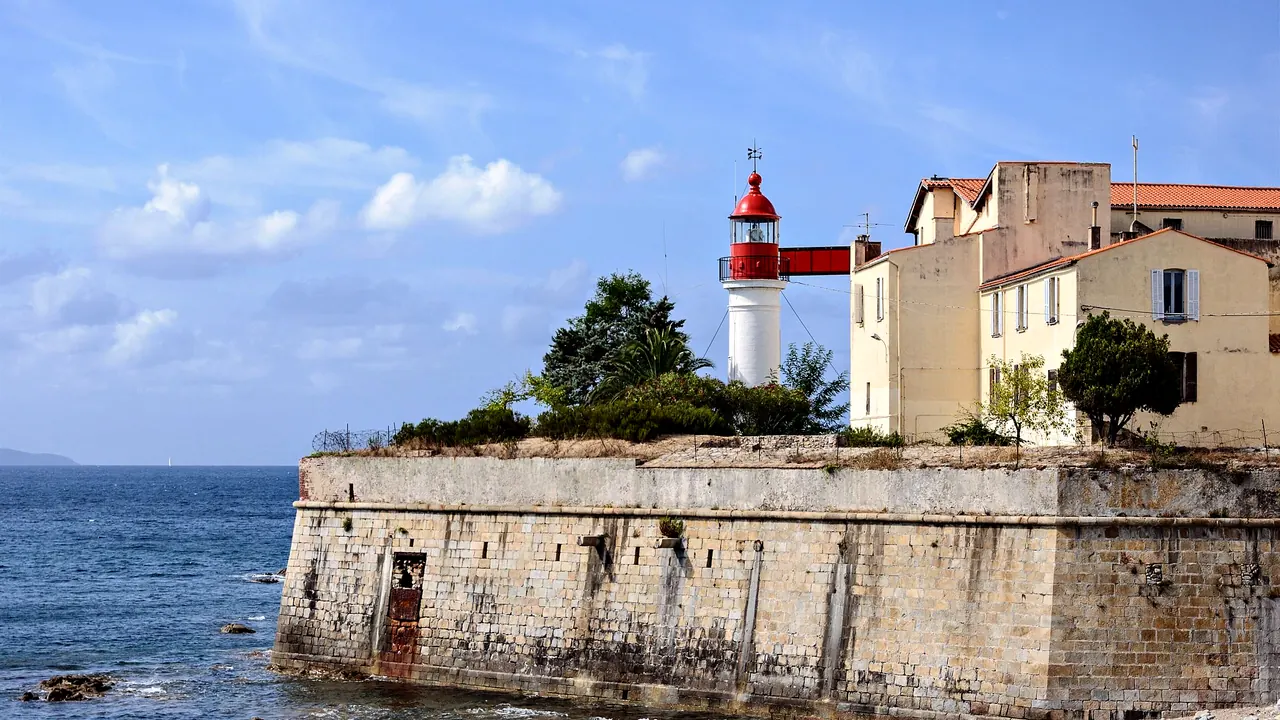
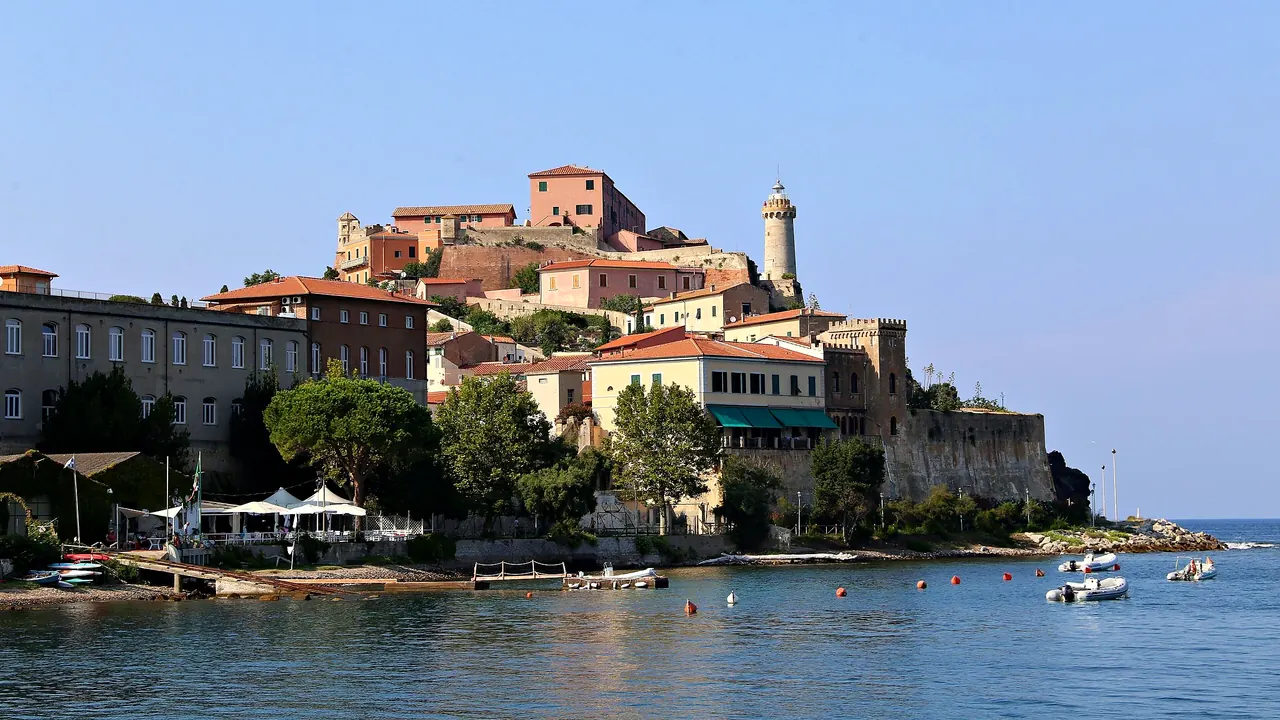
Photos: Corsica by Myrabella, CC BY-SA 3.0, cropped; Elba by Sailko, CC BY 3.0, cropped.
Corsica or Elba?
Our verdict in twelve categories, each scored against the same fixed benchmark cities, and the climate month by month, so you can choose for your trip.
Choose Corsica for
- nature and the outdoors
- day trips
- culture and sights
Corsica is the bigger, wilder choice: a mountain island where the GR20, the needles of Bavella and the Scandola cliffs rise behind some of the Mediterranean's finest beaches, with Bonifacio's clifftop old town and the Genoese citadels to fill the days between swims. It suits travellers with a car and at least a week, who want to hike, dive and change bases, and who will put up with slow roads and resort prices in summer.
Choose Elba for
- getting around
- families
- prices
If you want a simpler, more compact beach vacation, pick Elba. Every bay is a short drive from wherever you stay, the gently shelving sands at Marina di Campo, Lacona and Biodola suit young children, and it costs a little less than its neighbour. You give up the high mountains and Corsica's range of sights. In return you get an easy ferry hop from the Tuscan coast and summer evenings in piazzas like Capoliveri's.
Scoreboard
Twelve categories on one fixed scale from 0 to 100. The shaded stretch is the gap between the two.
Your match
Pick a travel style or drag the sliders, and both match scores follow your weighting.
Wins on nature and the outdoors and day trips with your weighting.
Wins on getting around and families with your weighting.
What matters to you?
Category by category
What the scores mean for a trip.
Beaches & swimming
Both islands are beach destinations first, and the gap between them is small. The real difference is scale. Corsica's southern trio of Palombaggia, Santa Giulia and Rondinara are among the Mediterranean's showpieces, and in the Agriates, Saleccia and Lotu are remote and hard to reach, by boat or a long track. The beaches are spread along a long coast, though, and the famous ones fill early.
Elba packs its variety into a much smaller island: turquoise shallows in the granite bays of Fetovaia and Cavoli, long sand at Marina di Campo and Lacona, and white pebble coves under limestone around Portoferraio. You can try several kinds of beach in a day, though the very best Corsican bays keep a slight edge.
Food & drink
Corsica eats from the mountains: lonzu, coppa and figatellu from free-roaming pigs, brocciu in everything from omelettes to fiadone, chestnut flour and wild boar. It also makes serious wine around Patrimonio and Sartène, and the markets of Ajaccio and Bastia are worth a morning. Elba's table is Tuscan and turns more to the sea, with cacciucco, stuffed squid and local sea bream, finished with schiaccia briaca and a glass of Aleatico.
The Corsican offer is broader and has proper markets, which Elba largely lacks. On both islands the weak point is the waterfront resort menu, and the better meals are found in the hills: the inland inns on Corsica, and Capoliveri, Marciana or Sant'Ilario on Elba.
Culture & sights
Napoleon links the two. He was born in Ajaccio, where his birthplace and the Italian paintings of the Palais Fesch stand, and exiled to Elba, where the Palazzina dei Mulini and the villa at San Martino keep his memory. Beyond him, Corsica has far more to see: the old town of Bonifacio on its cliffs, the citadels of Calvi and Corte, Pisan chapels in the hills and the carved menhirs of Filitosa.
Elba's sights make good half-days rather than a reason to come. These are the Medici bastions of Portoferraio, the star-shaped fortress at Porto Azzurro, a Roman villa across the bay and mineral museums recalling the iron mines.
Nightlife
Neither island is built for clubbing, and the difference is one of kind. In high summer Corsica has a few large open-air clubs in the hills behind Porto-Vecchio and harbour bars in Calvi that stay busy late, and Ajaccio and Bastia keep some bars open all year. Elba's summer nights belong to the piazza rather than the dance floor: Capoliveri, Porto Azzurro and Marina di Campo stay full past midnight with aperitivo and gelato, and a handful of weekend discos run near Marina di Campo and Procchio.
Nature & outdoors
This is where Corsica pulls furthest ahead. Its peaks rise above 2,700m and the GR20 along its spine is one of Europe's great treks. The Calanques de Piana, the Restonica lakes and the sea caves of Scandola are landscapes few islands can match, and there is canyoning inland and diving around the Lavezzi islands as well.
Elba's Monte Capanne, less than half that height, makes a fine outing by basket lift or on foot. The Grande Traversata Elbana, the iron-red mining east and the national park coast reward walkers, mountain bikers and snorkellers. Elba is a good walking island, but Corsica is a whole mountain range.
Day trips
Corsica's outings stay mostly on the island, but there are more of them. Sartène is close to the south, the craft villages of the Balagne to Calvi, and Cap Corse and the Patrimonio vineyards to Bastia. Corte is reached by the mountain railway, and a ferry from Bonifacio crosses to Sardinia.
Elba's day trips start with the hour-long ferry to Piombino, for the Etruscan tombs at Populonia and hill towns such as Suvereto, or with boats to Pianosa and Capraia. Most visitors make only one or two of these trips and spend the rest of their stay on the island.
Good for families
Elba is the easier island with children. Its long, gently shelving bays at Marina di Campo, Lacona and Biodola are made for paddling. The small aquarium and the open lift up Monte Capanne fill half-days, and the short distances keep time in the car low.
Corsica also works around a calm bay such as Santa Giulia, with campsites and resort villages with pools along the east and south coasts. Its twisting drives are much longer, though, and neither island has theme parks or large attractions.
Getting around
Both islands really need a car, but Elba is far more forgiving. It is about 27km long, so nothing is more than a short drive. Summer buses reach the bigger beaches, and scooters and e-bikes are a practical alternative.
Corsica's distances are much greater and its mountain roads slow, and buses between towns are infrequent. The narrow-gauge railway linking Ajaccio, Corte, Bastia and Calvi is a pleasure to ride, but it misses the south entirely. Elba's drawbacks are the August queues into Portoferraio and a ferry that needs booking ahead.
Shopping & style
What you bring home differs more than where you buy it. On Corsica it means charcuterie, chestnut flour and hand-forged knives, found in the Ajaccio and Bastia markets and the Balagne craft villages. On Elba it means Aleatico wine, schiaccia briaca and minerals from the old mines, picked up on an evening walk through the small boutique lanes of Capoliveri and Porto Azzurro. Fashion and retail depth are thin on both.
Affordability
Neither island is cheap in July and August, but Elba is the gentler bill. It lacks the high-end pricing of Porto-Vecchio, Bonifacio and Calvi, and its many campsites and self-catering apartments make a family stay more manageable.
On Corsica the ferry crossings and car hire weigh more heavily, though inland villages, campsites and market food soften the cost. On both islands, June and September give you the same sea for noticeably less.
Live music & performing arts
Corsica has a living tradition that Elba lacks: polyphonic singing, unaccompanied male voices in close harmony, heard in village churches in summer. It also has jazz in Calvi and guitar evenings among the Patrimonio vineyards. Elba has summer concerts in its squares and in Portoferraio's fortresses and a late-summer chamber music festival, but nothing between seasons, and neither island has opera or a major concert life.
Wellness & relaxation
On both islands, rest comes mostly from the slow pace. Elba has the one real bathing tradition between them, the mud and seawater treatments at San Giovanni across the bay from Portoferraio, alongside hotel spas around Biodola and Procchio. Corsica's thermal springs, such as Pietrapola, are small and simple, so its calm is found in mountain villages and long lunches. On Elba the August crowds make June or September the time to unwind.
When should you go?
Pick your month. The climate figures are measured averages, not a forecast.
Corsica in July
Elba in July
Daytime high, °C
Rainfall in the month, mm
Where the figures come from
Elba's temperatures are measured 62 km from the centre, at Grosseto.
Elba has no rain gauge within 25 km of the centre, so its rainfall comes from a gridded climate dataset read at the destination rather than from a gauge further away.
Temperature and rainfall are climate normals, averaged over the years shown. Corsica: 1991-2020 normals, Ajaccio (5.1 km from centre). Elba: 1991-2020 (sunshine 1961-1990) normals, Grosseto (61.7 km from centre).
The beach season is much the same on both islands. The sea is warm enough from June, reaches about 25°C in August and is still swimmable into early October. Midsummer is hotter around Elba's measuring point, with daytime highs of around 32°C in August against 29°C on Corsica. That makes walking the streets or the open slopes hard work on Elba at midday. Corsica also gets noticeably more sunshine through the year.
For hiking and sightseeing, both are at their best in May, June and September, and Elba is the warmer and drier of the two in spring. Rain returns in October on both islands and peaks in November, when Corsica is the wetter, with about 115mm. Winter on both is mild but grey, too cool for the beach.
Which traveller are you?
On an outdoors trip, Corsica is the clear choice. The GR20 and the gentler Mare e Monti paths, Bavella's granite needles, the Restonica lakes, canyoning in the inland rivers and diving around Scandola and the Lavezzi islands give far more range than Elba's single mountain.
On a culture and arts trip, Corsica again offers more: Bonifacio on its white cliffs, the citadels of Calvi and Corte, Filitosa's carved standing stones, the Palais Fesch paintings and polyphonic singing in summer churches, against Elba's Napoleonic houses and Medici forts.
On a family trip with young children, Elba is the easier island. Gently shelving bays at Marina di Campo and Lacona, a small aquarium, the open lift up Monte Capanne and short drives suit small travellers better than Corsica's long, winding roads between bases.
Before you go
| Measure | Corsica | Elba |
|---|---|---|
| Official language | French | Italian |
| Currency | Euro (EUR) | Euro (EUR) |
| Sockets | CE230 V, 50 Hz | CFL230 V, 50 Hz |
| Driving side | Right | Right |
| Time zone | UTC+1, UTC+2 in summer | UTC+1, UTC+2 in summer |
| Emergency number | 112 | 112 |
| Main airport | Ajaccio Napoléon Bonaparte airport (AJA)29 non-stop destinations | Pisa International Airport (PSA)82 non-stop destinations |
| Public holidays this year | 11 days | 13 days |
By the numbers
| Measure | Corsica | Elba |
|---|---|---|
| Population | 355,486 | 32,000 |
| People per km² | 41 | 143 |
| Swim season, months above 21 °C | 4 months | 4 months |
Where else could you go?
Every comparison below shares a destination with this one, so you can follow Corsica or Elba somewhere new.
- Sardiniavs Corsica
- Tuscanyvs Elba
- Cinque Terrevs Elba
- Umbriavs Elba
- Sardiniavs Elba
- French Rivieravs Corsica