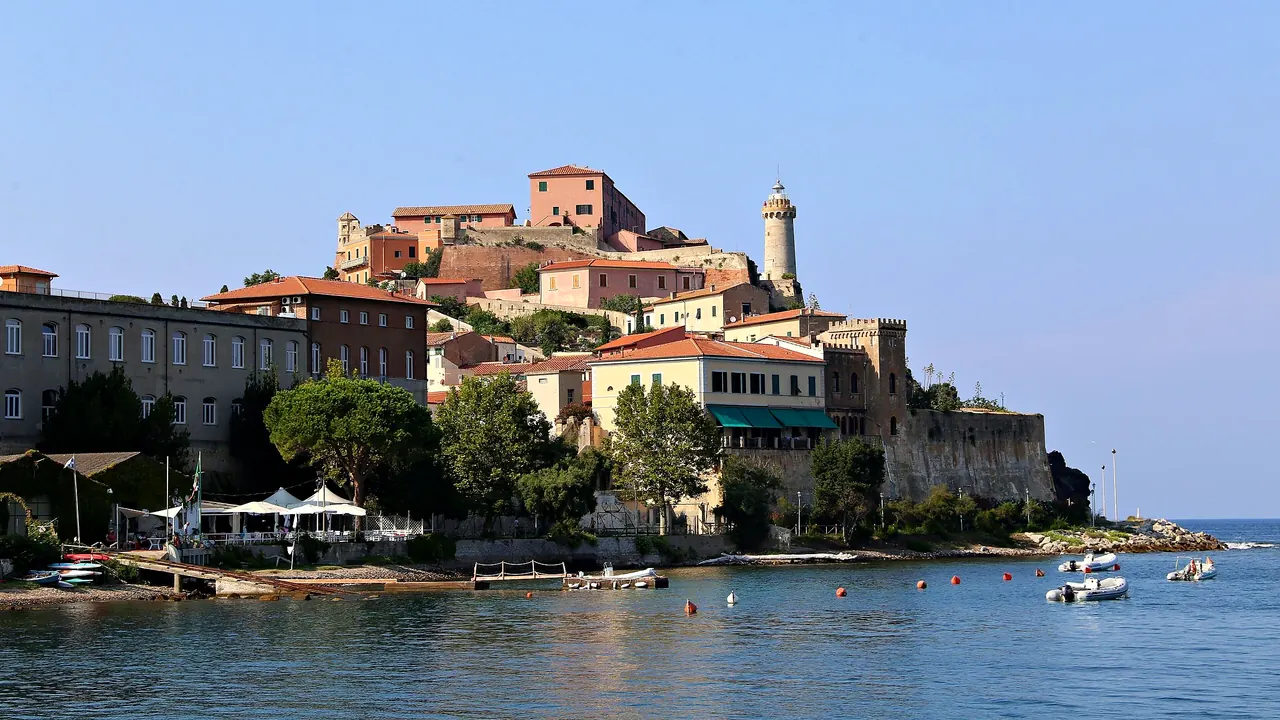
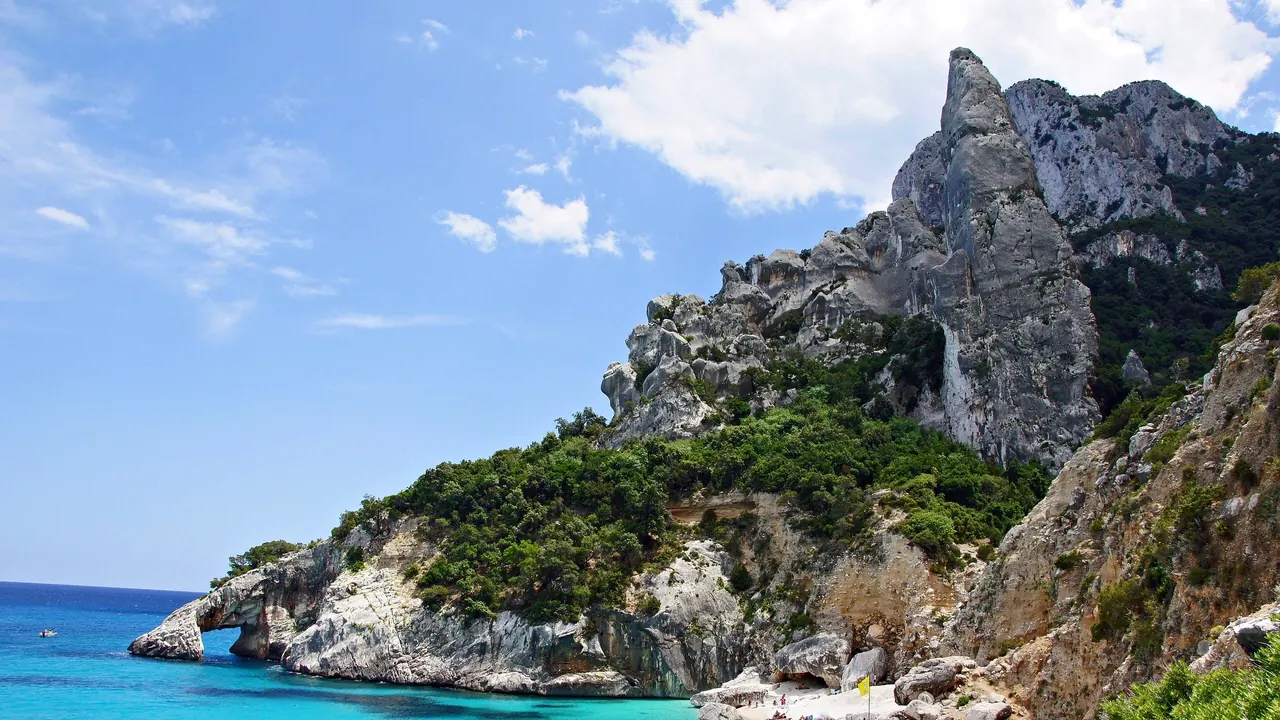
Photos: Elba by Sailko, CC BY 3.0, cropped; Sardinia by Yesuitus2001, CC BY-SA 2.5, cropped.
Elba or Sardinia?
Our verdict in twelve categories, each scored against the same fixed benchmark cities, and the climate month by month, so you can choose for your trip.
Choose Elba for
Elba does not lead in any category we score.
Elba suits a simpler week by the sea. It is a small island an hour's ferry ride from the Tuscan coast, so you can stay in one place and still reach the granite bays of the south-west, the white pebble coves near Portoferraio and the trails on Monte Capanne without long drives. It works best for couples and families who want beaches, walks and a quiet dinner in a hill village, and who are not looking for much more.
Choose Sardinia for
- nightlife
- day trips
- shopping
Sardinia is the bigger and richer trip. Its beaches are finer and more varied, its shepherd cooking tastes unlike anything on the mainland, and Bronze Age nuraghi, Catalan Alghero and the gorges of the Supramonte give it a depth Elba cannot match. The cost is distance: it is a large island, and getting the most from it means picking a base carefully or driving a great deal.
Scoreboard
Twelve categories on one fixed scale from 0 to 100. The shaded stretch is the gap between the two.
Your match
Pick a travel style or drag the sliders, and both match scores follow your weighting.
Has no clear advantage with the weighting you have chosen.
Wins on nightlife and day trips with your weighting.
What matters to you?
Category by category
What the scores mean for a trip.
Beaches & swimming
Both islands are beach destinations first, but Sardinia has more first-rate beaches and more kinds of them. You can choose between the granite coves of the Costa Smeralda and La Maddalena, the pebble bays below the Orosei cliffs that you reach by boat or on foot, and the shallow sand at Chia and La Pelosa. When the mistral blows, a sheltered coast is usually a drive away.
Elba's best water is concentrated in the south-west, at Fetovaia, Cavoli and Seccheto, with wide bays at Lacona and Biodola and white pebble coves under the cliffs near Portoferraio. Its beaches are smaller in scale but all close together, so you can reach a different bay every day without crossing half an island.
Food & drink
Sardinia eats better, and more distinctively. Its cooking comes from the shepherds' hills: suckling pig roasted over myrtle wood, pane carasau, pecorino, seadas with honey. The long farm menus at inland agriturismi are a reason to go in themselves, and Cagliari's San Benedetto market adds a city's range.
Elba has a shorter list of things worth seeking out: cacciucco, stuffed squid, schiaccia briaca and its sweet Aleatico wine. The real cooking is in the trattorias of Capoliveri and Marciana, while the resort waterfronts are predictable and many places close once summer ends.
Culture & sights
Sardinia has a heritage of its own. Thousands of Bronze Age nuraghi stand across the countryside, with the great complex at Su Nuraxi. There are Phoenician and Roman ruins at Nora and Tharros, Pisan churches like Saccargia and the Catalan old town of Alghero. It is enough to plan a trip around, as long as you are willing to drive between the sights.
Elba's history is narrower and easier to reach. It centres on Napoleon's exile, at the Palazzina dei Mulini and the villa at San Martino, and on the Medici fortifications of Portoferraio, with mining museums and a Roman villa besides. These make pleasant half-days between beach days rather than a reason to come.
Nightlife
Sardinia has the stronger nightlife, though it depends on where you stay. Porto Cervo has dressy beach clubs and late nightclubs in July and August, Alghero's ramparts fill for aperitivo, and Cagliari has wine bars all year.
Elba offers summer evenings rather than nights out: the piazza at Capoliveri, the harbourfront at Porto Azzurro and a few seasonal discos near Marina di Campo and Procchio. Outside high summer it goes quiet early.
Nature & outdoors
Elba is mountainous for its size. Monte Capanne rises to about 1,000m, with views across to Corsica, the Grande Traversata Elbana follows the ridges from end to end, and the iron-red east has rough mountain-bike tracks. It makes a good walking and snorkelling island that you can cover in a week.
Sardinia's wild country is on another scale. It has the limestone Supramonte, the Gorropu gorge, the demanding Selvaggio Blu cliff trek, sea-cliff climbing at Cala Gonone and the marine park of La Maddalena for sailing and diving. It also has activities Elba lacks, such as kitesurfing at Porto Pollo, flamingo lagoons and wild horses on the Giara plateau.
Day trips
Leaving Elba means taking the ferry to Piombino first. From there, Populonia above the bay of Baratti, the hill towns of Campiglia Marittima and Suvereto, and the Bolgheri wine estates are within reach, and boats run to Pianosa and Capraia. Most visitors manage one or two such outings.
Sardinia has far more within a day, though what you can reach depends on your base. From the north you can cross to Bonifacio on Corsica or drive the Alghero, Bosa and Capo Caccia circuit. From the east you can head into the Barbagia villages of Orgosolo and Mamoiada, and Cagliari has Carloforte and the Sulcis nearby.
Good for families
Both islands work well for a family beach vacation. Sardinia has a slight edge thanks to its resort villages with pools and children's clubs, a few water parks and the very shallow water at La Pelosa and Chia. Its cliff coves on the east coast are harder with small children, though, and the distances mean more time in the car.
On Elba, the gently shelving sand at Marina di Campo, Lacona and Biodola is never far from your base. There are small extras such as the aquarium and the open lift up Monte Capanne, and there is less driving overall, though the winding roads can still upset car-sick children.
Getting around
You need a car on both islands, and on both the buses are too sparse to rely on. The difference is size. Elba is only about 27km long, so even its twisting roads keep journeys short, and the ferry from Piombino is the usual way in.
Sardinia is a long drive from end to end, and the east coast between Olbia and Cagliari takes a good part of a day. Flying into whichever of its three airports is nearest your base saves hours, and many Orosei coves and the Maddalena islands are reachable only by boat.
Shopping & style
What you bring home from Elba is mostly edible or dug from the ground: Aleatico and Ansonica wines, honey, schiaccia briaca and crystals from the old mines. You pick these up on an evening walk past the small linen, beachwear and jewellery boutiques of Capoliveri, Porto Azzurro and old Portoferraio, or at the summer markets.
Sardinian crafts are a real reason to shop. There is red coral jewellery in Alghero, filigree gold, hand-woven rugs, cork goods and folding knives from Pattada, and in summer the piazzetta at Porto Cervo fills with luxury fashion boutiques that Elba has no equivalent of.
Affordability
Neither island is cheap in summer, but Sardinia gives you more room to keep costs down. The Costa Smeralda is very expensive, yet Cagliari, Alghero, the Ogliastra coast and the inland villages are moderate for Italy, and agriturismo meals are generous.
Elba is expensive across most of the island in summer, and the car ferry, parking and sunbeds add up. Its campsites, self-catering apartments and simple inland trattorias help. On both islands, June and September cost noticeably less than August.
Live music & performing arts
Outside a few summer evenings, Elba offers almost nothing to attend. There are concerts in its squares, churches and the Portoferraio fortresses, and a classical festival of chamber concerts in late summer, but no theatre season or regular venue.
Sardinia goes much further, and its most memorable performances are traditional ones. The deep four-voice canto a tenore of Barbagia and the ancient launeddas pipes turn up at village festivals, and the Sant'Efisio procession in Cagliari is a spectacle of costume and music. For a formal evening, the Teatro Lirico in Cagliari runs an opera and concert season, and Berchidda hosts the Time in Jazz festival in summer.
Wellness & relaxation
The two are much alike: both are restful mainly because of their slow pace, and neither has a strong spa culture. Elba's mud and seawater treatments at San Giovanni, which use the old salt pans, are its one real tradition, and Marciana or Sant'Ilario in June are as calm as it gets.
Sardinia has Roman-era thermal springs at Fordongianus and Sardara, thalassotherapy at its big resorts, and the unhurried villages of Ogliastra. Its inland agriturismi also give you more choice of where to slow down.
When should you go?
Pick your month. The climate figures are measured averages, not a forecast.
Elba in July
Sardinia in July
Daytime high, °C
Rainfall in the month, mm
Where the figures come from
Elba's temperatures are measured 62 km from the centre, at Grosseto.
Elba has no rain gauge within 25 km of the centre, so its rainfall comes from a gridded climate dataset read at the destination rather than from a gauge further away.
Sardinia has no rain gauge within 25 km of the centre, so its rainfall comes from a gridded climate dataset read at the destination rather than from a gauge further away.
Temperature and rainfall are climate normals, averaged over the years shown. Elba: 1991-2020 (sunshine 1961-1990) normals, Grosseto (61.7 km from centre). Sardinia: 1991-2020 normals, Olbia / Costa Smeralda (3.1 km from centre).
Elba's dry season runs from June to August. Highs reach about 32°C in July and August, too hot for long walks in the middle of the day, and the sea is warm enough to swim from June. July is the sunniest month, with over 300 hours of sunshine. September is still good for the beach but brings the first real rain, and from October the island turns wet, with the most rain in November at about 92mm. May and late September are the best months for walking Monte Capanne or cycling the east.
Sardinia's summer is much the same heat but drier and a little longer. July has almost no rain, the dry weather lasts through September, and the sea, which reaches about 25°C in August on both islands, stays warm enough to swim into early October. Spring and autumn suit walking and sightseeing here too. Its winter is slightly milder than Elba's but wetter, with the most rain in December, and on both islands the sea is too cold to swim.
Which traveller are you?
On a culture and arts trip, Sardinia is the clear choice. The nuraghi at Barumini, the Mont'e Prama giants in Cagliari's museum, canto a tenore singing and the opera season at the Teatro Lirico add up to far more than Elba's Napoleonic houses and forts.
For a food and nightlife trip, Sardinia also wins. Suckling pig and culurgiones at hill agriturismi, Cagliari's market and wine bars, and the summer clubs of Porto Cervo give it range, while Elba's evenings rarely go beyond a piazza stroll and a late dinner.
On a relaxing and wellness trip, Elba is the easier pick. It is small enough that you never face a long drive, its mud baths at San Giovanni form a real tradition, and a hill village like Marciana in June is quiet in a way that needs no planning.
Before you go
| Measure | Elba | Sardinia |
|---|---|---|
| Official language | Italian | Italian |
| Currency | Euro (EUR) | Euro (EUR) |
| Sockets | CFL230 V, 50 Hz | CFL230 V, 50 Hz |
| Driving side | Right | Right |
| Time zone | UTC+1, UTC+2 in summer | UTC+1, UTC+2 in summer |
| Emergency number | 112 | 112 |
| Main airport | Pisa International Airport (PSA)82 non-stop destinations | Olbia Costa Smeralda Airport (OLB)79 non-stop destinations |
| Public holidays this year | 13 days | 13 days |
By the numbers
| Measure | Elba | Sardinia |
|---|---|---|
| Population | 32,000 | 1,628,384 |
| People per km² | 143 | - |
| Swim season, months above 21 °C | 4 months | 3 months |
Where else could you go?
Every comparison below shares a destination with this one, so you can follow Elba or Sardinia somewhere new.