Italy
Sardinia
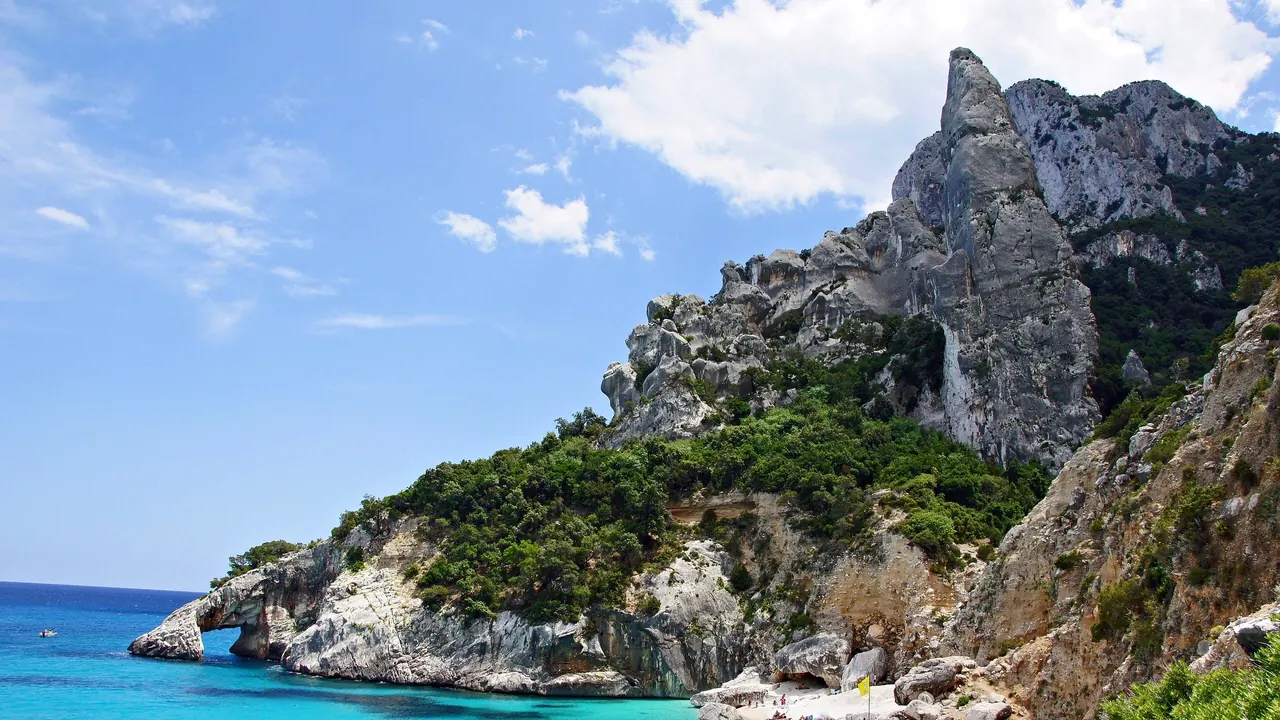
The rock spire and arch of Cala Goloritzè
- Beaches90
- Nature & outdoors78
- Food & drink68
Photo: Yesuitus2001, CC BY-SA 2.5, cropped
Match
58
Every category weighted equally
- Beach & sun62
- Culture & arts53
- Food & nightlife53
- Family trip61
- Outdoors62
- Relax & unwind61
- Shopping & style54
- On a budget56
Sardinia in twelve categories
Our verdict on each, scored 0 to 100 against the same fixed benchmark cities, so a score means the same thing on every page.
Beaches & swimming. Scores 90 out of 100.
Food & drink. Scores 68 out of 100.
Culture & sights. Scores 62 out of 100.
Nightlife. Scores 50 out of 100.
Nature & outdoors. Scores 78 out of 100.
Day trips. Scores 60 out of 100.
Good for families. Scores 68 out of 100.
Getting around. Scores 42 out of 100.
Shopping & style. Scores 45 out of 100.
Affordability. Scores 42 out of 100.
Live music & performing arts. Scores 35 out of 100.
Wellness & relaxation. Scores 50 out of 100.
Sardinia category by category
Beaches & swimming
90Beaches are the main reason most people come, and the island has an unusual number of first-rate ones. The northeast, around the Costa Smeralda and the La Maddalena archipelago, has granite coves with pale sand and glassy turquoise water. The east coast of the Gulf of Orosei has white pebble bays below limestone cliffs, many reachable only by boat or on foot. In the south, Chia and Tuerredda have fine sand and shallow water, and Stintino's La Pelosa in the northwest is shallow enough to wade far out.
The sea is warm enough to swim from June to early October and reaches about 25°C in August, when the best-known beaches get crowded. The mistral can whip up the west and north coasts, but there is nearly always a sheltered side of the island. Cagliari's Poetto gives the capital a long town beach as well.
Food & drink
68Sardinian cooking owes more to shepherds than to fishermen, and it tastes like nowhere else in Italy. Inland you get suckling pig roasted over myrtle wood, wafer-thin pane carasau, pecorino and pasta shapes like culurgiones and malloreddus, with fried seadas and honey to finish. On the coast there are bottarga, lobster in Alghero and tuna in Carloforte. Cannonau reds and Vermentino whites go with almost everything, and a glass of myrtle liqueur ends the meal.
The best eating is often at agriturismi in the hills, where long set menus come from the farm itself. Cagliari has the widest choice, with its covered San Benedetto market and seafood restaurants in the Marina quarter. Fine dining and international range are limited, and resort strips serve plenty of generic food.
Culture & sights
62Sardinia's heritage is unlike anything on the Italian mainland. Thousands of Bronze Age nuraghi, conical stone towers, stand across the countryside. Su Nuraxi at Barumini is the great complex, and giants' tombs and sacred wells such as Santa Cristina belong to the same culture. In Cagliari, the National Archaeological Museum holds the bronze figurines and the Mont'e Prama stone giants, and the walled Castello quarter looks down on the port.
The Phoenicians and Romans left the seaside ruins of Nora and Tharros. Pisan Romanesque churches such as Saccargia stand in the northern countryside, and Alghero keeps the Catalan walls and streets of its old town. Bosa's coloured houses and the political murals of Orgosolo add character. The sights are spread out, so seeing them means driving between them.
Nightlife
50Going out is seasonal and depends heavily on where you stay. In July and August the Costa Smeralda around Porto Cervo has glamorous beach clubs and late nightclubs that draw yachts and celebrities. Those nights are expensive and dressy, and they fade quickly after the end of August. Cagliari has a more ordinary year-round scene of wine bars in the Marina and Castello quarters and summer kiosks along Poetto beach. Alghero's ramparts fill with aperitivo crowds on summer evenings.
Elsewhere, and in most of the island's small towns, an evening means a long dinner and a stroll. Clubbers should base themselves in the northeast in high summer.
Nature & outdoors
78The wild heart of the island is the east, where the limestone Supramonte drops to the sea along the Gulf of Orosei. The Gorropu gorge is one of the deepest canyons in Europe, and the Selvaggio Blu is a multi-day cliff trek of serious difficulty. Cala Gonone is a base for sea-cliff climbing, kayaking and boat trips into sea caves. The Gennargentu massif rises behind, with cork oak and holm oak forests, mouflon and wild horses on the Giara plateau.
The La Maddalena archipelago is a marine park of granite islets made for sailing and diving. Porto Pollo is a kitesurfing and windsurfing spot, and flamingos feed in the lagoons around Cagliari and Oristano. Spring and autumn are best for walking, because inland summers are hot and dry.
Day trips
60Day outings depend on where you base yourself, because the island is large and the drives are slow. From the north, the ferry from Santa Teresa Gallura crosses to Bonifacio on its Corsican cliffs in about an hour. Castelsardo and the Gallura wine country with its Vermentino are close, and Alghero, Bosa and Capo Caccia are an easy circuit in the northwest.
From Cagliari, there are the island town of Carloforte, the old mining country of the Sulcis and the Marmilla's villages. On the east side, the mountain villages of Barbagia, such as Orgosolo and Mamoiada with its carnival masks, and Cannonau wineries around Jerzu make good days inland. The places are charming but small, and nobody covers them all from one base.
Good for families
68For a family who want a beach vacation, Sardinia works very well. The south coast around Chia and the Costa Rei, La Pelosa near Stintino and much of the Gallura have shallow, sandy water where small children can paddle safely. Many resort villages are set up with pools and children's clubs, and Italian restaurants take children in their stride.
There is little made specifically for children beyond a few water parks and boat trips to the islands, so the days revolve around the sea. The east coast's cliff coves can involve long, steep walks or boats. Families should expect to drive and plan for the midday heat in July and August.
Getting around
42A hire car is essentially required. The main road between Cagliari and Sassari is fast, but most of the island is reached on winding coastal and mountain roads that take longer than the map suggests. The east coast between Olbia and Cagliari is a long drive. Trains are few and slow, and buses connect towns but rarely reach the beaches. Coastal roads and car parks near famous beaches fill up in August.
The island has three airports, at Cagliari, Olbia and Alghero, and choosing the one nearest your base saves hours. Boat trips are the only practical way to reach many of the Orosei coves and the Maddalena islands.
Shopping & style
45Shopping here means crafts rather than fashion streets. Alghero is known for red coral jewellery, and filigree gold, hand-woven rugs and baskets, cork goods and folding shepherd's knives from Pattada are sold across the island, along with pecorino, bottarga and myrtle liqueur to take home. In summer, Porto Cervo's piazzetta fills with luxury fashion boutiques for the yacht crowd. Cagliari's Via Garibaldi and Via Manno cover everyday shopping, but anyone after a wide range of shops will find the island limited.
Affordability
42Prices vary sharply by area and month. The Costa Smeralda in July and August is one of the most expensive stretches of the Mediterranean, for hotels, beach clubs and dinners alike. Elsewhere, around Cagliari, Alghero, the Ogliastra coast and the inland villages, rooms and meals are moderate for Italy, and agriturismo set menus are generous for what they cost.
Car hire, ferries and accommodation all climb steeply in August. June and September are noticeably cheaper and still warm enough for the sea.
Live music & performing arts
35The formal scene centres on Cagliari's Teatro Lirico, which runs an opera and concert season. The most distinctive performances, though, are traditional. Canto a tenore, the deep four-voice shepherd singing of Barbagia, can be heard at festivals and village events, as can launeddas, triple reed pipes of ancient origin. Summer brings outdoor concerts and the long-running Time in Jazz festival in Berchidda. The great religious processions, such as Sant'Efisio in Cagliari, are spectacles of costume and music. Outside Cagliari, though, there is little to attend for most of the year.
Wellness & relaxation
50Sardinia is restful in its pace rather than in its bathing culture. The island has a few thermal springs that the Romans used. At Fordongianus, warm water still runs beside the Roman baths, and Sardara has thermal hotels. But taking the waters is not part of a typical visit. Spa stays mostly mean the thalassotherapy and spa centres of the large beach resorts in the south and the Costa Smeralda.
The island's real gift is slowness. Ogliastra, known for the long lives of its villagers, and the quiet agriturismi inland run to an unhurried rhythm, and late spring and September are the calmest times.
Where to stay in Sardinia
Sardinia is large and its roads are slow, so where you stay shapes the whole trip. Most visitors choose one or two bases and fly into the nearest of the three airports. For a first visit built around the sea, the northeast near Olbia works best: granite coves, calm shallow water for children and boat days among the Maddalena islands. The Costa Smeralda around Porto Cervo is the only real choice for clubbing in July and August, but it is also the island's most expensive stretch.
Cagliari suits travellers who want a proper city as well as a beach. It has markets, museums and evening wine bars in the old quarters, Poetto on its doorstep, and the sandy, family-friendly bays of Chia a drive along the south coast. Alghero is smaller and easy to explore on foot, with seafood, aperitivo on the ramparts and La Pelosa within reach, and it makes a good base for touring the northwest by car.
Walkers, climbers and kayakers should base themselves at Cala Gonone or on the Ogliastra coast, ideally on a second visit or in spring or autumn. An agriturismo inland gives the quietest stay and some of the best food. Pairing the east with the north or south means changing bases at least once.
When should you go?
Pick a month to see what it is like. The climate figures are measured averages, not a forecast.
Sardinia in July
Daytime high, °C
Rainfall in the month, mm
The whole year
Shaded against this city’s own year: the deepest cell is its best month for that figure and the palest its weakest.
Where the figures come from
Sardinia has no rain gauge within 25 km of the centre, so its rainfall comes from a gridded climate dataset read at the destination rather than from a gauge further away.
Temperature and rainfall are climate normals, averaged over the years shown. Sardinia: 1991-2020 normals, Olbia / Costa Smeralda (3.1 km from centre).
Before you go
| Measure | Sardinia |
|---|---|
| Official language | Italian |
| Currency | Euro (EUR) |
| Sockets | CFL230 V, 50 Hz |
| Driving side | Right |
| Time zone | UTC+1, UTC+2 in summer |
| Emergency number | 112 |
| Main airport | Olbia Costa Smeralda Airport (OLB)79 non-stop destinations |
| Public holidays this year | 13 days |
By the numbers
| Measure | Sardinia |
|---|---|
| Population | 1,628,384 |
| Swim season, months above 21 °C | 3 months |
Compare Sardinia with
Every comparison with a written verdict behind it.