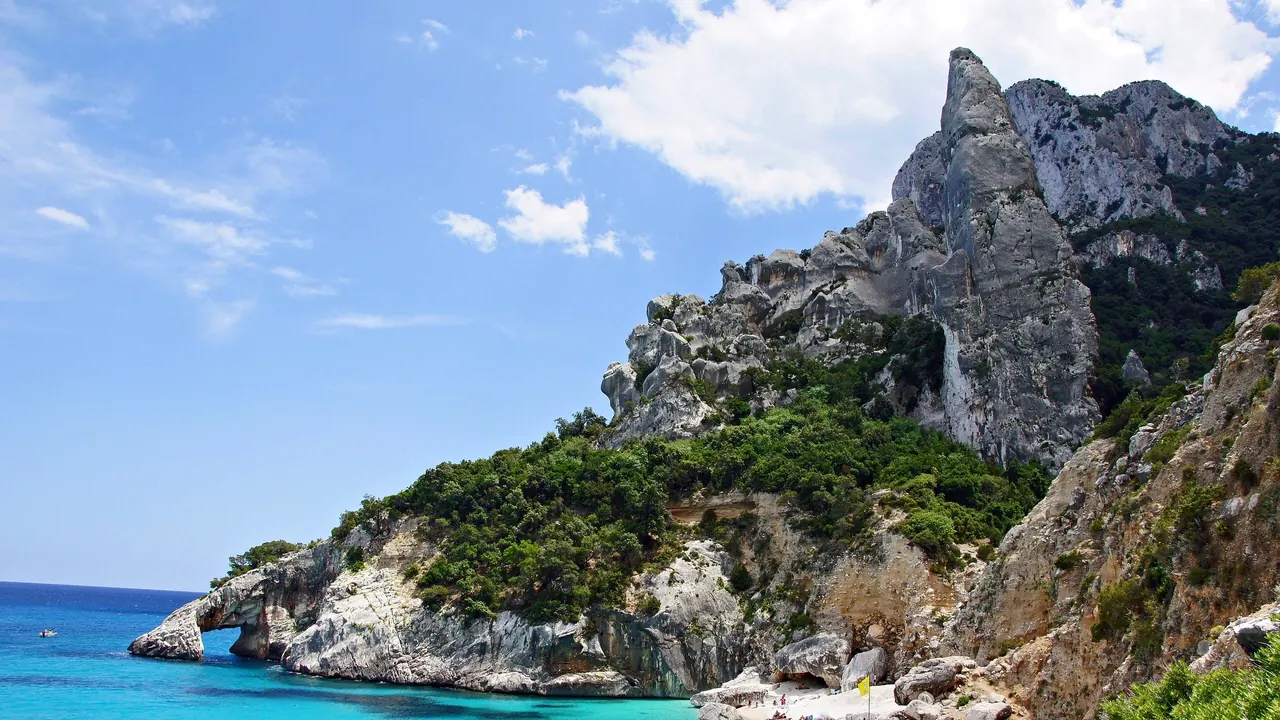
Photos: Sardinia by Yesuitus2001, CC BY-SA 2.5, cropped.
Sardinia or Tuscany?
Our verdict in twelve categories, each scored against the same fixed benchmark cities, and the climate month by month, so you can choose for your trip.
Choose Sardinia for
- beaches
- families
- nightlife
Choose Sardinia if the sea is the main reason for the trip. The granite coves of the northeast, the cliff-backed bays of the Gulf of Orosei and the shallow sands of the south are better than anything on the Tuscan coast. The Supramonte gives the island a wild interior to match. In return you accept long drives, sights spread thinly across the island and not much to do away from the water.
Choose Tuscany for
- day trips
- culture and sights
- wellness
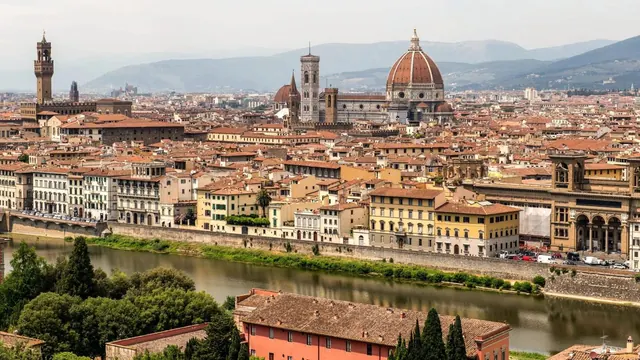
Tuscany suits travellers who want art, food and small towns they can link together. Florence, Siena and a dozen hill towns are within reach of one base, and the wine country is close by. Hot springs such as Saturnia and Bagno Vignoni make a good outing on a rest day. Its beaches are good rather than great, and from a base inland the coast is a side trip.
Scoreboard
Twelve categories on one fixed scale from 0 to 100. The shaded stretch is the gap between the two.
Your match
Pick a travel style or drag the sliders, and both match scores follow your weighting.
Wins on beaches and families with your weighting.
Wins on day trips and culture and sights with your weighting.
What matters to you?
Category by category
What the scores mean for a trip.
Beaches & swimming
Sardinia has the stronger and more varied coast. Pale granite coves in the northeast, white pebble bays under the Orosei cliffs and the shallow, wadeable water at La Pelosa and Chia give it many more first-rate beaches. The swimming season also lasts a little longer into autumn.
Tuscany's best swimming is on Elba and along the pine-backed Maremma shore at Cala Violina and Feniglia. Versilia is mostly long sand covered in rows of beach-club umbrellas. If you stay in Florence or the hill towns, the beach becomes a day out rather than the point of the trip.
Food & drink
Both kitchens are rooted in the land, but Tuscany gives a food lover more to work with. Wine is the big draw: Chianti Classico, Brunello in Montalcino and Vino Nobile in Montepulciano, with cellar visits and estate lunches along the way. Florence adds lampredotto from street carts, the San Lorenzo and Sant'Ambrogio markets and classic Oltrarno trattorias.
Sardinia's cooking is the more unusual of the two. It is shepherd food, such as suckling pig roasted over myrtle wood, pane carasau and culurgiones, and it is best at the long set menus of agriturismi in the hills. Outside Cagliari's Marina quarter the choice soon thins, and the resort strips serve a lot of generic food.
Culture & sights
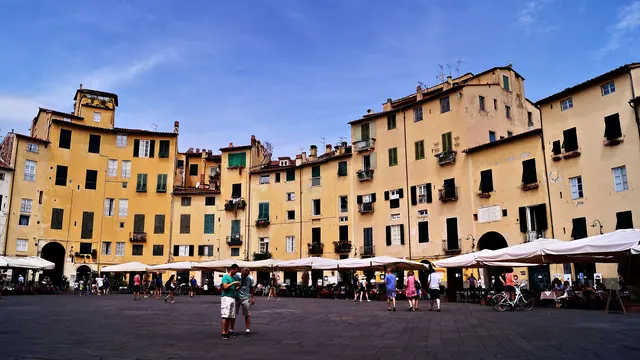
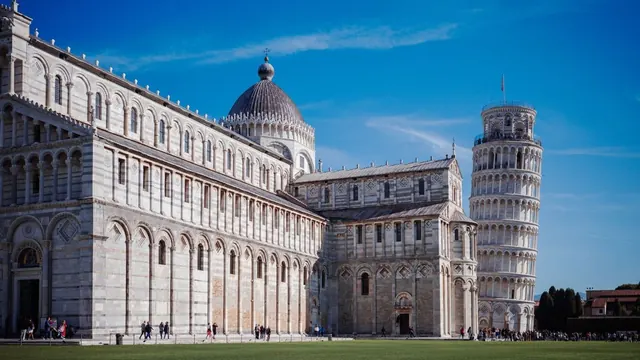
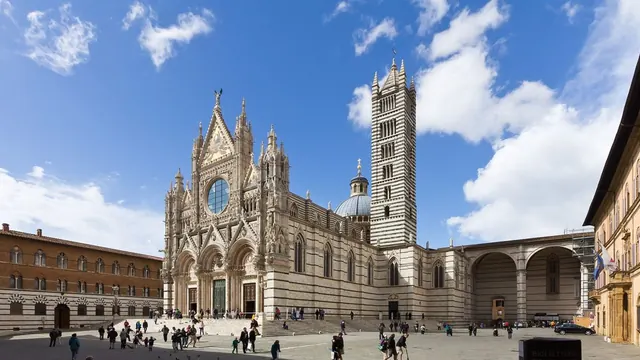
Tuscany has one of Europe's great collections of art and architecture. Compact Florence holds the Uffizi, the David and Brunelleschi's dome. Siena's Campo, Pisa's cathedral square, Lucca's walls and the towers of San Gimignano are all close, and a week barely scratches the surface.
Sardinia's heritage is older and stranger. It has Bronze Age nuraghi such as Su Nuraxi, the Mont'e Prama stone giants in Cagliari's archaeological museum and the seaside ruins of Nora and Tharros. It is worth the effort for curious travellers, but the sites are scattered and you need a car to link them.
Nightlife
Neither is a place to travel for nightlife, and in both the summer action moves to the coast. Sardinia's big nights are at the dressy, expensive beach clubs around Porto Cervo in July and August. Cagliari's Marina quarter and Alghero's ramparts are better for a quieter drink.
Tuscany's version is the long-running dance halls and beach clubs of Versilia near Viareggio. Florence adds a year-round student crowd on the Santo Spirito steps and in Oltrarno wine bars, which makes it the easier place of the two for a night out in a city.
Nature & outdoors
Both are excellent outdoors, in very different ways. Sardinia is wilder and more rugged, with the limestone Supramonte, the Gorropu gorge, sea-cliff climbing and kayaking from Cala Gonone, and diving in the Maddalena marine park.
Tuscany's best-known landscape is farmland: cypress-lined lanes, vineyards and the rolling Val d'Orcia, ideal for gentle cycling and walking from one hill town to the next. For harder walking, the Apuan Alps and the Casentino forests are there in the north.
Day trips
Tuscany is made for day trips. From Florence or Chianti, Siena, Pisa, Lucca and San Gimignano are all easy to reach. Bologna, the Cinque Terre, and Assisi and Orvieto in Umbria are just over the border.
In Sardinia, what you can reach depends on where you stay, and the drives are slow. The ferry to Bonifacio in Corsica, a loop through Alghero and Bosa, and the Barbagia villages all make good days. The places are small, though, and no single base covers them all.
Good for families
Both work well for families, but the trips look different. Sardinia is the simpler beach vacation. Chia, Costa Rei and La Pelosa have shallow, sandy water, and resort villages come with pools and children's clubs. The days revolve almost entirely around the sea.
Tuscany suits a split stay: a farmhouse with animals and a pool, then a lifeguarded lido on the Versilia or Maremma coast. It also has more for children on land, from the Pinocchio park at Collodi to cycling on Lucca's walls, though Florence's galleries test young children's patience.
Getting around
Tuscany is the easier of the two without a car. Florence is walkable, and regional trains link it to Pisa, Lucca, Arezzo and Viareggio. Chianti, the Val d'Orcia and the Maremma still need a car.
In Sardinia you need a hire car almost everywhere. Trains are few, buses rarely reach the beaches, and the mountain and coastal roads take longer than the map suggests. Many of the Orosei coves and the Maddalena islands can only be reached by boat, and flying into the airport nearest your base saves hours.
Shopping & style
Tuscany offers far more for shoppers. In Florence there are leather workshops around Santa Croce, goldsmiths on the Ponte Vecchio, bookbinders in Oltrarno and the luxury houses of Via de' Tornabuoni. Volterra adds alabaster and Montelupo ceramics.
In Sardinia, shopping mostly means crafts and food to take home: coral from Alghero, Pattada shepherd's knives, filigree gold and bottarga. Porto Cervo's summer boutiques are its only real fashion scene.
Affordability
Both are expensive in high season, and each has a famously pricey stretch: the Costa Smeralda in Sardinia and Forte dei Marmi in Tuscany. In Sardinia, prices depend most on the month. Car hire, ferries and rooms climb steeply in August, while Alghero, the Ogliastra coast and the inland agriturismi stay moderate.
In Tuscany, central Florence and the villas of Chianti raise the bill from spring to autumn. Trattoria meals and wine bought at the cellar door are reasonable, and Lucca, Arezzo and the Maremma cost noticeably less.
Live music & performing arts
Tuscany has much more to attend. Florence's Maggio Musicale Fiorentino has its own opera house and orchestra, Lucca holds Puccini recitals all year, and his operas are staged outdoors every summer at Torre del Lago. Siena's Accademia Chigiana and Lucca's summer concert series add more in the warmer months.
Sardinia's strength is tradition rather than a full programme. Canto a tenore and launeddas pipes can be heard at village festivals, and there are the Sant'Efisio procession and the Time in Jazz festival at Berchidda. Apart from Cagliari's Teatro Lirico, there is little to book for most of the year.
Wellness & relaxation
Tuscany is the better choice for a restful trip, because hot springs run through its countryside. There are the open-air terraced pools at Saturnia, the medieval bath at Bagno Vignoni and the grand spa town of Montecatini Terme. A farmhouse stay in the Val d'Orcia adds the slow days.
Sardinia is restful because of its pace rather than its waters. It has Roman springs at Fordongianus and spa centres at the big resorts, but its real calm is in the quiet agriturismi and the villages of Ogliastra in late spring and September.
When should you go?
Pick your month. The climate figures are measured averages, not a forecast.
Sardinia in July
Tuscany in July
Daytime high, °C
Rainfall in the month, mm
Where the figures come from
Sardinia has no rain gauge within 25 km of the centre, so its rainfall comes from a gridded climate dataset read at the destination rather than from a gauge further away.
Tuscany has no rain gauge within 25 km of the centre, so its rainfall comes from a gridded climate dataset read at the destination rather than from a gauge further away.
Tuscany's sunshine is measured 71 km from the centre, at Pisa / S. Giusto.
Temperature and rainfall are climate normals, averaged over the years shown. Sardinia: 1991-2020 normals, Olbia / Costa Smeralda (3.1 km from centre). Tuscany: 1995-2020 (sunshine 1991-2020, rainfall 1991-2020) normals, Firenze / Peretola (5.6 km from centre).
Sardinia has the drier and longer beach summer. Where most visitors stay, June to August is almost rainless, with about 4mm in July. The sea is warm enough to swim from June into early October and reaches about 25°C in August. July and August are hot for walking or touring inland sites, so May, June and September give the best balance. Rain returns from October, and the winters are mild but damp.
Tuscany gets just as hot, up to 33°C in August, which makes midday in Florence's streets hard going. July has about 320 hours of sunshine. The best months for sightseeing are April, May, September and early October. Autumn is much wetter than in Sardinia, with November the rainiest month at around 124mm, and winter days are a few degrees cooler.
Which traveller are you?
On a beach and sun trip, Sardinia is the clear choice. You can spend a fortnight moving from cove to cove, taking a boat to bays no road reaches and wading out over shallow southern sand. When the mistral blows, you drive to the sheltered side.
For a culture and arts trip, Tuscany wins easily. Spend the cool mornings in Florence's galleries, take the regional train to Lucca or to Arezzo for Piero della Francesca's frescoes, and finish a summer evening at an open-air Puccini opera.
On a relaxing and wellness trip, Tuscany also has the edge. A day can be an open-air soak in a warm spring, a long lunch with wine from the estate and an idle afternoon by a farmhouse pool. Sardinia is calm too, but has little bathing culture.
Before you go
| Measure | Sardinia | Tuscany |
|---|---|---|
| Official language | Italian | Italian |
| Currency | Euro (EUR) | Euro (EUR) |
| Sockets | CFL230 V, 50 Hz | CFL230 V, 50 Hz |
| Driving side | Right | Right |
| Time zone | UTC+1, UTC+2 in summer | UTC+1, UTC+2 in summer |
| Emergency number | 112 | 112 |
| Main airport | Olbia Costa Smeralda Airport (OLB)79 non-stop destinations | Florence Airport, Peretola (FLR)46 non-stop destinations |
| Public holidays this year | 13 days | 13 days |
By the numbers
| Measure | Sardinia | Tuscany |
|---|---|---|
| Population | 1,628,384 | 3,729,641 |
| Swim season, months above 21 °C | 3 months | - |
Where else could you go?
Every comparison below shares a destination with this one, so you can follow Sardinia or Tuscany somewhere new.
- Umbriavs Tuscany
- Corsicavs Sardinia
- Cinque Terrevs Tuscany
- Lake Gardavs Tuscany
- Corsicavs Tuscany
- Lake Comovs Tuscany