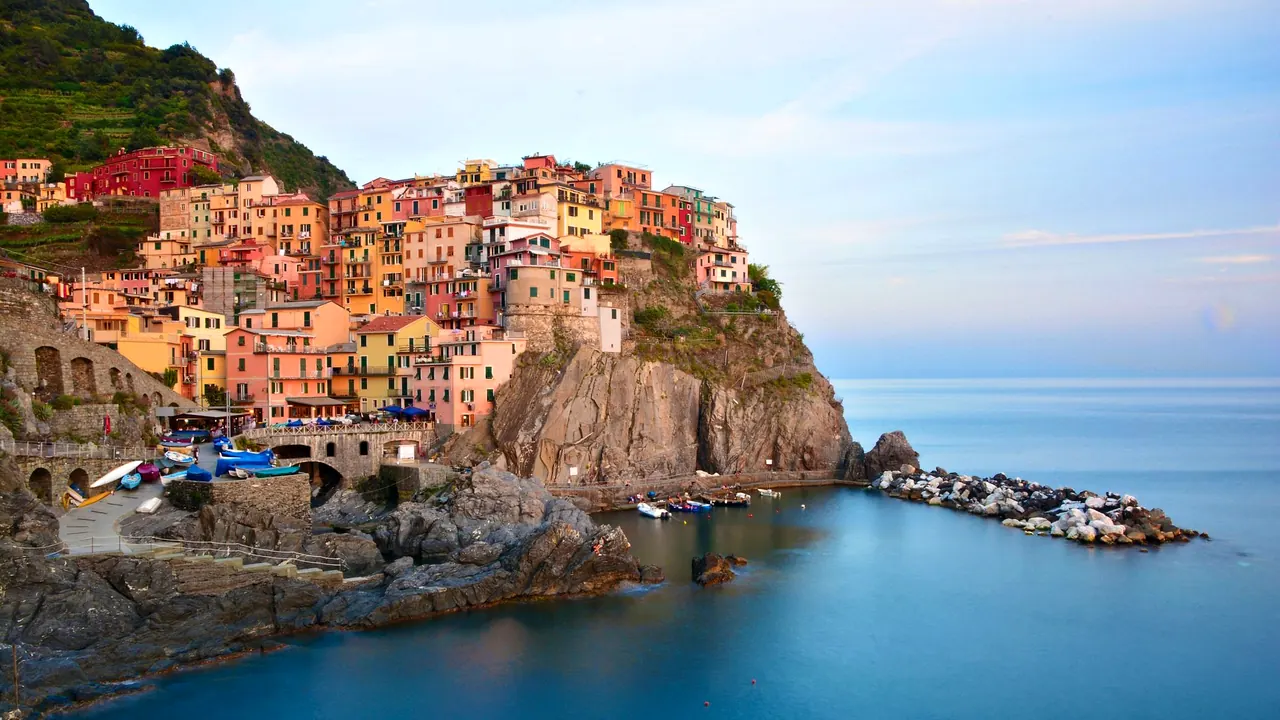
Photos: Cinque Terre by Narcisa Aciko, Pexels License.
Cinque Terre or Tuscany?
Our verdict in twelve categories, each scored against the same fixed benchmark cities, and the climate month by month, so you can choose for your trip.
Choose Cinque Terre for
- getting around
Cinque Terre suits walkers and anyone who wants a few days in one extraordinary landscape without a car. Five cliff villages are joined by trails and a local train, you swim off the rocks between hikes, and the day ends with a glass of terraced white at sunset. It is a short, single-minded trip. Rooms are scarce and dear, evenings are quiet, and there is little to do beyond walking, eating Ligurian food and looking at the sea.
Choose Tuscany for
- shopping
- culture and sights
- wellness
Tuscany is the broader vacation and the stronger choice for almost every other aim. Florence, Siena and Pisa offer art and architecture on a far greater scale. The food and wine run from Florence's market halls to the cellars of Montalcino, and the hot springs and farmhouse stays make it much more restful. It needs more planning, and usually a car for the hill country, but it rewards a week or two, and families, shoppers and opera-goers all do much better here.
Scoreboard
Twelve categories on one fixed scale from 0 to 100. The shaded stretch is the gap between the two.
Your match
Pick a travel style or drag the sliders, and both match scores follow your weighting.
Wins on getting around with your weighting.
Wins on shopping and culture and sights with your weighting.
What matters to you?
Category by category
What the scores mean for a trip.
Beaches & swimming
The seas warm up equally in summer, but the shores differ. Cinque Terre is mostly cliff. Monterosso's Fegina is its only proper beach, and elsewhere you swim off the rocks and slipways at Vernazza or Manarola, which is lovely between walks but no good for a day on the sand.
Tuscany has a real choice of coast: Elba's clear sandy bays and coves, the pine-backed strands of the Maremma and Cala Violina, and the long sands of Versilia lined with beach clubs. The catch is distance. From Florence or the hill towns the sea is a long drive, so a beach vacation means basing yourself on the coast.
Food & drink
Cinque Terre eats well but narrowly: trofie with pesto, focaccia and farinata, Monterosso's anchovies and fried fish in paper cones. In the busiest villages many menus are aimed at day-trippers. The sweet Sciacchetrà is the rare bottle worth seeking out.
Tuscany can carry a whole food trip by itself. There is Florentine steak, ribollita and lampredotto from street carts, the market halls of San Lorenzo and Sant'Ambrogio, and a wine route through Chianti, Montalcino and Montepulciano with estate lunches on the way. Add pecorino in Pienza and white truffles at San Miniato in autumn.
Culture & sights
This is where the two are furthest apart. In Cinque Terre the sight is the place itself: terraced cliffs and colour-washed villages, with striped parish churches, a watchtower and a small castle, but no museums of any size.
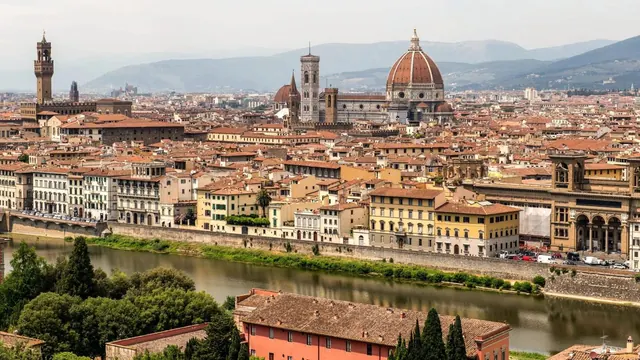
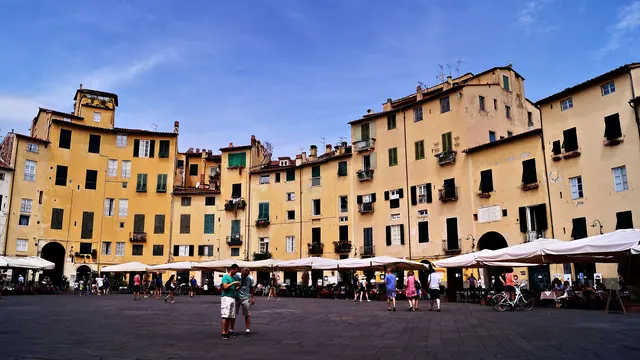
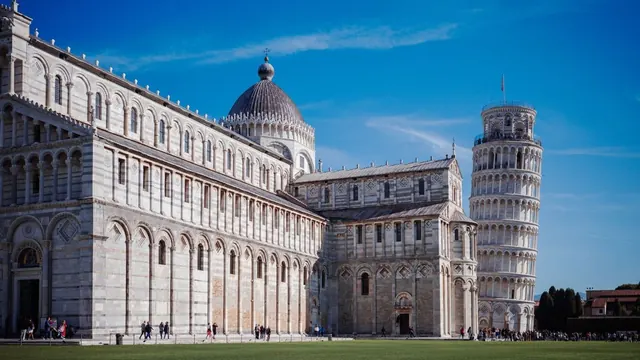
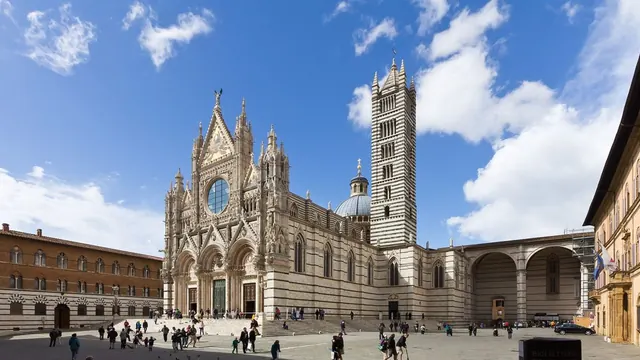
Tuscany is where the Renaissance began. Florence alone has the Uffizi, the Accademia and Brunelleschi's dome in a centre you can walk, and then come Siena's Campo, Pisa's cathedral square, San Gimignano's towers, Lucca's walls and Piero della Francesca's frescoes in Arezzo. A week only scratches the surface.
Nightlife
Neither is a party destination, but Tuscany at least has a night out. In Cinque Terre the evening means a sunset drink on a harbour wall and a few later bars in Monterosso and Riomaggiore, and the villages are asleep before midnight. Florence has student crowds on the steps of Santo Spirito and wine bars in Oltrarno, and in summer the beach clubs and dance halls of Versilia keep going until dawn.
Nature & outdoors
Both are excellent outdoors, in different ways. Cinque Terre is one compact walking coast: the cliff path between the villages, the higher ridge route through pine and chestnut, and a marine reserve for kayaking and diving, all reachable without a car.
Tuscany spreads its outdoors across a whole region. There is gentle cycling and walking through Chianti and the Val d'Orcia, steep ridge hikes in the Apuan Alps, beech forest in the Casentino and wild cattle in the Maremma park. You get more variety, but you travel further between places.
Day trips
Cinque Terre has good outings by rail and boat: Portovenere and Lerici across the gulf, medieval Sarzana and the Carrara quarries, with Pisa, Lucca and Genoa all within reach by train.
Tuscany goes further, because nearly every day trip is to a major town. From Florence you can reach Siena, San Gimignano, Volterra and Lucca, the wine country makes a loop through Montalcino and Pienza, and Bologna and Umbria's Assisi and Orvieto lie just over the border. Cinque Terre itself is an easy day out from Pisa.
Good for families
Cinque Terre is hard going with small children. The villages are made of steps, Corniglia sits high above its station, the summer trains are packed and nothing is designed for children. It works for older children who like walking, and families with toddlers stay in Monterosso, which is mostly flat and has a beach.
Tuscany is far easier. Agriturismi have pools and animals, the beaches of Versilia and the Maremma are shallow and lifeguarded, and there is Pinocchio's park at Collodi and cycling on Lucca's walls. Just keep visits to the Florence galleries short.
Getting around
Cinque Terre is the easier of the two without a car. A local train links all five villages a few minutes apart, ferries call at most harbours in season, and the trails connect the villages on foot. A car is more hindrance than help here. The effort comes from the crowded platforms in summer and the steep stairways.
Tuscany only works car-free along the rail line from Florence to Pisa, Lucca, Arezzo and Viareggio. Chianti, the Val d'Orcia and the Maremma need a car, old town centres are closed to visitors' traffic, and the islands mean planning ferries in advance.
Shopping & style
In Cinque Terre the shopping is mostly edible: pesto, jarred anchovies, lemon liqueur and terrace wine, plus some ceramics and linen.
Tuscany is a proper shopping destination. Florence has leather around Santa Croce, goldsmiths on the Ponte Vecchio, marbled paper in Oltrarno and luxury houses on Via de' Tornabuoni. Other towns have their own crafts, such as alabaster in Volterra and ceramics in Montelupo, and there are large designer outlets in the Arno valley.
Affordability
Both are expensive in season, and in both the room is the main cost. Cinque Terre's village rooms are few and in high demand, and access to the park paths is paid. Focaccia, fried fish and the cheap train keep daily spending modest, and many people stay in La Spezia or Levanto instead.
Tuscany is a little kinder to a budget because it has cheaper corners. Lucca, Arezzo, Pistoia, the Maremma and the Garfagnana cost noticeably less than Florence and Siena. Car hire is the extra cost to plan for.
Live music & performing arts
Cinque Terre has almost nothing to offer here: the odd church concert in summer and bands for the saints' feast days.
Tuscany has opera and chamber music of real standing. Florence has the Maggio Musicale with its own opera house, and the Teatro della Pergola for drama. Puccini's music is played year-round in Lucca and staged outdoors each summer at Torre del Lago, and Siena's Accademia Chigiana holds concerts in palaces.
Wellness & relaxation
Cinque Terre has no spas. Its restfulness comes from car-free villages and a terrace over the sea, which works in spring or early in the morning but not on a crowded summer afternoon.
Tuscany is built on hot springs: the pump rooms of Montecatini, the free terraced pools at Saturnia, the medieval bath at Bagno Vignoni and the white limestone pools of Bagni San Filippo. A farmhouse stay in the Val d'Orcia adds the slow days in between.
When should you go?
Pick your month. The climate figures are measured averages, not a forecast.
Cinque Terre in July
Tuscany in July
Daytime high, °C
Rainfall in the month, mm
Where the figures come from
Cinque Terre's temperatures are measured 78 km from the centre, at Pisa / S. Giusto.
Cinque Terre has no rain gauge within 25 km of the centre, so its rainfall comes from a gridded climate dataset read at the destination rather than from a gauge further away.
Tuscany has no rain gauge within 25 km of the centre, so its rainfall comes from a gridded climate dataset read at the destination rather than from a gauge further away.
Tuscany's sunshine is measured 71 km from the centre, at Pisa / S. Giusto.
Temperature and rainfall are climate normals, averaged over the years shown. Cinque Terre: 1991-2020 normals, Pisa / S. Giusto (77.8 km from centre). Tuscany: 1995-2020 (sunshine 1991-2020, rainfall 1991-2020) normals, Firenze / Peretola (5.6 km from centre).
Around the Cinque Terre villages the sea is warm enough for swimming from June to September, reaching about 25°C in August, and July and August bring the driest, sunniest weather. Midsummer is also when the cliff path is hardest, with middays near 30°C and crowded trails. April and May are the best months for walking. Autumn is wet: October and November each bring around 170mm of rain, enough to close sections of path.
Inland, where most visitors to Tuscany stay, summer runs hotter, reaching 33°C in August, which makes long afternoons in Florence's streets and the hill towns tiring. May, June and September are the comfortable months for towns and countryside alike. From September through the winter Tuscany is the drier of the two, with rain peaking in November at about 124mm, so an autumn trip there is less of a gamble than one to Cinque Terre.
Which traveller are you?
On a culture and arts trip, Tuscany wins clearly. Florence's galleries, Siena, Pisa and a chain of hill towns hold weeks of art and architecture, with opera in Florence and Lucca, while Cinque Terre's sights are its villages, seen in a day or two.
For a relaxing and wellness trip, choose Tuscany. Hot springs at Saturnia, Bagno Vignoni and Montecatini, and slow days at a farmhouse in the Val d'Orcia, beat Cinque Terre, which has no spas and only feels calm once the day-trippers leave.
On an outdoors trip, both deliver, in different ways. Pick Cinque Terre to walk the cliff paths from village to village and ride the train back, with no car at all. Pick Tuscany for cycling the hill country or hiking the Apuan Alps.
Before you go
| Measure | Cinque Terre | Tuscany |
|---|---|---|
| Official language | Italian | Italian |
| Currency | Euro (EUR) | Euro (EUR) |
| Sockets | CFL230 V, 50 Hz | CFL230 V, 50 Hz |
| Driving side | Right | Right |
| Time zone | UTC+1, UTC+2 in summer | UTC+1, UTC+2 in summer |
| Emergency number | 112 | 112 |
| Main airport | Pisa International Airport (PSA)82 non-stop destinations | Florence Airport, Peretola (FLR)46 non-stop destinations |
| Public holidays this year | 13 days | 13 days |
By the numbers
| Measure | Cinque Terre | Tuscany |
|---|---|---|
| Population | - | 3,729,641 |
| Swim season, months above 21 °C | 4 months | - |
Where else could you go?
Every comparison below shares a destination with this one, so you can follow Cinque Terre or Tuscany somewhere new.
- Portofinovs Cinque Terre
- Umbriavs Tuscany
- Lake Gardavs Cinque Terre
- Lake Gardavs Tuscany
- Lake Comovs Cinque Terre
- French Rivieravs Cinque Terre