Italy
Pisa
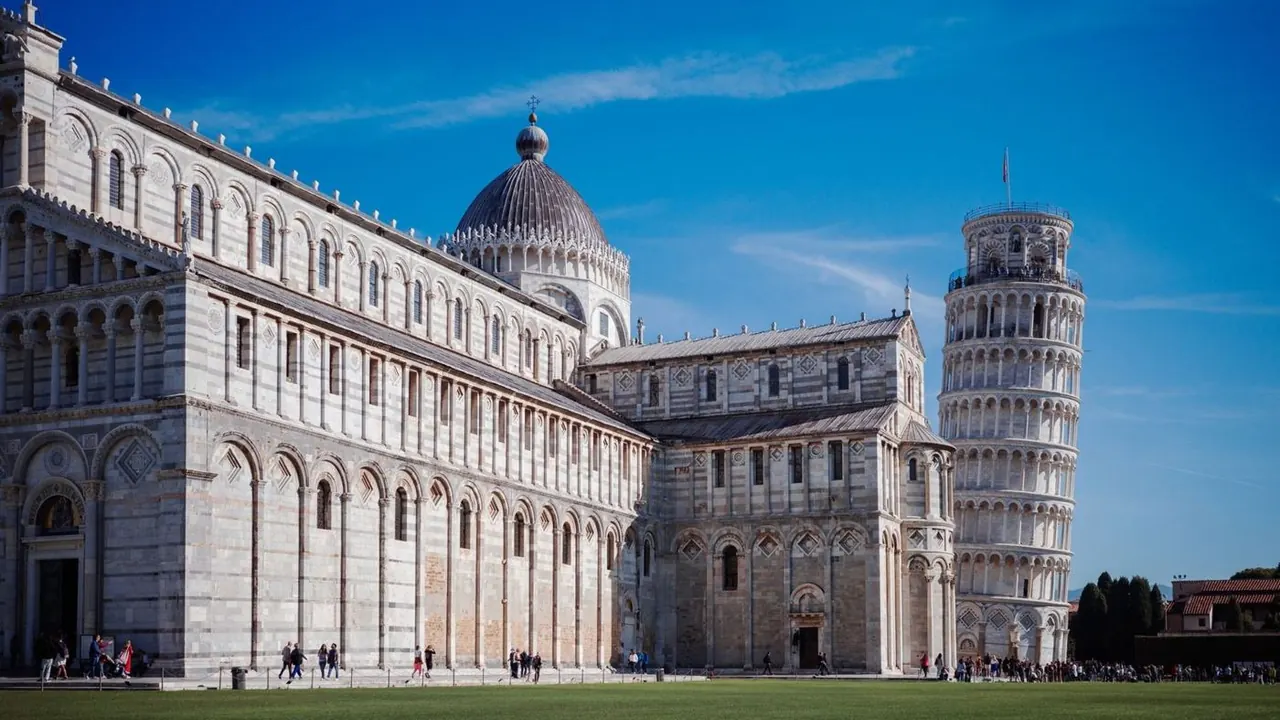
The cathedral and the Leaning Tower
- Day trips92
- Getting around76
- Culture & sights68
Photo: Bruno Kraler, Pexels License
Match
57
Every category weighted equally
- Beach & sun56
- Culture & arts59
- Food & nightlife54
- Family trip60
- Outdoors62
- Relax & unwind57
- Shopping & style54
- On a budget56
Pisa in twelve categories
Our verdict on each, scored 0 to 100 against the same fixed benchmark cities, so a score means the same thing on every page.
Beaches & swimming. Scores 58 out of 100.
Food & drink. Scores 55 out of 100.
Culture & sights. Scores 68 out of 100.
Nightlife. Scores 40 out of 100.
Nature & outdoors. Scores 62 out of 100.
Day trips. Scores 92 out of 100.
Good for families. Scores 52 out of 100.
Getting around. Scores 76 out of 100.
Shopping & style. Scores 38 out of 100.
Affordability. Scores 55 out of 100.
Live music & performing arts. Scores 38 out of 100.
Wellness & relaxation. Scores 45 out of 100.
Pisa category by category
Beaches & swimming
58The coast starts about 12km west of the centre, where the Arno meets the sea. Marina di Pisa has rocky breakwaters and small sandy coves. Further south, Tirrenia and Calambrone have long, wide sandy beaches backed by pine woods. Most of the shore is divided into rented beach establishments with umbrellas and loungers, with free stretches in between. In July and August the sea is warm, around 24°C to 25°C, and the shallow water is easy for paddling. Close to the river mouth the water is rarely very clear.
Viareggio and the Versilia beaches are a short train ride north. Most visitors treat the beach as a summer afternoon off from sightseeing, not as the reason for the stay.
Food & drink
55Pisa eats like a Tuscan university town. The food is plain, seasonal and generous: ribollita and pappa al pomodoro, wild boar and other game, and salt cod. The local speciality is cecina, a thin chickpea flatbread baked in wood ovens and eaten hot, often stuffed into focaccia. The best eating is in the old streets around Piazza delle Vettovaglie, where a morning produce market is surrounded by trattorias and wine bars. Students keep prices honest there.
Around the Leaning Tower the menus are aimed at day-trippers and are mostly forgettable. Seafood is better towards the coast, and the wine comes from the surrounding hills and the wider region. The range is limited. Pisa is a good place to eat well and simply, not a place to go for serious dining.
Culture & sights
68The Piazza dei Miracoli is one of the great architectural set pieces of Italy. The white marble cathedral, the round baptistery, the Leaning Tower and the walled Camposanto cemetery stand together on a lawn inside the medieval walls. The cathedral museum and the Museo delle Sinopie, with its preparatory drawings for the cemetery frescoes, complete the visit. The tower can be climbed.
The city beyond the square is where most visitors fail to go. Piazza dei Cavalieri has Vasari's decorated palace of the Scuola Normale. The tiny Gothic church of Santa Maria della Spina stands on the river, and the Museo Nazionale di San Matteo holds medieval Pisan painting and sculpture. Palazzo Blu hosts art exhibitions, and the curving Lungarni are lined with old palazzi. Two unhurried days cover all of it.
Nightlife
40Evenings in Pisa belong to the students. During term the small squares around the old market fill with young people drinking outside small bars and wine shops, and talk carries on past midnight. The arcaded Borgo Stretto and the riverbanks draw the early evening aperitivo crowd. In summer, people move down to the beach bars on the coast.
That is about the size of it. There are few clubs, the tower district is dead after dark, and outside term time and summer weekends the city winds down early. It is pleasant for a glass of wine in a piazza, but not a reason to come.
Nature & outdoors
62The Migliarino, San Rossore and Massaciuccoli park begins almost at the city's edge. It is a large stretch of pine and oak forest, wetland and undeveloped dunes running to the sea. Visitors can explore it by bike, on foot, on horseback or by carriage, and fallow deer are a common sight. East of the city, the Monte Pisano rises behind the old villages of Calci and Vicopisano, with olive-terrace paths and wide views over the plain.
Further out are the marble-scarred peaks of the Apuan Alps, good for proper mountain hiking, and the cliff paths of the Cinque Terre, about an hour or more away. Lake Massaciuccoli is good for birdwatching. The cycling on the plain is easy. Spring and autumn are the best seasons, as summers on the plain are hot and humid.
Day trips
92Day trips are where Pisa is strongest. Florence is about an hour away by train, close enough to see the Uffizi, the Duomo and the Oltrarno and be back for dinner. Lucca, with its complete Renaissance walls and quiet churches, is under half an hour away. Along the coast are Livorno and its canals, Viareggio and its Art Nouveau seafront, and the marble towns of Pietrasanta and Carrara.
The Cinque Terre villages are a little over an hour north by train, with La Spezia and Portovenere close by. By car, the Etruscan and medieval hilltop of Volterra and the towers of San Gimignano are each about an hour or a little more away. Siena and the Chianti wine country can be reached in under two hours. The vast Carthusian monastery at Calci is just outside the city.
Good for families
52Pisa is easy with children in practical terms. The centre is flat and small, the tower lawn is a natural place for them to run about, and nearly every child wants the photo pretending to hold the tower up. Climbing the tower is a memorable treat for older children, but younger ones are not allowed up.
Beyond that, little is made with children in mind. The family days are at the shallow sandy beaches of Tirrenia and Calambrone, or cycling and riding in the San Rossore park. Gelato in the old-town squares helps. Midsummer heat and the crowds around the cathedral square are the main things to plan around.
Getting around
76Pisa is a small, flat city, and a visitor can walk everywhere that matters. From the central station, the route along Corso Italia, across the Arno and up Borgo Stretto reaches the cathedral square in about half an hour on foot. The airport is unusually close and linked to the station by an automatic shuttle train. The station is one of the main rail hubs of western Tuscany, which makes day trips simple without a car.
City buses cover the gap to the tower and run out to the beaches, though they are slower. Bikes suit the flat streets and the park roads. A car is only worth having for the hill towns of inland Tuscany.
Shopping & style
38Shopping in Pisa is everyday Italian rather than a draw. Corso Italia, a long pedestrian street, has mid-range fashion and high-street chains. Borgo Stretto, under its medieval arcades, has smarter clothes, shoe shops and old pastry shops. The produce market at Piazza delle Vettovaglie is good for picnic food. A monthly antiques market sets up along the river and in the streets nearby.
Around the Leaning Tower, the stalls sell little but souvenirs. Anyone who wants serious fashion or crafts makes the short trip to Florence or Lucca.
Affordability
55Pisa is moderately priced for a well-known Italian city. Rooms in the centre and around the station are mid-range rather than premium, and they are easiest to find outside the summer peak. The trattorias that feed the student population are good value, and the city is small enough to walk, so getting around costs little.
The exceptions are the Piazza dei Miracoli monuments, where the tower climb in particular is a notable expense, and the cafés right beside them. In high summer the beach establishments on the coast charge seaside rates for umbrellas and loungers.
Live music & performing arts
38The Teatro Verdi is the city's opera house, a horseshoe-shaped 19th-century theatre. It runs a season of opera, symphonic concerts, ballet and Italian-language drama from autumn to spring, and a night there is an easy, unpretentious way to see Italian opera in a historic house. The university supports chamber music and small concert series, and churches sometimes host recitals.
The main live-music venue is the Verdi itself, and there is little in the way of jazz clubs or a touring circuit. Bigger productions mean a trip to Florence.
Wellness & relaxation
45Away from the cathedral square, Pisa is a quiet place. Evenings along the river and long lunches in the old-town squares set an easy pace. Just beyond the city, the thermal waters of San Giuliano Terme have been used since Roman times. Its grand 18th-century bath palace below the Monte Pisano houses a spa. Casciana Terme, about 45 minutes inland, has a larger public thermal pool.
There is no everyday bathing culture in the city itself, though, and wellness beyond these springs means hotel spas. The calm of the place comes from its small scale.
When should you go?
Pick a month to see what it is like. The climate figures are measured averages, not a forecast.
Pisa in July
Daytime high, °C
Rainfall in the month, mm
The whole year
Shaded against this city’s own year: the deepest cell is its best month for that figure and the palest its weakest.
Temperature and rainfall are climate normals, averaged over the years shown. Pisa: 1991-2020 normals, Pisa / S. Giusto (3.9 km from centre).
Before you go
| Measure | Pisa |
|---|---|
| Official language | Italian |
| Currency | Euro (EUR) |
| Sockets | CFL230 V, 50 Hz |
| Driving side | Right |
| Time zone | UTC+1, UTC+2 in summer |
| Emergency number | 112 |
| Elevation | 4 m |
| Main airport | Pisa International Airport (PSA)4 km from centre82 non-stop destinations |
| Public holidays this year | 13 days |
By the numbers
| Measure | Pisa |
|---|---|
| City population | 88,737 |
| People per km² | 479 |
| Museums within 10 km | 27 |
| UNESCO World Heritage sites within 50 km | 3 |
| Swim season, months above 21 °C | 4 months |
Compare Pisa with
Every comparison with a written verdict behind it.