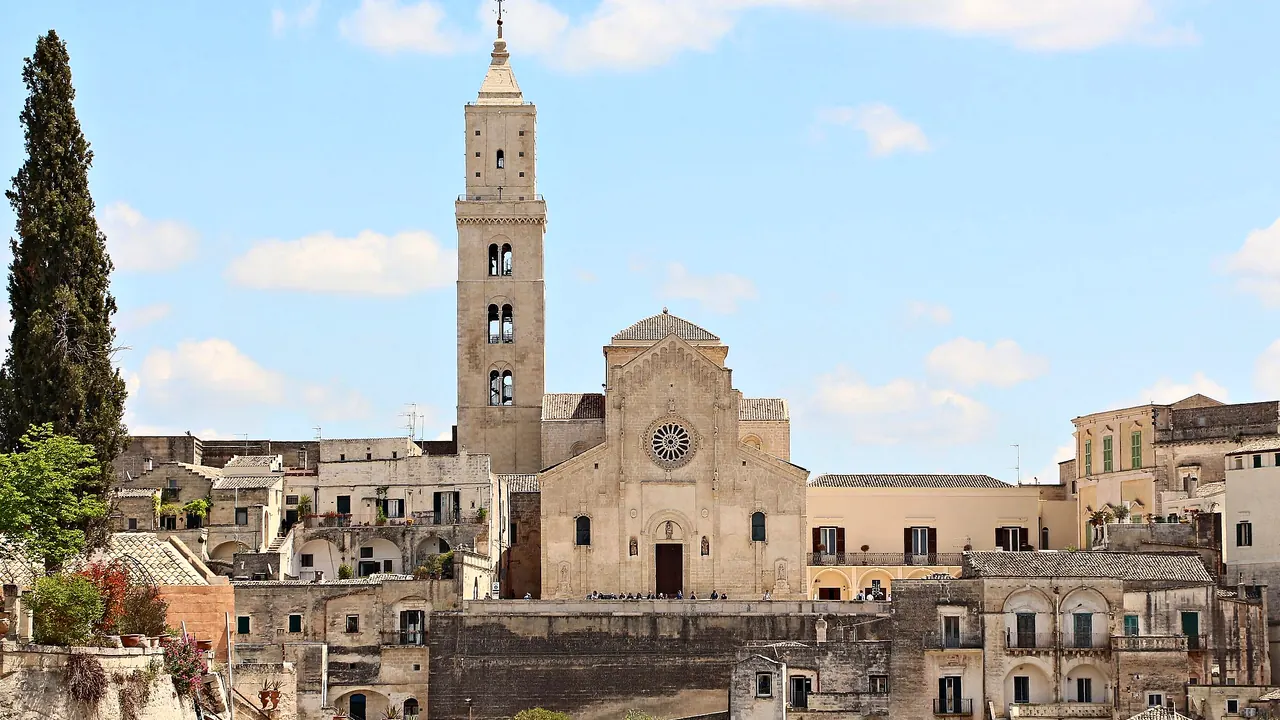
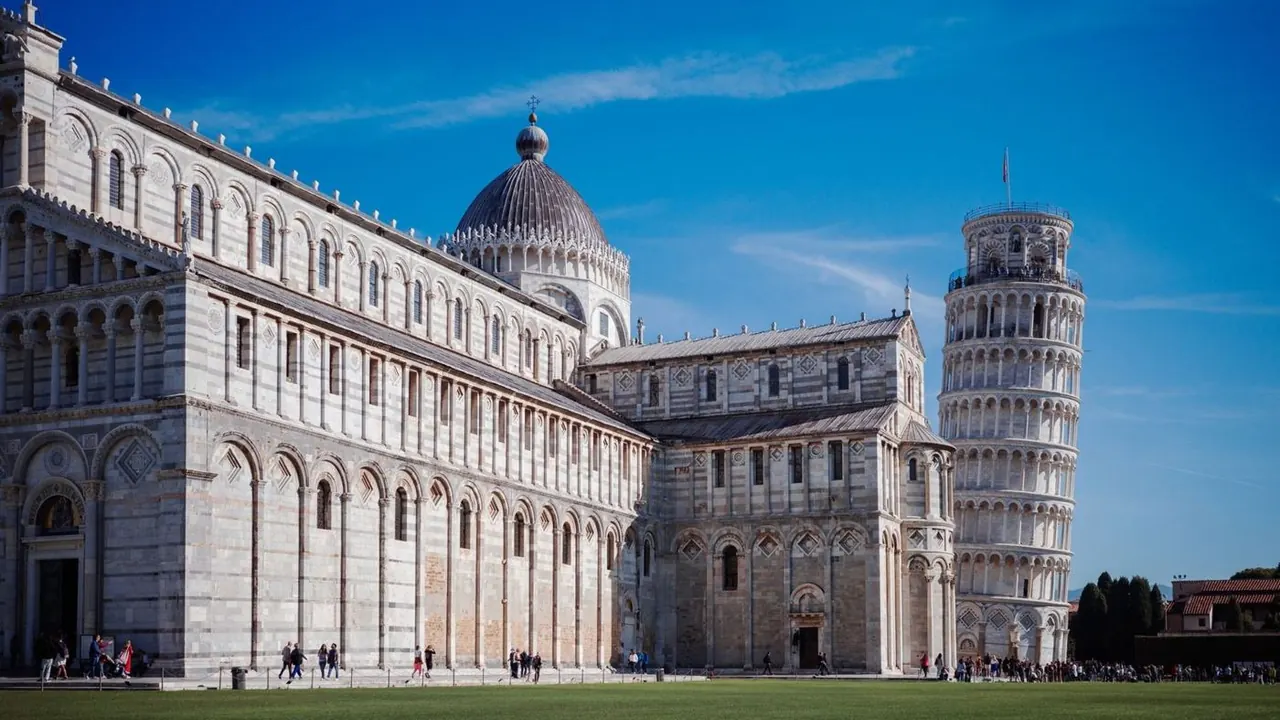
Photos: Matera by Bernard Gagnon, CC BY 4.0, cropped; Pisa by Bruno Kraler, Pexels License.
Matera or Pisa?
Our verdict in twelve categories, each scored against the same fixed benchmark cities, and the climate month by month, so you can choose for your trip.
Choose Matera for
- culture and sights
Matera is for travellers who want one extraordinary place and are willing to work a little to reach it. The cave districts of the Sassi, the rock churches and the gorge with the Murgia beyond make a stay that feels unlike anywhere else in Italy, and a night in a cave hotel is part of the point. It suits couples and slow travellers with a hire car, who are happy with quiet evenings and plan to explore Puglia and Basilicata by road.
Choose Pisa for
- getting around
- families
- nightlife
Pisa is the easier and broader choice. Its airport is close, the centre is flat and walkable, and the station puts Florence, Lucca and the Cinque Terre within reach without a car. Add beaches a short bus ride away, a student evening scene and an opera house, and it works better for families, first-time visitors to Italy and anyone who wants to see a lot of Tuscany from one base.
Scoreboard
Twelve categories on one fixed scale from 0 to 100. The shaded stretch is the gap between the two.
Your match
Pick a travel style or drag the sliders, and both match scores follow your weighting.
Wins on culture and sights with your weighting.
Wins on getting around and families with your weighting.
What matters to you?
Category by category
What the scores mean for a trip.
Beaches & swimming
Pisa has the sea on its doorstep. The coast begins about 12km from the centre, and buses run out to Marina di Pisa's coves and the long, pine-backed sands of Tirrenia and Calambrone, with rented loungers and free stretches to choose from. Versilia is a short train ride further.
Matera's beaches are similar in kind, wide Ionian sand and pine woods around Metaponto and Policoro with calm, shallow water, but they are a 45-minute drive away and close to impossible without a car. For a beach afternoon slotted into sightseeing, Pisa is far easier.
Food & drink
The two are close, and both serve plain regional cooking rather than serious dining. Matera's table is southern and rural: the horn-shaped durum loaf, cavatelli, pulse soups and crackling dried peppers, often eaten in cave dining rooms, with Aglianico to drink.
Pisa's cooking is Tuscan, with ribollita, game and its own hot chickpea cecina, and it has the livelier setting. The morning market at Piazza delle Vettovaglie and the student trattorias around it give the city a street-level food life that Matera lacks, and seafood is easy to find towards the coast.
Culture & sights
Both are strong, in very different ways. Matera's draw is an entire inhabited landscape: the Sassi carved into the side of the gorge, rock churches with Byzantine frescoes, cave houses lived in until the 1950s, and the whole scene at its finest when the lights come on at dusk.
Pisa concentrates its glory in one place, the marble cathedral, baptistery, Leaning Tower and Camposanto on their lawn, which you can climb into and tour in a morning. The reward for staying longer is the quieter city beyond, with Piazza dei Cavalieri, the San Matteo museum and the palazzi along the Arno.
Nightlife
Pisa has the livelier evenings, thanks to its university. In term time the squares around the old market fill with students drinking outside small bars until past midnight, and in summer the crowd moves to the beach bars on the coast. It is still modest, with few clubs.
Matera's evening is a passeggiata, a long dinner and a glass of wine on a terrace above the lit Sassi. That is a lovely way to end the day for a couple, but there is little more to it, and out of summer the town is asleep soon after dinner.
Nature & outdoors
The outdoors are just as good in both places but feel quite different. Matera's is rugged and stony: a path drops from Sasso Caveoso into the Gravina gorge and climbs to the Murgia plateau, past abandoned rock churches and Neolithic sites, and the Lucanian Dolomites lie further out.
Pisa's is green and gentle. The pine forest, wetland and dunes of San Rossore begin at the city's edge and suit cycling or riding among fallow deer, with the Monte Pisano olive terraces close by and the Apuan Alps for proper mountain walks.
Day trips
Matera is a good base for a road trip across two regions. Within about an hour lie the trulli of Alberobello, the white towns of the Valle d'Itria, Castel del Monte and Polignano a Mare on its sea cliffs. On the Basilicata side are the abandoned hill town of Craco and the Greek temple at Metaponto. Almost every one of them needs a hire car.
From Pisa the choice is wider still, and most of it can be reached by train. Florence is about an hour away, close enough for the Uffizi and back for dinner. Lucca's Renaissance walls are under half an hour away and the Cinque Terre a little over an hour. With a car, Volterra, San Gimignano and Siena are within reach as well.
Good for families
Pisa is the simpler place to bring children. The centre is flat and compact, the lawn beneath the tower is made for running about, and older children can climb the tower itself. Shallow sandy beaches and bike rides in San Rossore are close at hand.
Matera can thrill older children with its caves, the underground cistern and the scramble into the gorge, but the Sassi's steep steps rule out pushchairs, summer afternoons offer little shade, and the beach needs a car. It works best as a short stop with a baby carrier.
Getting around
Pisa is far easier to get around. Its centre is flat and walkable, the airport is linked to the station by an automatic shuttle train, and the station is a regional rail hub, so most of Tuscany is within reach without a car.
In Matera you also walk everywhere, but the Sassi are a workout of stairways, and leaving town is slow. The city is off the national rail network, the narrow-gauge line to Bari is slow and buses are thin, so a hire car is close to essential.
Shopping & style
Neither is a shopping destination, but Pisa has more to browse. Corso Italia offers high-street fashion, Borgo Stretto's arcades hold smarter shoe and clothes shops and old pastry shops, and an antiques market comes to the riverside every month.
Matera's shopping is mostly for visitors: painted terracotta cuccù whistles, small tufa carvings of the town and local ceramics, plus food such as dried peppers and Aglianico to carry home.
Affordability
Costs come out much the same, though the pressure points differ. In Matera the expense is the bed, since cave hotels in the Sassi are the town's speciality and priced to match, while guesthouses in the upper town are a cheap and short walk away.
In Pisa, rooms are mid-range and the student trattorias are good value; the main splurge is the tower climb, along with seaside rates for loungers on the beach in summer.
Live music & performing arts
Neither city is the place for a big night of theatre, but only one of them has a proper stage. In Matera, live performance happens mostly in summer: open-air events and a jazz festival against the Sassi, concerts from the conservatory, and the Festa della Bruna. That feast ends with its papier-mâché float being torn apart, and it is the one big night of the year.
Pisa's Teatro Verdi is a 19th-century horseshoe opera house with a season of opera, symphonic concerts and ballet from autumn to spring. The university adds chamber music on top. Outside summer, Pisa gives you a far better chance of seeing something.
Wellness & relaxation
Cave-hotel spas against Roman springs sums up the difference. Matera has no bathing tradition of its own. Its hotel spas, some with candlelit pools cut into the rock, are a memorable way to unwind, and its deeper calm comes from early mornings in the empty Sassi and evenings watching the gorge darken.
Pisa goes further, with genuine thermal water close by. San Giuliano Terme, just outside the city, has springs used since Roman times and a spa in its 18th-century bath palace below the Monte Pisano. Casciana Terme, about 45 minutes inland, has a large public thermal pool.
When should you go?
Pick your month. The climate figures are measured averages, not a forecast.
Matera in July
Pisa in July
Daytime high, °C
Rainfall in the month, mm
Where the figures come from
Matera has no rain gauge within 25 km of the centre, so its rainfall comes from a gridded climate dataset read at the city rather than from a gauge further away.
Temperature and rainfall are climate normals, averaged over the years shown. Matera: 2005-2025, 10 years observed (rainfall 1991-2020) normals, Matera / Martella (4.8 km from centre). Pisa: 1991-2020 normals, Pisa / S. Giusto (3.9 km from centre).
The two cities follow a similar pattern, but Matera runs hotter in high summer and Pisa wetter in autumn. On Matera's bare plateau July reaches about 32°C, too hot for climbing the Sassi stairways in the afternoon, while Pisa stays a little cooler but feels humid on the plain. For the sea, both coasts warm up from June to September, and the Ionian shore near Matera is slightly the warmer at about 26°C in August. Pisa has long, sunny summer days, with July the brightest month of the year.
For sightseeing and walking, May and late September to early October suit both, with daytime highs in the low to mid twenties. After that Pisa's autumn turns very wet, with October and November each bringing well over 120mm, while Matera gets noticeably less rain then. Winters are cool and similar in both, around 10°C to 12°C by day, quiet but fine for museums and churches.
Which traveller are you?
For a short city break, Pisa is the clear pick. The airport is minutes away by shuttle train, the centre is flat and walkable, and the cathedral square plus the quieter old town fit neatly into two days. Matera takes far longer to reach.
On a family trip with children, Pisa is much easier. Pushchairs cope with its level streets, sandy beaches and the San Rossore park are close by bus or bike, and Matera's steep, shadeless stone steps make it hard work with small children.
On a culture and arts trip, Matera offers the sights you cannot find anywhere else: whole cave districts, frescoed rock churches and a cistern beneath the piazza. Pisa answers with its marble square, an opera house and Florence an hour away by train.
Before you go
| Measure | Matera | Pisa |
|---|---|---|
| Official language | Italian | Italian |
| Currency | Euro (EUR) | Euro (EUR) |
| Sockets | CFL230 V, 50 Hz | CFL230 V, 50 Hz |
| Driving side | Right | Right |
| Time zone | UTC+1, UTC+2 in summer | UTC+1, UTC+2 in summer |
| Emergency number | 112 | 112 |
| Elevation | 401 m | 4 m |
| Main airport | Bari Karol Wojtyła International Airport (BRI)54 km from centre104 non-stop destinations | Pisa International Airport (PSA)4 km from centre82 non-stop destinations |
| Public holidays this year | 13 days | 13 days |
By the numbers
| Measure | Matera | Pisa |
|---|---|---|
| City population | 59,685 | 88,737 |
| People per km² | 152 | 479 |
| Museums within 10 km | 8 | 27 |
| UNESCO World Heritage sites within 50 km | 1 | 4 |
| Swim season, months above 21 °C | 5 months | 4 months |
Where else could you go?
Every comparison below shares a destination with this one, so you can follow Matera or Pisa somewhere new.