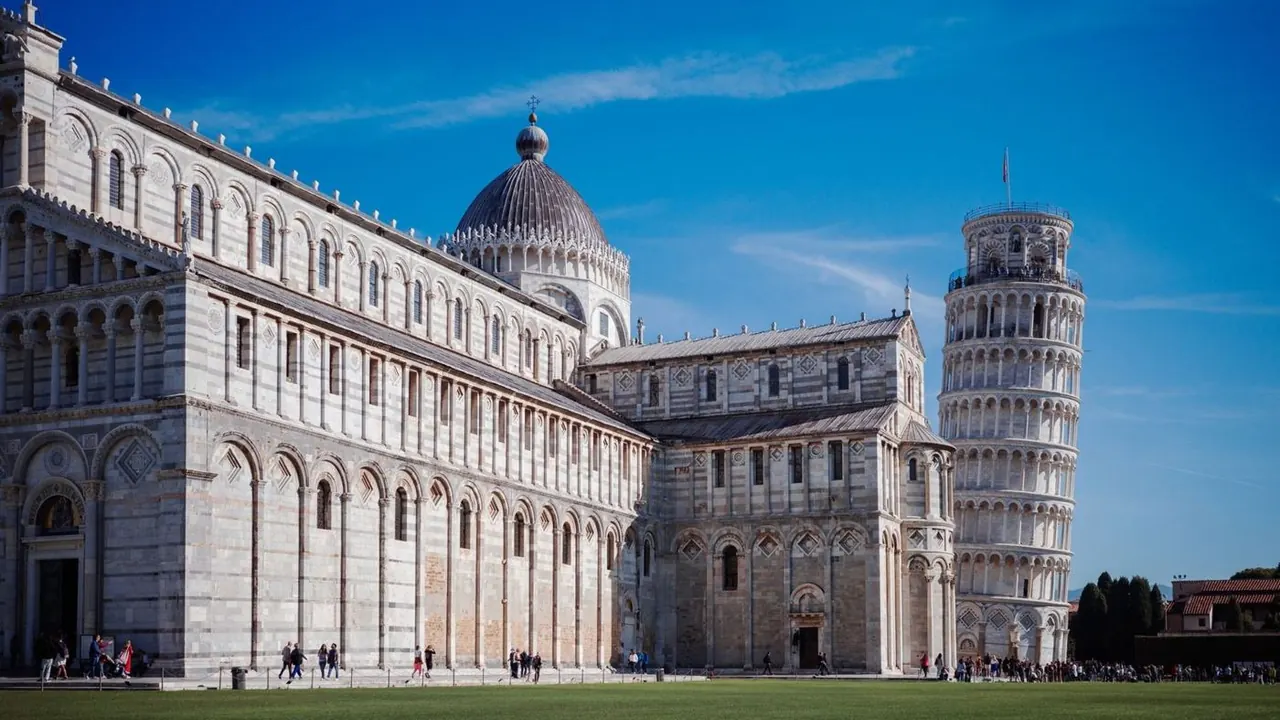
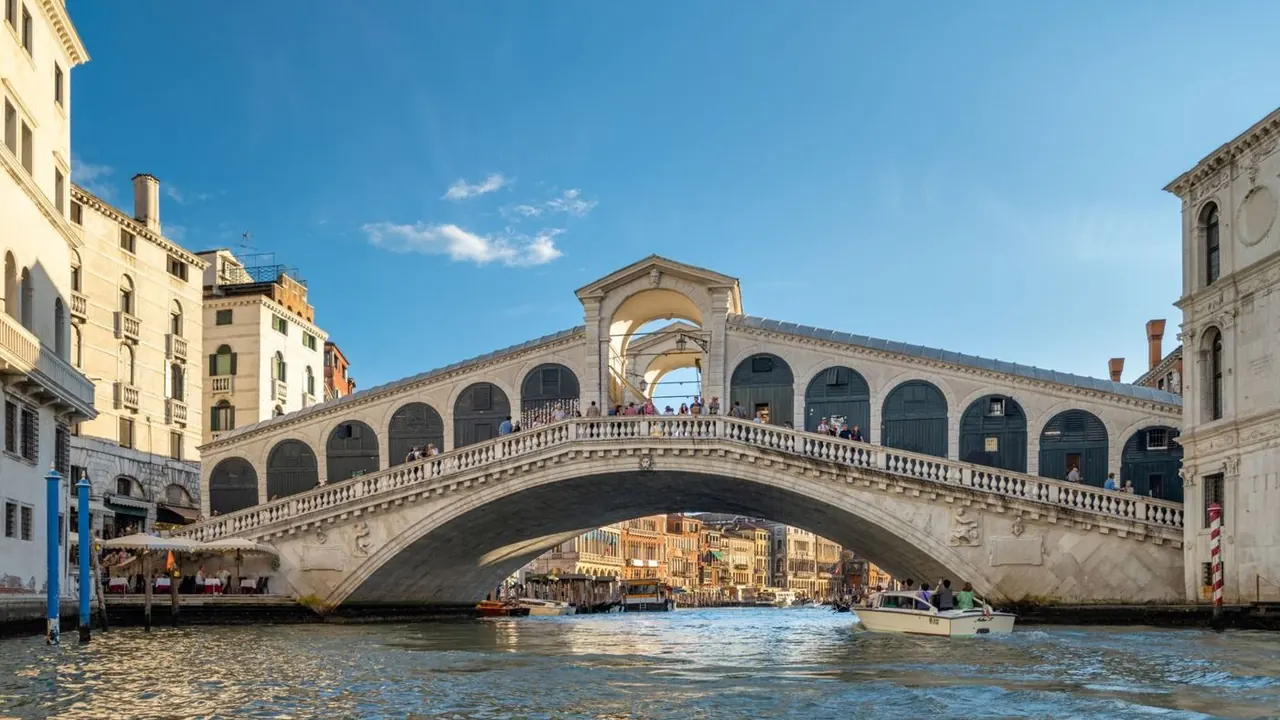
Photos: Pisa by Bruno Kraler, Pexels License; Venice by David Vives, Pexels License.
Pisa or Venice?
Our verdict in twelve categories, each scored against the same fixed benchmark cities, and the climate month by month, so you can choose for your trip.
Choose Pisa for
- prices
- nature and the outdoors
- nightlife
Pisa suits travellers who want a cheap, easy base more than a showpiece. It is small, flat and good value. Florence, Lucca and the Cinque Terre are all within easy train range, and the San Rossore park and Monte Pisano are right on the edge of town. Choose it if you want to see a lot of Tuscany without paying big-city prices, and you're happy that the city's own sights take a couple of days.
Choose Venice for
- culture and sights
- live music and the arts
- shopping
Venice is the one to pick when the city itself is the reason for the trip. Its art, its churches and the whole canal setting take a week to do justice, and La Fenice and the craft workshops add evenings and afternoons that Pisa can't match. In return you pay far more, carry your bags over stepped bridges and find the city quiet after dark, so it rewards people who come to look, listen and walk slowly.
Scoreboard
Twelve categories on one fixed scale from 0 to 100. The shaded stretch is the gap between the two.
Your match
Pick a travel style or drag the sliders, and both match scores follow your weighting.
Too close to call, 2 points apart
Wins on prices and nature and the outdoors with your weighting.
Wins on culture and sights and live music and the arts with your weighting.
What matters to you?
Category by category
What the scores mean for a trip.
Beaches & swimming
The two are close here, and in both the sea is something for a hot afternoon, not the reason to come. Pisa's coast is about 12km out of town. Tirrenia and Calambrone have long sandy beaches backed by pine woods, and Marina di Pisa has smaller coves between rocky breakwaters.
Venice's Lido is closer in spirit, a vaporetto ride from San Marco, with fine Adriatic sand lined with rows of cabanas. Both have shallow, warm water that is fine for children but not especially clear. Wilder Pellestrina gives Venice a quieter option, while Pisa can easily reach the Versilia resorts by train.
Food & drink
Venice has the slightly more distinctive table, built around standing at a bacaro counter with cicchetti and a spritz, and lagoon cooking such as black cuttlefish risotto supplied from the Rialto market. Getting good meals there takes effort, because the picture-menu places crowd the main routes.
Pisa is plainer and more reliable: Tuscan soups, game and salt cod, and hot cecina from wood ovens. The trattorias round the Vettovaglie market keep standards and prices steady because they feed students. Neither city is a place for ambitious dining.
Culture & sights
This is where Venice pulls far ahead. The whole city is the monument, and beyond San Marco and the Grand Canal there is a depth of painting in the Accademia, the Frari and San Rocco, plus modern art at the Guggenheim and Punta della Dogana. You could spend a week and still miss churches worth seeing.
Pisa has one superb set piece in the Piazza dei Miracoli, and quieter rewards along the Lungarni, at Piazza dei Cavalieri and in the medieval collection of San Matteo. Two unhurried days cover it, which is why many visitors pair it with Florence.
Nightlife
Neither is a party town, but Pisa stays up later. In term time the student crowd fills the little squares around the old market until past midnight, and in summer evenings move to the beach bars on the coast.
Venice's evening peaks at aperitivo along the Fondamenta della Misericordia, and only Campo Santa Margherita keeps going afterwards. By midnight the canals are silent. Anyone after clubs from Venice has to travel to the mainland or Jesolo.
Nature & outdoors
Pisa has more on its doorstep and more variety. The San Rossore forest, with its wetland and dunes, starts at the city's edge and can be explored by bike or on horseback. Monte Pisano rises just to the east, and the Apuan Alps offer serious mountain walking.
Venice's outdoors is the lagoon itself: salt marshes around Torcello with flamingos and egrets, kayaking and Venetian rowing. It is lovely, but it is flat, and real mountains are more than two hours away.
Day trips
Both are outstanding bases, with Pisa a little stronger. Florence is about an hour away and Lucca under half an hour. The Cinque Terre, the marble towns and, with a car, Volterra and San Gimignano are all within reach, so you can see the best of Tuscany without moving hotel.
From Venice, the Veneto towns follow one another along the railway: Padua for Giotto, Vicenza for Palladio, then Verona. The lagoon islands of Murano, Burano and Torcello add a boat-based day that Pisa has no equivalent for.
Good for families
Pisa is the more practical of the two with children. The centre is flat and compact, the tower lawn gives children room to run, and the shallow beaches and park rides are close. Younger children can't climb the tower, though.
Venice has more wonder, with boats for buses and glass-blowing on Murano, but every outing means carrying a pushchair over stepped bridges through summer crowds. It works best as a short stay with older children.
Getting around
Pisa is the easier city to move about. It is flat and walkable, its airport is linked to the station by a shuttle train only minutes away, and the station is a main rail hub for western Tuscany. Bikes and buses fill the gaps.
Venice is entirely on foot or by water. That is part of its charm, but the alleys confuse people, the steps on the bridges punish anyone with wheeled luggage, and the vaporetto lines are slow and crowded.
Shopping & style
Venice gives shoppers far more reason to browse. Murano glass, Burano lace, papier-mâché masks, marbled paper and furlane slippers are still made in workshops in Dorsoduro and Castello, and the big fashion names line the streets between San Marco and the Rialto. The main routes, though, are crowded with imported fakes.
Pisa offers everyday Italian shopping on Corso Italia and the arcades of Borgo Stretto, plus a monthly antiques market by the river. Anyone after crafts or fashion goes on to Florence or Lucca.
Affordability
There is a wide gap here, and it favours Pisa. Central rooms are mid-range, student trattorias are cheap, and walking costs nothing, so the tower climb and the summer beach loungers are the main extra costs.
Venice is among the dearest stays in Italy. Hotels, water transport and church entry all add up, and coffee at a table on San Marco is notoriously steep. Staying in Mestre or a quiet sestiere, and eating cicchetti at the counter, softens the bill.
Live music & performing arts
Venice has far more for an evening out. La Fenice is one of Italy's great opera houses, where Verdi and Rossini premiered works, and the Biennale adds festivals of contemporary music, theatre and dance. On most nights there is Vivaldi in a church or scuola grande, which varies in quality but is memorable in his own city.
Pisa's stage is the Teatro Verdi, a relaxed historic house with a season running from autumn to spring, plus university chamber concerts. For anything bigger you go to Florence.
Wellness & relaxation
Neither city has a bathing culture of its own, so the difference is in the setting. Pisa's thermal springs are closer: San Giuliano Terme's 18th-century bath palace is just outside town, with the larger pools of Casciana Terme further inland, and the small city sets a calm pace in its own right.
Venice's calm comes from having no traffic. Early mornings in Castello, Cannaregio or on Giudecca are hushed, and its spas are in palazzo hotels, while the Euganean thermal towns are about an hour away.
When should you go?
Pick your month. The climate figures are measured averages, not a forecast.
Pisa in July
Venice in July
Daytime high, °C
Rainfall in the month, mm
Where the figures come from
Venice has no rain gauge within 25 km of the centre, so its rainfall comes from a gridded climate dataset read at the city rather than from a gauge further away.
Venice's sunshine is measured 26 km from the centre, at Treviso / S. Angelo.
Temperature and rainfall are climate normals, averaged over the years shown. Pisa: 1991-2020 normals, Pisa / S. Giusto (3.9 km from centre). Venice: 1991-2020 normals, Venezia / Tessera (6.7 km from centre).
Both cities get hot in July and August, with afternoons around 30°C on the Tuscan plain and on the lagoon alike. That is the main beach season, when the sea is warm for swimming at Tirrenia and on the Lido, and Venice's water is a touch warmer. Pisa is the sunnier and drier of the two in summer. The rain that Venice gets in thundery spells from late spring onwards holds off in Pisa until September, and then Pisa turns properly wet through October and November.
For walking the streets, May, June and September are the comfortable months in both. Winter divides them. Pisa stays mild, with highs around 11°C in January, while Venice drops to about 8°C and feels raw by the water, though its winter months are relatively dry. A late-autumn trip is drier in Venice, and an early-spring trip is milder in Pisa.
Which traveller are you?
On a culture and arts trip, choose Venice and stay long, because Pisa's sights fill a weekend and Venice's fill a week. Go out early, before San Marco fills, check whether the Biennale year is art or architecture, and add Giotto in Padua.
For a trip on a tight budget, sleep in Pisa and take the train to Florence and Lucca, and admire the tower from the lawn instead of paying to climb it. Venice stays affordable only if you sleep in Mestre and visit by day.
On an outdoors trip, Pisa is the better choice in spring or autumn, before summer makes the plain hot and humid. Mix a day cycling in the park with a hill walk and a day on the Cinque Terre paths. From Venice, the lagoon fills a morning, and the Dolomites need a trip of their own.
Before you go
| Measure | Pisa | Venice |
|---|---|---|
| Official language | Italian | Italian |
| Currency | Euro (EUR) | Euro (EUR) |
| Sockets | CFL230 V, 50 Hz | CFL230 V, 50 Hz |
| Driving side | Right | Right |
| Time zone | UTC+1, UTC+2 in summer | UTC+1, UTC+2 in summer |
| Emergency number | 112 | 112 |
| Elevation | 4 m | 2 m |
| Main airport | Pisa International Airport (PSA)4 km from centre82 non-stop destinations | Venice Marco Polo Airport (VCE)7 km from centre103 non-stop destinations |
| Public holidays this year | 13 days | 13 days |
By the numbers
| Measure | Pisa | Venice |
|---|---|---|
| City population | 88,737 | 250,369 |
| People per km² | 479 | 602 |
| Museums within 10 km | 27 | 52 |
| UNESCO World Heritage sites within 50 km | 3 | 5 |
| Swim season, months above 21 °C | 4 months | 4 months |
Where else could you go?
Every comparison below shares a destination with this one, so you can follow Pisa or Venice somewhere new.