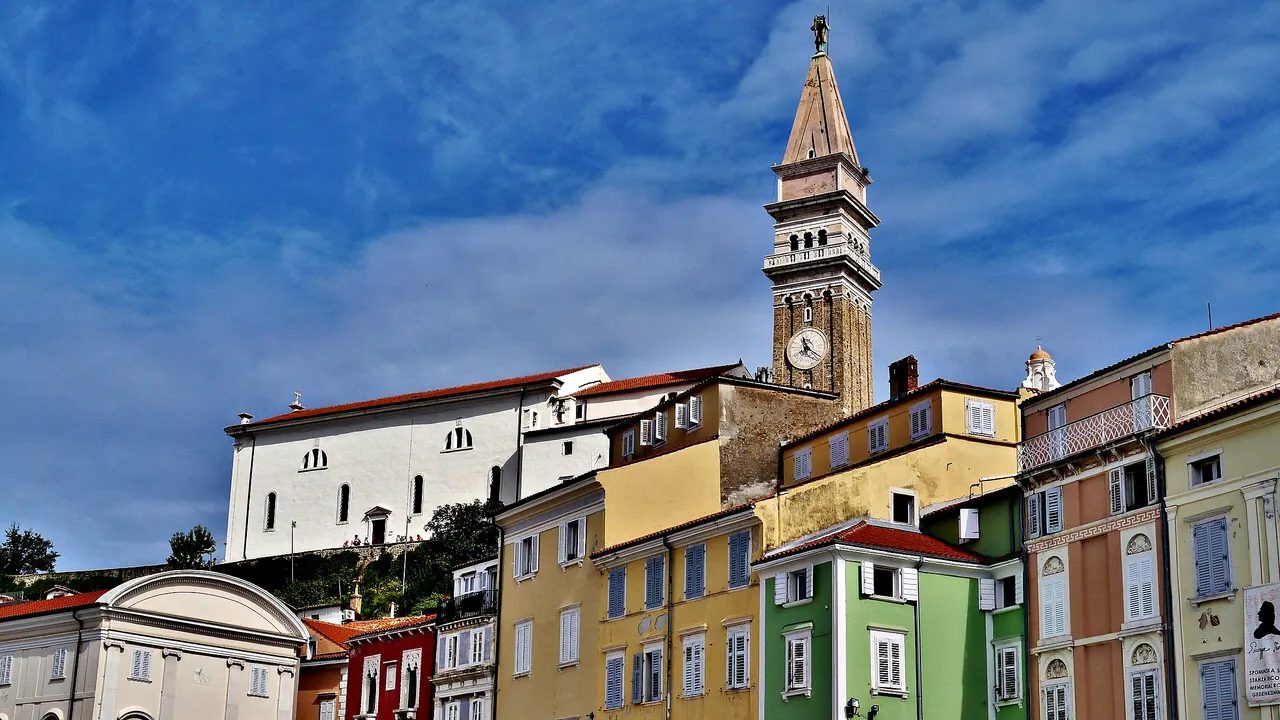
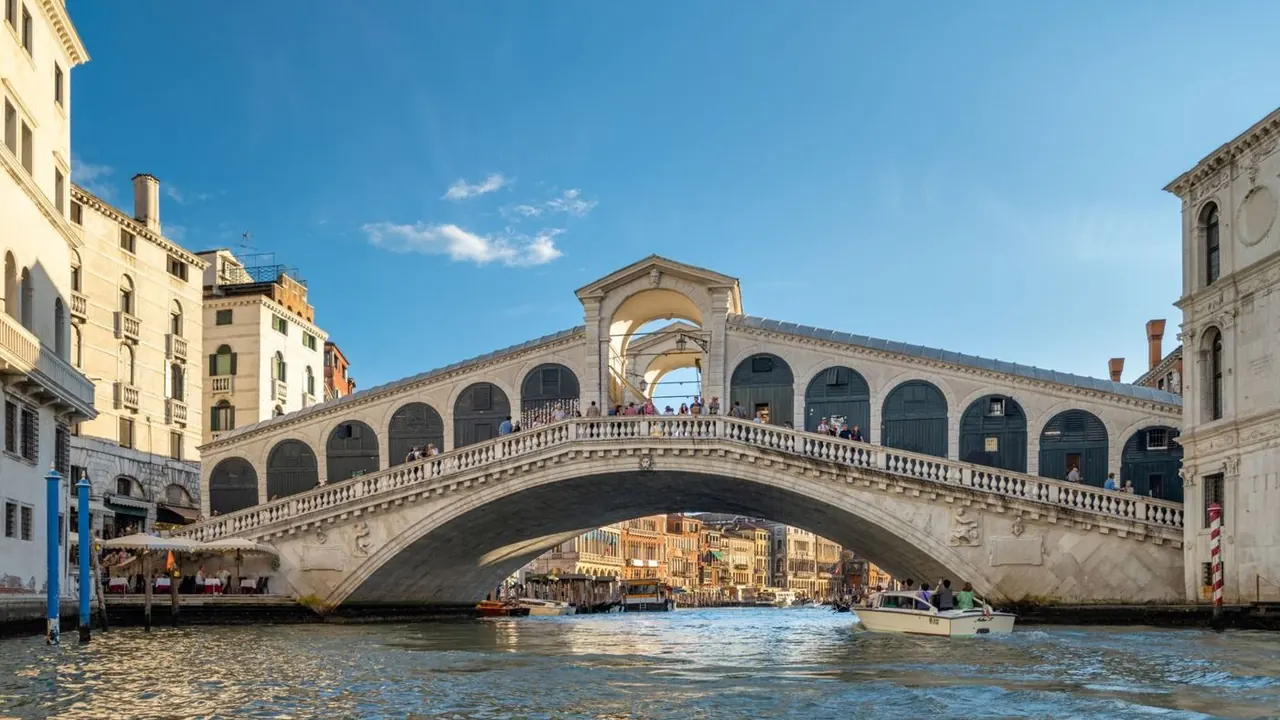
Photos: Piran by Zairon, CC BY-SA 4.0, cropped; Venice by David Vives, Pexels License.
Piran or Venice?
Our verdict in twelve categories, each scored against the same fixed benchmark cities, and the climate month by month, so you can choose for your trip.
Choose Piran for
- prices
- wellness
- nature and the outdoors
Piran suits a slow seaside stay. You swim off the rocks below the old walls, eat grilled fish on the Punta and spend the evenings watching the light over the bay. It costs less than Venice, the spas around Portoroz and the salt pans give you somewhere to unwind, and the cliffs at Strunjan and the Parenzana cycle route add gentle outdoor days. Choose it if you want to rest more than sightsee, and if you will hire a car to reach Istria and the Karst.
Choose Venice for
- culture and sights
- live music and the arts
- shopping
Venice is the trip for anyone who travels for art, architecture and music. Piazza San Marco and the Accademia, Tintoretto's canvases at San Rocco and an evening at La Fenice give you more to see in a day than Piran offers in a week. Fast trains to Padua and Verona, the bacari around the Rialto and the craft workshops of Murano and Dorsoduro add to the case. In return you get higher prices, crowds on the main routes and very little sense of a seaside break.
Scoreboard
Twelve categories on one fixed scale from 0 to 100. The shaded stretch is the gap between the two.
Your match
Pick a travel style or drag the sliders, and both match scores follow your weighting.
Wins on prices and wellness with your weighting.
Wins on culture and sights and live music and the arts with your weighting.
What matters to you?
Category by category
What the scores mean for a trip.
Beaches & swimming
These two are level on swimming but offer very different seasides. Piran has no real beach of its own. You climb down ladders or slip off rocks and concrete into clear water around the Punta, and Fiesa is a small pebble cove. For sand, you have to go along the coast to Portoroz's small artificial beach or to Strunjan.
Venice has a proper sandy beach on the Lido, a short boat ride away. It runs for kilometres, with shallow water that suits small children, though the water is greenish rather than clear and much of the sand is taken up by rows of private cabanas. Choose Piran if you want to swim in clear water, and Venice if you want to lie on sand.
Food & drink
Venice is clearly the better place to eat, thanks to the bacari of the Rialto, Cannaregio and Castello. You can work your way through salt cod, sarde in saor and soft-shell crab at the counter, and the lagoon cooking is fed by the Rialto market. You do have to steer clear of the picture-menu places around San Marco.
Piran keeps things simple: grilled fish, squid and buzara in konobas, with Malvazija and Refosk from the hills behind. It is a good meal, but the harbour menus repeat one another, and anything more varied means a drive inland into Istria.
Culture & sights
There is a huge gap here. Piran's Venetian Gothic peninsula, Tartini Square and the view from St George's and the town walls make a lovely half-day to a day's wander. Beyond that you have a maritime museum, a small aquarium and a monastery cloister.
Venice is the place Piran's architecture was copied from, and it goes on for days. You have San Marco and the Doge's Palace, the palazzi of the Grand Canal, Titian, Tintoretto and the Accademia, modern art at the Guggenheim and Punta della Dogana, and the Biennale at the Arsenale and Giardini.
Nightlife
Neither is a place for a big night out, but Venice has a bit more life after dark. Its aperitivo hour fills the bacari along the Fondamenta della Misericordia, and students keep the bars around Campo Santa Margherita going later.
Piran's evening is a glass of wine on Tartini Square or a sunset on the Punta, and the town is quiet soon after. Portoroz's beach bars, casino and summer clubs are the nearest thing to clubbing.
Nature & outdoors
Piran has the better outdoors, with more variety. You can walk the clifftop path above the flysch cliffs at Strunjan, paddle beneath them, watch the wading birds among the Secovlje salt pans and cycle the Parenzana inland through olive groves. The Karst and the Skocjan caves are about an hour away.
Venice's outdoors is almost all lagoon. You can kayak or learn to row standing up among the marshes around Torcello, where you may see egrets and flamingos, or cycle the sea walls of Pellestrina. Hills are a fair drive away, and green space in the city is scarce.
Day trips
Both are good bases, but Venice has the edge because fast trains do the work. Padua is half an hour away, and Verona and Vicenza are easy day trips. Murano, Burano and Torcello make a day out by boat without leaving the lagoon.
Piran's strength is its position where three countries meet. You can reach Trieste, the Istrian towns of Rovinj, Porec and Motovun, Predjama Castle and Ljubljana. Without a railway, though, most of these trips need a hire car.
Good for families
Piran is the easier choice with small children. The car-free seafront is flat, the sea is calm and warm in summer, and Portoroz has a shallow sandy beach close by. There is not much built for children, though, so it suits a few days by the sea better than a long stay.
Venice is more exciting for children, with vaporetto rides, glass-blowing on Murano and dinosaurs at the natural history museum. It is harder work for parents. Stepped bridges defeat pushchairs, and summer brings packed alleys and humid heat.
Getting around
You can walk everywhere in both, and Venice has the slight edge thanks to its water buses. Vaporetti run along the Grand Canal and out to the Lido and the islands, and trains run straight into Santa Lucia. The catch is the hundreds of stepped bridges, which make luggage hard work.
Piran's old town takes a quarter of an hour to cross on foot, and a shuttle runs from the car park and on to Portoroz. Once you want to go further, though, buses are slow and there is no railway.
Shopping & style
Venice is far ahead here. Murano glass, Burano lace, papier-mâché masks, marbled paper and furlane slippers are all still made in the city, and big fashion names line the Mercerie. Look for workshops where you can see the craft being done, because the main routes are full of imported copies.
Piran has a few galleries and harbour souvenir stalls. The things worth taking home are salt flower from Secovlje, olive oil and coastal wine.
Affordability
Piran is the cheaper of the two by some way. Rooms in the old town do get scarce and expensive in July and August, but the simple konobas, local wine and a free day of swimming and walking keep costs reasonable.
Venice is expensive almost everywhere you turn: rooms in the historic centre, boat fares set for visitors, entry to churches and sights, and table service on the Piazza. You can cut costs by eating cicchetti standing at the counter, staying in Mestre or coming in winter.
Live music & performing arts
Venice has a full season of opera, ballet and concerts at La Fenice and the Teatro Malibran, plus drama at the Teatro Goldoni and the Biennale's contemporary festivals. On almost any evening there is also Vivaldi in a church or scuola grande, of mixed quality.
Piran's music centres on its native son, Tartini. There are summer concerts in churches, the monastery cloister and on the square, and occasional recitals at the small Tartini Theatre. Out of season there is very little on.
Wellness & relaxation
Piran is the better place to unwind. Spa treatments here use local brine, seawater and salt-pan mud, whether in Portoroz's resort pools, the open-air thalasso spa among the Secovlje lagoons or the health resort at Strunjan.
Venice has no bathing tradition of its own. Its spas are in hotels, and the nearest thermal mud is at Abano Terme, about an hour away. The calm it does offer comes from the quiet of Castello, Cannaregio and Giudecca at the start and end of the day.
When should you go?
Pick your month. The climate figures are measured averages, not a forecast.
Piran in July
Venice in July
Daytime high, °C
Rainfall in the month, mm
Temperature and rainfall are climate normals, averaged over the years shown. Piran: 2005-2020 (sunshine 1991-2020, rainfall 1991-2020) normals, Portoroz (1.2 km from centre). Venice: 1991-2020 (sunshine 1971-2000, rainfall 1981-2010) normals, Venezia / Tessera (6.7 km from centre).
The two share the northern Adriatic and follow much the same year. Both are best for swimming from late June to early September, when the sea warms to about 25°C. Piran is a little warmer and noticeably sunnier through the summer, with July days around 30°C. That makes swimming at Piran easy but walking the lanes up to the church hard work at midday. In Venice the same heat is made heavier by humidity, so a summer visit there is mostly early mornings and evenings.
The rain falls at different times. Venice gets its wettest spells in June and October, while Piran turns wet from September and stays that way through November, at well over 100mm a month. For walking and sightseeing, May and late September suit both towns, though Piran's autumn is the damper of the two. Winter is cool and grey in both. Venice is the colder, with January days near 7°C, which suits a museum visit better than a walk by the sea.
Which traveller are you?
On a culture and arts trip, choose Venice. The Basilica, the Doge's Palace, the Accademia and the Frari give you more great art than you can see in a week, and La Fenice adds opera. Piran's old town takes about a day to see, and its museums are small.
For a trip on a tight budget, Piran is the sensible pick. Rooms and meals cost less, especially outside high summer or if you stay in Portoroz. Swimming and walking are free. In Venice, rooms, water transport and church entry all add up fast.
On a relaxing and wellness trip, Piran wins. You can lie in brine and salt mud at the outdoor thalasso spa among the Secovlje lagoons, and Strunjan has a seawater health resort. In Venice, spas mostly mean hotel spas, and the crowds around San Marco work against a calm stay.
Before you go
| Measure | Piran | Venice |
|---|---|---|
| Official language | Slovene | Italian |
| Currency | Euro (EUR) | Euro (EUR) |
| Sockets | CF230 V, 50 Hz | CFL230 V, 50 Hz |
| Driving side | Right | Right |
| Time zone | UTC+1, UTC+2 in summer | UTC+1, UTC+2 in summer |
| Emergency number | 112 | 112 |
| Elevation | 7 m | 2 m |
| Main airport | Trieste Airport (TRS)34 km from centre32 non-stop destinations | Venice Marco Polo Airport (VCE)7 km from centre103 non-stop destinations |
| Public holidays this year | 21 days | 13 days |
By the numbers
| Measure | Piran | Venice |
|---|---|---|
| City population | 3,787 | 250,369 |
| People per km² | 85 | 602 |
| Museums within 10 km | 5 | 52 |
| UNESCO World Heritage sites within 50 km | 4 | 5 |
| Swim season, months above 21 °C | 4 months | 4 months |
Where else could you go?
Every comparison below shares a destination with this one, so you can follow Piran or Venice somewhere new.