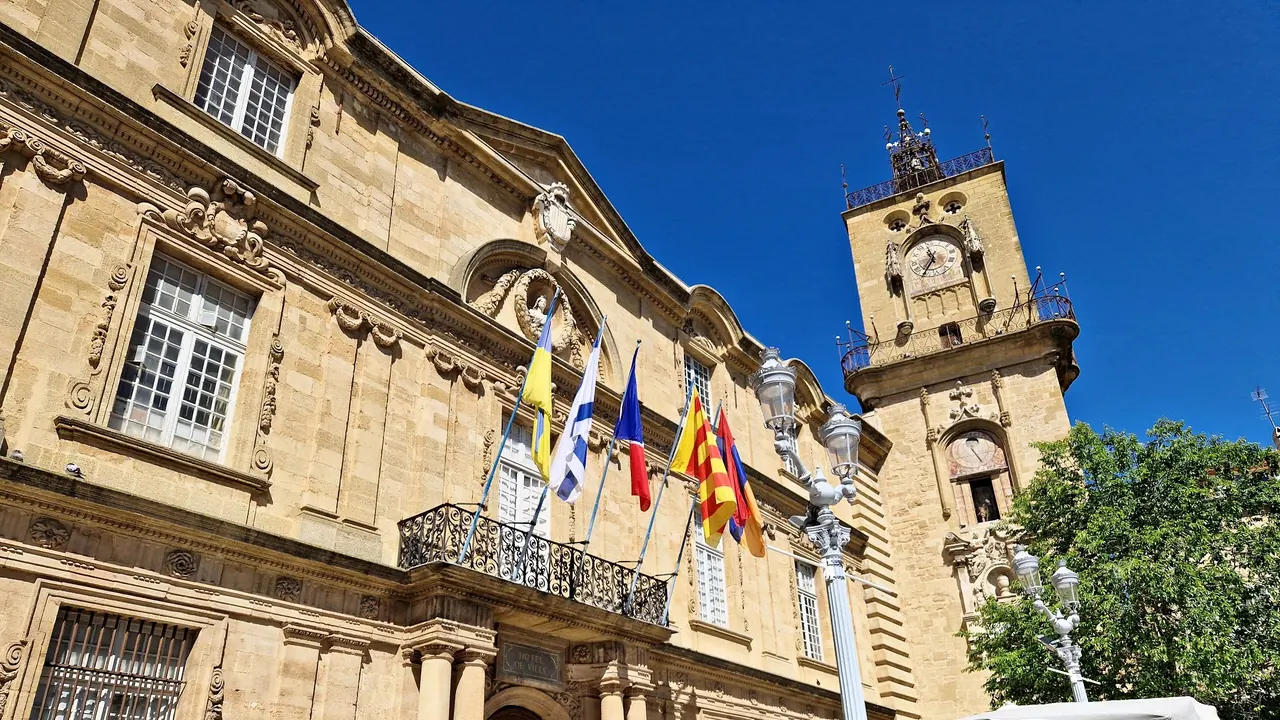
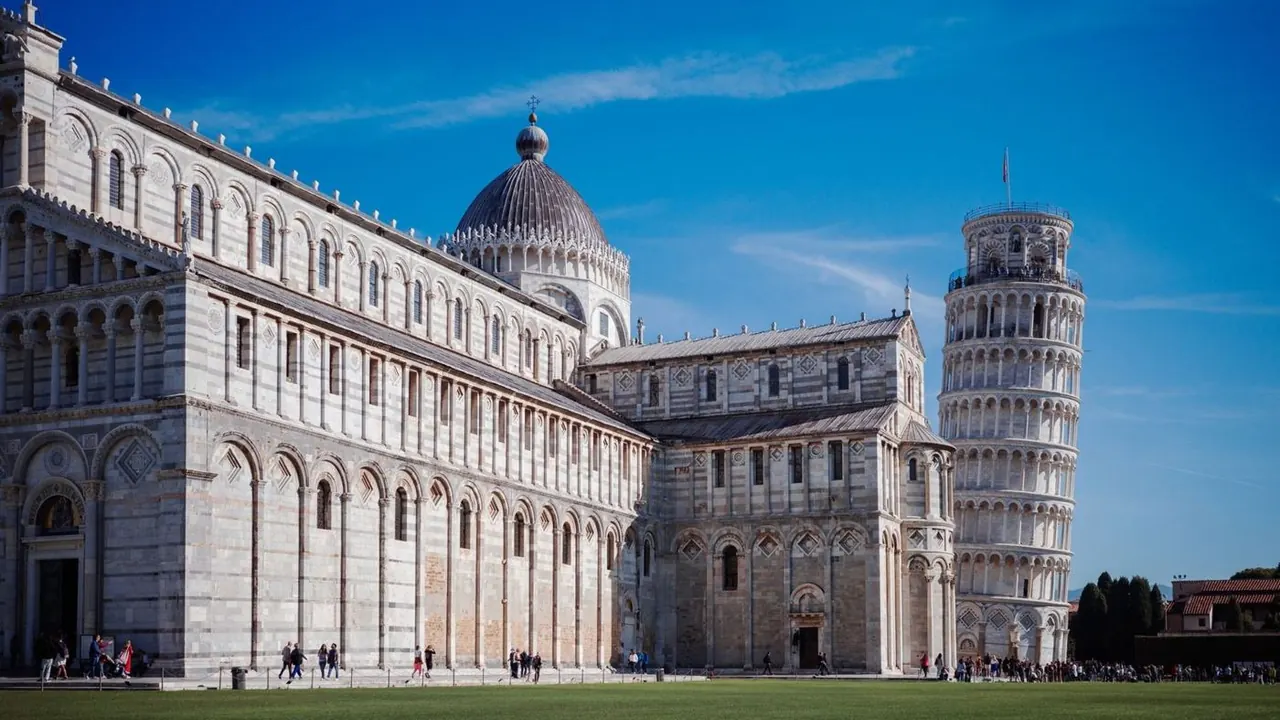
Photos: Aix-en-Provence by Hanay, CC BY-SA 4.0, cropped; Pisa by Bruno Kraler, Pexels License.
Aix-en-Provence or Pisa?
Our verdict in twelve categories, each scored against the same fixed benchmark cities, and the climate month by month, so you can choose for your trip.
Choose Aix-en-Provence for
- live music and the arts
- shopping
- nature and the outdoors
Aix-en-Provence suits a traveller who wants to settle into Provence with a car and let the region come to them. The pleasures are slow ones: market mornings and long terrace lunches, Cézanne's mountain and the Calanques for walking, Luberon villages on the doorstep, and in July some of the finest opera in Europe. It costs more, and the sea is a drive away, but as a base for landscape, food and a gentler pace it is hard to beat.
Choose Pisa for
- prices
- beaches
- getting around
Pisa is the better pick for a car-free trip built around trains. Its station and nearby airport put Florence, Lucca and the Cinque Terre within easy reach, the Piazza dei Miracoli gives it a world-class sight of its own, and sandy beaches lie just beyond the edge of town. Rooms and meals are kinder to the budget, which makes it a sensible, practical base for seeing a lot of Tuscany.
Scoreboard
Twelve categories on one fixed scale from 0 to 100. The shaded stretch is the gap between the two.
Your match
Pick a travel style or drag the sliders, and both match scores follow your weighting.
Too close to call, 1 point apart
Wins on live music and the arts and shopping with your weighting.
Wins on prices and beaches with your weighting.
What matters to you?
Category by category
What the scores mean for a trip.
Beaches & swimming
Pisa has the beach on its doorstep. About 12km west, Tirrenia and Calambrone offer long, wide sandy beaches under pine woods with shallow, warm water, reached by city bus, and Viareggio is a short train ride further. The water near the river mouth is rarely clear, but a summer afternoon on the sand is easy.
From Aix, a swim is a planned day out. The coast lies around 30km away, and what you find there is pebbly or rocky: the Côte Bleue coves, Marseille's small city beaches, Cassis and the calanques. They are prettier and clearer, but small, busy in August and awkward without a car, which is why so many visitors simply use the pool.
Food & drink
Aix eats better. Its days turn on the Provençal market on Place Richelme and long lunches of tapenade, daube, grilled fish and Coteaux d'Aix rosé, with calissons from the old confectioners and a few genuinely serious restaurants among the bistros.
Pisa cooks plainer Tuscan food: ribollita, game, salt cod and hot cecina from wood ovens. The trattorias and wine bars around Piazza delle Vettovaglie are honest and good, but there is little ambitious dining. Both cities avoid their showpiece spots, the Cours Mirabeau terraces in Aix and the tourist menus by the tower in Pisa.
Culture & sights
Pisa has the bigger single sight. The Piazza dei Miracoli, with its cathedral, baptistery, Camposanto and the tower you can climb, is one of the great ensembles of Italy, and behind it lie Piazza dei Cavalieri, Santa Maria della Spina and the medieval painting of the San Matteo museum.
Aix offers a townscape rather than a monument: the plane trees and fountains of the Cours Mirabeau, the honey-coloured mansions of the Mazarin quarter and a cathedral with a Merovingian baptistery. Its particular draw is Cézanne, whose studio, family house and quarries can all be visited, with the Musée Granet alongside. Both fill two unhurried days.
Nightlife
Neither is a place to go out late, and both owe their evenings to students. In Aix the crowd drinks on terraces around Place des Cardeurs, with a few cocktail and wine bars and a handful of small clubs, and Marseille close by for a proper night.
Pisa is more about aperitivo and wine in the squares around the old market and along Borgo Stretto, with almost no clubs. Its summer evenings move down to the beach bars on the coast, an option Aix's inland setting does not give it.
Nature & outdoors
Aix has far more dramatic country within reach. Montagne Sainte-Victoire rises just east of town, the limestone cliffs of the Calanques make some of the best coastal walking in the Mediterranean, and the Verdon gorges and the lavender and vineyard roads of the Luberon add kayaking and cycling. In midsummer, fire risk can close the massifs, and a car helps throughout.
Pisa's outdoors are gentler and closer. The San Rossore park begins at the city's edge, with pine forest, dunes and fallow deer to explore by bike or on horseback, and the Monte Pisano offers olive-terrace walks. Real mountain hiking means travelling out to the Apuan Alps or the Cinque Terre.
Day trips
Both are superb bases, and Pisa edges ahead because so much is reachable by train. Florence is about an hour away, Lucca under half an hour, and the Cinque Terre, Viareggio and the marble towns of the coast are straightforward rail trips, with Volterra, San Gimignano and Siena for those who drive.
Aix has Marseille half an hour away, Avignon by TGV and Arles, Nîmes and the Pont du Gard for Roman Provence. Its finest outings, though, are the Luberon villages such as Gordes and Roussillon, and the Alpilles, which really need a car.
Good for families
Pisa is slightly easier with children. The centre is flat, the lawn around the tower lets them run, the tower photo is a favourite, and the shallow sandy beaches and bike rides in San Rossore make good family days, though younger children cannot climb the tower.
Aix has a safe pedestrian centre with fountains and ice cream, but its sights are mansions and museums and summer afternoons are fierce. Families tend to stay somewhere with a pool and drive to the zoo at La Barben or the coast, with Sainte-Victoire for older children who like walking.
Getting around
Pisa is the simpler place to arrive and travel from. The airport sits unusually close with a shuttle train to the central station, a main rail hub for western Tuscany, and the flat centre is a half-hour walk from end to end, with bikes and buses for the rest.
Aix is just as walkable within its small old town, but leaving it is harder. The TGV station sits out on the plateau and needs a shuttle bus, the villages are poorly served, and most visitors end up hiring a car and wrestling with tight parking in the centre.
Shopping & style
Aix makes a better shopping stop. The lanes around Rue d'Italie and Rue Espariat hold French fashion, shoe and homeware boutiques and delicatessens, and the market squares add textiles, flowers and bric-a-brac. Santons, olive wood, Marseille soap and Provençal prints make distinctive things to bring home.
Pisa is more everyday: chains along Corso Italia, smarter shops and pastry shops under the arcades of Borgo Stretto, and a monthly antiques market by the river. Near the tower it is souvenirs only, and serious shoppers take the train to Florence or Lucca.
Affordability
Pisa is the cheaper stay. Central rooms are mid-range, the student trattorias are good value and walking costs nothing; the main extras are the tower climb and beach loungers in summer.
Aix is one of the dearer towns in the south of France, with few hotels and those mostly boutique, rates that climb during the July festival and a hire car usually added for the countryside. Back-street lunch menus and market picnics soften it, but the budget gap is real.
Live music & performing arts
Aix is the clear choice for anyone who plans a trip around performance. In July its opera festival stages productions in the courtyard of the Archbishop's Palace, and through the year the Grand Théâtre de Provence, Ballet Preljocaj at the Pavillon Noir and the Jeu de Paume keep a serious programme running.
Pisa's scene centres on the Teatro Verdi, a 19th-century horseshoe house with an autumn to spring season of opera, concerts and ballet. It makes a relaxed night out in a historic setting, though bigger productions mean Florence.
Wellness & relaxation
Aix has the edge, with spa water in the town itself. Founded by the Romans for its springs, it still has warm fountains, and the Thermes Sextius spa stands on the old baths; long lunches and plane-tree afternoons do the rest.
Pisa's thermal waters lie just outside town, at the bath palace of San Giuliano Terme beneath the Monte Pisano, with a larger public pool at Casciana Terme. Within the city, the calm comes from quiet riverside evenings away from the cathedral square.
When should you go?
Pick your month. The climate figures are measured averages, not a forecast.
Aix-en-Provence in July
Pisa in July
Daytime high, °C
Rainfall in the month, mm
Temperature and rainfall are climate normals, averaged over the years shown. Aix-en-Provence: 1991-2020 normals, Marseille / Marignane (19.2 km from centre). Pisa: 1991-2020 normals, Pisa / S. Giusto (3.9 km from centre).
The two cities follow almost the same temperature curve, with highs around 31°C in July in Aix and barely lower in Pisa, which makes midsummer hot work for sightseeing on foot in both. The real difference is rain and light. Aix is far drier and sunnier, with almost no rain in July (11mm), while Pisa gets noticeably wetter from September and is at its dampest in October and November, when rainfall reaches 132mm in a month. For streets and countryside, April to early June and late September suit both, though Aix's dry, bright weather makes it the safer bet in early spring.
For swimming, Pisa has the edge. Its sea is warm enough from June and reaches 25°C in August, while the coast near Aix peaks around 22°C, and the mistral can cool it further. July and August are the beach months in both, with Pisa's water staying pleasant well into September.
Which traveller are you?
On an outdoors trip, Aix-en-Provence is the stronger choice. Sainte-Victoire rises at the edge of town, the Calanques offer superb coastal walking and kayaking, and the Verdon gorges and Luberon cycling routes are an easy drive, best in spring and autumn.
For a beach and sun trip, Pisa wins. Long sandy beaches at Tirrenia and Calambrone are a short bus ride away, the sea is warmer and the water shallow, whereas from Aix every swim means driving to small, crowded coves near Marseille.
On a tight budget, Pisa makes the money go further. Rooms are mid-range, student trattorias feed you well, and the train network covers day trips without hiring a car, while Aix has few cheap rooms and the countryside really needs one.
Before you go
| Measure | Aix-en-Provence | Pisa |
|---|---|---|
| Official language | French | Italian |
| Currency | Euro (EUR) | Euro (EUR) |
| Sockets | CE230 V, 50 Hz | CFL230 V, 50 Hz |
| Driving side | Right | Right |
| Time zone | UTC+1, UTC+2 in summer | UTC+1, UTC+2 in summer |
| Emergency number | 112 | 112 |
| Elevation | 73 m | 4 m |
| Main airport | Marseille Provence Airport (MRS)21 km from centre126 non-stop destinations | Pisa International Airport (PSA)4 km from centre82 non-stop destinations |
| Public holidays this year | 11 days | 13 days |
By the numbers
| Measure | Aix-en-Provence | Pisa |
|---|---|---|
| City population | 149,695 | 88,737 |
| People per km² | 804 | 479 |
| Museums within 10 km | 8 | 27 |
| UNESCO World Heritage sites within 50 km | 1 | 4 |
| Swim season, months above 21 °C | 2 months | 4 months |
Where else could you go?
Every comparison below shares a destination with this one, so you can follow Aix-en-Provence or Pisa somewhere new.
- Luccavs Pisa
- Marseillevs Aix-en-Provence
- La Speziavs Pisa
- Florencevs Pisa
- Avignonvs Aix-en-Provence
- Sienavs Pisa