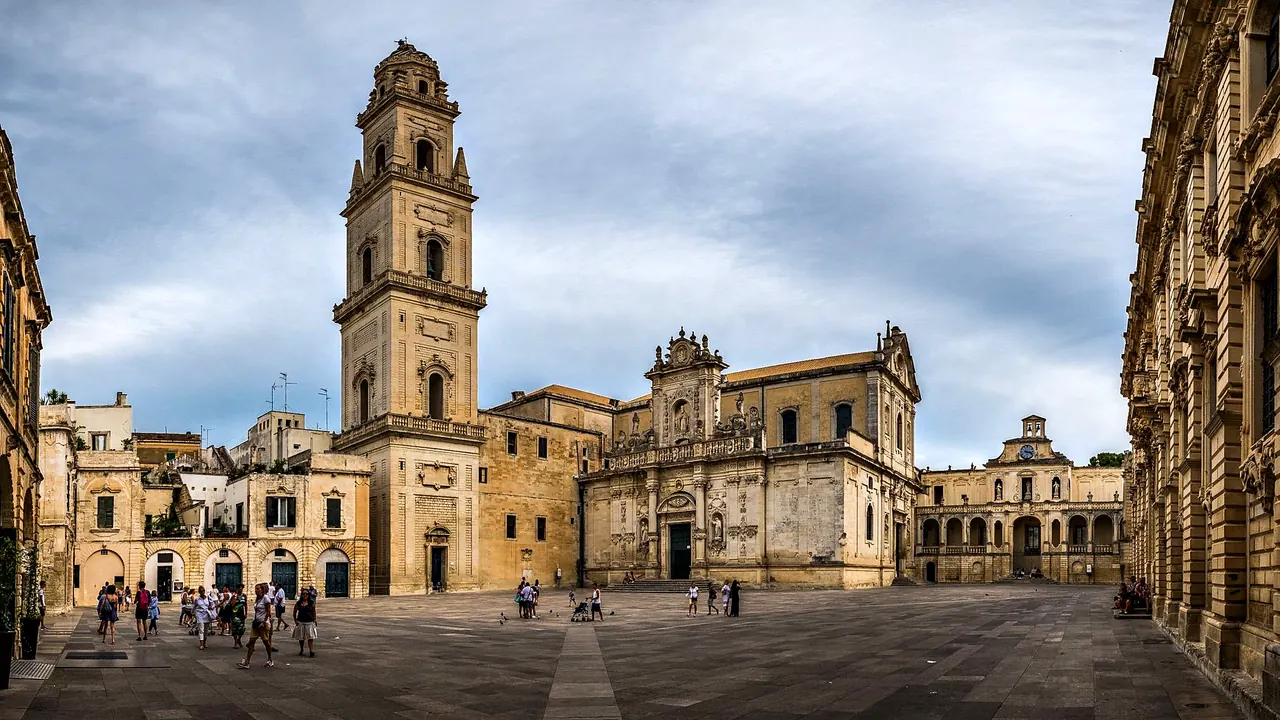
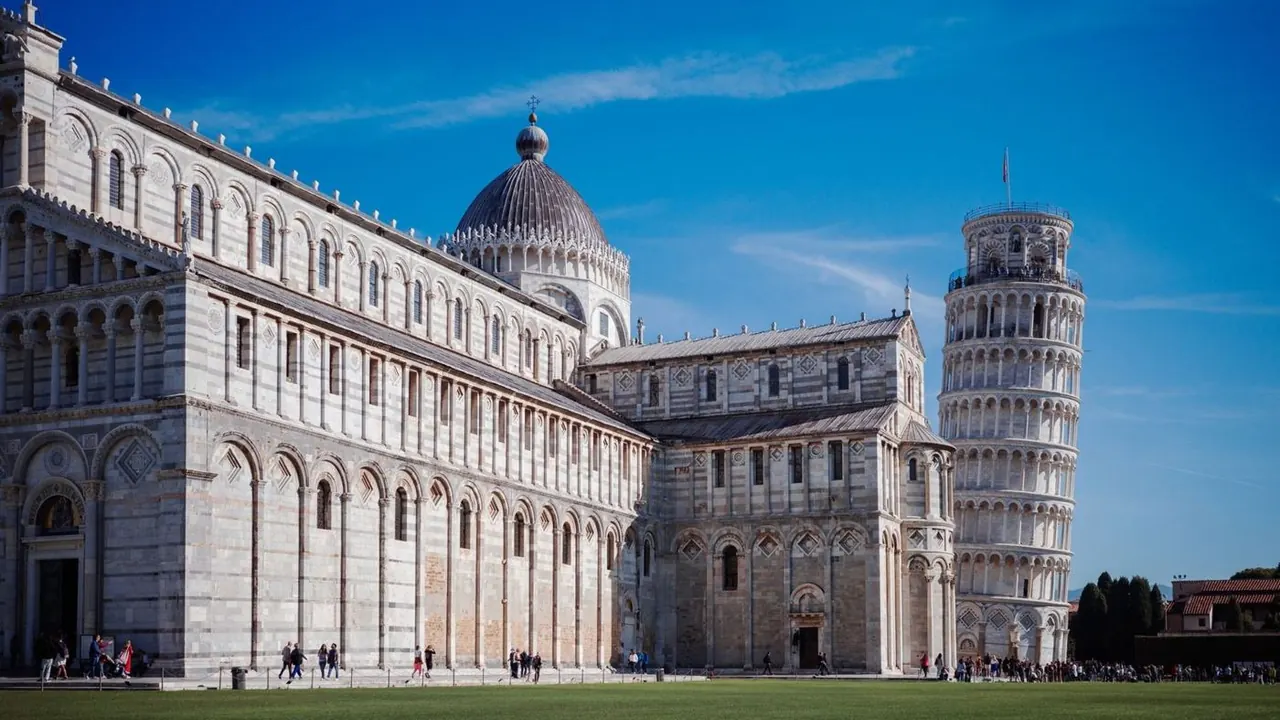
Photos: Lecce by Giuseppe Milo, CC BY 3.0, cropped; Pisa by Bruno Kraler, Pexels License.
Lecce or Pisa?
Our verdict in twelve categories, each scored against the same fixed benchmark cities, and the climate month by month, so you can choose for your trip.
Choose Lecce for
- beaches
- food and drink
- prices
Lecce suits a slower summer stay built around the sea. It gives you two coasts within an easy drive, clearer water and better sand than Pisa can offer, a Baroque old town that rewards evening wandering, and cooking with a character all its own. Plan on hiring a car, because the best of the Salento lies beyond the reach of its trains.
Choose Pisa for
- getting around
- day trips
- nature and the outdoors
Pisa is the better pick for travellers who want to see a lot of Italy without driving. Its airport is a few minutes from the centre, Florence, Lucca and the Cinque Terre are easy train rides away, and a large coastal park starts at the edge of town. It works best as a compact base for Tuscany or a short break, with the beach as an afternoon extra rather than the point of the trip.
Scoreboard
Twelve categories on one fixed scale from 0 to 100. The shaded stretch is the gap between the two.
Your match
Pick a travel style or drag the sliders, and both match scores follow your weighting.
Wins on beaches and food and drink with your weighting.
Wins on getting around and day trips with your weighting.
What matters to you?
Category by category
What the scores mean for a trip.
Beaches & swimming
Neither city is on the sea, but Lecce's coast is the one worth the trip. Within about half an hour you reach the white coves and sea stacks of the Adriatic side, and on the Ionian side there are long, shallow beaches of fine sand with very clear water. In summer the beach shapes the whole day. The catch is that you need a car or the seasonal buses, and August is crowded.
Pisa's shore is easier to reach and less striking. Tirrenia and Calambrone have wide sand backed by pines, mostly divided into rented establishments, and the water near the Arno mouth is rarely clear. It suits an afternoon off from sightseeing, with Versilia a short train ride away if you want more.
Food & drink
Lecce has the more distinctive table. A day there runs from a warm custard pasticciotto and iced espresso with almond milk through rustico at mid-morning to ciceri e tria and fava purée with chicory. Dinner comes with dark Negroamaro or Primitivo, and simple old-town osterie make it cheap to eat well.
Pisa cooks plain Tuscan food: ribollita, game, salt cod and hot cecina in focaccia. The best of it is around the Piazza delle Vettovaglie market, while the menus near the tower are best skipped. Neither city offers much range or serious fine dining, so both are for honest regional cooking.
Culture & sights
The two are closely matched, but in very different ways. In Lecce the whole old town is the sight: honey-coloured limestone facades crowded with carved fruit and cherubs, Santa Croce, the enclosed Duomo square at dusk and a half-excavated Roman amphitheatre in the main piazza. Its museums are modest, so the pleasure is in walking.
Pisa concentrates its greatest moment in one place, the marble ensemble of cathedral, baptistery, tower and Camposanto on its lawn. It also has the stronger collection, with medieval Pisan art at San Matteo, plus the river-side jewel of Santa Maria della Spina and the Lungarni palazzi that most visitors never see.
Nightlife
Going out is on much the same modest scale in both, a glass of wine in a piazza rather than a reason to travel. Lecce's evenings start with the passeggiata and move into wine and cocktail bars in the old lanes. In summer the late crowd drives down to the beach discos around Gallipoli.
Pisa's night belongs to students in term time, drinking outside small bars around the old market. The tower district empties after dark, and out of term the city goes quiet early.
Nature & outdoors
Pisa has more varied outdoors close at hand. The San Rossore park starts at the city's edge, with forest, dunes and fallow deer to see by bike, on foot or on horseback. Monte Pisano's olive-terrace paths rise just east, and the Apuan Alps offer real mountain hiking.
Lecce's countryside is a flat plain of olives and red earth, so its nature is all on the coast. That means the cliffs and sea caves between Otranto and Leuca, wetlands for birdwatching, and snorkelling, kayaking and diving that Pisa cannot match.
Day trips
Here Pisa pulls well ahead. Florence is about an hour by train and walled Lucca under half an hour. The Cinque Terre, Viareggio and the marble towns of Carrara and Pietrasanta are all reachable by rail, and Volterra, San Gimignano and Siena are within a drive.
Lecce is a good base for the Salento, with Otranto's cathedral mosaic, island Gallipoli and the trulli of Alberobello further north. Most of these trips need a car, though, and the list of famous names is shorter.
Good for families
Both are easy with children and neither has much built for them, so no zoos or theme parks. Lecce's draw is the shallow, sandy water around Porto Cesareo and evening piazzas full of local families.
Pisa offers the tower photo, a climb for older children (younger ones cannot go up) and cycling or riding in San Rossore. Both call for planning around the summer midday heat.
Getting around
Once you look past the old town, Pisa is far easier to get around without a car. Its airport shuttle puts you at the central station within minutes, and from that western Tuscan rail hub the coast, Lucca and the Cinque Terre are simply a train away. Lecce's fast line only heads north towards Brindisi and Bari. The Salento's slow local trains and summer-only beach buses mean most visitors to Lecce end up renting a car to reach the coves and stone towns.
On foot the difference shrinks. Both centres are flat and compact. Lecce's is partly pedestrian, with the station just outside the old town, and from Pisa's station it is an easy half-hour stroll over the Arno to the tower. In Lecce, drivers leave the car outside the walls. In Pisa you need one only for the hill towns inland.
Shopping & style
Neither is a shopping destination, but what you find differs. Lecce is for craft keepsakes: cartapesta saints from old-town workshops, small carvings in local limestone and Grottaglie ceramics. Pisa is for everyday Italian fashion along Corso Italia and the arcades of Borgo Stretto, with a monthly antiques market by the river and Florence close by for anything more serious.
Affordability
Costs are broadly similar, and they rise for different reasons. In Lecce, food and wine are cheap and palazzo B&Bs fairly priced, but August fills the whole Salento and a hire car adds to the bill. In Pisa you rarely need transport at all and student trattorias keep meals honest. The tower climb and cafés by the cathedral square are where money goes.
Live music & performing arts
The two are evenly matched, but their seasons are opposite. Lecce comes alive in summer with pizzica, the tambourine dance heard at village festivals and above all at the great Notte della Taranta in Melpignano in August. Pisa's strength is winter, when the horseshoe Teatro Verdi stages opera, ballet and concerts from autumn to spring.
Wellness & relaxation
Both are calm places with thermal waters nearby. From Lecce you drive under an hour to Santa Cesarea Terme, with sulphur pools in grottoes on cliffs above the sea, or stay at a masseria farmhouse with a spa. Pisa's springs are closer, at San Giuliano Terme just outside the city, where an 18th-century bath palace on waters used since Roman times houses a spa.
When should you go?
Pick your month. The climate figures are measured averages, not a forecast.
Lecce in July
Pisa in July
Daytime high, °C
Rainfall in the month, mm
Where the figures come from
Lecce's temperatures are measured 38 km from the centre, at Brindisi.
Lecce has no rain gauge within 25 km of the centre, so its rainfall comes from a gridded climate dataset read at the city rather than from a gauge further away.
Temperature and rainfall are climate normals, averaged over the years shown. Lecce: 1991-2020 (sunshine 1981-2010) normals, Brindisi (38 km from centre). Pisa: 1991-2020 normals, Pisa / S. Giusto (3.9 km from centre).
Through the warm months the two cities follow almost the same temperatures. Both reach about 30°C in July and August, too hot for long midday walks, and both are pleasant for sightseeing in May, June and September. The real difference is rain and sun. Lecce is the drier, brighter place, with long sunny days through summer, and its sea stays warm enough for swimming from June well into October, reaching about 26°C in August. Pisa's sea is a touch cooler, and its summers on the plain feel more humid.
Autumn separates them most clearly. From September Pisa turns wet, with October and November bringing over 120mm of rain each, while Lecce's rainy spell comes later and is lighter. In winter Lecce is a little milder and much sunnier, which makes it the gentler choice for a winter city walk. Pisa in that season is grey and damp, but still fine for its museums and a night at the opera.
Which traveller are you?
On a beach and sun trip, Lecce is the clear choice. The pale coves of Torre dell'Orso and the shallow, clear Ionian beaches at Porto Cesareo outclass Pisa's river-mouth shore, and the summers are sunnier and drier.
For a food and nightlife trip, Lecce has the edge at the table, with pasticciotto, iced almond coffee and dishes found nowhere else. Evenings out are similar in size in both cities, sociable piazza drinking rather than big clubs.
For a short city break, Pisa is far easier. The airport is linked to the station by shuttle train, everything is walkable on the flat, and Lucca or Florence add a second day without a car.
Before you go
| Measure | Lecce | Pisa |
|---|---|---|
| Official language | Italian | Italian |
| Currency | Euro (EUR) | Euro (EUR) |
| Sockets | CFL230 V, 50 Hz | CFL230 V, 50 Hz |
| Driving side | Right | Right |
| Time zone | UTC+1, UTC+2 in summer | UTC+1, UTC+2 in summer |
| Emergency number | 112 | 112 |
| Elevation | 49 m | 4 m |
| Main airport | Brindisi Airport (BDS)39 km from centre49 non-stop destinations | Pisa International Airport (PSA)4 km from centre82 non-stop destinations |
| Public holidays this year | 13 days | 13 days |
By the numbers
| Measure | Lecce | Pisa |
|---|---|---|
| City population | 94,783 | 88,737 |
| People per km² | 393 | 479 |
| Museums within 10 km | 11 | 27 |
| UNESCO World Heritage sites within 50 km | 0 | 4 |
| Swim season, months above 21 °C | 4 months | 4 months |
Where else could you go?
Every comparison below shares a destination with this one, so you can follow Lecce or Pisa somewhere new.