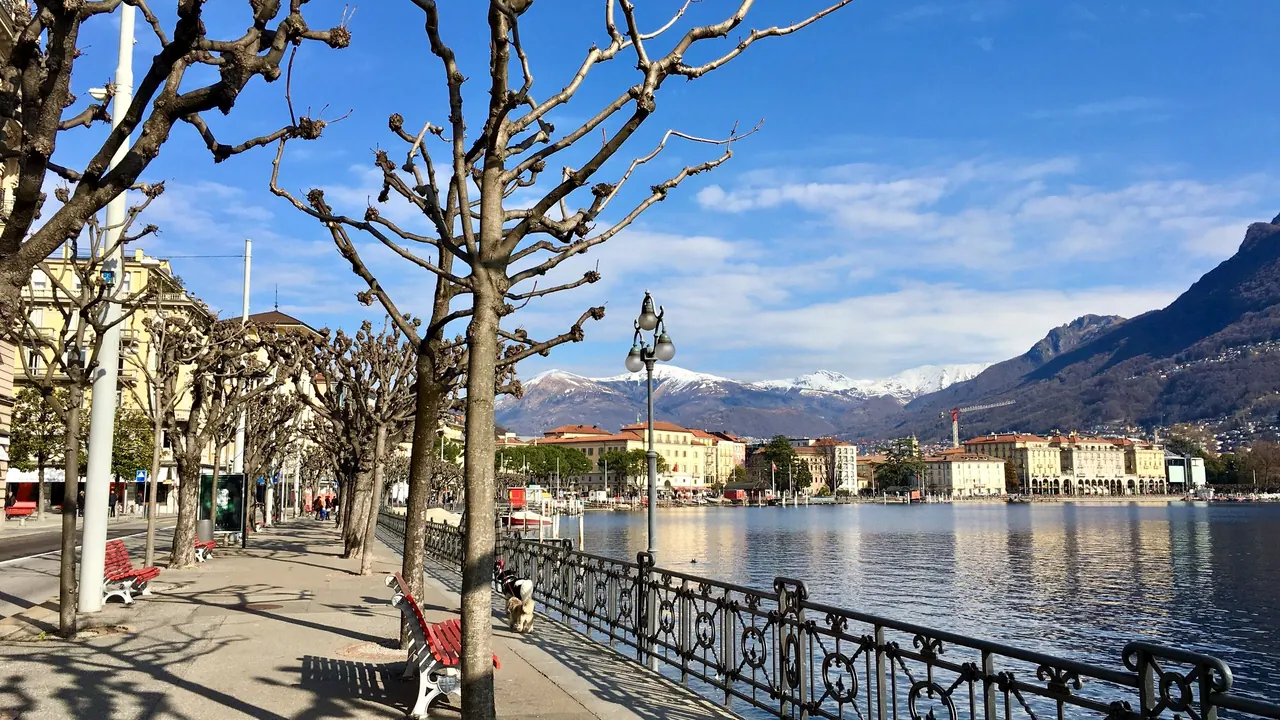
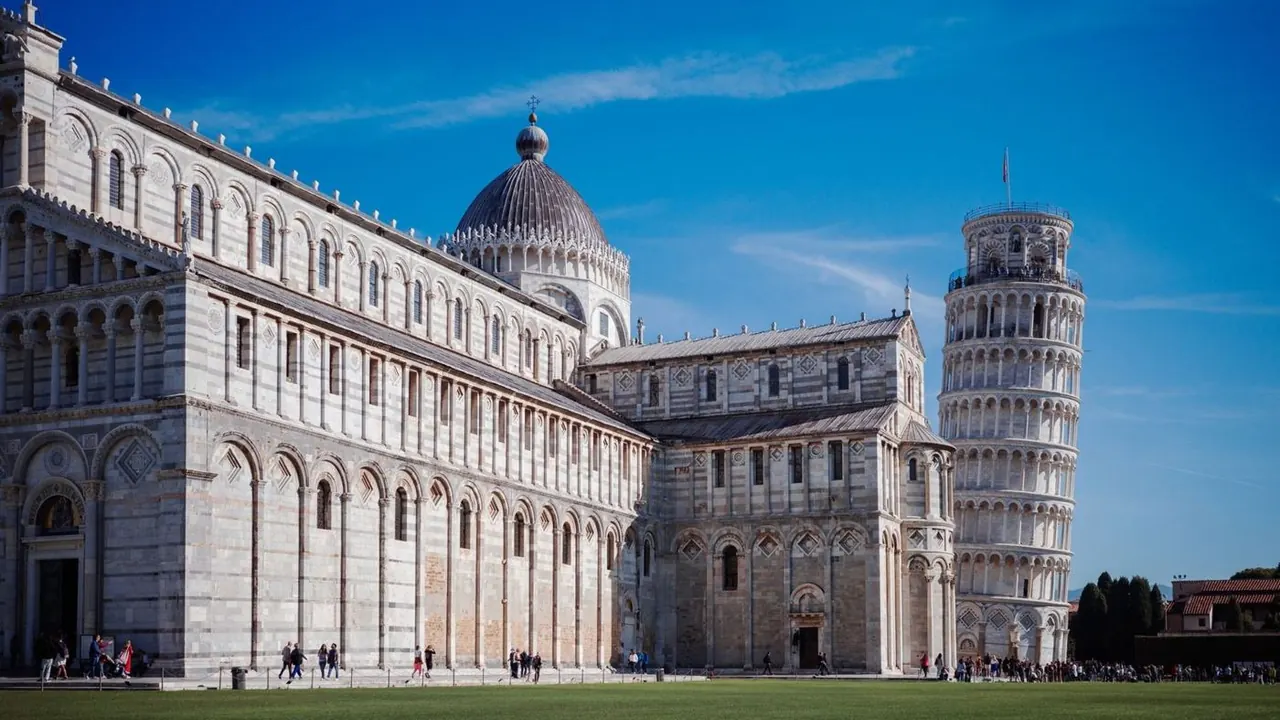
Photos: Lugano by Thomas Woodtli from Zürich, Switzerland, CC BY-SA 2.0, cropped; Pisa by Bruno Kraler, Pexels License.
Lugano or Pisa?
Our verdict in twelve categories, each scored against the same fixed benchmark cities, and the climate month by month, so you can choose for your trip.
Choose Lugano for
- nature and the outdoors
- shopping
- families
Lugano is for travellers who come for the setting and can live with Swiss prices. The lake, the funiculars up Monte Brè and San Salvatore and the ridge walks of Ticino make it the stronger base for walking, boating and slow lakeside days. Families with young children will find it calm and safe, and the town's own sights take only a day, which leaves the rest of the stay for being outdoors.
Choose Pisa for
- prices
- culture and sights
- nightlife
Pisa suits the traveller who wants more to see for less money. The cathedral square is one of Italy's great sights and the old town around the Lungarni adds a second day. Florence, Lucca and the Cinque Terre are all within easy train range, and the student trattorias and squares keep eating and evenings relaxed and inexpensive. Sandy beaches lie just outside the city for summer afternoons.
Scoreboard
Twelve categories on one fixed scale from 0 to 100. The shaded stretch is the gap between the two.
Your match
Pick a travel style or drag the sliders, and both match scores follow your weighting.
Wins on nature and the outdoors and shopping with your weighting.
Wins on prices and culture and sights with your weighting.
What matters to you?
Category by category
What the scores mean for a trip.
Beaches & swimming
Pisa is the place for a proper beach. Tirrenia and Calambrone have long sandy shores backed by pine woods, the sea warms to the mid-twenties in high summer and the shallow water suits paddling, although the water near the Arno mouth is rarely very clear.
Lugano has no sea and no sand. Swimming happens at lidos with lawns, decks and ladders into a lake that reaches about 23°C. It is pleasant on a hot afternoon, but the season is short and the experience is quite different from a day on the coast.
Food & drink
Pisa eats better and more cheaply. The streets around Piazza delle Vettovaglie have plain Tuscan cooking, such as ribollita, wild boar and hot cecina from wood ovens, at prices kept honest by the students. Seafood is better towards the coast.
Lugano's best meals are in the grotti, rustic taverns serving polenta, braised meats and local Merlot under chestnut trees. Beyond these there is little street food or cheap eating, and many visitors cross into Italy for serious meals. Neither city has a wide range.
Culture & sights
The gap here is wide. Pisa has the Piazza dei Miracoli, where cathedral, baptistery, tower and Camposanto stand together on one lawn, and a lesser-visited old town beyond it with Vasari's palace on Piazza dei Cavalieri, Santa Maria della Spina and medieval painting at San Matteo.
Lugano's arcaded old town is attractive but quickly seen. Luini's Passion fresco in Santa Maria degli Angioli and the art museum split between LAC and Palazzo Reali are the highlights, with the Hesse museum up in Montagnola as an extra.
Nightlife
Neither is a party city, but Pisa has more going on after dark. During term, students fill the small squares around the old market until past midnight, and in summer people move to the beach bars on the coast.
Lugano's evenings are an aperitivo by the lake followed by a long dinner, with a well-dressed local crowd and high prices. Most nights it is quiet before midnight, and young locals head to Milan to go out.
Nature & outdoors
Lugano has the more dramatic setting. Steep wooded mountains rise straight from the lake, funiculars climb Monte Brè and San Salvatore from the edge of town, and the path to Gandria, the Generoso rack railway and the green Verzasca and Maggia valleys are all within easy reach.
Pisa's outdoors is flatter and gentler: the pine forest, wetland and dunes of the San Rossore park with fallow deer, olive terraces on Monte Pisano and birdwatching on Lake Massaciuccoli. For real mountain hiking you need to go out to the Apuan Alps.
Day trips
Both are excellent bases, but Pisa has more within reach. Florence is an hour by train, Lucca under half an hour, and the Cinque Terre, Viareggio and the marble towns of Carrara and Pietrasanta lie along the same coast line, with Volterra, San Gimignano and Siena further inland.
Lugano's advantage is that it covers two countries. Milan and Lake Como are close in one direction, while Bellinzona's castles and Lake Maggiore are close in the other, and lake boats run to Morcote.
Good for families
Lugano has a slight edge for families with young children. Boat trips, lido slides, funicular rides and the park of Swiss landmarks in miniature at Melide make for easy outdoor days, though the steep streets are hard work with a pushchair.
Pisa is flat and practical, and the tower lawn and the classic photo keep children happy for a while. Younger ones cannot climb the tower, so the best family days are at the shallow beaches or cycling in San Rossore.
Getting around
Lugano climbs steeply from the lake, while Pisa is flat. In Lugano a short funicular links the station, high on the hill, with the old town below, and the lakefront promenade joins up most of the sights. Beyond the centre, boats and mountain railways do much of the sightseeing work, so a car is rarely needed.
In Pisa you can walk everywhere. The walk from the station along Corso Italia and up Borgo Stretto reaches the tower in about half an hour. The shuttle train from the airport is unusually convenient, and bikes suit the streets and the park roads.
Shopping & style
Lugano has more to offer at the top end. Via Nassa's arcades are lined with Swiss watchmakers, jewellers and Italian fashion houses, and there is a large designer outlet towards Mendrisio. It offers little for younger or cheaper tastes.
Pisa's shopping is everyday Italian: chains on Corso Italia, smarter shoes and old pastry shops under Borgo Stretto's arcades, and a monthly antiques market by the river. Serious shoppers from both cities head to Milan or Florence.
Affordability
This is the biggest difference between the two. Lugano is expensive across the board, from lakeside hotels to boat trips and mountain railways. Grotti, set lunches and the regional transport that usually comes with a hotel stay soften the cost only a little.
Pisa is moderately priced for a famous Italian city, with mid-range rooms and student trattorias. The main extra costs are the tower climb, the cafés beside the monuments and loungers on the beach in high summer.
Live music & performing arts
Lugano's music is built around a concert hall and summer jazz, while Pisa's is built around a historic opera house. At LAC by the lake, the Orchestra della Svizzera italiana plays in a hall with fine acoustics, and in summer the free Estival Jazz concerts fill Piazza della Riforma.
Pisa's stage is the horseshoe-shaped Teatro Verdi. Its season runs from autumn to spring, and an unpretentious night of Italian opera there is easy to arrange. The university's chamber music and recitals in churches fill in around it.
Wellness & relaxation
Both are calm places to slow down, but only Pisa has thermal water. The springs at San Giuliano Terme, used since Roman times, have a spa in an 18th-century bath palace, and Casciana Terme has a larger public pool.
Lugano relies on its pace and setting instead: lido afternoons, benches in Parco Ciani and long grotto lunches, plus hotel spas and a big pool and sauna complex near Rivera.
When should you go?
Pick your month. The climate figures are measured averages, not a forecast.
Lugano in July
Pisa in July
Daytime high, °C
Rainfall in the month, mm
Temperature and rainfall are climate normals, averaged over the years shown. Lugano: 1991-2020 normals, Lugano (1.2 km from centre). Pisa: 1991-2020 normals, Pisa / S. Giusto (3.9 km from centre).
Lugano is warm enough for the lidos from June to early September. Summer highs reach about 27°C, and July and August are its sunniest months. The catch is rain: from April to November it is wet, with May the wettest month at 178mm, often in heavy showers, so a bright summer day can end in a thunderstorm. Spring and autumn are the best seasons for hiking. Winter is cool, with highs in single figures, but December to February are Lugano's driest months and get as much sun as Pisa's, so a coat is enough for walking the lakefront and the old-town lanes.
Pisa's year runs the other way round. July and August reach 30°C, which is hot for sightseeing on the plain, but they are also its driest and sunniest months, and the sea is about 25°C in August. June and September are the best months for combining sights with a swim, because the sea is already warm or still warm and the heat is easier to bear. The rain comes in autumn and peaks at 132mm in November. Winters are a few degrees milder than Lugano's but no sunnier.
Which traveller are you?
On a trip on a tight budget, Pisa is far easier. Student trattorias, mid-range rooms and a centre you can cover on foot keep costs down, while Lugano has no cheap way to stay and charges Swiss prices for meals, boats and mountain railways.
For a culture and arts trip, Pisa offers much more. The cathedral, baptistery, tower and Camposanto, followed by Piazza dei Cavalieri and the San Matteo museum, take two full days, and Florence is an hour away. Lugano's sights fill a single day.
On an outdoors trip, Lugano is the clear pick. Funiculars and a rack railway take you straight up to summit paths, the Monte Lema to Tamaro ridge is a classic hike, and the Verzasca valley is close. Pisa's flat park and Monte Pisano are gentler.
Before you go
| Measure | Lugano | Pisa |
|---|---|---|
| Official language | French, German, Italian, Romansh | Italian |
| Currency | Swiss Franc (CHF) | Euro (EUR) |
| Sockets | CJ230 V, 50 Hz | CFL230 V, 50 Hz |
| Driving side | Right | Right |
| Time zone | UTC+1, UTC+2 in summer | UTC+1, UTC+2 in summer |
| Emergency number | 112 | 112 |
| Elevation | 283 m | 4 m |
| Main airport | Milan Malpensa International Airport (MXP)46 km from centre208 non-stop destinations | Pisa International Airport (PSA)4 km from centre82 non-stop destinations |
| Public holidays this year | 15 days | 13 days |
By the numbers
| Measure | Lugano | Pisa |
|---|---|---|
| City population | 63,495 | 88,737 |
| People per km² | 837 | 479 |
| Museums within 10 km | 17 | 27 |
| UNESCO World Heritage sites within 50 km | 5 | 4 |
| Swim season, months above 21 °C | - | 4 months |
Where else could you go?
Every comparison below shares a destination with this one, so you can follow Lugano or Pisa somewhere new.