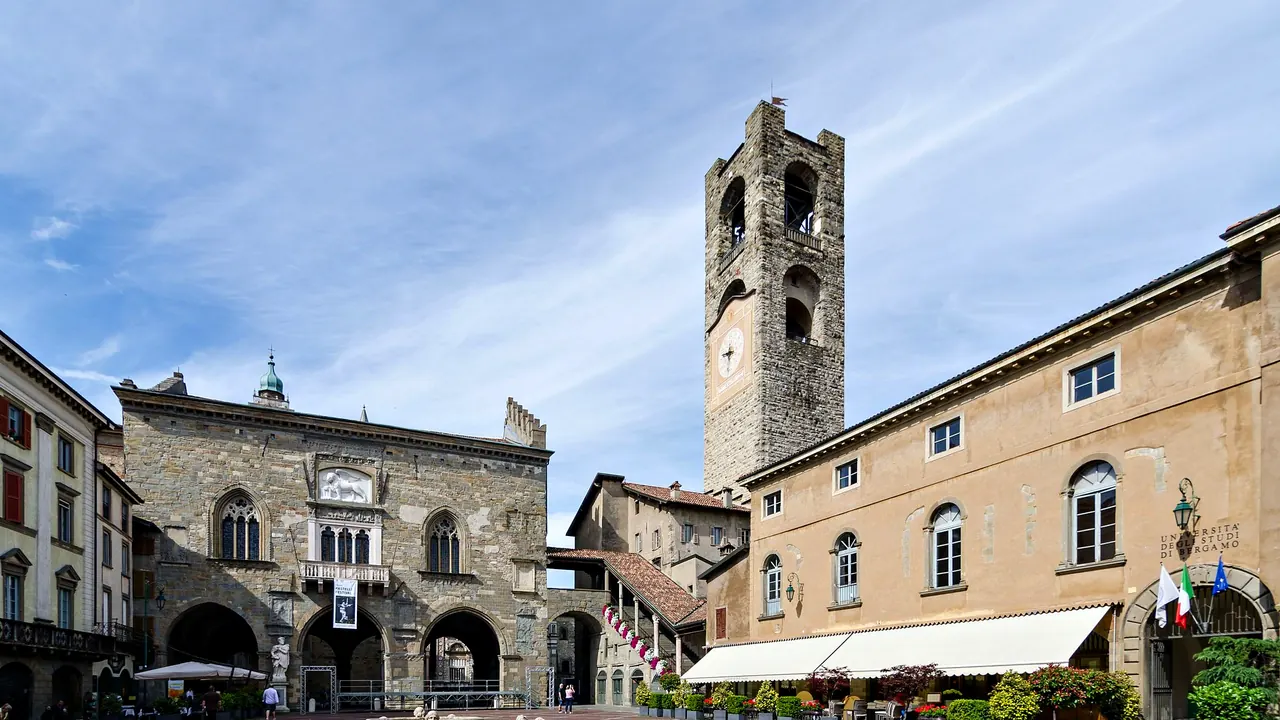
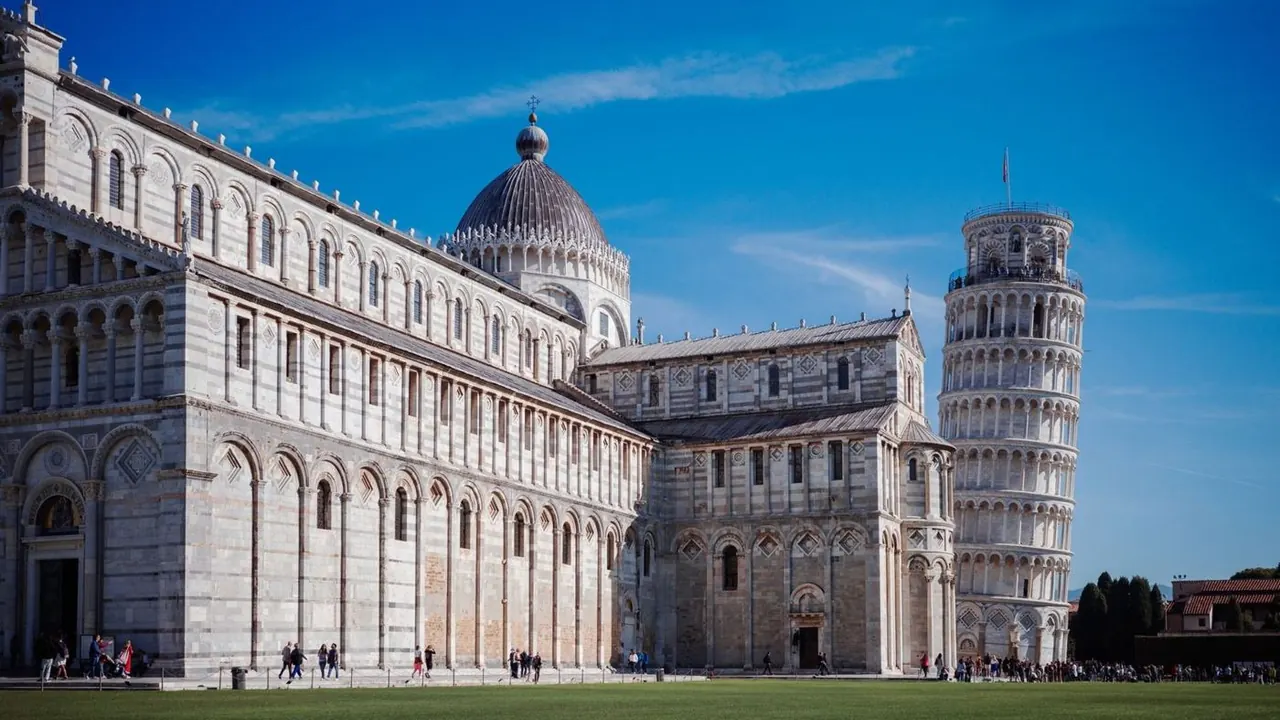
Photos: Bergamo by Steffen Schmitz, CC BY-SA 4.0, cropped; Pisa by Bruno Kraler, Pexels License.
Bergamo or Pisa?
Our verdict in twelve categories, each scored against the same fixed benchmark cities, and the climate month by month, so you can choose for your trip.
Choose Bergamo for
- nature and the outdoors
- live music and the arts
- wellness
Bergamo suits travellers who want mountains and lakes as much as monuments. The walled Città Alta gives a compact, beautiful old town, but the trip really opens up in the Orobie valleys, on Lake Iseo and Lake Como, and in the spa towns up Val Brembana. Opera lovers have Donizetti's own theatre. It rewards a slower stay, ideally with a car for the high country.
Choose Pisa for
- beaches
- nightlife
- getting around
Pisa is the better pick if you want the sea within reach and no car at all. Sandy beaches lie just west of the centre, the flat old town is walkable end to end, and the rail hub puts Florence, Lucca and the Cinque Terre within easy reach. Students keep its evenings livelier, and the summers are drier and sunnier, which makes it the stronger choice for a warm-weather Tuscan base.
Scoreboard
Twelve categories on one fixed scale from 0 to 100. The shaded stretch is the gap between the two.
Your match
Pick a travel style or drag the sliders, and both match scores follow your weighting.
Too close to call, 2 points apart
Wins on nature and the outdoors and live music and the arts with your weighting.
Wins on beaches and nightlife with your weighting.
What matters to you?
Category by category
What the scores mean for a trip.
Beaches & swimming
Pisa has a real coast and Bergamo does not. From Pisa, the long sandy beaches of Tirrenia and Calambrone, backed by pine woods, are about 12km away, with shallow water for paddling and Versilia a short train ride north.
Bergamo's answer is lake swimming at Lake Iseo or on the Lecco arm of Lake Como, from lidos, grassy shores and concrete platforms. It makes a fine hot day out, but anyone who wants sand and salt water should choose Pisa.
Food & drink
The two cities eat about equally well, but from different kitchens. Bergamo cooks Alpine Lombard food: casoncelli with butter and sage, polenta, game, and a remarkable cheese board of Taleggio, Branzi and Strachitunt, with a serious fine-dining tier in the province.
Pisa is Tuscan and plainer: ribollita, salt cod and hot cecina from wood ovens, best eaten in the student trattorias around Piazza delle Vettovaglie. Its seafood improves towards the coast, while Bergamo is the place for cheese lovers and a richer, more northern table.
Culture & sights
Each city has one great set piece, and they are equally strong. Bergamo's is a whole walled hilltop town, with Piazza Vecchia, Santa Maria Maggiore and the marble front of the Cappella Colleoni, plus Raphael and Bellini at the Accademia Carrara below the hill.
Pisa's is the Piazza dei Miracoli, the cathedral, baptistery, tower and Camposanto standing together on one lawn, with more to find in Piazza dei Cavalieri, at the San Matteo museum and along the Lungarni. Bergamo is better for atmospheric strolling, and Pisa for a single, unforgettable architectural ensemble.
Nightlife
Neither is a party town, but Pisa has more life after dark. During term, students fill the small squares around the old market and talk well past midnight, and in summer the evening shifts to beach bars on the coast.
Bergamo runs to a long aperitivo, wine bars and pubs around Via XX Settembre and Borgo Santa Caterina, with drinks in the upper-town squares on summer nights, and it tends to end by midnight. In both cases, a proper club night means another city.
Nature & outdoors
Bergamo has the bigger landscapes. The Colli di Bergamo park climbs from the upper town, and Val Brembana and Val Seriana lead into the Orobie Alps, with high lakes, rifugi, the Serio waterfall and small winter ski areas such as Foppolo, while two lakes add sailing and cycling.
Pisa's outdoors are gentler and closer to sea level: the pine forest, wetland and dunes of San Rossore, where you can ride or cycle among fallow deer, and olive-terrace paths on the Monte Pisano. The Apuan Alps and Cinque Terre give real hiking, but they are further away.
Day trips
Both are outstanding bases, and Pisa has the edge. Florence is about an hour away, Lucca under half an hour, and the Cinque Terre, Viareggio and the marble towns of Carrara and Pietrasanta are all easy by train, with Volterra, San Gimignano and Siena further out.
Bergamo's range is Lombard: Milan in under an hour, Lake Como and Lake Iseo's Monte Isola closer still, and Crespi d'Adda, Brescia, Cremona and Verona all within reach. The difference is one of flavour, Renaissance Tuscany and the coast against Lombardy's lakes and cities.
Good for families
These two are about equal for families, in different ways. Bergamo has more built for children nearby, with the funiculars, the Leolandia theme park and the Le Cornelle wildlife park, though the cobbled lanes of the upper town are hard work with a buggy.
Pisa is flat and small, the tower lawn is a natural place to run about, and the shallow sandy beaches at Tirrenia are ideal for younger children. Bear in mind that small children cannot climb the tower, and plan around the summer crowds.
Getting around
Pisa is the simpler city to move around. It is flat and compact, you can walk from the station to the cathedral square in about half an hour, and an automatic shuttle train links the airport to one of western Tuscany's main rail hubs.
Bergamo works on two levels, with funiculars between the lower town and the Città Alta and up to San Vigilio, and the steep walk between them is hard going. Trains reach Milan and Brescia directly, but the valleys and lake shores are much easier with a car.
Shopping & style
Neither city is a shopping destination, and both send serious fashion shoppers elsewhere: Bergamo to Milan, and Pisa to Florence or Lucca. What differs is the haul you take home. Bergamo's upper town is lined with cheese shops, delicatessens and wine sellers, while Pisa offers arcaded Borgo Stretto, its produce market and a monthly antiques market by the river.
Affordability
Both cities cost about the same, comfortable rather than cheap, and both make sensible bases because their hotels are fairly priced. The expensive spots differ. In Bergamo, rooms and restaurants inside the Città Alta cost more. In Pisa, it is the tower climb, the cafés beside the monuments and the summer beach loungers.
Live music & performing arts
Bergamo has the stronger stage life, built around its native composer. The Teatro Donizetti runs an opera season and an autumn festival of Donizetti's works that draws serious opera lovers, the Teatro Sociale adds smaller productions, and Bergamo Jazz has a long history.
Pisa's Teatro Verdi offers an easy, unpretentious night of opera, ballet or concerts in a 19th-century horseshoe house, but there is little beyond it. Both cities are within reach of bigger houses, with La Scala an evening trip from Bergamo.
Wellness & relaxation
Bergamo is better for a restful stay. San Pellegrino Terme, the Belle Époque spa town of the mineral water, is about forty minutes up the valley, Trescore Balneario has ancient sulphur springs, and the quiet walls of the Città Alta set a slow pace in the mornings and evenings.
Pisa has San Giuliano Terme close by, with its 18th-century bath palace below the Monte Pisano, and a larger public pool at Casciana Terme. Its calm, though, comes mainly from the small scale of the town and slow evenings by the river.
When should you go?
Pick your month. The climate figures are measured averages, not a forecast.
Bergamo in July
Pisa in July
Daytime high, °C
Rainfall in the month, mm
Where the figures come from
Bergamo has no rain gauge within 25 km of the centre, so its rainfall comes from a gridded climate dataset read at the city rather than from a gauge further away.
Bergamo's sunshine is measured 64 km from the centre, at Lugano.
Temperature and rainfall are climate normals, averaged over the years shown. Bergamo: 1991-2020 normals, Bergamo / Orio Al Serio (3.9 km from centre). Pisa: 1991-2020 normals, Pisa / S. Giusto (3.9 km from centre).
Both cities are hot in July and August, but they spend the year differently. Bergamo sits at the foot of the Alps, so winters are cold, with January highs around 7°C, and rain is spread through late spring and again heavily from September into November. Its best walking weather is late spring and early autumn, between the showers. Midsummer brings around 29°C, which is pleasant for lake swimming and mountain walks but sticky in the lower town.
Pisa is milder in winter, about 11°C in January, and its summers are noticeably drier and sunnier, with very little rain from June to August. The sea is warm enough for the beach from late June, peaking near 25°C in August and staying swimmable into September. The weather turns in autumn: October and November are the wettest months, at up to 132mm, so spring is the comfortable season for sightseeing without the summer heat on the plain.
Which traveller are you?
On a beach and sun trip, Pisa wins clearly. Long sandy beaches at Tirrenia and Calambrone are a short bus ride away, the summer sea is warm, and the dry, sunny months suit it. Bergamo only offers lake lidos on pebble and grass.
For an outdoors trip, Bergamo is the stronger base. Woodland paths climb from the upper town, and the Orobie Alps have rifugi, high lakes and serious hiking, with sailing and cycling on two lakes. Pisa's San Rossore park is gentler, flatter country.
For a short city break, Pisa is the easier choice. The airport is minutes from the station, the flat centre is walkable in half an hour, and the cathedral square and riverside palazzi fit neatly into two days, with student bars for evenings.
Before you go
| Measure | Bergamo | Pisa |
|---|---|---|
| Official language | Italian | Italian |
| Currency | Euro (EUR) | Euro (EUR) |
| Sockets | CFL230 V, 50 Hz | CFL230 V, 50 Hz |
| Driving side | Right | Right |
| Time zone | UTC+1, UTC+2 in summer | UTC+1, UTC+2 in summer |
| Emergency number | 112 | 112 |
| Elevation | 249 m | 4 m |
| Main airport | Il Caravaggio International Airport (BGY)4 km from centre146 non-stop destinations | Pisa International Airport (PSA)4 km from centre82 non-stop destinations |
| Public holidays this year | 13 days | 13 days |
By the numbers
| Measure | Bergamo | Pisa |
|---|---|---|
| City population | 119,534 | 88,737 |
| People per km² | 2,973 | 479 |
| Museums within 10 km | 21 | 27 |
| UNESCO World Heritage sites within 50 km | 6 | 4 |
| Swim season, months above 21 °C | - | 4 months |
Where else could you go?
Every comparison below shares a destination with this one, so you can follow Bergamo or Pisa somewhere new.