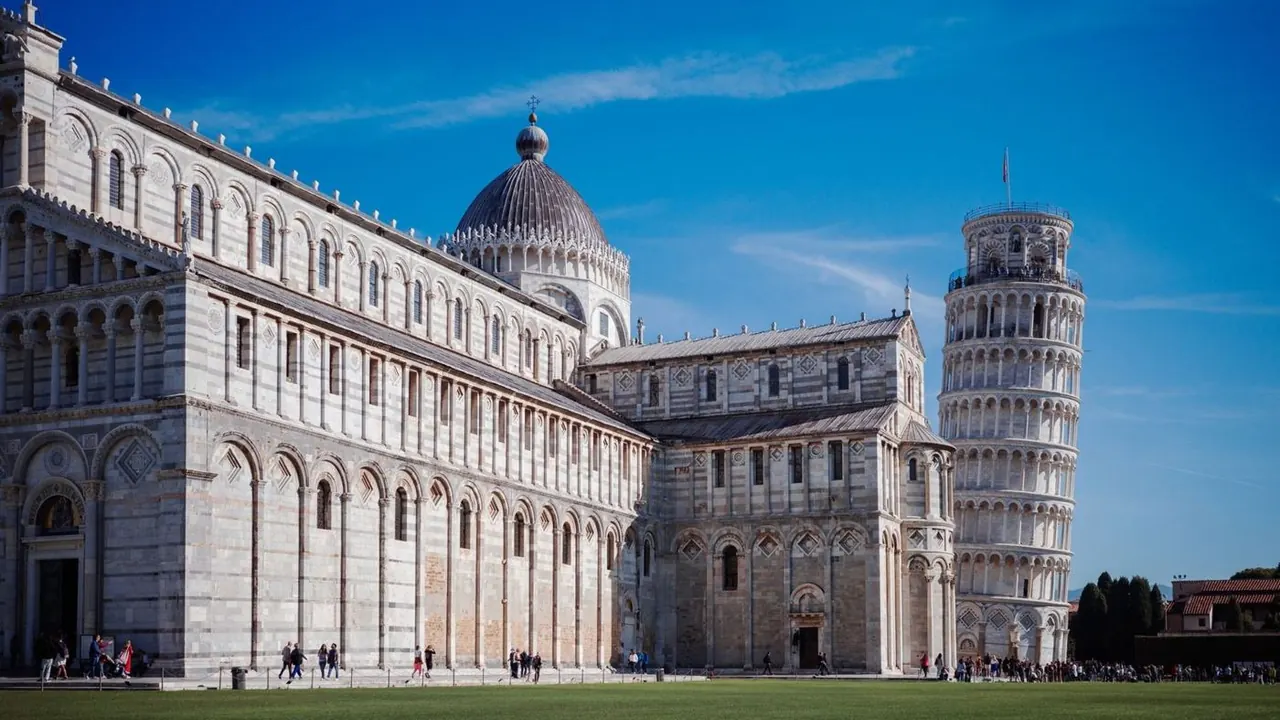
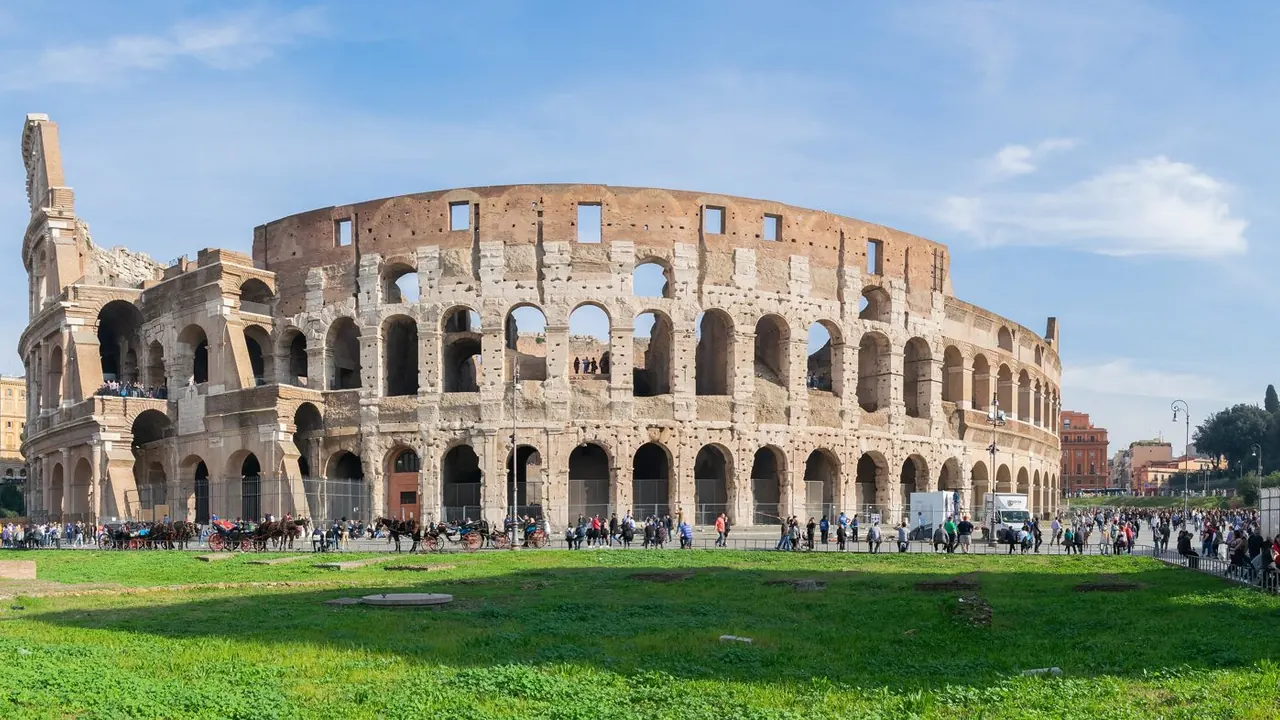
Photos: Pisa by Bruno Kraler, Pexels License; Rome by Tournasol7, CC BY-SA 4.0, cropped.
Pisa or Rome?
Our verdict in twelve categories, each scored against the same fixed benchmark cities, and the climate month by month, so you can choose for your trip.
Choose Pisa for
- prices
- getting around
- beaches
Pisa suits a traveller who wants a compact, easy base in Tuscany rather than a city to fill a week. The cathedral square and the quieter town beyond it take a couple of days. After that, the station gets you to Florence, Lucca and the Cinque Terre, and the pine-backed sands of Tirrenia are close by for hot afternoons. Rooms cost less, and everything is a flat walk.
Choose Rome for
- shopping
- culture and sights
- live music and the arts
Choose Rome when the city itself is the reason for the trip. Few places anywhere can match its ancient ruins, Vatican collections and Baroque churches. Its trattorias, its evenings in the piazzas and its proper opera and concert scene give the days and nights a depth Pisa cannot offer. In return you pay more for a room, the walking is harder, and you will never see all of it.
Scoreboard
Twelve categories on one fixed scale from 0 to 100. The shaded stretch is the gap between the two.
Your match
Pick a travel style or drag the sliders, and both match scores follow your weighting.
Wins on prices and getting around with your weighting.
Wins on shopping and culture and sights with your weighting.
What matters to you?
Category by category
What the scores mean for a trip.
Beaches & swimming
Pisa has the easier seaside. The coast begins about 12km from the centre, and south of the Arno mouth, Tirrenia and Calambrone have long sandy beaches backed by pine woods. The shallow water suits paddling, and Viareggio is a short train ride north.
Rome's sea at Ostia is half an hour away by suburban train, but the sand there is dark and volcanic, and the lidos fill with Romans escaping the heat at weekends. The prettier coves at Sperlonga mean a long day out. Near both cities the water is rarely clear, so neither works as a beach vacation in its own right.
Food & drink
Rome eats far better. It has a cuisine entirely its own, from carbonara and cacio e pepe to fried artichokes in the Ghetto and the offal dishes of Testaccio. Its street food, supplì and pizza al taglio, is taken seriously, and Trastevere and Monti are whole neighbourhoods to eat your way through.
Pisa's cooking is honest Tuscan fare: ribollita, game, salt cod and hot cecina from wood ovens, best in the student trattorias around Piazza delle Vettovaglie. It makes for good, simple eating over a few days, but the range runs out quickly. In both cities, avoid the menus beside the big monuments.
Culture & sights
Rome is in a different league. The Colosseum, the Forum and the Pantheon, the Vatican Museums and Sistine Chapel, the Borghese Gallery and the squares of Bernini and Borromini are enough to make a week feel short.
Pisa has one superb ensemble, the Piazza dei Miracoli, with its cathedral, baptistery, Camposanto and Leaning Tower. Beyond it is a quieter town with Santa Maria della Spina, Piazza dei Cavalieri and the medieval art of San Matteo. Two unhurried days cover the lot, which makes Pisa a stop on a Tuscan tour rather than a culture trip in itself.
Nightlife
Rome gives you a fuller evening. Trastevere's lanes stay crowded with wine bars until late, Monti has small cocktail bars, and San Lorenzo and Pigneto add student and alternative crowds, though clubbing is limited even here.
Pisa's nights mean drinks with students in the small squares around the old market during term. Outside term, the town goes quiet early, and the tower district is empty after dark.
Nature & outdoors
There is little between them, but the green is of a different kind. Pisa has wild country on its doorstep. The San Rossore park runs through pine forest, wetland and undeveloped dunes to the sea, with fallow deer, and the olive terraces of Monte Pisano rise just to the east. The Apuan Alps are further out for real mountain walking.
Rome's outdoors starts inside the city, in the villa parks and along the Appian Way, a cobbled Roman road past tombs and aqueduct ruins that makes a fine bike ride. Beyond the city are the crater lakes of the Alban Hills, and about ninety minutes away are the Apennines, with skiing at Terminillo in winter.
Day trips
Both are excellent bases, and the difference is in what lies around them. Pisa's trips are Tuscan and Ligurian: Florence in about an hour, walled Lucca in under half an hour, the Cinque Terre a little over an hour north by train, and Volterra and San Gimignano by car.
Rome's excursions lean towards antiquity and central Italy. Nearby are the excavated port of Ostia Antica, Hadrian's Villa at Tivoli and the Etruscan tombs of Tarquinia and Cerveteri. Further out are Orvieto and Assisi, and fast trains put Naples, Pompeii and even Florence within reach.
Good for families
Neither city is built around children, and in both, gelato and space to run do much of the work. Pisa is easier on small legs, being flat and compact, with the tower lawn to play on and shallow beaches and park bike rides close by, though young children cannot climb the tower. Rome has more to catch a child's imagination, with gladiators, catacombs and the Bioparco zoo in Villa Borghese, but its queues, cobbles and traffic make the days more tiring.
Getting around
Pisa is far simpler. You can walk the flat centre from end to end in about half an hour, the airport is a short shuttle-train ride from the station, and the station links easily to the rest of western Tuscany.
Rome's centre is also best seen on foot, and the walk from the Colosseum to Trastevere is a pleasure. The distances are bigger, though, and the cobbles and heat wear you down. The metro barely reaches the historic core, and buses and trams get stuck in traffic.
Shopping & style
Rome is the place to shop. The streets off the Spanish Steps hold the big Italian fashion houses, and Monti has independent boutiques and vintage. Via Margutta and Via dei Coronari keep their artisans and antique dealers, and Porta Portese holds a huge Sunday flea market.
Pisa offers everyday Italian shopping along Corso Italia and under the arcades of Borgo Stretto, plus a monthly antiques market by the river. For anything more serious, people make the trip to Florence or Lucca.
Affordability
Pisa is noticeably easier on a budget. Central rooms are mid-range, student trattorias keep meals fair, and the town costs nothing to walk. The tower climb and summer beach loungers are the main extra costs.
In Rome the expense is mostly the room, which is small and costly in the centre and hard to find in spring and autumn. On top of that come substantial fees at the Vatican, the Colosseum and the Borghese. Day-to-day costs are gentler: espresso drunk standing at the bar, pizza al taglio, free drinking fountains and churches full of art that are open to everyone.
Live music & performing arts
Rome has far more to see and hear. The Teatro dell'Opera stages opera and ballet in winter and moves to the Baths of Caracalla in summer, and the Santa Cecilia orchestra plays at the Auditorium Parco della Musica. The city also has a long-running jazz club scene and frequent church concerts.
Pisa's offering is essentially the Teatro Verdi, a 19th-century horseshoe-shaped theatre with an autumn-to-spring season, plus university chamber music. It makes a pleasant evening, but bigger productions mean going to Florence.
Wellness & relaxation
Neither city is a wellness destination, and the calm comes in different forms. Pisa turns quiet as soon as you leave the cathedral square, and its small scale sets an easy pace. The springs of San Giuliano Terme, used since Roman times, are just outside town, with a spa in an 18th-century bath palace below Monte Pisano, and Casciana Terme has a larger public thermal pool further inland.
Rome's centre is loud and hot, so you find calm in the villa gardens, on the Aventine and over long lunches. For thermal water you leave the city, either for the sulphurous outdoor pools of Bagni di Tivoli or for the free hot springs around Viterbo, about ninety minutes away.
When should you go?
Pick your month. The climate figures are measured averages, not a forecast.
Pisa in July
Rome in July
Daytime high, °C
Rainfall in the month, mm
Where the figures come from
Rome's sunshine is measured 31 km from the centre, at Vigna Di Valle.
Temperature and rainfall are climate normals, averaged over the years shown. Pisa: 1991-2020 normals, Pisa / S. Giusto (3.9 km from centre). Rome: 1991-2020 normals, Roma / Ciampino (15.1 km from centre).
Both cities share the same Tyrrhenian rhythm, and Rome runs a degree or so warmer almost all year. Spring is the best time to walk either one. By May, days reach around 23°C to 24°C, rain is moderate and the real heat has not arrived. July and August climb to about 30°C, which makes midday sightseeing hard work in both, though Rome is the drier and sunnier of the two in high summer. This is also when the sea is warm enough for proper swimming, about 25°C off both coasts, and June and September are still pleasant.
Autumn is where they part. Pisa turns wet sooner and harder. September is already rainy, and October and November are the wettest months, with around 130mm in November. Rome's rain builds more gently, so early autumn favours Rome for mild days on foot. Winter is cool and damp in both, with Rome getting a little more sun.
Which traveller are you?
On a culture and arts trip, Rome is the clear choice. Its ancient monuments, the Vatican collections, Baroque churches with Caravaggios and an opera season that moves to the Baths of Caracalla in summer give you weeks of material. Pisa's sights fill two days.
For a food and nightlife trip, Rome again. Its own cuisine of Roman pastas, supplì and Jewish-style artichokes, eaten in Testaccio and Monti, leads straight into late evenings in the wine bars of Trastevere and San Lorenzo. Pisa offers simple Tuscan cooking and quiet student squares.
On a tight budget, Pisa makes more sense. Rooms are mid-range rather than premium, student trattorias are good value and the flat centre costs nothing to walk. The station puts Florence and Lucca within easy reach, so a modest budget goes further than in Rome.
Before you go
| Measure | Pisa | Rome |
|---|---|---|
| Official language | Italian | Italian |
| Currency | Euro (EUR) | Euro (EUR) |
| Sockets | CFL230 V, 50 Hz | CFL230 V, 50 Hz |
| Driving side | Right | Right |
| Time zone | UTC+1, UTC+2 in summer | UTC+1, UTC+2 in summer |
| Emergency number | 112 | 112 |
| Elevation | 4 m | 21 m |
| Main airport | Pisa International Airport (PSA)4 km from centre82 non-stop destinations | Rome–Fiumicino Leonardo da Vinci International Airport (FCO)23 km from centre242 non-stop destinations |
| Public holidays this year | 13 days | 13 days |
By the numbers
| Measure | Pisa | Rome |
|---|---|---|
| City population | 88,737 | 2,748,109 |
| People per km² | 479 | 2,135 |
| Museums within 10 km | 27 | 178 |
| UNESCO World Heritage sites within 50 km | 3 | 7 |
| Swim season, months above 21 °C | 4 months | 5 months |
Where else could you go?
Every comparison below shares a destination with this one, so you can follow Pisa or Rome somewhere new.