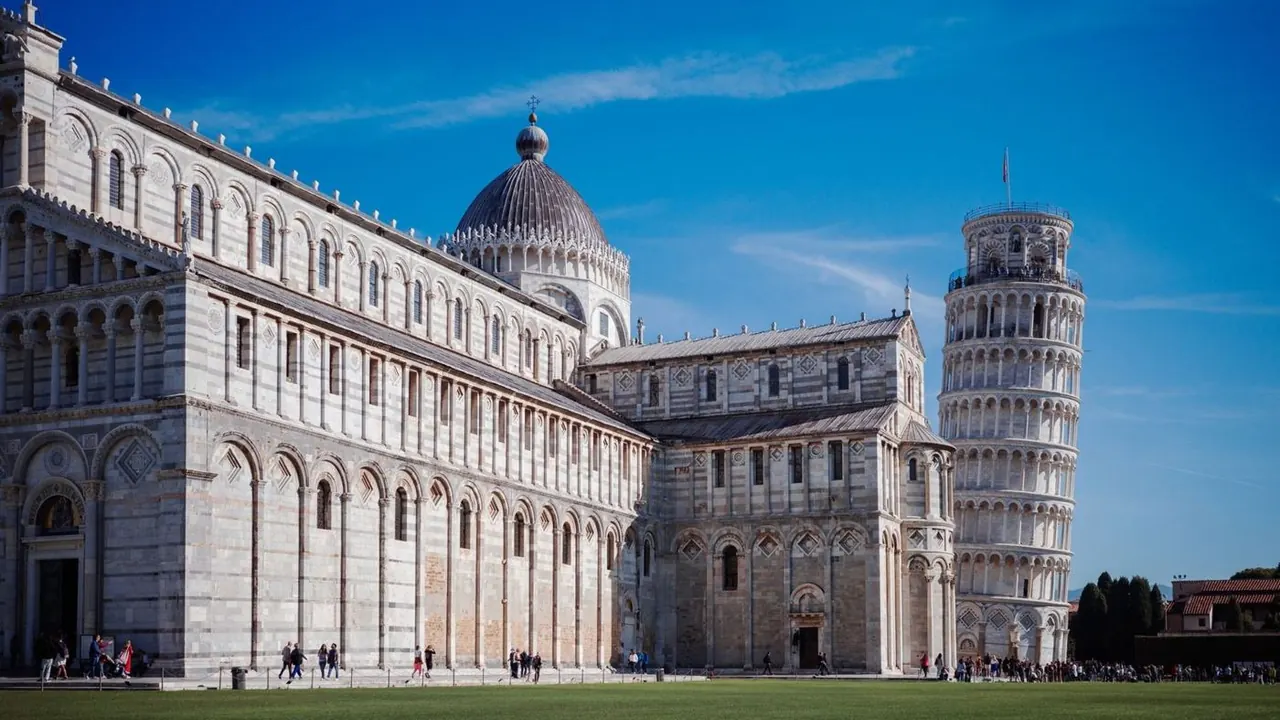
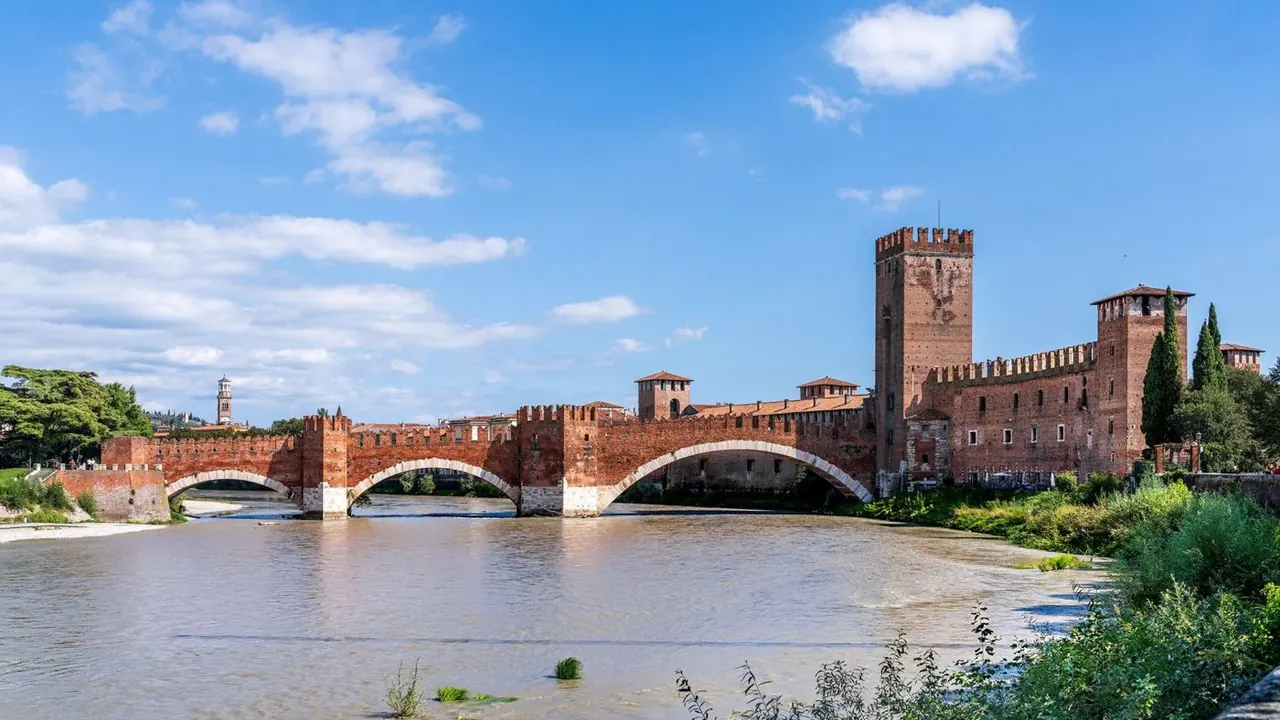
Photos: Pisa by Bruno Kraler, Pexels License; Verona by NorbertNagel, CC BY-SA 4.0, cropped.
Pisa or Verona?
Our verdict in twelve categories, each scored against the same fixed benchmark cities, and the climate month by month, so you can choose for your trip.
Choose Pisa for
- beaches
- prices
- getting around
Pisa suits a traveller who wants a small, easy base on the Tuscan side, with the sea close by and Florence, Lucca and the Cinque Terre a train ride away. Rooms cost a little less, the airport is almost in town, and the long sandy beaches at Tirrenia make a summer afternoon off simple. In return you get quieter evenings, a thin arts calendar and plain, simple food.
Choose Verona for
- live music and the arts
- families
- shopping
If you are drawn by opera under the stars, Roman stones and serious wine, Verona is the stronger choice. The summer Arena festival, the Valpolicella and Amarone cellars on the doorstep and a deeper old centre give you more to fill both days and evenings. Families also have Gardaland and Lake Garda within half an hour. Expect to pay more for a room, above all on opera nights.
Scoreboard
Twelve categories on one fixed scale from 0 to 100. The shaded stretch is the gap between the two.
Your match
Pick a travel style or drag the sliders, and both match scores follow your weighting.
Wins on beaches and prices with your weighting.
Wins on live music and the arts and families with your weighting.
What matters to you?
Category by category
What the scores mean for a trip.
Beaches & swimming
Pisa has a real coastline and the edge here. West of the city, the Arno mouth opens onto rocky breakwaters at Marina di Pisa. Further south, Tirrenia and Calambrone have long, wide sandy beaches under the pines, with shallow sea and Versilia a short train ride beyond.
Verona's water is a lake rather than the sea. Garda's southern shore is clearer and calmer than the sea near the Arno, but the beaches are narrow lidos, lawns and pebbles, plus Sirmione's limestone shelves, and they fill up at summer weekends. In both cities the swim is a break from sightseeing, but in Pisa it is the easier and roomier one.
Food & drink
Verona eats better, and its biggest advantage is wine. Valpolicella, Amarone, Soave and Bardolino are all made within a short drive. Its Veneto cooking, such as Amarone risotto, bigoli with duck and bollito misto with pearà, is served in wood-panelled osterie around Piazza delle Erbe and in Veronetta.
Pisa's table is plainer Tuscan food: ribollita, game, salt cod and hot cecina from wood ovens, best eaten around the Vettovaglie market. Neither city has much range, and both serve their weakest meals beside their most famous monument.
Culture & sights
Pisa's sights are concentrated on one great square. The cathedral, baptistery, Leaning Tower and Camposanto make an extraordinary ensemble, with Piazza dei Cavalieri, Santa Maria della Spina and the San Matteo museum as quieter extras.
Verona has more layers across a whole city. Roman amphitheatre and theatre, Scaliger tombs, the Romanesque San Zeno and Castelvecchio's museum fill two or three days, where Pisa is covered in two.
Nightlife
Both cities go to bed fairly early, and neither has a club scene in the centre. The difference is in who sets the tone. In Pisa it is students drinking in the little squares by the old market during term, and the coast's beach bars in summer.
Verona's evenings are built around the aperitivo, with spritz and Valpolicella in Piazza delle Erbe, and younger bars across the river in Veronetta. In summer, the opera crowd pouring out of the Arena near midnight gives the centre a late lift that Pisa lacks.
Nature & outdoors
Both have good country close by, but of different kinds. Pisa looks towards the sea: San Rossore's pine forest, wetland and wild dunes start at the city's edge, with deer, flat cycling, birdwatching on Lake Massaciuccoli, and the Apuan Alps further off.
Verona looks towards the Alps. It has vineyard walks in Valpolicella and the long Adige cycle route. Monte Baldo's ridges rise above Garda, with sailing and windsurfing at the lake's northern end, and the Lessinia plateau offers beech woods and gorges.
Day trips
Both are excellent bases, so the choice is really between Tuscany and the Veneto. From Pisa, Florence is an hour by train, Lucca under half an hour and the Cinque Terre a little over an hour. Siena is under two hours by train with a change at Empoli, and only the hill towns of Volterra and San Gimignano really need a car.
From Verona, Vicenza's Palladio and Padua's Giotto frescoes lie on the fast line towards Venice, which is itself about an hour and ten minutes away. A regional train reaches Gonzaga Mantua in under an hour, and the Garda towns and the cellars of Valpolicella and Soave are closer still.
Good for families
Verona has much more aimed at children. Gardaland, the water parks around southern Garda and the drive-through safari at Parco Natura Viva are all about half an hour away. In town, the Arena tends to fire young imaginations.
Pisa's appeal for families is simpler: the tower lawn to run about on, a tower climb for older children only, shallow sandy beaches and bike rides in San Rossore. In both cities the family days need a transfer and summer heat needs planning around.
Getting around
Pisa is the easier of the two. An automatic shuttle train links the airport to the central station. From there you can walk to the cathedral square in about half an hour, and the station's role as a western Tuscan rail hub makes trips out simple without a car.
Verona's centre inside the river loop is just as walkable and largely free of traffic. However, the station is a bus ride or twenty minutes' walk from Piazza Bra, and the Valpolicella villages, the Lessinia and some Garda attractions are hard to reach without a car.
Shopping & style
Verona is the better place to shop. Marble-paved Via Mazzini carries Italian fashion labels, and Corso Porta Borsari has boutiques and jewellers. The best things to take home are Amarone, Garda olive oil and pandoro.
Pisa offers high-street chains on Corso Italia, smarter shops and old pastry shops under the arcades of Borgo Stretto, and a monthly antiques market by the river. For serious shopping, Pisa sends you to Florence and Verona sends you to Milan.
Affordability
Pisa is the cheaper stay. Its central rooms are mid-range, and the student trattorias keep meals honest. The main expenses are the tower climb and seaside loungers in high summer.
In Verona the cost is mainly the room. Hotels in the historic centre are dear for a provincial city, and they become scarce on opera nights and during trade fairs. Wine counters, Veronetta's osterie and local bottles are good value, and staying near the station or across the river helps.
Live music & performing arts
This is one of the widest gaps between the two. Verona's summer opera in the Roman Arena draws thousands to the stone tiers for Verdi and Puccini on most evenings. The Roman theatre adds Shakespeare, dance and jazz outdoors, and the Teatro Filarmonico covers the cooler months.
Pisa has the horseshoe-shaped Teatro Verdi, with an unpretentious season from autumn to spring, plus university chamber concerts and the odd church recital. For anything bigger you go to Florence.
Wellness & relaxation
Both cities are calm once you leave their famous squares, and both have Roman-era springs just outside town. Pisa's is San Giuliano Terme, with its 18th-century bath palace below the Monte Pisano, plus Casciana Terme's larger pool inland.
Verona's warm water comes with a lake view. Sirmione's thermal centre has pools facing Garda, and near Lazise a spring-fed lake lies in an old villa garden.
When should you go?
Pick your month. The climate figures are measured averages, not a forecast.
Pisa in July
Verona in July
Daytime high, °C
Rainfall in the month, mm
Temperature and rainfall are climate normals, averaged over the years shown. Pisa: 1991-2020 normals, Pisa / S. Giusto (3.9 km from centre). Verona: 1991-2020 normals, Verona / Villafranca (11.6 km from centre).
The two cities share a hot high summer, around 30°C in July and August, when walking in the middle of the day is tiring in both. Pisa's summer is the drier and sunnier of the two. Its sea is warm enough for proper swimming from June to September and peaks near 25°C in August. Verona's rain is spread more evenly through the year, so its summer months are wetter, while Garda gives it lake swimming over the same stretch.
The difference shows at either end of the year. Pisa's winter is milder, with highs around 11°C in January against Verona's 7°C. But from September its rain builds sharply, peaking around 132mm in November, so autumn there is often wet. Verona's autumn is damper than its summer but never as heavy, and its winters are drier but colder. For both, May, June and late September are the most comfortable months for sightseeing.
Which traveller are you?
On a beach and sun trip, Pisa is the better pick. Real Tyrrhenian beaches start about 12km away, with long sandy shores backed by pine woods at Tirrenia and Calambrone. Verona's swimming is on the narrower, busier shores of Lake Garda.
For a culture and arts trip, Verona gives more. It has a Roman Arena, a Roman theatre, San Zeno, Castelvecchio's Scarpa galleries and, in summer, grand opera on the ancient tiers. Pisa's great square is magnificent, but its theatre and concert life is modest by comparison.
On a family trip with children, Verona fills a longer stay more easily. Garda's water has no tides or surf, which suits small swimmers, and theme parks and a safari zoo turn rest days into treats. Pisa fits a shorter family stop built around the sea.
Before you go
| Measure | Pisa | Verona |
|---|---|---|
| Official language | Italian | Italian |
| Currency | Euro (EUR) | Euro (EUR) |
| Sockets | CFL230 V, 50 Hz | CFL230 V, 50 Hz |
| Driving side | Right | Right |
| Time zone | UTC+1, UTC+2 in summer | UTC+1, UTC+2 in summer |
| Emergency number | 112 | 112 |
| Elevation | 4 m | 59 m |
| Main airport | Pisa International Airport (PSA)4 km from centre82 non-stop destinations | Verona Villafranca Valerio Catullo Airport (VRN)10 km from centre96 non-stop destinations |
| Public holidays this year | 13 days | 13 days |
By the numbers
| Measure | Pisa | Verona |
|---|---|---|
| City population | 88,737 | 255,588 |
| People per km² | 479 | 1,285 |
| Museums within 10 km | 27 | 18 |
| UNESCO World Heritage sites within 50 km | 3 | 5 |
| Swim season, months above 21 °C | 4 months | - |
Where else could you go?
Every comparison below shares a destination with this one, so you can follow Pisa or Verona somewhere new.