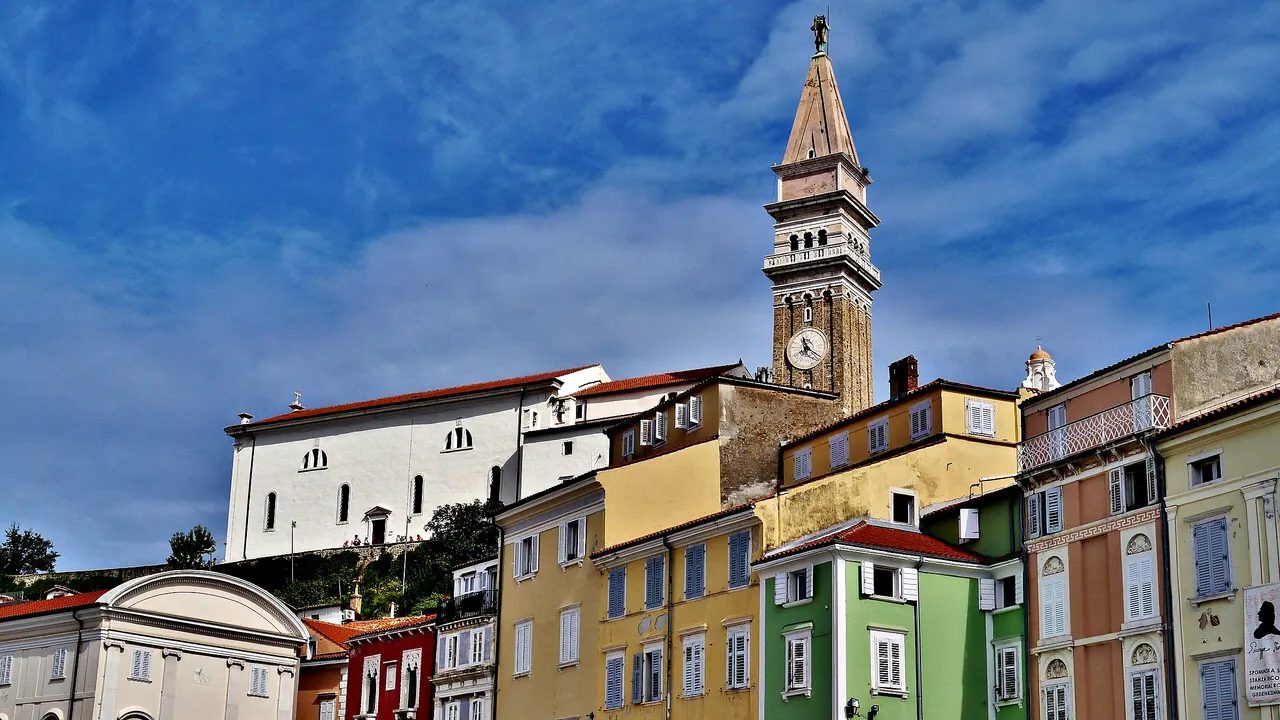
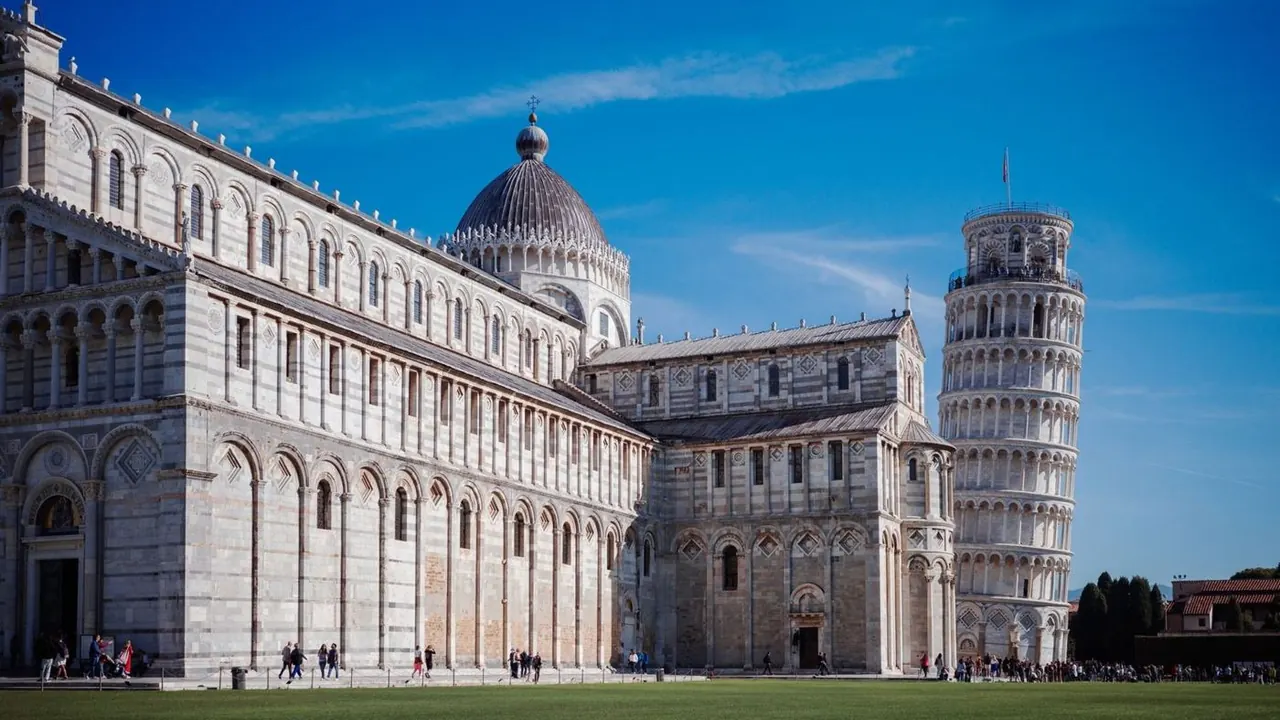
Photos: Piran by Zairon, CC BY-SA 4.0, cropped; Pisa by Bruno Kraler, Pexels License.
Piran or Pisa?
Our verdict in twelve categories, each scored against the same fixed benchmark cities, and the climate month by month, so you can choose for your trip.
Choose Piran for
- wellness
Piran suits a slow seaside stay. It is a car-free Venetian peninsula where you swim off rocks and ladders, spend an afternoon in the brine and salt mud of the Portoroz spas, and finish the evening early on Tartini Square. Pick it for rest, sea and an unhurried pace rather than sights, food or nights out, and hire a car for a day or two if you want to see Trieste and Istria.
Choose Pisa for
- culture and sights
- nightlife
- shopping
For a busier trip built around sightseeing, Pisa is the stronger choice. The Piazza dei Miracoli and the quieter city beyond it fill two full days, and the student quarter eats and drinks better than Piran's harbour. The station also puts Florence, Lucca and the Cinque Terre within easy reach without a car.
Scoreboard
Twelve categories on one fixed scale from 0 to 100. The shaded stretch is the gap between the two.
Your match
Pick a travel style or drag the sliders, and both match scores follow your weighting.
Wins on wellness with your weighting.
Wins on culture and sights and nightlife with your weighting.
What matters to you?
Category by category
What the scores mean for a trip.
Beaches & swimming
The two are about level for swimming but very different in kind. In Piran you swim right below the town walls, climbing into clear Adriatic water from concrete platforms, ladders and rocks around the Punta, with only the pebble cove at Fiesa nearby. If you want sand, you have to go to the small, artificial beach at Portoroz.
Pisa's sea is about 12km away, but there you get long, wide sandy beaches at Tirrenia and Calambrone, backed by pine woods and mostly lined with rented umbrellas and loungers. The water is shallower and warm, but near the mouth of the Arno it is cloudier than in Piran.
Food & drink
You eat better in Pisa. Its Tuscan cooking includes ribollita, wild boar and cecina hot from wood ovens, and the trattorias around the Piazza delle Vettovaglie market are kept honest by students. Avoid the menus near the tower.
Piran's food is narrower: grilled fish, scampi buzara and squid in konobas whose harbour menus look much alike, with Malvazija, Refosk and the local salt on the side. Neither town is a dining destination.
Culture & sights
Pisa has far more to see. The cathedral, baptistery, Leaning Tower and Camposanto stand together on one lawn, and beyond them are Vasari's palace on Piazza dei Cavalieri, Santa Maria della Spina by the river and the medieval painting in San Matteo.
Piran's appeal is the whole town rather than any one sight: Venetian Gothic houses, Tartini Square and the view of the red roofs from St George's campanile and the old walls. With a small maritime museum and an aquarium, a day covers it.
Nightlife
Neither is a place for a big night out, but Pisa has more going on after dark. During term, students fill the squares around the old market late into the night, and aperitivo hour brings people to Borgo Stretto and the river.
In Piran, evenings mean a glass of wine watching the sunset on the Punta, and the town is quiet soon after. For later nights you go to Portoroz for its casino and a few summer clubs.
Nature & outdoors
Pisa has more variety close by. The San Rossore park, with its forest, wetland and wild dunes where you often see fallow deer, starts at the edge of the city. The olive terraces of Monte Pisano are just east, and the Apuan Alps offer proper mountain hiking.
Piran's outdoors is gentler and more about the sea. You can kayak beneath the Strunjan flysch cliffs, watch wading birds on the Secovlje salt pans and cycle the Parenzana through the vineyards. The Skocjan caves on the Karst are about an hour away.
Day trips
Both make good bases, but Pisa is the easier one. Trains reach Florence in about an hour, Lucca in under half an hour, and the Cinque Terre in a little over an hour. Volterra, San Gimignano and Chianti are within reach by car.
Piran's advantage is that three countries meet here. Trieste, Rovinj, Porec and the hill towns of Motovun and Groznjan are all close, and summer boats cross to Venice. Most of these trips are much easier by car than by bus.
Good for families
The two towns work about equally well for families, for different reasons. Piran is safe and calm: no cars in the old town, a warm, quiet sea and a small aquarium. But swimming means ladders rather than sand, and the lanes up to the church are steep.
Pisa has the tower lawn for running about, the famous photo, and a tower climb for older children only. The shallow sandy beaches at Tirrenia and Calambrone are better for paddling. Plan around the summer heat and the crowds on the cathedral square.
Getting around
Getting around is easier in Pisa. The airport is linked to the central station by a shuttle train, everything worth seeing is within walking distance on the flat, and the station is a regional rail hub, so you rarely need a car.
You can cross Piran's car-free old town on foot in about a quarter of an hour, and a shuttle runs from the car park and on to Portoroz. With no railway and slow regional buses, though, exploring further usually means hiring a car.
Shopping & style
Pisa offers more shopping, though it is ordinary Italian shopping: high-street chains along Corso Italia, smarter clothes, shoe shops and old pastry shops under the arcades of Borgo Stretto, and a monthly antiques market by the river. In Piran it comes down to a few craft shops, plus salt flower from Secovlje, Istrian olive oil and coastal wine.
Affordability
Pisa is the cheaper stay. Central rooms are mid-range, the student trattorias are good value, and you can walk everywhere. The costly parts are the tower climb, the cafés next to the monuments, and the umbrellas and loungers at the beach in summer.
In July and August, Piran's old-town rooms are scarce and expensive, and you pay for the view at the waterfront restaurants. Staying in Portoroz or coming outside summer helps, and swimming off the rocks is free.
Live music & performing arts
Pisa has the stronger programme, and the two run in opposite seasons. The 19th-century Teatro Verdi stages opera, ballet and symphonic concerts from autumn to spring.
Piran's music happens in summer: Tartini concerts in churches, the monastery cloister and on the square named after him, plus occasional recitals at the small Tartini Theatre. Out of season there is little on.
Wellness & relaxation
This is where Piran comes out ahead. Portoroz was built as a spa resort around seawater pools and brine baths, and out among the salt pans you can lie in salt mud with the lagoons around you. Strunjan has its own seawater health resort.
Pisa's springs are older and inland: the Roman-era waters of San Giuliano Terme in an 18th-century bath palace, and the larger public pool at Casciana Terme. Beyond those, the calm comes from walks along the Arno rather than from bathing.
When should you go?
Pick your month. The climate figures are measured averages, not a forecast.
Piran in July
Pisa in July
Daytime high, °C
Rainfall in the month, mm
Temperature and rainfall are climate normals, averaged over the years shown. Piran: 2005-2020 (sunshine 1991-2020, rainfall 1991-2020) normals, Portoroz (1.2 km from centre). Pisa: 1991-2020 normals, Pisa / S. Giusto (3.9 km from centre).
Both towns have warm summers and swimming seas from June to September. In July and August daytime highs reach about 30°C in each, and the sea is around 25°C. The difference is the rain. Pisa's summer is very dry, with only about 32mm in July, though the heat on the open plain makes long walks around the monuments tiring in the middle of the day. Piran keeps getting showers through the summer, but sea breezes make the heat easier. Pisa also has a little more sunshine in every month.
Autumn turns wet in both from September. November is the wettest month in each, with about 125mm in Piran and a little more in Pisa. Winters are cool rather than cold, and Piran is the chillier of the two at about 9°C in January. For walking and the outdoors, May and early June are best in both towns, along with late September in Piran and early October in Pisa.
Which traveller are you?
On a culture and arts trip, Pisa is the clear choice. The cathedral square, the San Matteo museum and an opera night at the Teatro Verdi take two days, and Florence is an hour away by train. Piran's Venetian lanes take an afternoon.
For a relaxing and wellness trip, Piran suits better. Its car-free lanes slow you down, and Portoroz, the Secovlje salt pans and Strunjan offer seawater pools, brine baths and salt mud. Pisa has the thermal baths at San Giuliano Terme but no bathing culture in town.
On a food and nightlife trip, Pisa gives more. There are cecina and trattorias around the Vettovaglie market, and during term the squares fill with students until late. Piran offers grilled fish and a glass at sunset, then goes quiet.
Before you go
| Measure | Piran | Pisa |
|---|---|---|
| Official language | Slovene | Italian |
| Currency | Euro (EUR) | Euro (EUR) |
| Sockets | CF230 V, 50 Hz | CFL230 V, 50 Hz |
| Driving side | Right | Right |
| Time zone | UTC+1, UTC+2 in summer | UTC+1, UTC+2 in summer |
| Emergency number | 112 | 112 |
| Elevation | 7 m | 4 m |
| Main airport | Trieste Airport (TRS)34 km from centre32 non-stop destinations | Pisa International Airport (PSA)4 km from centre82 non-stop destinations |
| Public holidays this year | 21 days | 13 days |
By the numbers
| Measure | Piran | Pisa |
|---|---|---|
| City population | 3,787 | 88,737 |
| People per km² | 85 | 479 |
| Museums within 10 km | 5 | 27 |
| UNESCO World Heritage sites within 50 km | 4 | 4 |
| Swim season, months above 21 °C | 4 months | 4 months |
Where else could you go?
Every comparison below shares a destination with this one, so you can follow Piran or Pisa somewhere new.