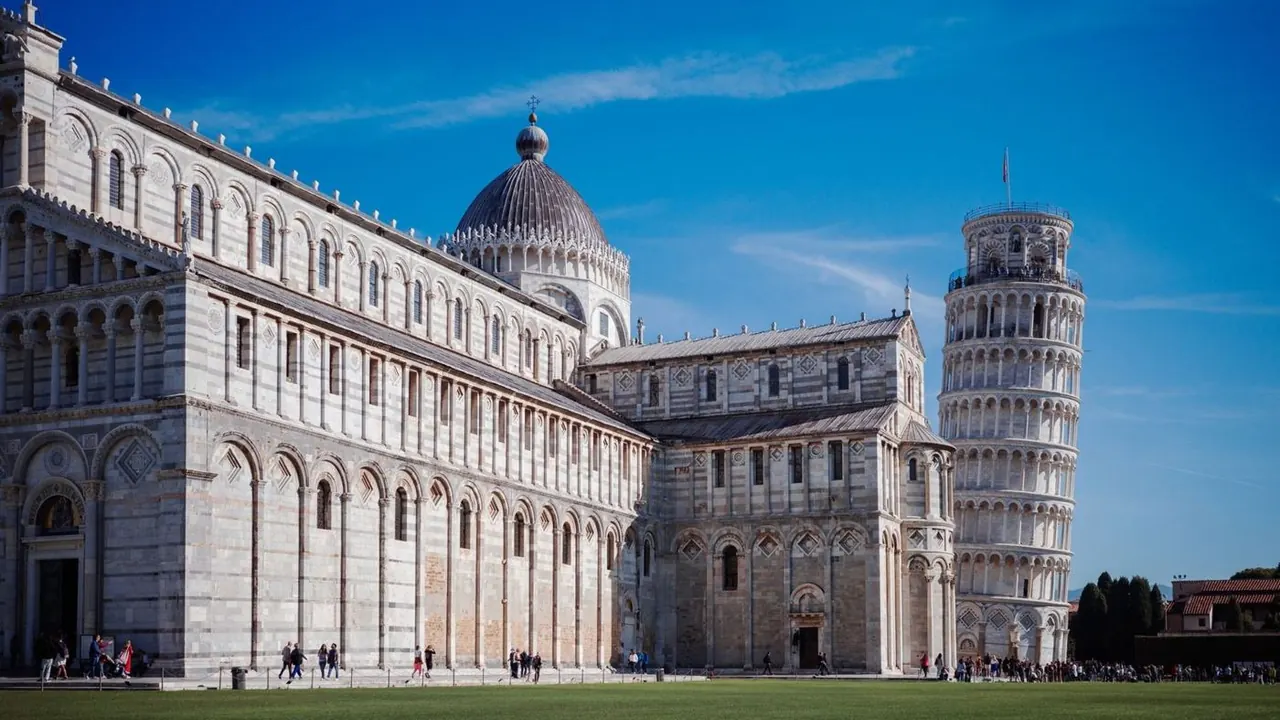
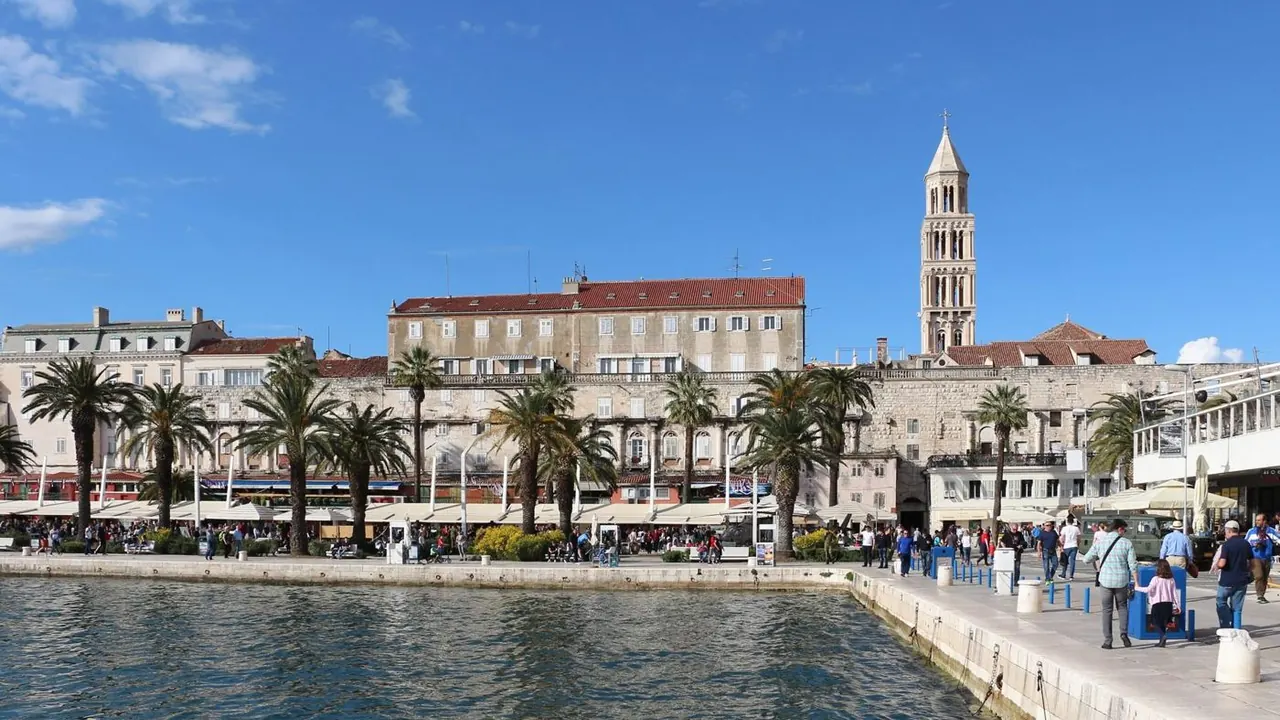
Photos: Pisa by Bruno Kraler, Pexels License; Split by Bernard Gagnon, CC BY-SA 4.0, cropped.
Pisa or Split?
Our verdict in twelve categories, each scored against the same fixed benchmark cities, and the climate month by month, so you can choose for your trip.
Choose Pisa for
- day trips
- prices
- getting around
Pisa suits the traveller who wants Tuscany more than Pisa itself. Its station and its airport sit close to a compact, flat centre, so it works as a base: Florence, Lucca, the Cinque Terre and the marble coast are all easy by train, and the city's own monuments fill a relaxed day or two in between. It also costs less to stay in, and the student trattorias keep meals simple and fair.
Choose Split for
- beaches
- nature and the outdoors
- nightlife
Split is the better choice when the sea and the landscape are the point. You can swim from the old town, take a ferry out to Brač or Hvar, and walk up Marjan or into the limestone ranges behind the coast, with the lived-in Roman palace as your home base. Summer evenings carry on later than they do in Pisa. Expect to pay more in July and August, when it gets hot and crowded.
Scoreboard
Twelve categories on one fixed scale from 0 to 100. The shaded stretch is the gap between the two.
Your match
Pick a travel style or drag the sliders, and both match scores follow your weighting.
Too close to call, level with your weighting
Wins on day trips and prices with your weighting.
Wins on beaches and nature and the outdoors with your weighting.
What matters to you?
Category by category
What the scores mean for a trip.
Beaches & swimming
Split has the better swimming, and it is right on the doorstep. Clear Adriatic water starts a few minutes' walk from the palace, either at sandy, shallow Bačvice with its picigin players or at the pebbly, pine-shaded coves around Marjan. Island beaches on Brač and Šolta are a ferry ride away. The catch is that most of the shore is pebble or concrete, and the town beaches fill up in high summer.
Pisa's sea is a trip out, about 12km to the coast. Once there, though, Tirrenia and Calambrone have the long, soft sand Split lacks, mostly lined with rented loungers, and the water is murkier near the Arno mouth.
Food & drink
These two are about level, and both are good for honest regional cooking rather than fine dining. In Pisa that means Tuscan peasant dishes, game, salt cod and hot cecina, with the best tables around the market at Piazza delle Vettovaglie.
Split is built around the sea: grilled fish, black risotto and octopus under the peka, eaten in the konobas of Varoš with Plavac Mali or Pošip. In both cities the menus closest to the main sight are the ones to avoid.
Culture & sights
The sightseeing is similar in size, and either city takes about two days, but the experience is different. Pisa's great sight is a set piece: cathedral, baptistery, tower and Camposanto standing apart on a lawn. Beyond them are quieter rewards, such as San Matteo's medieval painting and the Lungarni palazzi.
Split's Diocletian's Palace is the opposite. It is a Roman monument people still live in, with houses, bars and a cathedral inside its walls. The best way to see it is to wander, then visit the Meštrović Gallery on Marjan.
Nightlife
Split offers more of a night out. In summer the bars spill into the palace alleys and stairways until late, and the beach bars and clubs around Bačvice keep going into the early hours. From October to May it shrinks to a few bars.
Pisa's evenings are smaller and more talkative: students drinking outside wine shops around the old market, aperitivo on Borgo Stretto, and very few clubs. It depends on term time rather than the tourist season.
Nature & outdoors
Split has the more dramatic outdoors, and you can start most of it on foot. Marjan's pine woods and cliffs begin at the edge of the old town, Mosor and Kozjak offer ridge hikes, and there is rafting in the Cetina canyon and kayaking or sailing among the islands. Krka's waterfalls and Biokovo's peaks are each about an hour away.
Pisa's landscape is gentler. San Rossore's forest, dunes and deer are made for cycling or riding, and there are olive-terrace walks on Monte Pisano. Real mountains mean a trip to the Apuan Alps.
Day trips
This is Pisa's strongest card. Florence and its Uffizi are an hour away by train and Lucca is under half an hour, while the Cinque Terre, Viareggio and the marble towns of Carrara and Pietrasanta are all reachable without a car. Volterra, San Gimignano and Siena are within a drive.
Split has excellent trips too, especially Trogir, Šibenik, Salona and the islands of Hvar and Brač. However, the choice is narrower, and outside summer the reduced ferry timetables take some planning.
Good for families
Both work for children in a simple, unplanned way, with little built specifically for them. In Pisa, children can run on the cathedral lawn, take the classic tower photo and spend days on the shallow sand at Tirrenia. Under-eights cannot climb the tower.
Split offers sea time closer at hand, with Bačvice's paddling water, shady Marjan and a ferry ride that often turns out to be the highlight. The palace's steps and polished stone are hard going with a pushchair, which matters less on Pisa's flat streets.
Getting around
Pisa is easier to get in and out of. The airport is linked to the station by a shuttle train, the flat centre is walkable from end to end, and the station is a rail hub for western Tuscany. Buses to the beach are slow, but bikes suit the town.
Split's car-free core is even more compact, and the ferry port, bus station and railway sit together on the harbour. Beyond that the local buses are basic, summer traffic on the coast road is slow, and the stepped palace lanes are hard work with luggage.
Shopping & style
Neither city is a shopping destination, though Pisa has a little more ordinary Italian shopping: chains along Corso Italia, smarter shoes and pastry shops under the Borgo Stretto arcades, and a monthly antiques market by the river. For serious fashion, you would go on to Florence or Lucca.
In Split, the shops inside the palace lean towards souvenirs and Croatian ties. The best browsing is at the Pazar, with its figs, honey, brandies, olive oil and Dalmatian wine to take home.
Affordability
Pisa is the cheaper of the two across the year, and its prices hold steadier. Rooms stay in the middle range in most months, the student trattorias keep everyday meals fair, and the few real costs are easy to see coming: the tower climb, the cafés on the cathedral square and a lounger on the coast in August.
Split is at its most expensive when most people want to go. In midsummer, a room by the palace and a fish dinner on the Riva, priced by weight, can cost far more than the same nights in Pisa. In spring, early autumn or winter the gap narrows and can even reverse, and bakery breakfasts, the Pazar, local buses and the palace itself stay cheap whatever the month.
Live music & performing arts
Both cities are modest here, and each relies on one historic house. Pisa's Teatro Verdi stages opera, concerts and ballet from autumn to spring, and there are university chamber series.
Split's Croatian National Theatre keeps a similar programme, but its distinctive moments come in summer: opera on the Peristyle during the Split Summer Festival, and klapa singers in the palace vestibule. That makes Split the better choice in July, and Pisa the better choice in the colder months.
Wellness & relaxation
Neither city is a spa destination, but Pisa has an edge with thermal water nearby: the old bath palace at San Giuliano Terme below Monte Pisano, and the larger public pool at Casciana Terme.
Split has no bathing tradition, so its calm comes from fjaka, the long, idle coffees on the Riva, best in spring or September. When the old town is loud in midsummer, quiet means escaping to an island.
When should you go?
Pick your month. The climate figures are measured averages, not a forecast.
Pisa in July
Split in July
Daytime high, °C
Rainfall in the month, mm
Temperature and rainfall are climate normals, averaged over the years shown. Pisa: 1991-2020 normals, Pisa / S. Giusto (3.9 km from centre). Split: 1991-2020 normals, Split / Marjan (0.9 km from centre).
The two run on almost the same temperature curve. Both are pleasant for walking from April to early June and again in September and October, and both are hot in July and August at around 30°C. The sea off each warms to about 25°C by August, so the swimming season covers June to September in both. What separates them is autumn. Pisa turns wet from September, and October and November are its rainiest months at well over 120mm each. Split gets noticeably less rain until November, and its sea is still about 21°C in October, so a late swim is more realistic there.
Split is also the sunnier of the two all year, with more sunshine in winter as well as in midsummer. Winters are mild and similar in both cities, around 11°C to 12°C by day. Both are fine then for sightseeing, though not for the beach.
Which traveller are you?
On a beach and sun trip, Split is the clear pick. The swimming starts a short walk from the palace at Bačvice and the Marjan coves, and ferries reach longer island beaches. Pisa's sandy shore is a bus ride away and better suited to a summer afternoon.
For a short city break, Pisa is easier. The airport is minutes from the centre by shuttle train, everything is walkable on the flat, and a few days can take in the cathedral square, the riverside palazzi and an hour's train ride to Florence.
On a trip on a tight budget, Pisa stretches the money further. Central rooms stay mid-range, student trattorias are cheap and walking costs nothing. Split in high summer charges big-city rates for rooms, and island ferries add up quickly.
Before you go
| Measure | Pisa | Split |
|---|---|---|
| Official language | Italian | Croatian |
| Currency | Euro (EUR) | Euro (EUR) |
| Sockets | CFL230 V, 50 Hz | CF230 V, 50 Hz |
| Driving side | Right | Right |
| Time zone | UTC+1, UTC+2 in summer | UTC+1, UTC+2 in summer |
| Emergency number | 112 | 112 |
| Elevation | 4 m | 0 m |
| Main airport | Pisa International Airport (PSA)4 km from centre82 non-stop destinations | Split Saint Jerome Airport (SPU)12 km from centre69 non-stop destinations |
| Public holidays this year | 13 days | 14 days |
By the numbers
| Measure | Pisa | Split |
|---|---|---|
| City population | 88,737 | 160,577 |
| People per km² | 479 | - |
| Museums within 10 km | 27 | 11 |
| UNESCO World Heritage sites within 50 km | 3 | 4 |
| Swim season, months above 21 °C | 4 months | 4 months |
Where else could you go?
Every comparison below shares a destination with this one, so you can follow Pisa or Split somewhere new.