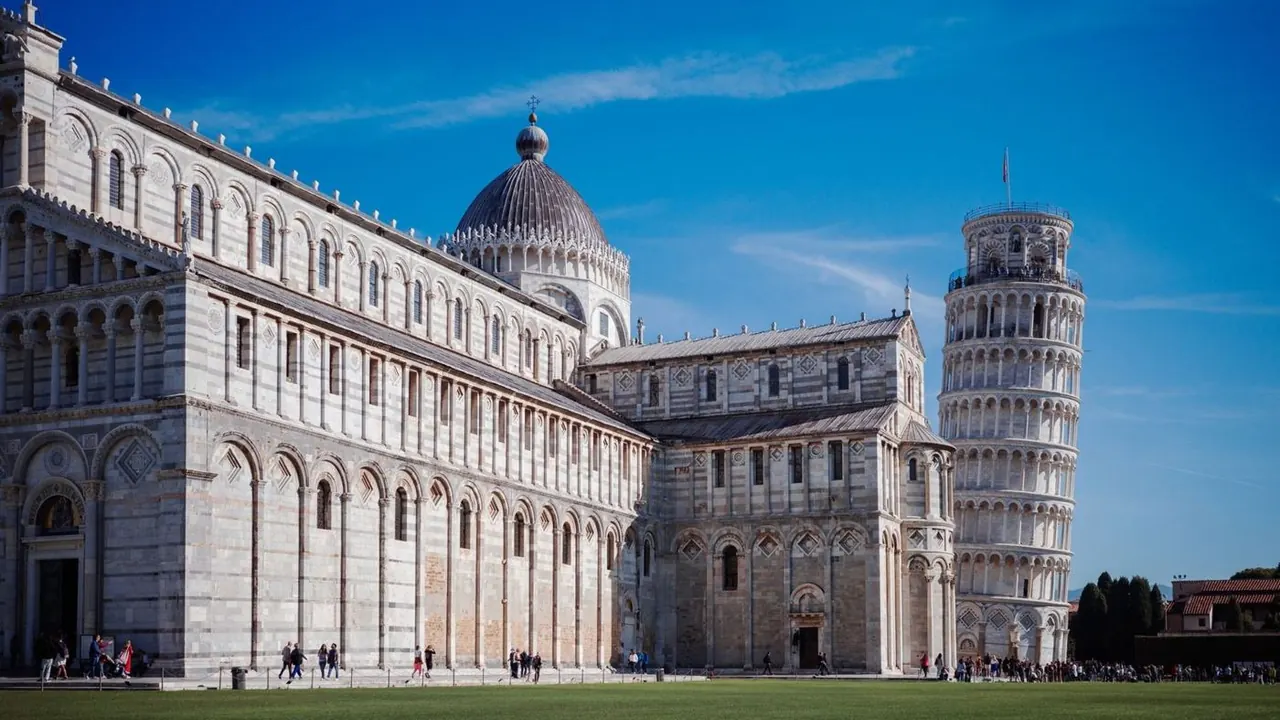
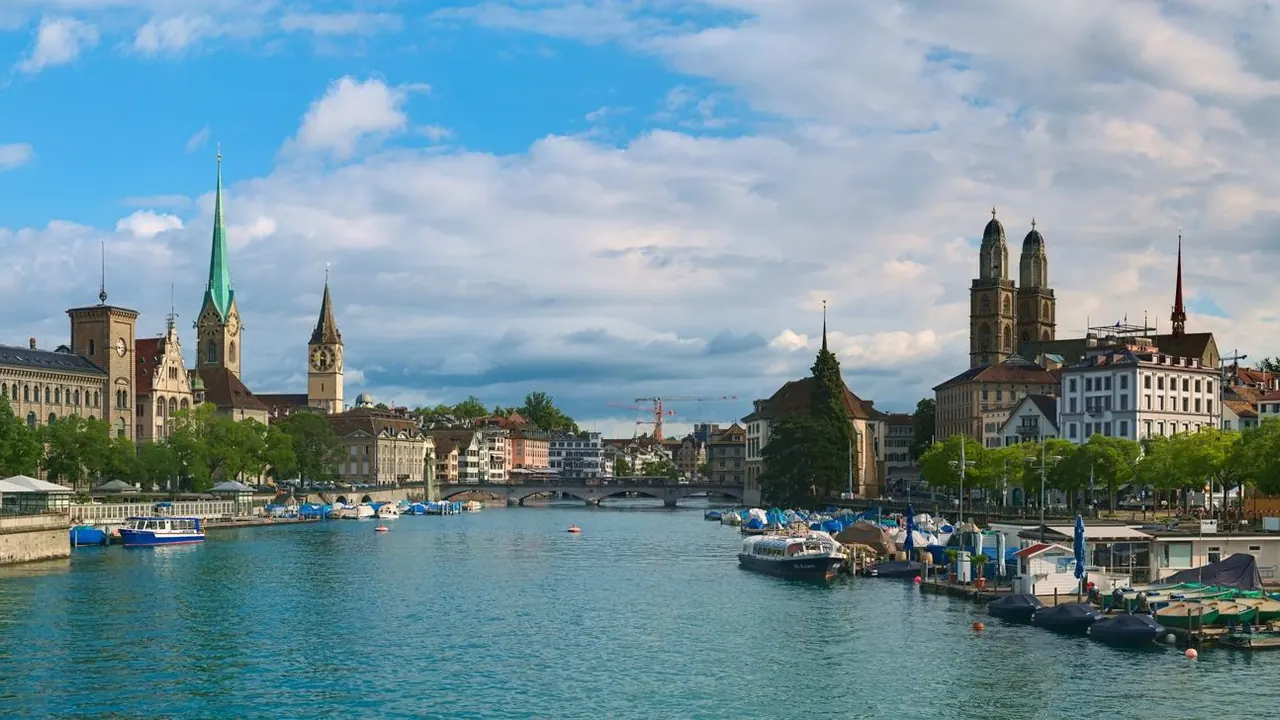
Photos: Pisa by Bruno Kraler, Pexels License; Zurich by Daniel Kraft, CC BY-SA 3.0, cropped.
Pisa or Zurich?
Our verdict in twelve categories, each scored against the same fixed benchmark cities, and the climate month by month, so you can choose for your trip.
Choose Pisa for
- prices
- beaches
- culture and sights
Pisa suits a traveller who wants Tuscany without Tuscany's highest prices. You get the cathedral square, a quiet medieval centre that most visitors never explore, student trattorias, sandy beaches a bus ride away and, best of all, a station that puts Florence, Lucca and the Cinque Terre within an easy day. It works best as a base you leave each morning rather than a place to linger for a week.
Choose Zurich for
- live music and the arts
- shopping
- families
Zurich is the choice when ease and polish matter more than the bill. Trams, trains and lake boats run like clockwork, the Alps are close enough for a day's hiking or skiing, children are well looked after, and the opera house, concert hall and techno clubs give it evenings Pisa cannot match. The catch is the cost, which is about as steep as Europe gets.
Scoreboard
Twelve categories on one fixed scale from 0 to 100. The shaded stretch is the gap between the two.
Your match
Pick a travel style or drag the sliders, and both match scores follow your weighting.
Wins on prices and beaches with your weighting.
Wins on live music and the arts and shopping with your weighting.
What matters to you?
Category by category
What the scores mean for a trip.
Beaches & swimming
Pisa has a real seaside about 12km from the centre. The long sandy beaches of Tirrenia and Calambrone are backed by pine woods, the shallow water warms up properly in midsummer, and Versilia is a short train ride north. The sea near the Arno mouth is rarely clear, though, and rented beach establishments take up much of the shore.
Zurich makes a lot of its lake. The water is clean and clear, and the wooden bathing houses and the Letten river baths are part of everyday summer life. But you swim from grass and decking, not sand, and the season lasts only a few months. Go to Pisa for sand and sea, and to Zurich for a clear-water dip between museums.
Food & drink
These two are about level for eating, but the food is very different. Pisa cooks plain, rustic Tuscan food: ribollita, game, salt cod and hot cecina from wood ovens, best eaten around the Piazza delle Vettovaglie market, where students keep the trattorias honest.
Zurich is richer and more formal. You eat veal in cream sauce with rösti, winter fondue in guild-house dining rooms and confectionery from the old tea rooms on Paradeplatz, with international cooking in Kreis 4 and 5. It has more fine dining than Pisa but no market culture to speak of, and every meal costs far more.
Culture & sights
Pisa has the more memorable sight. The Piazza dei Miracoli is one of Italy's great architectural ensembles: cathedral, baptistery, tower and Camposanto standing together on one lawn. Behind it are Piazza dei Cavalieri, Santa Maria della Spina and the medieval painting of San Matteo.
Zurich's strength lies in its collections rather than a single landmark. The Kunsthaus runs from Swiss painters to Munch and Giacometti, the National Museum tells the country's story and the Rietberg covers art from other continents. Add the Grossmünster and Chagall's windows in the Fraumünster. Each city needs about two days, but Pisa's will stay with you longer.
Nightlife
Zurich is the clear winner after dark. Electronic music runs deep here: clubs in Kreis 4, Kreis 5 and Zurich West stay open until morning at weekends, Langstrasse stays rough and lively late into the night, and in summer the drinking moves out to the bathing houses and the Limmat. The bill for a round is what cuts nights short.
In Pisa, a night out means a glass of wine with students in the squares around the old market, or aperitivo under the arcades of Borgo Stretto. There are few clubs, and outside term time the city goes quiet early.
Nature & outdoors
Zurich's lake and mountains are hard to beat. Shore paths, the Uetliberg ridge and boats to the lake villages are all close at hand, and Rigi, Pilatus and the Glarus valleys are within about an hour for high-mountain hiking, with ski slopes in winter.
Pisa's outdoors is gentler and flatter. The San Rossore park of pinewood, wetland and dunes starts at the edge of town, with fallow deer and easy cycling, and Monte Pisano has olive-terrace paths. The Apuan Alps and Cinque Terre cliff paths need a longer journey, and summer on the plain is sticky.
Day trips
Both cities make excellent bases, but Pisa has the edge, because Florence, a bigger draw than Pisa itself, is only about an hour away by train. Lucca's walls are under half an hour away, and the Cinque Terre a little over an hour. Volterra and San Gimignano are easiest with a car.
From Zurich, Lucerne, Bern, Basel and St Gallen's abbey library are each about an hour, and the Rhine Falls and Stein am Rhein make a good pair. Every one of them is easy by train, so you never need a car.
Good for families
Zurich is built for family days. It has a zoo with an indoor rainforest hall, shallow lidos on the lake, boat trips, the Technorama twenty minutes away and the Transport Museum in Lucerne, and it is clean and safe throughout.
Pisa is flat, compact and manageable, and children love the tower lawn and the pretend-to-hold-it-up photo. Younger ones cannot climb the tower, though, and beyond the beaches at Tirrenia and bike rides in San Rossore, very little is aimed at children. Summer heat and crowds take planning.
Getting around
Zurich is about as easy as cities get. Trams, S-Bahn, funiculars and lake boats all run on one ticket and keep to time, and the airport is a short train ride away.
Pisa works differently: you can walk everything, about half an hour from station to tower. A shuttle train links the very close airport, and the station is the rail hub for western Tuscany. Only the buses to the beaches are slow.
Shopping & style
Zurich is the place to shop. Bahnhofstrasse runs from station to lake past watchmakers, jewellers and old department stores, the Altstadt lanes hold antique shops, and the arches of the Zurich West viaduct house design shops. Everything is expensive.
Pisa offers everyday Italian shopping: chains along Corso Italia, smarter shoes and pastry shops on Borgo Stretto, and a monthly antiques market by the river. Serious shoppers head to Florence.
Affordability
In Pisa the expense gathers in a few predictable places. The tower climb is the one ticket that really stings, the cafés facing the cathedral square charge for the view, and in July and August an umbrella and lounger on the beaches of Tirrenia comes at seaside rates. Step a few streets away from the monuments, or come outside the summer peak, and the city feels reasonable for such a famous name.
Zurich has no cheap corner to retreat to, because the cost follows you everywhere: the bed, every meal, a round of drinks, even a tram ride or a museum ticket. The integrated travel pass and the visitor card that bundles museum entry take some of the edge off, and supermarket picnics on the lake shore, the free lidos and the drinking fountains help more. Even so, the same sum goes a good deal further in Pisa.
Live music & performing arts
Pisa's stage is essentially the Teatro Verdi, a horseshoe-shaped opera house from the nineteenth century, where an unpretentious night at the opera is a real pleasure. Beyond that there are chamber concerts and church recitals, and anything bigger means going to Florence.
Zurich offers far more. The Opernhaus is among Europe's most respected opera houses, the Tonhalle Orchestra plays in a richly restored concert hall, and the Rote Fabrik and the clubs of the old industrial districts bring jazz, indie and touring bands. Theatre at the Schauspielhaus is mostly in German.
Wellness & relaxation
Both cities have a Roman-era spa town close by: San Giuliano Terme with its 18th-century bath palace below Monte Pisano for Pisa, and Baden twenty minutes by train from Zurich.
Zurich goes further within the city itself, with thermal pools in the vaults of an old brewery and a rooftop pool. In winter the lake and river bathing houses become saunas with cold dips in between. Pisa's calm comes instead from long lunches and evenings by the river.
When should you go?
Pick your month. The climate figures are measured averages, not a forecast.
Pisa in July
Zurich in July
Daytime high, °C
Rainfall in the month, mm
Temperature and rainfall are climate normals, averaged over the years shown. Pisa: 1991-2020 normals, Pisa / S. Giusto (3.9 km from centre). Zurich: 1991-2020 normals, Zurich Town / Ville. (2.2 km from centre).
Pisa has the longer warm season. From May the days are pleasant for walking the old streets, and July and August reach about 30°C, which is hot and humid on the plain. That is when the sea is at its warmest, around 25°C, and rain is scarce, so the beaches at Tirrenia are at their best. For sightseeing, late spring and September are kinder. From September onwards the rain comes in earnest, peaking at around 132mm in November, though the winters stay mild enough for a quiet off-season city visit.
Zurich runs cooler, and its summer is also its wettest stretch. Even so, June to August bring the most sunshine and highs of about 24°C, which is warm enough for the lake lidos and alpine walks. Winter is cold, around 4°C, with short grey days and fog over the lake, better for saunas and ski days than for strolling. If you want warmth, Pisa wins from May to October. Zurich is at its most rewarding from June to early September.
Which traveller are you?
On a trip on a tight budget, Pisa is the obvious pick. Student trattorias, mid-range rooms and a centre you can walk keep daily costs modest. Zurich is among the world's most expensive cities, and even careful travellers feel every meal and every night.
On a family trip with children, Zurich makes life easier. It is clean, safe and orderly, buggies are no trouble on the transport, and much of what it offers is made with children in mind. Pisa is manageable but has little for children beyond the tower and the beach.
For an outdoors trip, choose Zurich. Real alpine hiking in summer and skiing in winter are a short train ride away, and the lake is always close by. Pisa's outdoors means gentle parkland and low hills, lovely for cycling but tame by comparison.
Before you go
| Measure | Pisa | Zurich |
|---|---|---|
| Official language | Italian | French, German, Italian, Romansh |
| Currency | Euro (EUR) | Swiss Franc (CHF) |
| Sockets | CFL230 V, 50 Hz | CJ230 V, 50 Hz |
| Driving side | Right | Right |
| Time zone | UTC+1, UTC+2 in summer | UTC+1, UTC+2 in summer |
| Emergency number | 112 | 112 |
| Elevation | 4 m | 408 m |
| Main airport | Pisa International Airport (PSA)4 km from centre82 non-stop destinations | Zürich Airport (ZRH)9 km from centre226 non-stop destinations |
| Public holidays this year | 13 days | 10 days |
By the numbers
| Measure | Pisa | Zurich |
|---|---|---|
| City population | 88,737 | 440,935 |
| People per km² | 479 | 5,016 |
| Museums within 10 km | 27 | 63 |
| UNESCO World Heritage sites within 50 km | 3 | 1 |
| Swim season, months above 21 °C | 4 months | - |
Where else could you go?
Every comparison below shares a destination with this one, so you can follow Pisa or Zurich somewhere new.