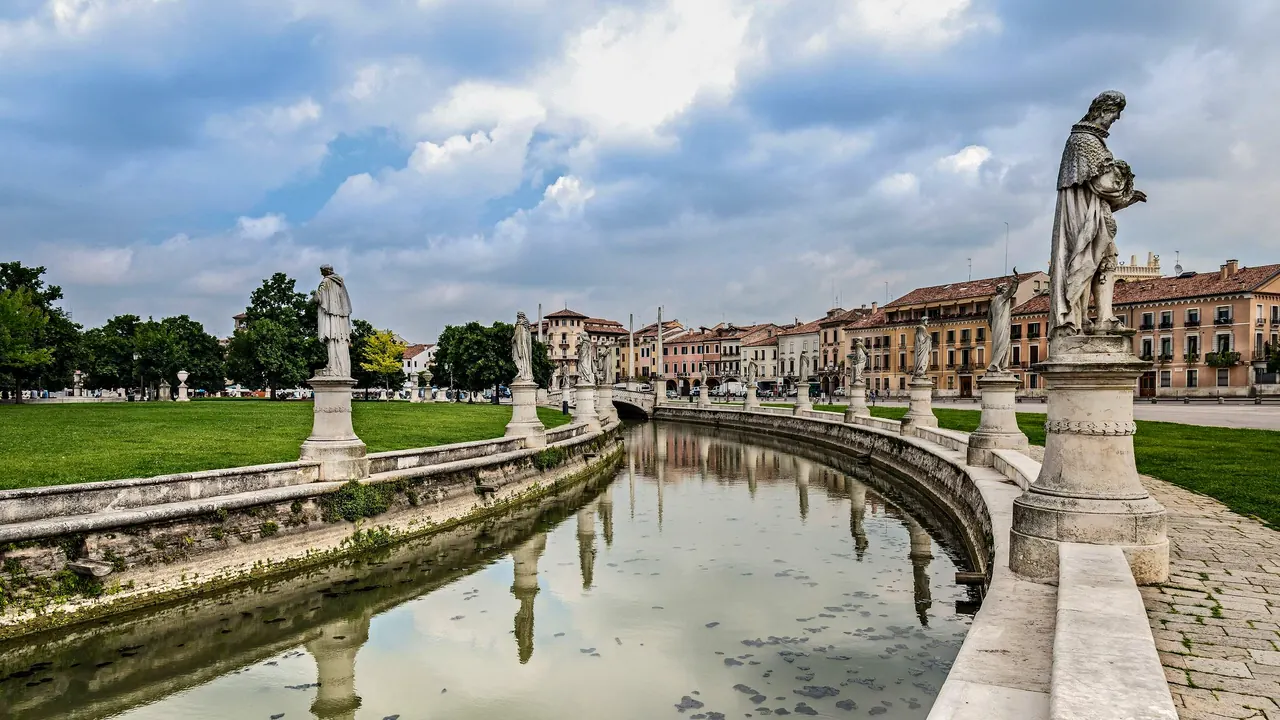
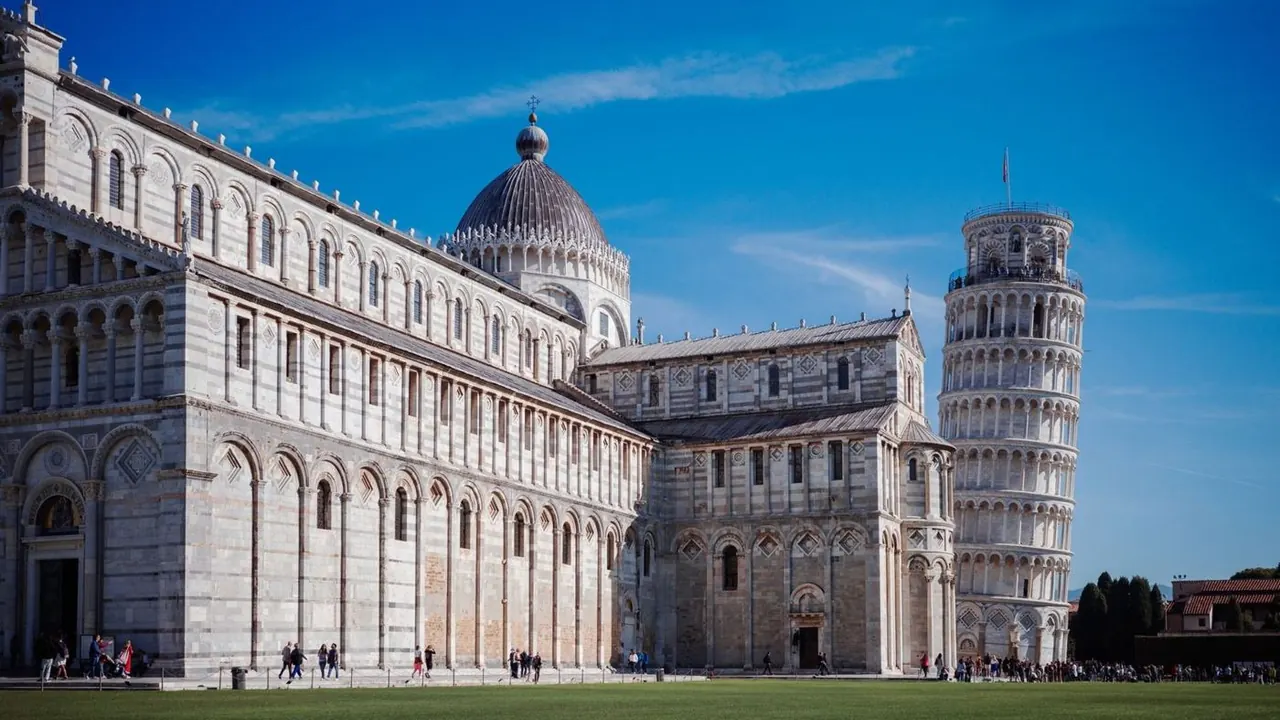
Photos: Padua by Didier Descouens, CC BY-SA 4.0, cropped; Pisa by Bruno Kraler, Pexels License.
Padua or Pisa?
Our verdict in twelve categories, each scored against the same fixed benchmark cities, and the climate month by month, so you can choose for your trip.
Choose Padua for
- wellness
- food and drink
- shopping
Padua suits a traveller who wants art and comfort in equal measure: Giotto's frescoes and the Basilica of Saint Anthony in the morning, a thermal soak at Abano in the afternoon, and a spritz in the market squares at dusk. It is also a calmer base for Venice, Verona and Vicenza by train, and it has the richer Venetian cooking to come back to.
Choose Pisa for
- beaches
- families
- nature and the outdoors
Choose Pisa if your trip mixes sightseeing with the sea and open country. The Piazza dei Miracoli and the quieter old town take a couple of days. After that, the sandy coast, the San Rossore park and easy trains to Florence, Lucca and the Cinque Terre fill the rest of the stay. That makes it the better pick for families and for summer.
Scoreboard
Twelve categories on one fixed scale from 0 to 100. The shaded stretch is the gap between the two.
Your match
Pick a travel style or drag the sliders, and both match scores follow your weighting.
Too close to call, level with your weighting
Wins on wellness and food and drink with your weighting.
Wins on beaches and families with your weighting.
What matters to you?
Category by category
What the scores mean for a trip.
Beaches & swimming
Padua is inland, so a beach day means an hour's journey to Sottomarina or the Venice Lido. Both are flat strips of umbrellas on a shallow, calm Adriatic, fine for paddling but not much to look at.
Pisa has the sea much closer. About 12km west, the long sandy beaches of Tirrenia and Calambrone run beside pine woods, Marina di Pisa adds rocky breakwaters and coves, and Versilia is a short train ride north. From Pisa a swim fits into a sightseeing afternoon, which it never quite does from Padua.
Food & drink
Padua has the more interesting food. Its Venetian home cooking includes bigoli with duck sauce, baccalà and risotto with spring peas. The twin morning markets in Piazza delle Erbe and Piazza della Frutta feed it, and the city has a proper spritz ritual in the squares, Euganean wines and the historic Caffè Pedrocchi.
Pisa eats more plainly: Tuscan soups, game and hot cecina from wood ovens, best in the trattorias around Piazza delle Vettovaglie. Avoid the menus near the Leaning Tower. Neither city is a place for fine dining.
Culture & sights
Padua comes out ahead on art. Giotto's frescoes in the Scrovegni Chapel changed European painting. Around them are a UNESCO-listed group of fourteenth-century fresco cycles, the Basilica of Saint Anthony with Donatello's bronzes, the world's oldest permanent anatomical theatre and the oldest university botanical garden still in its original place.
Pisa's strength is one great group of buildings: the cathedral, baptistery, tower and Camposanto on the lawn of the Piazza dei Miracoli. Beyond it, Piazza dei Cavalieri, Santa Maria della Spina and the medieval painting in San Matteo are worth the second day that most visitors skip.
Nightlife
Neither city is built for a big night out, and both run on students and early-evening drinks in the squares. In Padua that means the standing spritz crowd around the Palazzo della Ragione, which spills across Piazza delle Erbe and Piazza dei Signori on warm nights, with wine bars in the old ghetto.
Pisa's evenings centre on the small squares around the old market and along the river. In summer it has something Padua lacks: bars on the beach. Both cities go quiet outside university term.
Nature & outdoors
Padua's outdoors starts about 15km away in the Euganean Hills, old volcanic cones with vineyards, chestnut woods and quiet roads for cycling. Closer in are level towpaths along the Brenta. For real mountain walking you drive about an hour and a half to the pre-Alps.
Pisa has wilder country right at the edge of town. The San Rossore park has pine forest, wetland and undeveloped dunes running down to the sea, and you often see fallow deer. The olive terraces of Monte Pisano rise just to the east, and the Apuan Alps and the Cinque Terre cliff paths are within reach.
Day trips
Both are among the best bases in Italy, and the difference is in what you go out to see. From Padua it is Venice in under half an hour, Palladio's Vicenza, Verona and Bologna: a string of Veneto and Emilian art cities along the railway.
From Pisa it is Florence in about an hour, Lucca next door and the Cinque Terre by train. By car you reach the Tuscan hill towns of Volterra and San Gimignano, so the mix is city, coast and countryside.
Good for families
Both cities have flat, compact centres where children are welcome. In Padua, Prato della Valle and the botanical glasshouses are the main options for children. For a bigger day out, Gardaland and Lake Garda are more than an hour away.
Pisa does better because its family days are close by: the shallow sandy beaches at Tirrenia and Calambrone, cycling and horse riding in San Rossore, and the tower lawn with its photo every child wants. Older children can climb the tower, but younger ones are not allowed up.
Getting around
Both are small, flat and easy on foot, and both rely on trains for day trips. Padua's sights are all within a 20-minute walk, much of it under arcades, and a tram runs from the station to Prato della Valle.
Pisa takes a little longer to cross, about half an hour on foot from the station to the tower. Its airport, though, is so close that a shuttle train runs straight to the station.
Shopping & style
Neither city is a shopping destination, but Padua has more to browse. Its arcaded streets have Italian fashion and shoe shops and university bookshops, and the delicatessens under the Palazzo della Ragione sell cheese and Euganean wine to take home. A large antiques market fills Prato della Valle once a month.
Pisa has the chains along Corso Italia, smarter shops on Borgo Stretto and souvenir stalls around the tower. Serious shoppers go from Padua to Venice or Milan, and from Pisa to Florence or Lucca.
Affordability
Costs are much the same in both. Each is moderately priced, with good-value trattorias that feed the students and centres small enough to walk.
The extra costs fall in different places. Padua's rooms get dearer around trade fairs and graduation season, though its hotels still make a cheaper bed for days spent in Venice. In Pisa, the tower climb and the cafés beside the Piazza dei Miracoli are the expensive part, along with beach loungers in summer.
Live music & performing arts
Each city has a nineteenth-century horseshoe-shaped Teatro Verdi and a modest season rather than a real scene. Pisa's Verdi offers more as an opera house, with opera, ballet and symphonic concerts from autumn to spring. Padua's strength is its chamber orchestra, which plays in places like the frescoed Sala dei Giganti and the Basilica of Saint Anthony.
For major productions Padua has better reach, with the Fenice in Venice and the summer Arena in Verona close by. From Pisa you go to Florence.
Wellness & relaxation
Padua has one of Europe's largest thermal districts on its doorstep. Abano and Montegrotto Terme, about 12km away, have dozens of spa hotels with hot mineral pools and mud treatments, and many take day visitors after a morning of sightseeing.
Pisa has its own Roman-era springs at San Giuliano Terme, with a spa in an 18th-century bath palace, and a larger public pool at Casciana Terme, but there is less on offer. Pisa's calm comes more from evenings by the Arno and the small size of the city.
When should you go?
Pick your month. The climate figures are measured averages, not a forecast.
Padua in July
Pisa in July
Daytime high, °C
Rainfall in the month, mm
Where the figures come from
Padua's temperatures are measured 35 km from the centre, at Treviso / Istrana.
Padua has no rain gauge within 25 km of the centre, so its rainfall comes from a gridded climate dataset read at the city rather than from a gauge further away.
Padua's sunshine is measured 36 km from the centre, at Treviso / S. Angelo.
Temperature and rainfall are climate normals, averaged over the years shown. Padua: 1991-2020 normals, Treviso / Istrana (35.4 km from centre). Pisa: 1991-2020 normals, Pisa / S. Giusto (3.9 km from centre).
For walking the streets, both cities are most comfortable in May, June and September, when afternoons are warm but not yet at full midsummer heat. July and August reach about 31°C on the Venetian plain and feel close and humid. Pisa is barely cooler, but its summers are much drier and sunnier, so these are its best beach months. The Adriatic off Padua's coast warms just as much, to around 26°C in August, but those beaches are an hour away.
The two differ most in autumn and winter. In Pisa the rain sets in hard from September, and October and November are its wettest months at around 130mm. Padua's rain is spread more evenly through the year. Padua's winters are colder, with January afternoons near 8°C and fog often lying over the plain, while Pisa's winter days are milder. For a winter walking break, Tuscany is the better choice if you can avoid the showers.
Which traveller are you?
For a beach and sun trip, Pisa is the clear pick. Sandy beaches backed by pine woods lie about 12km away, the Versilia resorts are a short train ride north, and summers are dry and sunny. From Padua, the flat Adriatic beaches are an hour's trip.
On a relaxing and wellness trip, Padua comes out well ahead. The thermal pools and mud treatments of Abano and Montegrotto are a short ride out of town. Between soaks, the arcades, long lunches and the old botanical garden keep the pace slow.
On a family trip with children, Pisa works better. Shallow sandy beaches, cycling and riding in San Rossore and the tower photo fill the days without going far. In Padua, children face mostly frescoes and churches, so families depend on longer trips out.
Before you go
| Measure | Padua | Pisa |
|---|---|---|
| Official language | Italian | Italian |
| Currency | Euro (EUR) | Euro (EUR) |
| Sockets | CFL230 V, 50 Hz | CFL230 V, 50 Hz |
| Driving side | Right | Right |
| Time zone | UTC+1, UTC+2 in summer | UTC+1, UTC+2 in summer |
| Emergency number | 112 | 112 |
| Elevation | 12 m | 4 m |
| Main airport | Venice Marco Polo Airport (VCE)39 km from centre103 non-stop destinations | Pisa International Airport (PSA)4 km from centre82 non-stop destinations |
| Public holidays this year | 13 days | 13 days |
By the numbers
| Measure | Padua | Pisa |
|---|---|---|
| City population | 206,496 | 88,737 |
| People per km² | 2,220 | 479 |
| Museums within 10 km | 29 | 27 |
| UNESCO World Heritage sites within 50 km | 5 | 4 |
| Swim season, months above 21 °C | 4 months | 4 months |
Where else could you go?
Every comparison below shares a destination with this one, so you can follow Padua or Pisa somewhere new.