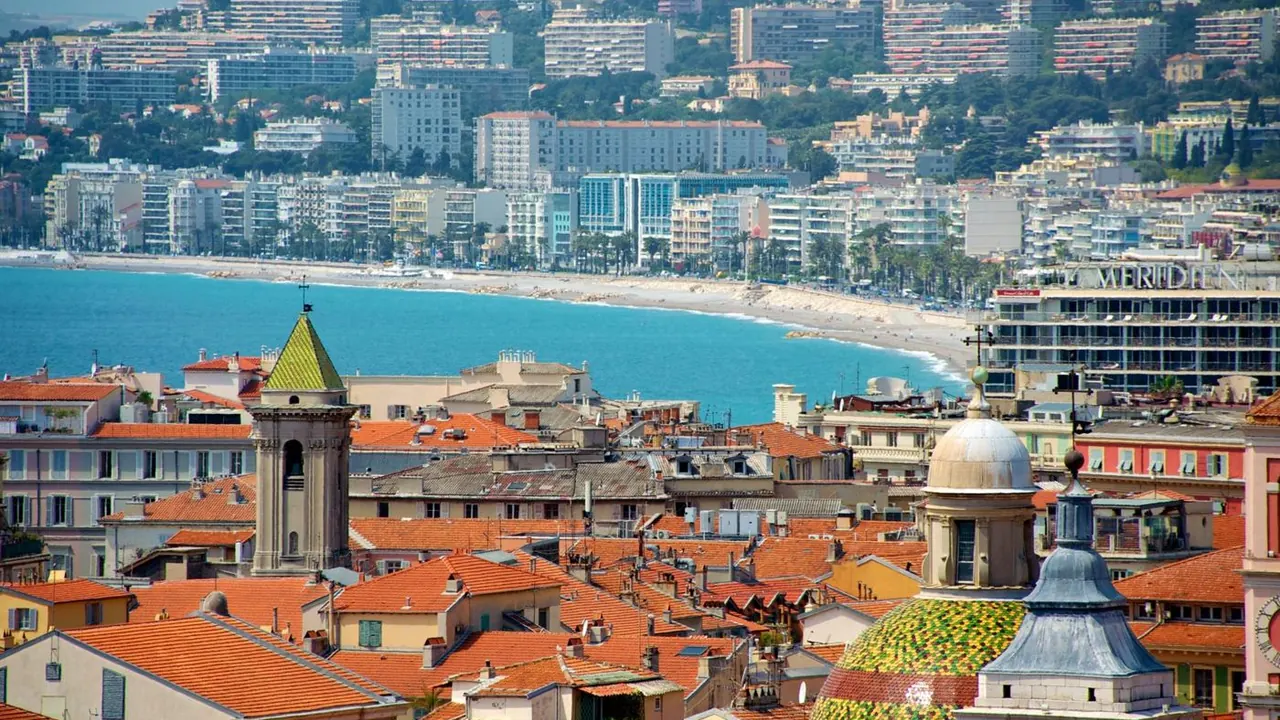
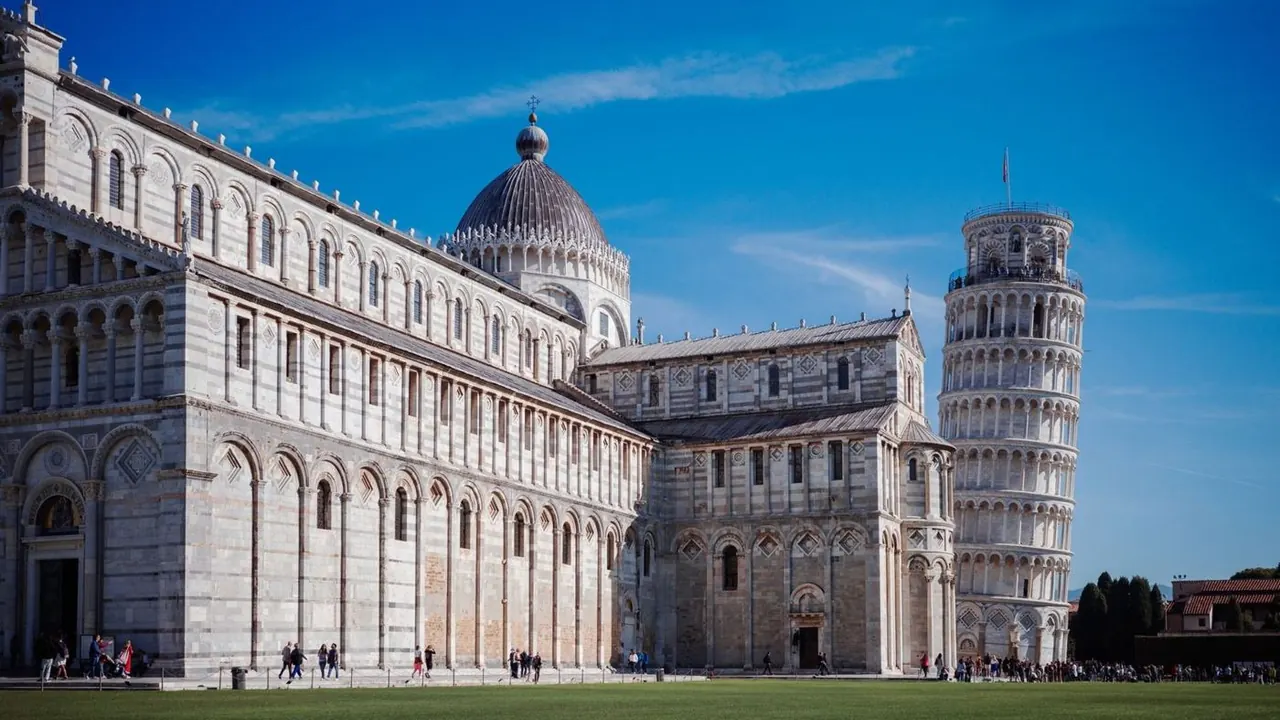
Photos: Nice by Daniel Stockman, CC BY-SA 2.0, cropped; Pisa by Bruno Kraler, Pexels License.
Nice or Pisa?
Our verdict in twelve categories, each scored against the same fixed benchmark cities, and the climate month by month, so you can choose for your trip.
Choose Nice for
- nature and the outdoors
- beaches
- shopping
Nice suits travellers who want the sea and the mountains in one stay. It has a long swimming season and clear water, with coastal paths and Alpine valleys within reach. Its old town is livelier at night, the shopping is better and the food has a character of its own. It costs more, especially in summer, but a week on the Riviera gives you something different every day.
Choose Pisa for
- prices
- day trips
- wellness
Pisa is the better pick for a cheaper, compact base built around Tuscan sightseeing. One of Italy's great groups of buildings is on the doorstep, Florence, Lucca and the Cinque Terre are a short train ride away, and the student trattorias keep meals honest. The beach is a sideline and the evenings are quiet, so it fits a trip made of days out rather than days on the sand.
Scoreboard
Twelve categories on one fixed scale from 0 to 100. The shaded stretch is the gap between the two.
Your match
Pick a travel style or drag the sliders, and both match scores follow your weighting.
Wins on nature and the outdoors and beaches with your weighting.
Wins on prices and day trips with your weighting.
What matters to you?
Category by category
What the scores mean for a trip.
Beaches & swimming
In Nice the sea is at the end of the street. About 7km of pebble shore runs below the promenade, the water is clear and blue, and the sandy coves at Villefranche and Beaulieu are a few minutes along the coast. The stones are the catch, which is why loungers and water shoes make a difference.
Pisa's coast is about 12km away by bus, but it has sand rather than pebbles. The long, shallow beaches of Tirrenia and Calambrone, backed by pine woods, are easy for paddling. The water near the mouth of the Arno is rarely clear, though, and most visitors treat the beach as a summer afternoon off.
Food & drink
The two share a street food: Nice's socca and Pisa's cecina are both chickpea flatbreads baked in wood ovens. Nice has the fuller kitchen behind it. Its Ligurian-style dishes, the Cours Saleya market, the tiny Bellet vineyards and a few serious kitchens in the hills give you more to explore over a week.
Pisa serves plain, generous Tuscan cooking such as ribollita, game and salt cod, at its best in the student trattorias around Piazza delle Vettovaglie. It is honest and good value but narrower, and there is little serious dining. In both cities, skip the tables beside the main sights.
Culture & sights
Each city fills two or three days, but in different ways. Pisa has the single great set piece: the marble cathedral, the baptistery, the Leaning Tower and the Camposanto together on one lawn. Walk on into the medieval city and you find Piazza dei Cavalieri, Santa Maria della Spina and the San Matteo museum.
Nice has no monument on that scale. Its strength is twentieth-century art, with Matisse in Cimiez, Chagall's biblical cycle and MAMAC, set against an Italianate old town and the villas and Russian cathedral of the Belle Époque resort. Pisa is the choice for architecture and medieval painting, Nice for modern art.
Nightlife
A night out in Nice usually means dinner in Vieux Nice and then a slow wander between the wine and cocktail bars in its narrow lanes, where students, locals and visitors share the same doorways. The harbour suits a quieter drink with an older crowd, and in summer the evenings stretch out at the beach clubs and along the seafront. From autumn to spring the old town empties sooner, and anyone after proper clubs takes the train to Monaco or Cannes.
Pisa's version is smaller and depends on the university calendar. In term time you get a glass outside a little bar in the squares by the old market, or an aperitivo under the arcades of Borgo Stretto, with conversation running on late. Out of term it fades early, the streets around the tower are empty after dark, and in summer whatever life there is moves to bars on the beach. Nice gives you more to do after dinner, while Pisa gives you a quieter piazza.
Nature & outdoors
Nice has more outdoors because the Alps come down to the sea there. It has cape paths at Cap Ferrat and Cap d'Ail, cycling on the corniches and limestone gorges behind the coast. The Mercantour is about two hours away and Isola 2000 and Auron offer skiing in winter. Diving and sailing are easy to arrange.
Pisa's nature is flatter and gentler. The San Rossore park, with its pine forest, wetlands, dunes and fallow deer, begins at the edge of the city and suits bikes and horses. The Monte Pisano has walks along olive terraces. For real mountain hiking you need to go to the Apuan Alps or the Cinque Terre.
Day trips
Both are excellent bases. The difference is what lies along the line. From Nice, the trips run along one coast: Monaco, Èze, Villefranche, Menton, Antibes and Cannes, plus Grasse and Saint-Paul-de-Vence inland and Sanremo across the Italian border. Almost all are under an hour away.
From Pisa, the trips lead to first-rank cities. Florence and the Uffizi are about an hour away and Lucca is under half an hour. The Cinque Terre are a train ride north, and with a car you can reach Volterra, San Gimignano and Siena. Nice offers a string of different seaside towns, Pisa offers Renaissance Tuscany.
Good for families
Both are easy with children without being made for them. Nice has more in town for them, with the playgrounds and water jets of the Promenade du Paillon and the animals at Parc Phoenix, but its pebble beaches are hard on small feet.
In Pisa, children get the tower photo and the lawn to run on, though younger ones cannot climb the tower. There are also the shallow sandy beaches at Tirrenia and bike rides in San Rossore. Midsummer heat is the thing to plan around in both cities.
Getting around
Neither city needs a car, but they work differently. Nice is bigger, so the tram from the airport across the city and the buses up to Cimiez do real work, and the coastal trains handle the day trips. Crowded summer trains are its main drawback.
Pisa is small enough to walk from end to end in about half an hour. The airport is unusually close and linked by a shuttle train, and the station is a rail hub for western Tuscany.
Shopping & style
Nice has more variety. Avenue Jean Médecin is the main high street, and the streets around rue Paradis have the luxury labels. The old town sells Provençal soaps, olive oil and fabrics, and the Cours Saleya holds an antiques market on Mondays.
Pisa's shopping is everyday Italian, along Corso Italia and under the arcades of Borgo Stretto, with a monthly antiques market by the river. Serious fashion or crafts mean a trip to Florence or Lucca.
Affordability
Pisa is the cheaper place to stay. Central rooms are mid-range, the student trattorias keep meals fair, and the small centre costs nothing to walk. The tower climb and the cafés beside it are the main expenses.
Nice is expensive by southern European standards, especially for seafront rooms in summer and private beach loungers. Cheap trams and coastal trains, low museum entry fees and socca lunches help, and spring and late autumn are easier on the budget.
Live music & performing arts
Nice has more to offer. The Opéra de Nice stages opera, ballet and Philharmonic concerts, the Théâtre National puts on drama, and two events are worth planning a trip around: the Nice Jazz Festival in July and the Carnival in February.
Pisa's main stage is the Teatro Verdi, a horseshoe-shaped house whose autumn-to-spring season makes for a relaxed night of Italian opera. Beyond that there are university concerts and church recitals, and bigger productions mean going to Florence.
Wellness & relaxation
Neither city has a bathing tradition within its own streets, but Pisa has real thermal water close by. San Giuliano Terme, used since Roman times, has a spa in its 18th-century bath palace, and Casciana Terme has a large public pool.
Nice relies on seafront hotel spas and thalassotherapy centres along the coast. Its calm comes from the sea itself: an early swim, a long lunch and a walk along the promenade at dusk, best enjoyed out of season.
When should you go?
Pick your month. The climate figures are measured averages, not a forecast.
Nice in July
Pisa in July
Daytime high, °C
Rainfall in the month, mm
Temperature and rainfall are climate normals, averaged over the years shown. Nice: 1991-2020 normals, Nice (8 km from centre). Pisa: 1991-2020 normals, Pisa / S. Giusto (3.9 km from centre).
Both follow the same Mediterranean pattern, with dry, hot summers and a wet late autumn, but Nice is the milder and sunnier of the two all year round. Its beach season runs from June to September, with the sea at about 25°C in August. Summer highs of around 28°C make walking a little easier than in Pisa. Winters are softer too, and even December and January are brighter than in Pisa, so Nice works for a winter break as well.
Pisa sits on a plain and reaches about 30°C in July and August, when the heat and humidity make sightseeing at midday hard work. Its sea warms just as much, so those are its beach months. For walking the city, May, June and early September are kinder. In both places the rain arrives in September, and October and November are the wettest months, with well over 100mm each. Late spring is the safest season for either city.
Which traveller are you?
On a beach and sun trip, Nice is the clear choice. The sea starts at the foot of the promenade, the water is clearer, the sunny season lasts longer and the sandy coves at Villefranche and Beaulieu are minutes away. Pisa's beaches need a bus and suit an afternoon off.
For a trip on a tight budget, Pisa goes further. Central rooms cost less, the student trattorias keep meals cheap, the centre is easy to walk and Florence and Lucca are a short train ride away. Nice can be done cheaply with socca and trams, but its summer rooms cost a lot.
On an outdoors trip, Nice has the wider range. It has the cape paths, the corniche cycling routes, the high lakes of the Mercantour and winter skiing about an hour and a half away. Pisa's San Rossore park and Monte Pisano are lovely for easy rides and walks, but they are gentler.
Before you go
| Measure | Nice | Pisa |
|---|---|---|
| Official language | French | Italian |
| Currency | Euro (EUR) | Euro (EUR) |
| Sockets | CE230 V, 50 Hz | CFL230 V, 50 Hz |
| Driving side | Right | Right |
| Time zone | UTC+1, UTC+2 in summer | UTC+1, UTC+2 in summer |
| Emergency number | 112 | 112 |
| Elevation | 0 m | 4 m |
| Main airport | Nice-Côte d'Azur Airport (NCE)6 km from centre130 non-stop destinations | Pisa International Airport (PSA)4 km from centre82 non-stop destinations |
| Public holidays this year | 11 days | 13 days |
By the numbers
| Measure | Nice | Pisa |
|---|---|---|
| City population | 357,737 | 88,737 |
| People per km² | 4,975 | 479 |
| Museums within 10 km | 17 | 27 |
| UNESCO World Heritage sites within 50 km | 2 | 3 |
| Swim season, months above 21 °C | 4 months | 4 months |
Where else could you go?
Every comparison below shares a destination with this one, so you can follow Nice or Pisa somewhere new.