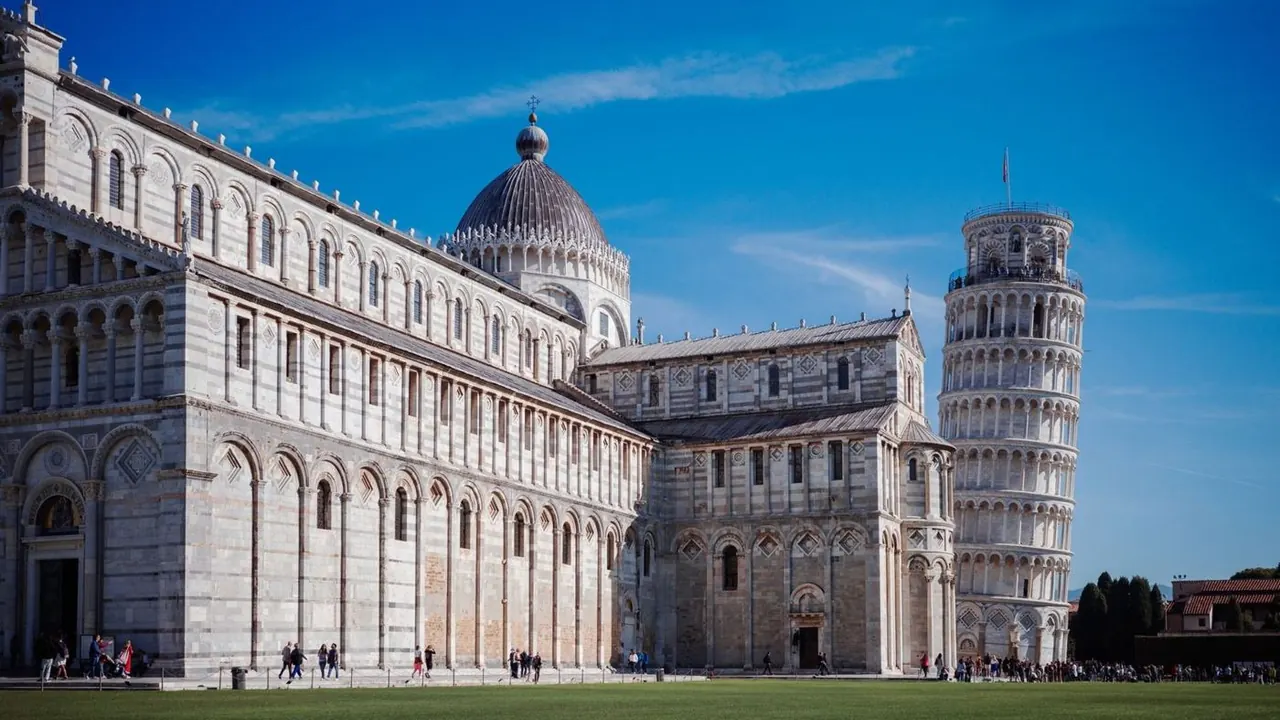
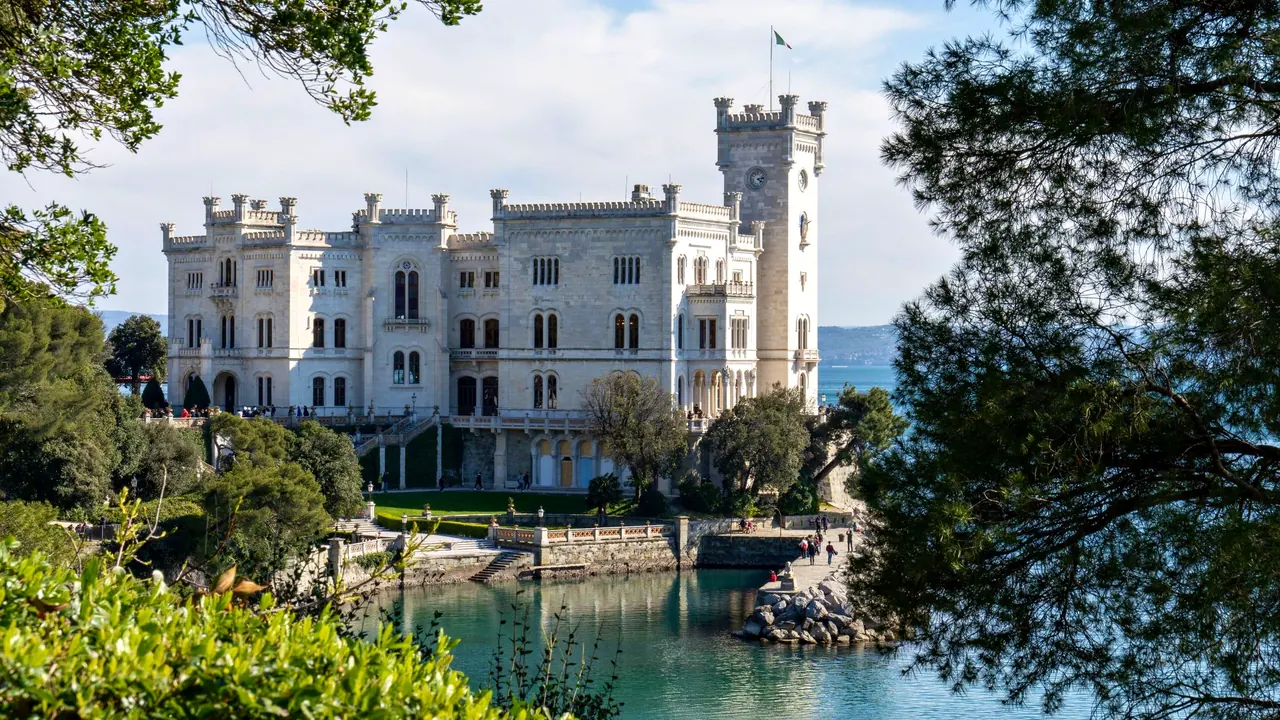
Photos: Pisa by Bruno Kraler, Pexels License; Trieste by Tibor Szabo, Pexels License.
Pisa or Trieste?
Our verdict in twelve categories, each scored against the same fixed benchmark cities, and the climate month by month, so you can choose for your trip.
Choose Pisa for
- day trips
- nightlife
- getting around
Pisa suits the traveller who wants Tuscany more than a single city. The cathedral square and the quiet riverside old town take a couple of days. After that the station does the work: Florence, Lucca and the Cinque Terre are all easy without a car, and the airport is close to the centre. It is flat and compact, and the sandy beaches at Tirrenia suit young children who want to paddle.
Choose Trieste for
- live music and the arts
- food and drink
- nature and the outdoors
Trieste is for a slower, more absorbing stay in one place. This old Habsburg port has its own food and coffee culture, a proper opera house and clear water you swim in from the promenade. The Karst plateau starts right behind the houses, and Slovenia and Friuli are close enough for day trips. Choose it if you would rather settle in than tick off famous names.
Scoreboard
Twelve categories on one fixed scale from 0 to 100. The shaded stretch is the gap between the two.
Your match
Pick a travel style or drag the sliders, and both match scores follow your weighting.
Too close to call, level with your weighting
Wins on day trips and nightlife with your weighting.
Wins on live music and the arts and food and drink with your weighting.
What matters to you?
Category by category
What the scores mean for a trip.
Beaches & swimming
Pisa has the sand. Tirrenia and Calambrone have long, wide beaches backed by pine woods, and the shallow water is easy for small children to paddle in. Most of the shore is rented out to beach establishments with loungers, and near the Arno mouth the water is rarely clear. It works better as an afternoon off from sightseeing than as the basis of a swimming vacation.
Trieste has the better sea but hardly any beach. At Barcola people lay their towels on concrete terraces and pine-shaded lawns, then climb down ladders into clear Adriatic water, and swimming is part of everyday life. Prettier pebble coves lie below the cliffs at Sistiana and Duino, and Piran is under an hour away. If you're happy to swim off rocks, Trieste is the more rewarding of the two.
Food & drink
Trieste has more to discover. Its buffets carve boiled pork and ham from steaming pots, served with horseradish and sauerkraut. Jota sits on menus next to sardoni, and coffee comes with its own vocabulary. Up on the Karst, farmhouse osmize pour Vitovska and Terrano.
Pisa eats like the rest of Tuscany, plainly and well. The highlights are cecina from wood ovens and the student trattorias around Piazza delle Vettovaglie, but the range is narrow and the menus near the tower are best avoided. Neither city is a place for serious fine dining.
Culture & sights
The two are well matched, but in different ways. Pisa has one supreme ensemble: the cathedral, baptistery, tower and Camposanto on their lawn. Behind it lie quieter rewards, such as Piazza dei Cavalieri, Santa Maria della Spina and the medieval art of San Matteo, and the whole city takes about two days.
In Trieste the city itself is the sight. Piazza Unità opens onto the sea and the Borgo Teresiano grid lines the Canal Grande, while San Giusto hill layers Roman, Byzantine-style and medieval remains. Miramare, the great synagogue and the Risiera memorial reflect a more mixed and more troubled history than Pisa's.
Nightlife
Pisa is a little livelier, thanks to its students. In term time the small squares around the old market stay full of people drinking outside until after midnight, and aperitivo crowds fill Borgo Stretto and the river banks. Trieste has an older population, and its evenings revolve around a spritz on Piazza Unità or along the Canal Grande, moving out to the Barcola kiosks in summer. Neither has much of a club scene.
Nature & outdoors
Trieste has the wilder outdoors, right on its doorstep. The Karst rises straight behind the city, with cliff paths near Duino, the Val Rosandra gorge and huge caves. The gulf is serious sailing water, and the Miramare marine reserve is good for snorkelling. The Julian Alps are within reach for longer days.
Pisa's countryside is gentler. The San Rossore park of pine forest, wetland and dunes begins at the edge of town and is ideal for flat cycling and spotting deer. The olive terraces of Monte Pisano are close by, and the Apuan Alps are the place for real mountain hiking.
Day trips
Pisa is the stronger base, mainly because of who its neighbours are. Florence is about an hour by train and Lucca under half an hour. The Cinque Terre, Viareggio and the marble towns are all on the same line, and Volterra, San Gimignano and Siena are within a drive.
Trieste offers variety rather than famous names. You can visit Aquileia's mosaics, star-shaped Palmanova and the Collio vineyards in Friuli, then cross into Slovenia for Piran, Ljubljana or Postojna. Venice is a long day at about two hours each way.
Good for families
Neither city is built for children, and they suit different ages. Pisa works better for little ones: it is flat and small, there is the tower lawn to run on and the obligatory photo, and the sandy shallows are nearby. Under-eights cannot climb the tower, though.
Trieste is better for older children. They get the Grotta Gigante, Miramare's gardens, a waterfront aquarium and a hands-on science centre. Its steep stepped streets and rocky swimming are harder going with a pushchair.
Getting around
Pisa is slightly easier. It is flat end to end, and you can walk from the station to the cathedral square in about half an hour. The airport is linked by an automatic shuttle, and the station is a regional rail hub, so you rarely need a bus or a car.
Trieste's waterfront core is just as walkable. The climb to San Giusto and the districts behind it is real exercise, though, so you will use the dense bus network more. Boats across the bay to Muggia make a pleasant extra.
Shopping & style
Neither city is a shopping destination, but the things worth buying differ. In Pisa, Borgo Stretto's arcades have smarter clothes and old pastry shops, and a monthly antiques market sets up along the river. Florence and Lucca are close for anything serious. Trieste's best finds are its old-town antique shops and things to eat or drink: roasted coffee, Karst wine and honey, and presnitz to take home.
Affordability
Costs are much the same in both, but the money goes on different things. In Pisa, the student trattorias and walking cost little, while the tower climb and the summer beach loungers are where the bills add up. In Trieste, buffet lunches, cheap buses and free swimming at Barcola keep things easy, though rooms get tight around the autumn regatta and seafood dinners are priced like any other Italian city.
Live music & performing arts
Both cities have a Teatro Verdi, but Trieste's plays the bigger part. Its waterfront house runs a proper opera and ballet season, and operetta survives as a Habsburg habit rarely found elsewhere in Italy. The Politeama Rossetti and a Slovenian-language theatre widen the offer, and summer brings concerts in the San Giusto castle courtyard.
Pisa's Verdi offers a relaxed night of opera or a symphony concert between autumn and spring, with some university chamber music besides. For anything larger, you go to Florence.
Wellness & relaxation
Pisa has the edge for anyone who wants a soak. The springs at San Giuliano Terme, just outside the city, have been used since Roman times, and a grand 18th-century bath palace below Monte Pisano houses a spa. Casciana Terme, further inland, adds a larger public thermal pool.
Trieste has no thermal baths of its own, only hotel and day spas. Its calm comes from a slow daily rhythm instead: long sittings over a newspaper in the old coffee houses, and a sunset walk out along the Molo Audace. Both are quiet places, but Pisa is quiet because it is small, while Trieste is quiet because of its unhurried, older character.
When should you go?
Pick your month. The climate figures are measured averages, not a forecast.
Pisa in July
Trieste in July
Daytime high, °C
Rainfall in the month, mm
Temperature and rainfall are climate normals, averaged over the years shown. Pisa: 1991-2020 normals, Pisa / S. Giusto (3.9 km from centre). Trieste: 1991-2020 normals, Trieste (1.6 km from centre).
Pisa is the warmer and sunnier of the two. Its summer highs reach about 30°C, which makes July and August good for the sea but sticky for sightseeing on the plain. May, June and September are the best balance. The rain comes in hard from September, peaking at about 132mm in November, so late autumn is the wettest stretch. Winters are mild enough for walking the streets.
Trieste gets showers spread through the summer, with May the wettest early month at about 90mm, and winters are cooler, with January highs around 9°C. In August both seas reach about 25°C. Trieste's water cools much further in winter and spring, though, so its swimming season really runs from June to September. Pisa gets slightly more sun in every month.
Which traveller are you?
For a short city break, Pisa is the easier pick. The airport shuttle reaches the station in minutes, the flat centre is easy to walk, and the cathedral square plus the old town fit neatly into two days, with Lucca close by if time allows.
On an outdoors trip, Trieste wins clearly. You can walk the Strada Napoleonica above the gulf, hike or climb in Val Rosandra, go underground in the Grotta Gigante, and snorkel or kayak off Miramare, all within easy reach of the centre.
On a culture and arts trip, the sights are fairly even, but Trieste offers more in the evenings. Its waterfront opera house runs a full season, operetta is a living tradition, and summer brings concerts on San Giusto. Pisa's theatre programme is smaller and more modest.
Before you go
| Measure | Pisa | Trieste |
|---|---|---|
| Official language | Italian | Italian |
| Currency | Euro (EUR) | Euro (EUR) |
| Sockets | CFL230 V, 50 Hz | CFL230 V, 50 Hz |
| Driving side | Right | Right |
| Time zone | UTC+1, UTC+2 in summer | UTC+1, UTC+2 in summer |
| Emergency number | 112 | 112 |
| Elevation | 4 m | 2 m |
| Main airport | Pisa International Airport (PSA)4 km from centre82 non-stop destinations | Trieste Airport (TRS)31 km from centre32 non-stop destinations |
| Public holidays this year | 13 days | 13 days |
By the numbers
| Measure | Pisa | Trieste |
|---|---|---|
| City population | 88,737 | 198,417 |
| People per km² | 479 | 2,332 |
| Museums within 10 km | 27 | 33 |
| UNESCO World Heritage sites within 50 km | 4 | 5 |
| Swim season, months above 21 °C | 4 months | 4 months |
Where else could you go?
Every comparison below shares a destination with this one, so you can follow Pisa or Trieste somewhere new.