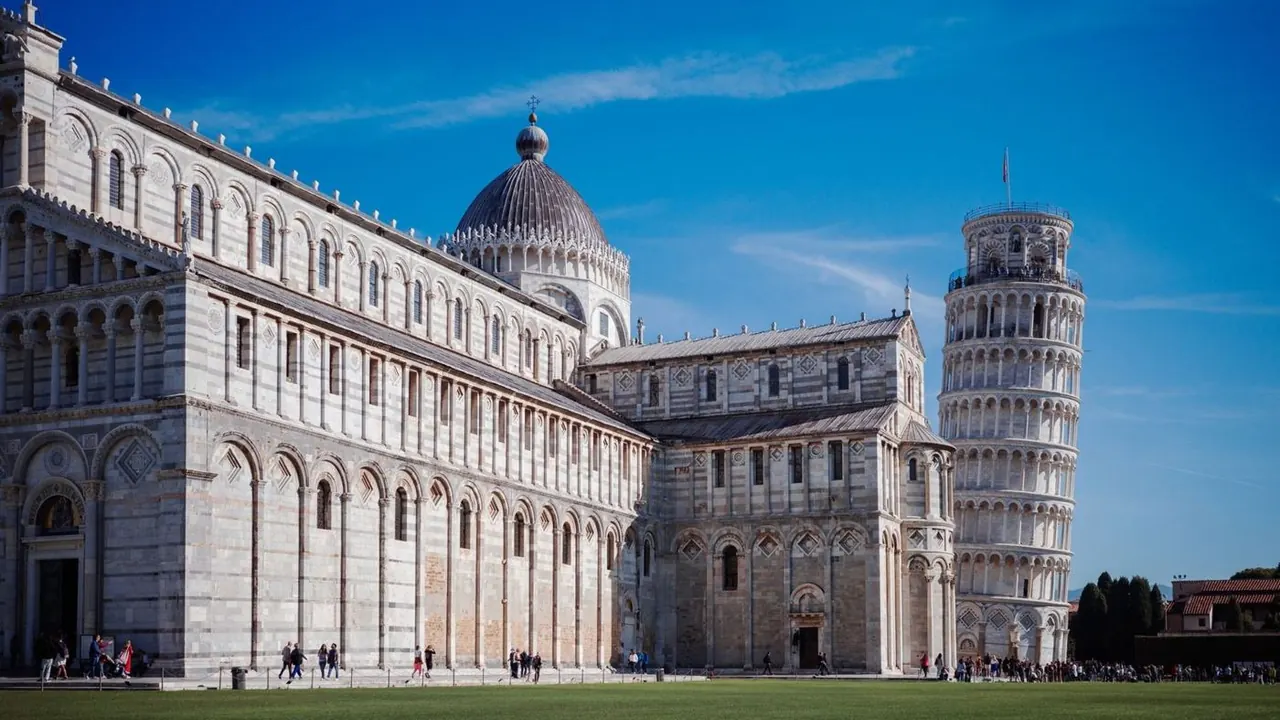
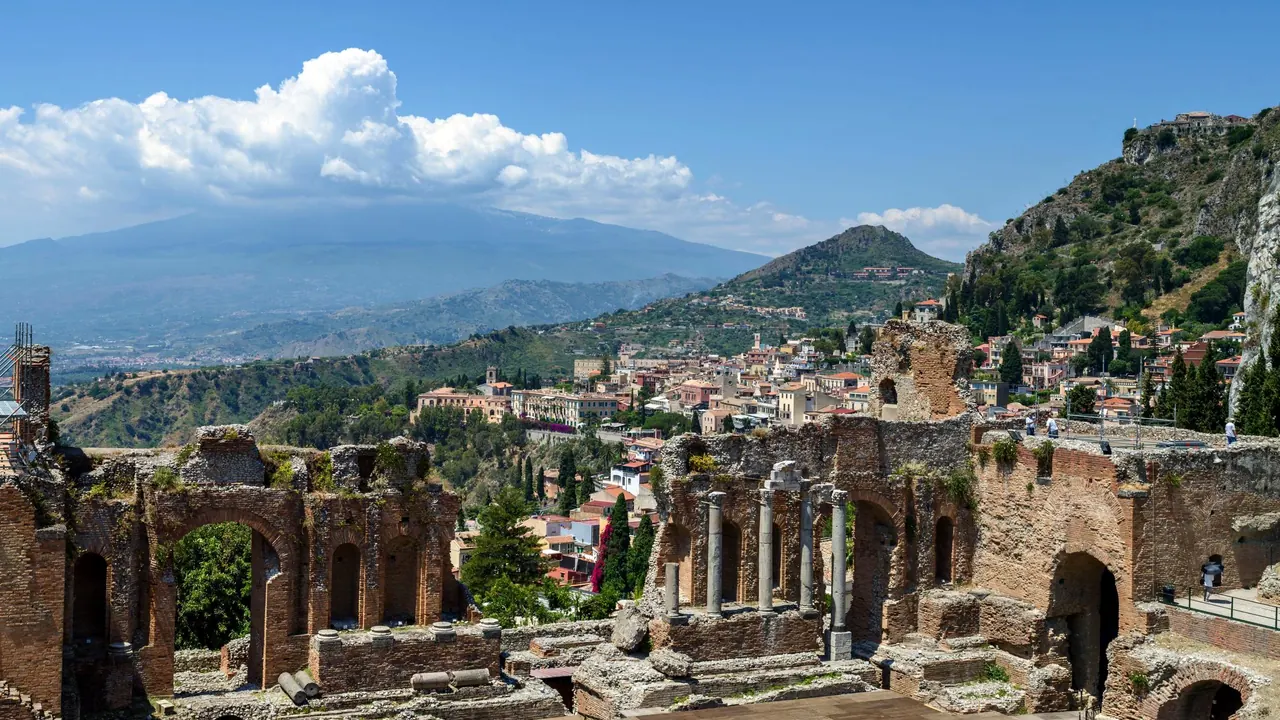
Photos: Pisa by Bruno Kraler, Pexels License; Taormina by Reinhard Bruckner, Pexels License.
Pisa or Taormina?
Our verdict in twelve categories, each scored against the same fixed benchmark cities, and the climate month by month, so you can choose for your trip.
Choose Pisa for
- prices
- culture and sights
- getting around
Pisa suits a traveller who wants a base rather than a resort. It has one of Italy's great monument squares, a quieter old town that most visitors never reach, and a station that puts Florence, Lucca and the Cinque Terre within easy reach. It is flat, compact, cheaper to stay in and easy to manage with children, and it rewards anyone planning a busy week of sightseeing by train.
Choose Taormina for
- nature and the outdoors
- beaches
- food and drink
Taormina is for the slower, more scenic vacation. Go for clear water in the coves below town, Etna on the horizon and within reach for a day on the lava, and long evenings on a terrace over the Ionian. It costs more and the town is all steps and slopes, but for couples who want sea, volcano and Sicilian food in one beautiful setting, it gives more than Pisa can.
Scoreboard
Twelve categories on one fixed scale from 0 to 100. The shaded stretch is the gap between the two.
Your match
Pick a travel style or drag the sliders, and both match scores follow your weighting.
Wins on prices and culture and sights with your weighting.
Wins on nature and the outdoors and beaches with your weighting.
What matters to you?
Category by category
What the scores mean for a trip.
Beaches & swimming
Taormina is the better place to swim. The coves at Mazzarò and Isola Bella have clear, glassy water made for snorkelling, though the beaches are narrow pebble strips that fill early. For longer stretches of sand and shingle, Giardini Naxos and Letojanni are a short bus ride away.
Pisa's coast offers the opposite: the long, wide sandy beaches of Tirrenia and Calambrone, backed by pine woods, with shallow water that suits paddling. The sea is cooler, and murkier near the Arno mouth. For most visitors it is a summer afternoon off from sightseeing, not the point of the trip.
Food & drink
The two are evenly matched, but they eat in very different styles. Pisa cooks plain Tuscan food: ribollita, game, salt cod and hot cecina from wood ovens. The best of it is in the student trattorias around the Vettovaglie market, where it is honest and cheap but not ambitious.
Taormina has more Sicilian flavour and more polish at the top: swordfish, raw red prawns, pasta alla Norma, granita with brioche for breakfast and Etna wines on every list. The catch is the resort pricing along Corso Umberto. In both towns the best meals are away from the main sights.
Culture & sights
Pisa is far stronger here. The cathedral, baptistery, tower and Camposanto make one of Italy's great ensembles, and beyond them lie Piazza dei Cavalieri, Santa Maria della Spina and the medieval art of the San Matteo museum.
Taormina has one world-class sight, the Greek theatre framing Etna and the coast, plus a pleasant run of medieval palazzi along the Corso. A day of slow walking covers it, and there are no major museums.
Nightlife
Neither town is a reason to travel for nightlife, but Pisa has more going on after dark, thanks to its students. During term the squares around the old market fill with people drinking outside small bars until past midnight.
Taormina's evenings are older and quieter: aperitivo in Piazza IX Aprile, piano bars on sea-view terraces, and a few beach clubs near Mazzarò in summer. It is romantic rather than late.
Nature & outdoors
Taormina has the bigger landscapes. Etna is an hour away for walks over lava flows and the Silvestri craters, guided trips towards the summit, and skiing in winter. The Alcantara gorges and the marine reserve at Isola Bella add basalt canyons and sea grottoes to explore.
Pisa's outdoors are gentler. The San Rossore park begins at the city's edge, with pine forest, wetland, dunes and fallow deer, and the olive-terrace paths of Monte Pisano rise just to the east. Real mountain hiking means going further, to the Apuan Alps.
Day trips
Pisa is one of the best day-trip bases in Italy. Florence is an hour away by train and Lucca under half an hour, and the Cinque Terre, Viareggio and the marble towns of Carrara and Pietrasanta are all reachable on the same rail network. With a car, Volterra, San Gimignano and Siena are added to the list.
Taormina has fine excursions of its own: Catania's lava-stone baroque, Syracuse and Ortigia, and the wine villages on Etna. The best of them, though, take two hours or an early start, and fewer are as simple to do without a car.
Good for families
Pisa is the easier choice with children. The centre is flat, the tower lawn gives them space to run, and the sandy, shallow beaches at Tirrenia suit small swimmers, though younger children cannot climb the tower.
Taormina works best for school-age children, who will enjoy snorkelling at Isola Bella and the craters on Etna. Its steps, pebble coves and couple-focused hotels make it hard with toddlers, and many families stay down in Giardini Naxos instead.
Getting around
Pisa is much simpler to get around. It is small and flat, a shuttle train links the airport to the station, and you can walk everywhere that matters. As a regional rail hub, it makes most outings possible without a car.
Taormina's centre is pedestrian and compact, but it sits on a slope, so every outing involves stairways. You use the cable car to reach the sea, and the railway station is down on the coast. Etna and the inland villages realistically need a tour or a hired car.
Shopping & style
Both are modest for shopping, and in both the serious shopping is a trip away, in Florence or Catania. What you find differs. Pisa offers everyday Italian high-street shopping on Corso Italia, smarter shops under the arcades of Borgo Stretto and a monthly antiques market by the river.
Taormina packs everything into Corso Umberto, which is aimed at visitors but more distinctive. Look for Caltagirone majolica, moor's-head vases, coral and cameos, and Bronte pistachio cream to take home.
Affordability
Pisa is clearly the cheaper stay. Central rooms are mid-range, the student trattorias are good value and walking costs nothing. The main expenses are the tower climb and the beach loungers in summer.
Taormina is the most expensive base in eastern Sicily, with grand hotels, scarce mid-range rooms in summer and resort prices on the main street. Granita and buses stay cheap, and sleeping in Giardini Naxos or coming in spring or autumn makes a real difference.
Live music & performing arts
The two are close, but their seasons don't overlap. Pisa's Teatro Verdi stages opera, concerts and ballet in a 19th-century horseshoe theatre from autumn to spring, an easy and unpretentious night out.
Taormina comes alive for performance in summer, when the Greek theatre hosts concerts, opera and international acts with Etna behind the stage. The rest of the year it has little beyond piano bars.
Wellness & relaxation
Both are calm places once you step away from the crowds. Pisa has thermal water nearby: the 18th-century bath palace at San Giuliano Terme and the larger public pool at Casciana Terme.
Taormina relies on hotel spas, many with terrace pools above the sea and treatments using volcanic mud and citrus. Its restful mood depends on avoiding August, when cruise crowds fill the Corso.
When should you go?
Pick your month. The climate figures are measured averages, not a forecast.
Pisa in July
Taormina in July
Daytime high, °C
Rainfall in the month, mm
Where the figures come from
Taormina's temperatures are measured 45 km from the centre, at Messina.
Taormina has no rain gauge within 25 km of the centre, so its rainfall comes from a gridded climate dataset read at the city rather than from a gauge further away.
Temperature and rainfall are climate normals, averaged over the years shown. Pisa: 1991-2020 normals, Pisa / S. Giusto (3.9 km from centre). Taormina: 1991-2020 normals, Messina (45.1 km from centre).
Pisa's beach season is short, really July and August, when the sea reaches about 25°C. Those are also its hottest months, with highs around 30°C on a humid plain, which makes long sightseeing days tiring. Late spring and early summer are the best time for walking the streets and taking the train to Florence or Lucca, as May and June are warm, sunny and fairly dry. The rain sets in from September and is heaviest in October and November. Winters are cool and grey.
Taormina is warmer and drier for most of the year. Its summers are almost rainless, and the sea is good for swimming from June into October, peaking at about 26°C in August. Midsummer is hot on the steep lanes, so spring is the better season for walking. September shows the difference most clearly. Both towns turn wetter that month, but Taormina gets 64mm against Pisa's 102mm, and its sea stays a little warmer, so a late-summer beach week is the safer bet in Sicily. By October and November both are properly wet. Winters are milder in Taormina, though neither town is a beach destination then.
Which traveller are you?
On a culture and arts trip, Pisa is the clear choice. The Piazza dei Miracoli, the San Matteo museum and the palazzi along the river fill two days, and Florence's galleries are an hour away by train. Taormina's Greek theatre is magnificent, but it stands largely alone.
For an outdoors trip, Taormina wins. Etna's craters and lava fields, the Alcantara gorges and snorkelling or kayaking in the Isola Bella marine reserve are all close by. Pisa's pine park and hill paths are pleasant, but much gentler.
On a trip on a tight budget, Pisa goes much further. Student trattorias, mid-range central rooms and a walkable centre keep daily costs down. Taormina charges resort prices, and saving money there means sleeping down the coast in Giardini Naxos.
Before you go
| Measure | Pisa | Taormina |
|---|---|---|
| Official language | Italian | Italian |
| Currency | Euro (EUR) | Euro (EUR) |
| Sockets | CFL230 V, 50 Hz | CFL230 V, 50 Hz |
| Driving side | Right | Right |
| Time zone | UTC+1, UTC+2 in summer | UTC+1, UTC+2 in summer |
| Emergency number | 112 | 112 |
| Elevation | 4 m | 204 m |
| Main airport | Pisa International Airport (PSA)4 km from centre82 non-stop destinations | Catania-Fontanarossa Airport (CTA)47 km from centre96 non-stop destinations |
| Public holidays this year | 13 days | 13 days |
By the numbers
| Measure | Pisa | Taormina |
|---|---|---|
| City population | 88,737 | 10,471 |
| People per km² | 479 | 799 |
| Museums within 10 km | 27 | 5 |
| UNESCO World Heritage sites within 50 km | 4 | 2 |
| Swim season, months above 21 °C | 4 months | 5 months |
Where else could you go?
Every comparison below shares a destination with this one, so you can follow Pisa or Taormina somewhere new.
- Luccavs Pisa
- Cataniavs Taormina
- La Speziavs Pisa
- Florencevs Pisa
- Syracuse, Sicilyvs Taormina
- Sienavs Pisa