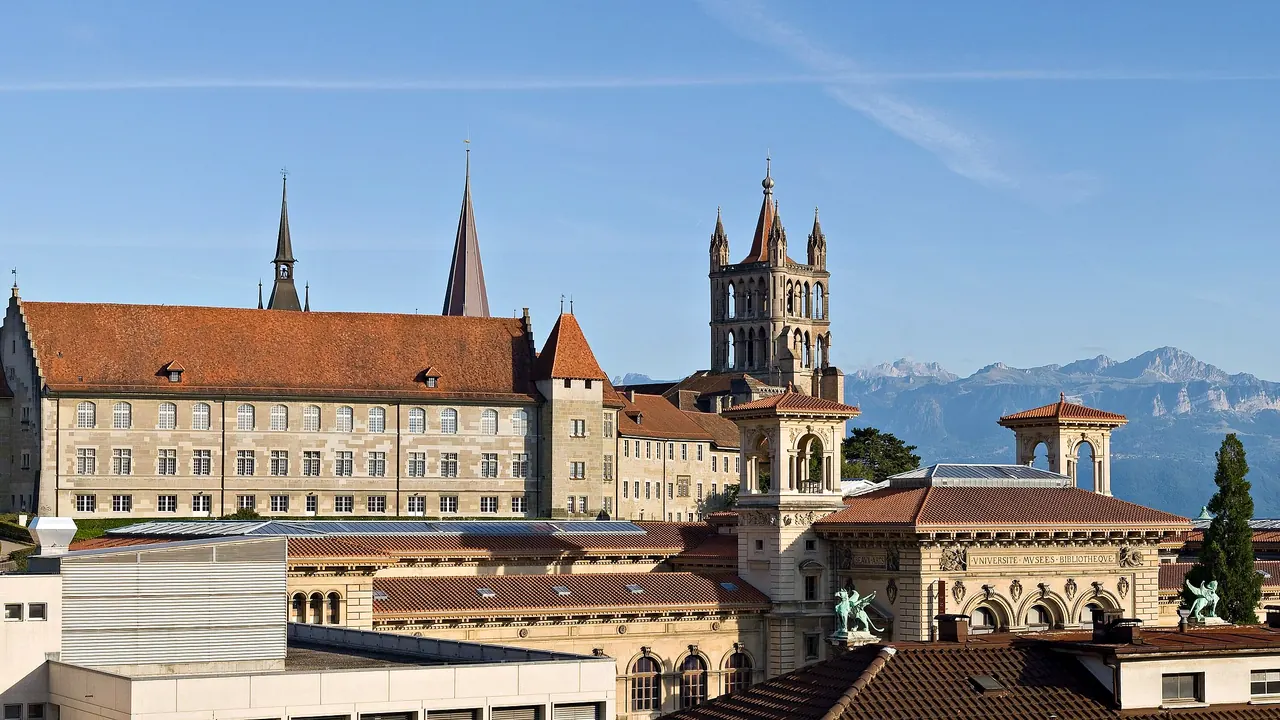
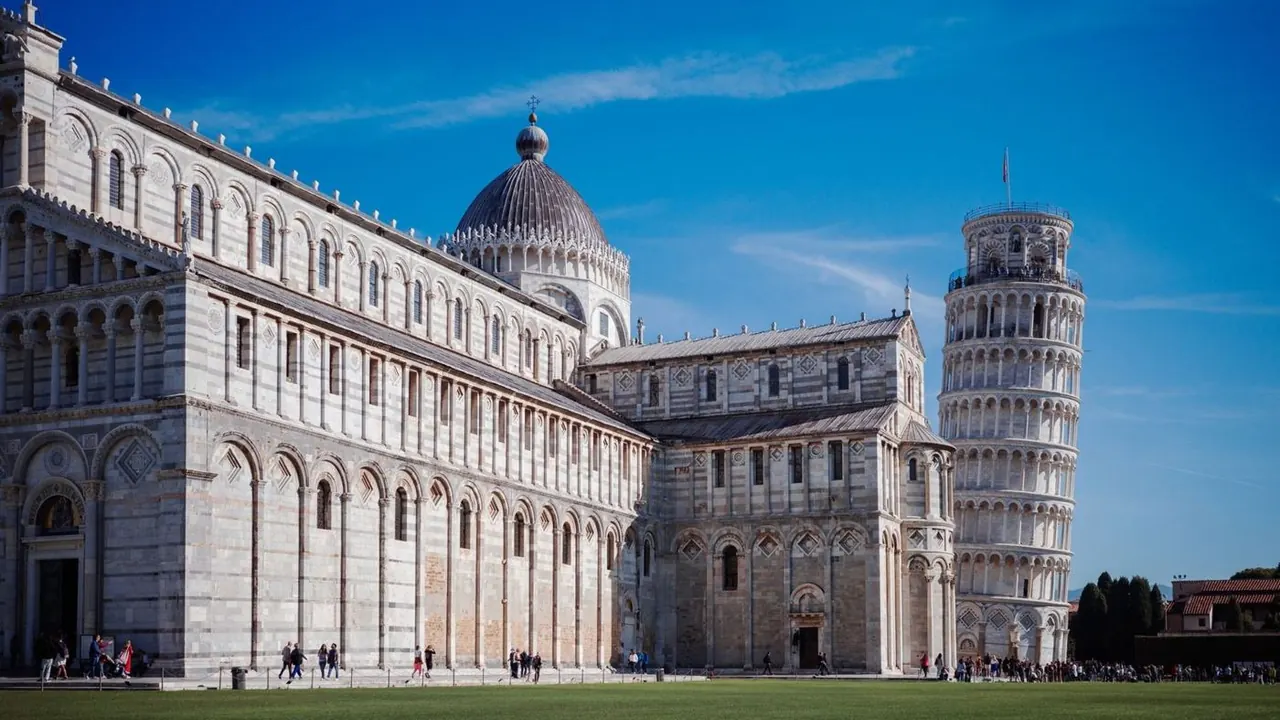
Photos: Lausanne by Christian Mehlführer, CC BY-SA 3.0, cropped; Pisa by Bruno Kraler, Pexels License.
Lausanne or Pisa?
Our verdict in twelve categories, each scored against the same fixed benchmark cities, and the climate month by month, so you can choose for your trip.
Choose Lausanne for
- nature and the outdoors
- live music and the arts
- families
Lausanne suits travellers who want landscape and polish more than monuments. The Alps across the lake, the Lavaux vineyard paths and the Jura ridges are all close enough for a morning start, and the city adds dance, theatre and a good orchestra in the evenings. It is also the easier base with children. The catch is the cost: this is a trip for people who can absorb Swiss prices or are happy to picnic.
Choose Pisa for
- prices
- beaches
- culture and sights
Pisa is the better pick for anyone who wants Italy's great sights on a sensible budget. The Piazza dei Miracoli is a world-class set piece in its own right, and the station puts Florence, Lucca and the Cinque Terre within easy reach, so a week here can take in much of Tuscany. Add sandy beaches a short bus ride away and cheap student trattorias, and it makes a fuller and cheaper summer stay, as long as you don't need much happening after dark.
Scoreboard
Twelve categories on one fixed scale from 0 to 100. The shaded stretch is the gap between the two.
Your match
Pick a travel style or drag the sliders, and both match scores follow your weighting.
Too close to call, 1 point apart
Wins on nature and the outdoors and live music and the arts with your weighting.
Wins on prices and beaches with your weighting.
What matters to you?
Category by category
What the scores mean for a trip.
Beaches & swimming
Pisa has a real coast. About 12km west, Tirrenia and Calambrone have long sandy beaches backed by pines, and the water is shallow and warm in midsummer, which suits paddling. Most of the shore is rented beach establishments, and the water near the Arno mouth is rarely clear. The Versilia beaches are a short train ride further north.
Lausanne only offers lake bathing: grassy lawns, steps and shingle at Vidy and Bellerive, with a season that barely covers the summer. Both cities treat swimming as an afternoon off, but in Pisa the afternoon is spent on sand.
Food & drink
Neither city is a food destination, but they eat very differently. Lausanne cooks Vaudois food, perch from the lake, papet and fondue, and wine makes the meal: tasting Chasselas in a Lavaux caveau is the real pleasure. It also has a celebrated top tier for one special dinner, while cheap meals are hard to find.
Pisa is the reverse: simple Tuscan cooking, hot cecina from wood ovens and student-priced trattorias around Piazza delle Vettovaglie, with little at the top end.
Culture & sights
Pisa has the greater sight. The cathedral, baptistery, Leaning Tower and Camposanto standing together on one lawn rank among Italy's finest ensembles. Beyond the square are Piazza dei Cavalieri, Santa Maria della Spina on the river and medieval painting at San Matteo.
Lausanne's interest lies more in its museums than its streets. Above the steep old town stands the Gothic cathedral, where the night watchman still calls the hours. The rest is the Olympic Museum at Ouchy, the Plateforme 10 galleries and the distinctive Collection de l'Art Brut. Each city takes two or three days, but Pisa's highlight is far more famous.
Nightlife
Both are quiet, student-driven towns after dark, but the style differs. Lausanne has an actual club district in the Flon, where clubs and late bars fill old warehouses on Friday and Saturday nights, though drinks are expensive. Pisa has few clubs; its evenings are about drinking outside small bars in the market squares and taking aperitivo on Borgo Stretto. In summer, Pisa's evenings move out to the beach bars on the coast.
Nature & outdoors
Lausanne's setting is far more dramatic. The French Alps rise straight out of the lake opposite, the Lavaux terraces make a superb walk, and within an hour you can be skiing, hiking or standing on the glacier at Glacier 3000, with the Jura on the other side for cycling and cross-country skiing.
Pisa's outdoors is flatter and gentler: the pine forests, wetlands and dunes of San Rossore, where you will often see fallow deer, easy cycling on the plain and olive-terrace paths on the Monte Pisano. The Apuan Alps and the Cinque Terre paths are an hour or more away.
Day trips
Both are excellent bases, but Pisa's day trips are bigger names. Florence is an hour away by train, Lucca under half an hour, the Cinque Terre a little over an hour, and Siena, Volterra and San Gimignano are within reach by car.
Lausanne's rail network makes its trips just as easy. The Château de Chillon, Gruyères, Bern's arcaded old town and Geneva are all an easy train ride away, and a boat crosses to Évian. Lausanne's trips feel more like Alpine countryside and small towns, while Pisa's lead you to some of Italy's most famous art cities.
Good for families
Lausanne is the better place to spend a week with small children. It is safe, clean and relaxed, and on summer afternoons the lawns and pools at Bellerive and Ouchy give children room to swim and run about while parents sit by the lake. The hills are the daily obstacle. Even with the metro, a pushchair is hard work on the stairs and slopes, and feeding a family in restaurants costs a great deal.
Pisa works the other way round. It is flat and compact, easy to cross with a buggy, and the tower lawn and the gelato in the old-town squares keep children happy for a while. Once the tower photo is taken, though, very little in the city is made for them, and younger children are not allowed up the tower. The best family days are spent cycling or riding in San Rossore, and you need to plan around the midsummer heat and the crowds in the cathedral square.
Getting around
Lausanne climbs a steep hillside and Pisa lies on a flat plain, and that shapes every day of a stay. In Lausanne, stairs, bridges and lifts link the levels, and the m2 metro climbs more than 300m from the lake at Ouchy to the upper town. Most visitors ride up and walk back down.
Pisa is a city for walking. From the station, along Corso Italia, across the Arno and up to the cathedral square takes about half an hour, and the level streets suit a bike. Its airport is unusually close, linked to the station by a short shuttle train. You don't need a car in either city.
Shopping & style
Lausanne has slightly more to buy. Rue de Bourg is the place for Swiss watches, jewellery and chocolate, and you can pick up a bottle of Lavaux wine, though the range is narrow overall. Pisa's Corso Italia and the arcades of Borgo Stretto are everyday Italian high streets, enlivened by the monthly antiques market by the river. In both cities, serious shoppers end up elsewhere, and from Pisa that means Florence or Lucca.
Affordability
This is the widest gap between the two. In Lausanne, hotels, meals, wine and taxis all cost far more than almost anywhere in Europe, and budget visitors live on supermarket picnics and free lakeside walks.
Pisa is moderately priced, with mid-range rooms, cheap trattorias and a centre you can walk. The main extra costs are the tower climb and the beach loungers in summer.
Live music & performing arts
Lausanne has the much richer stage for its size. It is home to the Béjart Ballet and the Prix de Lausanne, the lakeside Théâtre de Vidy is known across Europe for contemporary work, and the opera and chamber orchestra run full seasons. Montreux's July jazz festival is a short train ride away.
Pisa's evening out is the Teatro Verdi, a charming 19th-century horseshoe theatre for opera and concerts from autumn to spring, and for bigger productions people go to Florence.
Wellness & relaxation
Neither city has its own bathing culture, so both rely on springs just outside town. From Lausanne, Yverdon-les-Bains and Lavey-les-Bains, Switzerland's hottest springs, are easy by train, and the grand lakeside hotels have large spas. Pisa's equivalent is San Giuliano Terme, used since Roman times, in an 18th-century bath palace. Pisa's calm comes from its small scale, while in Lausanne you find it on the lakeshore and among the vines.
When should you go?
Pick your month. The climate figures are measured averages, not a forecast.
Lausanne in July
Pisa in July
Daytime high, °C
Rainfall in the month, mm
Where the figures come from
Lausanne's temperatures are measured 40 km from the centre, at Payerne.
Lausanne has no rain gauge within 25 km of the centre, so its rainfall comes from a gridded climate dataset read at the city rather than from a gauge further away.
Temperature and rainfall are climate normals, averaged over the years shown. Lausanne: 1991-2020 (sunshine 1961-1990) normals, Payerne (39.7 km from centre). Pisa: 1991-2020 normals, Pisa / S. Giusto (3.9 km from centre).
Lausanne has a short warm season. Days reach about 26°C in July, and from late June to early September the lake is warm enough to swim. Rain falls steadily all year and is actually heaviest in summer, so expect showers between the sunny spells. Spring and early autumn are good for walking the vineyards. From November to February it is cold, around 4°C, grey and short of sunshine in town, though that is when the mountains come into their own for skiing.
Pisa runs warmer at every point in the year. July and August reach about 30°C on a humid plain, which makes sightseeing hard work in the afternoon, but they are the driest and sunniest months and the sea is at its warmest, around 25°C. Late spring and September are the most comfortable for walking. The rain arrives in autumn, peaking at about 132mm in November, and winters are mild and fine for a city break, though not for the beach.
Which traveller are you?
On a trip on a tight budget, Pisa wins clearly. Its rooms are mid-range, the student trattorias around the old market are good value, and you can walk everywhere. Lausanne is one of Europe's costliest stops, where even a simple lunch adds up quickly.
For an outdoors trip, Lausanne is the stronger base. You can walk the Lavaux terraces, sail or paddleboard on the lake, and reach skiing or Alpine hiking at Villars or Les Diablerets in about an hour. Pisa's park and the Monte Pisano are gentler.
On a family trip with children, Lausanne has more made for them: the hands-on Olympic Museum, the aquarium-vivarium, Sauvabelin's animal park and pedal boats, and steamer rides on the lake. Pisa is flat and has shallow sandy beaches, but offers children little beyond those.
Before you go
| Measure | Lausanne | Pisa |
|---|---|---|
| Official language | French, German, Italian, Romansh | Italian |
| Currency | Swiss Franc (CHF) | Euro (EUR) |
| Sockets | CJ230 V, 50 Hz | CFL230 V, 50 Hz |
| Driving side | Right | Right |
| Time zone | UTC+1, UTC+2 in summer | UTC+1, UTC+2 in summer |
| Emergency number | 112 | 112 |
| Elevation | 495 m | 4 m |
| Main airport | Geneva International Airport (GVA)52 km from centre150 non-stop destinations | Pisa International Airport (PSA)4 km from centre82 non-stop destinations |
| Public holidays this year | 9 days | 13 days |
By the numbers
| Measure | Lausanne | Pisa |
|---|---|---|
| City population | 144,873 | 88,737 |
| People per km² | 3,499 | 479 |
| Museums within 10 km | 31 | 27 |
| UNESCO World Heritage sites within 50 km | 3 | 4 |
| Swim season, months above 21 °C | - | 4 months |
Where else could you go?
Every comparison below shares a destination with this one, so you can follow Lausanne or Pisa somewhere new.