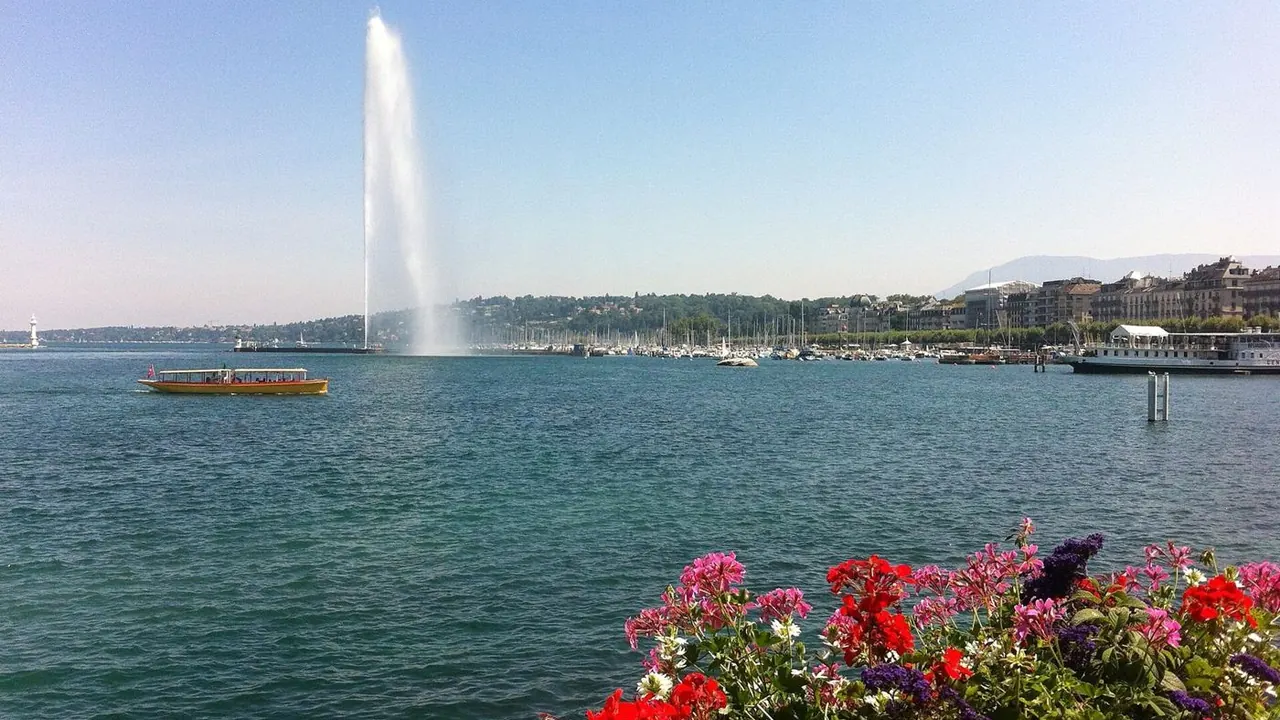
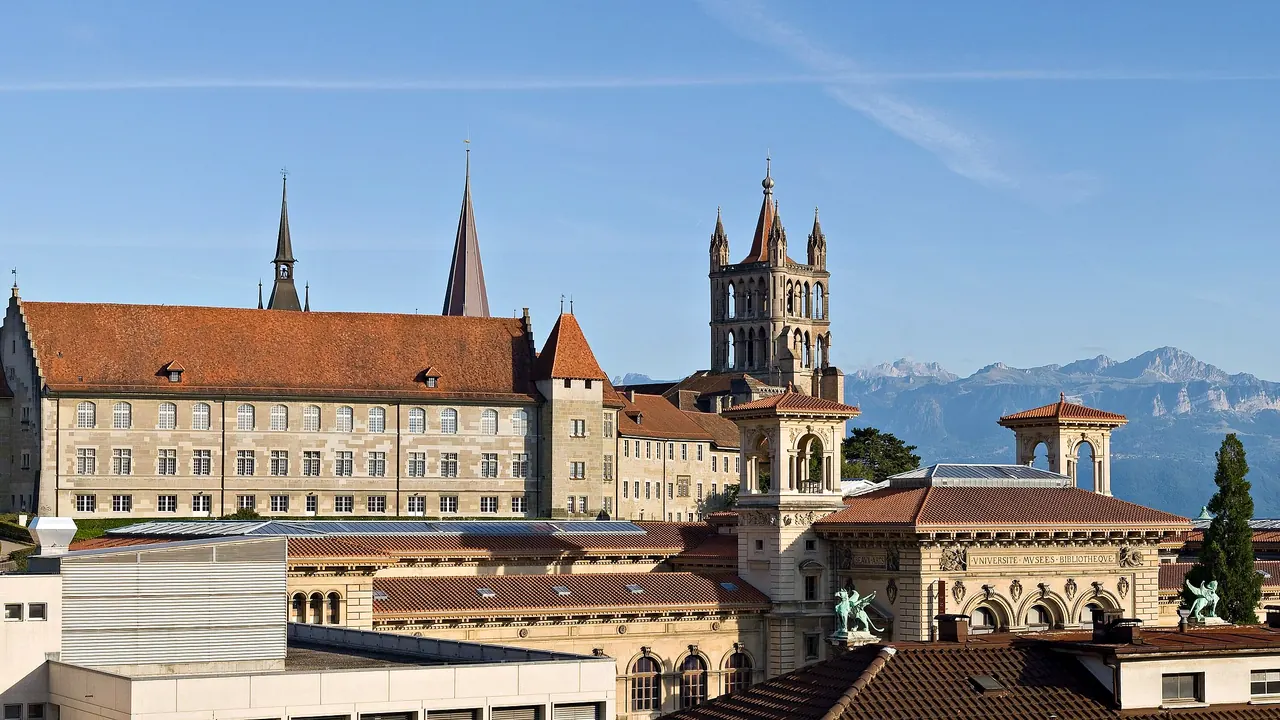
Photos: Geneva by Diviosen, CC BY-SA 3.0, cropped; Lausanne by Christian Mehlführer, CC BY-SA 3.0, cropped.
Geneva or Lausanne?
Our verdict in twelve categories, each scored against the same fixed benchmark cities, and the climate month by month, so you can choose for your trip.
Choose Geneva for
- shopping
- getting around
- beaches
Geneva suits the traveller who wants things to be easy and wants to shop. The airport is a few minutes from the centre by train, the centre is flat enough to cover on foot, and the Rue du Rhône holds the flagship watch and jewellery houses that Lausanne has no answer to. Add the Reformation and United Nations story, CERN and a full opera season, and it makes a polished, efficient city break.
Choose Lausanne for
- families
- nightlife
- day trips
Families, and anyone who likes to move around the region, will do better in Lausanne. It has more for children, with the Olympic Museum, an aquarium-vivarium and the woods at Sauvabelin, and from the middle of French-speaking Switzerland its trains reach Bern, Fribourg, Gruyères and the Lavaux vineyards quickly. The steep streets take some effort, but the student life in the Flon and a stage built around dance give it more character in the evenings.
Scoreboard
Twelve categories on one fixed scale from 0 to 100. The shaded stretch is the gap between the two.
Your match
Pick a travel style or drag the sliders, and both match scores follow your weighting.
Too close to call, 1 point apart
Wins on shopping and getting around with your weighting.
Wins on families and nightlife with your weighting.
What matters to you?
Category by category
What the scores mean for a trip.
Beaches & swimming
Both cities swim in the same lake over the same short summer, so the choice comes down to the setting. Geneva's signature is the Bains des Pâquis, a concrete jetty out in the harbour where you dive in with the Jet d'Eau in view, and Genève-Plage across the water adds pools and lawns.
Lausanne's swimming is more spread out along the shore: the old Bellerive lido, grassy banks at Vidy and small shingle coves towards Pully and Lutry. In both cities it is lido life rather than a beach, and something to fit around a summer stay.
Food & drink
The two eat equally well, and both serve lake perch, fondue and Chasselas, but the emphasis differs. Geneva's table is more French and more international, because the diplomatic community supports a wide range of cuisines and a polished fine-dining scene in Carouge and the Old Town.
Lausanne stays closer to the Vaud countryside, with papet vaudois, the Saturday market around Place de la Riponne, and caveaux in the Lavaux villages where you taste wine with the growers. In neither city is a cheap casual meal easy to find.
Culture & sights
The sights are of similar weight and take two or three days in either city, but they tell different stories. Geneva's are about ideas and institutions: Calvin's St Pierre Cathedral and the dig beneath it, the Reformation Wall, the Palais des Nations and the Red Cross museum, with CERN on the edge of town.
Lausanne's interest lies more in its museums. The Olympic Museum at Ouchy and the Plateforme 10 cluster by the station lead them, and the Collection de l'Art Brut is unlike anything in Geneva. Its Gothic cathedral, where a night watchman still calls out the hours, is the finer single building.
Nightlife
Neither is a party city, and both go quiet on weeknights. Geneva's late drinking is in the Pâquis bars behind the station, with a small alternative club scene in squat-born centres around Plainpalais and Jonction.
Lausanne's tens of thousands of students give its weekends a little more energy, and it all gathers in one place. The Flon's old warehouses hold the clubs and late bars, so a night out there feels more concentrated than Geneva's scattered scene.
Nature & outdoors
Both are superb bases for the outdoors, with the lake in front and the Jura behind. Geneva's mountains sit on the skyline: the Salève's cable car and cliffs are just over the French border, and Chamonix and Mont Blanc are about an hour away.
Lausanne has the walking on its doorstep, with the Lavaux terrace paths between Lutry and Saint-Saphorin and the Sauvabelin forest above town. The Vaud Alps resorts and the glacier at Glacier 3000 are within an hour, and its view straight across the water to the French Alps is the more dramatic.
Day trips
Geneva's outings lean across the border into France. A boat crosses the lake to medieval Yvoire, Annecy's canals and old town are under an hour by road, and Nyon's Roman ruins and Lausanne's steep old town are a quick train ride up the shore. Montreux, Chillon and the Lavaux terraces are within reach as well.
Lausanne sits in the middle of the Swiss rail network, so more of the country is close at hand. Vevey and Montreux are about twenty minutes away, while Bern, Fribourg, Neuchâtel and walled Murten each make an easy day. Gruyères works from either city. Almost none of it needs a car, which makes Lausanne the better base for a week of train trips.
Good for families
Lausanne does more for children. The Olympic Museum is hands-on, the aquarium-vivarium shows river and lake creatures from around the world, and Sauvabelin combines an animal park, pedal boats and a wooden lookout tower in one outing. Paddle steamers and the lidos at Ouchy and Bellerive fill summer afternoons.
Geneva is flatter and kinder to pushchairs, and its Natural History Museum dioramas are a real hit. Beyond that it is mostly small animal enclosures, parks and harbour boat rides, so families tend to run out of ideas sooner.
Getting around
Geneva is the easier city to move around. The centre is nearly flat from the station across the bridges to Carouge, the airport is a few minutes away by train, and the yellow harbour boats are part of the tram and bus network.
Lausanne is just as compact, but it is built on a steep slope, with stairs, bridges and lifts between its levels. The m2 metro, which climbs more than 300m from Ouchy to the upper town, does most of the work. Without it, getting about is real exercise.
Shopping & style
This is where Geneva pulls well ahead. The Rue du Rhône and the streets around it hold the flagship boutiques of the major Swiss watch houses and international luxury labels. Carouge's small workshops and the Plainpalais flea market give it an independent side as well.
Lausanne has watch shops and chocolatiers along Rue de Bourg and a few design shops in the Flon, but no luxury district and few independents. It is the place to pick up chocolate or a bottle of Lavaux wine, not to plan a trip around.
Affordability
Both are among the most expensive cities a visitor can choose, and the gap between them is too small to change a budget. The ways to save differ. In Geneva many city museums are free and hotel guests usually get free local transport, and the French border lets you sleep or eat more cheaply across it.
In Lausanne savings come from supermarket picnics on the lakeside promenades and a glass of Chasselas in a Lavaux caveau.
Live music & performing arts
The two stages are equally strong but lean different ways. Geneva's strength is classical music and opera, with a full season at the Grand Théâtre and the Orchestre de la Suisse Romande in the gilded Victoria Hall.
Lausanne leads in dance, as home of the Béjart Ballet and the Prix de Lausanne, and the Théâtre de Vidy brings contemporary work with a Europe-wide reputation. In July the Montreux Jazz Festival is a short train ride along the shore.
Wellness & relaxation
Geneva has a bathing ritual of its own. In winter the Bains des Pâquis lido turns into a sauna and hammam, and regulars go from the heat straight into the cold lake. The spa towns of Évian and Divonne are just over the French border, and the quiet Sundays and lakeside promenades slow the city down.
Lausanne has nothing like that in town. Its steep centre is also busier, so the calm is found on the edges, in the Lavaux vines and along the shore at Ouchy. What it does have is real thermal water nearby. Yverdon-les-Bains is under half an hour by train, and Lavey-les-Bains, with the hottest springs in Switzerland, is under an hour up the Rhône valley.
When should you go?
Pick your month. The climate figures are measured averages, not a forecast.
Geneva in July
Lausanne in July
Daytime high, °C
Rainfall in the month, mm
Where the figures come from
Lausanne's temperatures are measured 40 km from the centre, at Payerne.
Lausanne has no rain gauge within 25 km of the centre, so its rainfall comes from a gridded climate dataset read at the city rather than from a gauge further away.
Temperature and rainfall are climate normals, averaged over the years shown. Geneva: 1991-2020 normals, Geneve-Cointrin (5.7 km from centre). Lausanne: 1991-2020 (sunshine 1961-1990) normals, Payerne (39.7 km from centre).
The two cities share a lake and much the same climate, and both are at their best from June to early September. Highs then reach about 27°C in Geneva and 26°C in Lausanne, the days are long and sunny, and the lake is warm enough to swim in. May and late September are mild and good for walking, though the water is still cold. From November to February both are grey and chilly, with highs of only around 4 to 6°C. That is weather for museums, fondue and day trips up into the snow.
The real difference is rain. Lausanne is noticeably wetter all year, with summer months reaching about 115mm against roughly 77mm in Geneva, so a summer stay there needs more flexibility around showers. Geneva's wettest stretch comes in autumn and early winter instead. Its summers are a little drier and slightly warmer, which makes it the safer bet for lake days.
Which traveller are you?
On a shopping trip, Geneva is the clear choice. The Rue du Rhône is one of the world's great streets for Swiss watches and fine jewellery, and Carouge's craft workshops and the Plainpalais flea market give it a less formal side. Lausanne's offer is narrow by comparison.
On a family trip with young children, Lausanne gives you more to fill the days. There is the hands-on Olympic Museum, the aquarium-vivarium and Sauvabelin's animal park, pedal boats and lookout tower. Geneva has no zoo or aquarium, though its streets are easier with a pushchair.
For a short city break, Geneva is simpler. Its airport train takes minutes, the flat centre runs on foot from the station to the Old Town, and the cathedral, the Reformation Wall and the Palais des Nations fit comfortably into a long weekend.
Before you go
| Measure | Geneva | Lausanne |
|---|---|---|
| Official language | French, German, Italian, Romansh | French, German, Italian, Romansh |
| Currency | Swiss Franc (CHF) | Swiss Franc (CHF) |
| Sockets | CJ230 V, 50 Hz | CJ230 V, 50 Hz |
| Driving side | Right | Right |
| Time zone | UTC+1, UTC+2 in summer | UTC+1, UTC+2 in summer |
| Emergency number | 112 | 112 |
| Elevation | 403 m | 495 m |
| Main airport | Geneva International Airport (GVA)5 km from centre150 non-stop destinations | Geneva International Airport (GVA)52 km from centre150 non-stop destinations |
| Public holidays this year | 9 days | 9 days |
By the numbers
| Measure | Geneva | Lausanne |
|---|---|---|
| City population | 211,152 | 144,873 |
| People per km² | 13,280 | 3,499 |
| Museums within 10 km | 34 | 31 |
| UNESCO World Heritage sites within 50 km | 2 | 3 |
Where else could you go?
Every comparison below shares a destination with this one, so you can follow Geneva or Lausanne somewhere new.
- Annecyvs Geneva
- Chamonixvs Geneva
- Chamonixvs Lausanne
- Bernvs Lausanne
- Annecyvs Lausanne
- Interlakenvs Lausanne