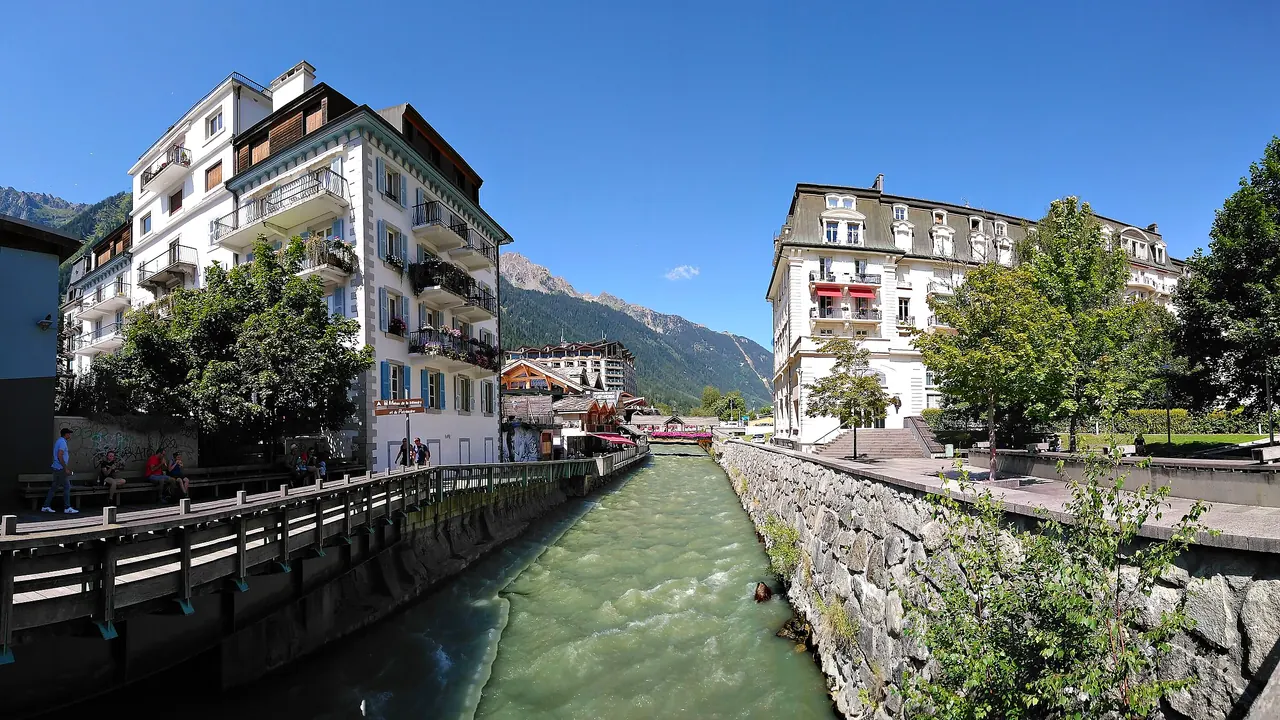
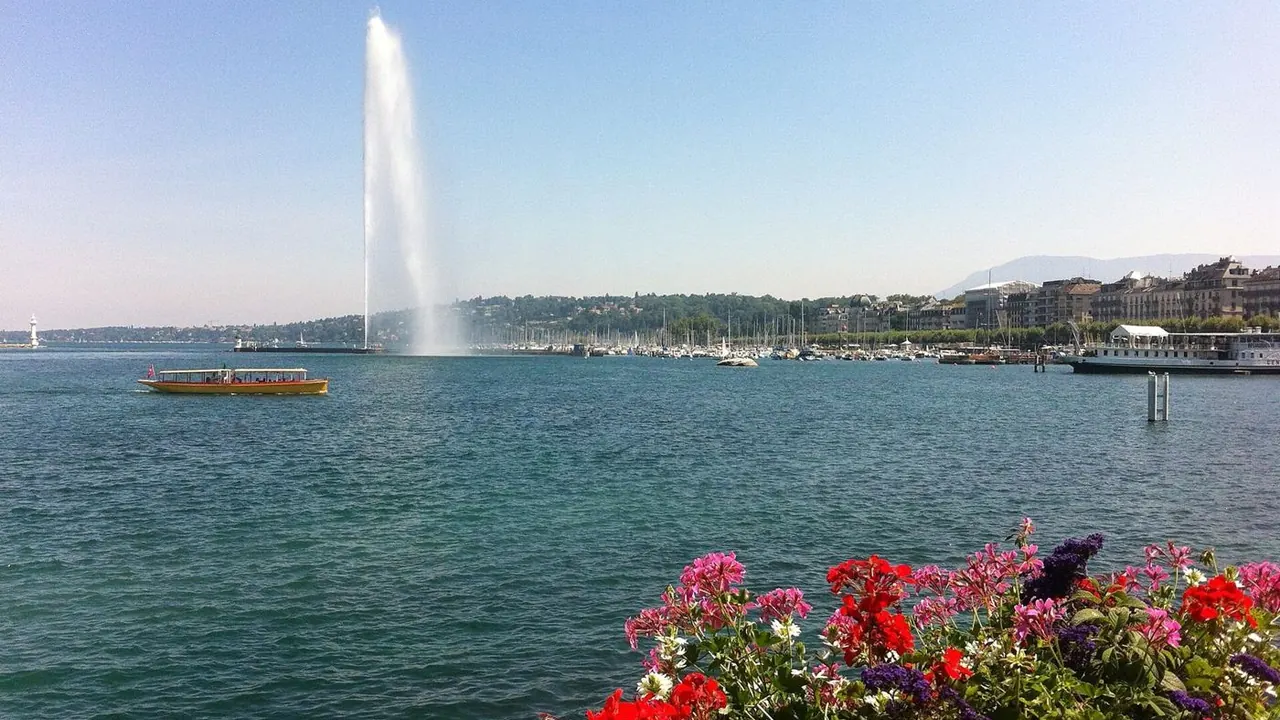
Photos: Chamonix by Tiia Monto, CC BY-SA 3.0, cropped; Geneva by Diviosen, CC BY-SA 3.0, cropped.
Chamonix or Geneva?
Our verdict in twelve categories, each scored against the same fixed benchmark cities, and the climate month by month, so you can choose for your trip.
Choose Chamonix for
- nature and the outdoors
- prices
- families
Chamonix is the choice when the mountains are the whole point. Cable cars lift you from the town centre onto the glaciers, the Lac Blanc and Tour du Mont Blanc trails start at the edge of town, and in winter the steep ski areas and the Vallée Blanche are on the doorstep. It suits skiers, climbers, hikers and active families who will spend every daylight hour outside and are happy with fondue and a loud bar afterwards.
Choose Geneva for
- live music and the arts
- culture and sights
- shopping
Geneva makes more sense for a rounder trip, with the Alps on the horizon rather than overhead. It has Calvin's cathedral and the Old Town, an opera house and a symphony orchestra, a lake the whole city swims in, and trains and lake steamers that make Lausanne, Lavaux and Montreux easy outings. It is the better base for a short city break, a culture-led stay or a first look at the region, as long as the budget can take it.
Scoreboard
Twelve categories on one fixed scale from 0 to 100. The shaded stretch is the gap between the two.
Your match
Pick a travel style or drag the sliders, and both match scores follow your weighting.
Wins on nature and the outdoors and prices with your weighting.
Wins on live music and the arts and culture and sights with your weighting.
What matters to you?
Category by category
What the scores mean for a trip.
Beaches & swimming
Neither has a sea, and swimming is a side activity in both, but Geneva comes off clearly better. Its clean lake is part of city life: you can dive off the Bains des Pâquis jetty with the Jet d'Eau in view, or spread out on the lawns of Genève-Plage, all minutes from the centre, with the water at around 23°C by August.
In Chamonix the nearest real swim is Lac de Passy, a small lake down the valley that only warms up in July and August. Otherwise it is the outdoor basin of the municipal pool, or a drive of over an hour to Lake Annecy.
Food & drink
Both serve fondue and raclette, but the cooking around them differs. Chamonix eats like a mountain resort: tartiflette, Reblochon and diots sausages on terraces facing the glaciers, and picnics from the cheese shops for days in the hills. The menus look alike, though, and a fair number of places close between the seasons.
Geneva has more depth. Perch from the lake, Chasselas and Gamay from the canton's own vineyards, a wide spread of international kitchens and polished fine dining in Carouge and the Old Town make it the better place to eat well, though never cheaply.
Culture & sights
Geneva has far more to see. Calvin's St Pierre Cathedral, with the excavations beneath it, the Reformation Wall, the Palais des Nations, the Red Cross museum and CERN cover the Reformation, diplomacy and science, and together they fill a couple of days.
Chamonix's heritage is narrower and fits into half a day: the Musée Alpin on the birth of alpinism and the 1924 Winter Olympics, the old guides' quarter and the climbers' cemetery. It is absorbing if mountaineering history moves you, but the real sight here is the massif.
Nightlife
Neither is a place for big nights out, and the two are about level, but the evenings feel quite different. Chamonix's scene is après-ski. It is loud, sociable and young, starting in the late afternoon at the foot of the slopes and ending in a lane of pubs and a couple of small clubs, then quietening in summer and largely shutting in the shoulder seasons.
Geneva is steadier through the year and more varied: late bars in the Pâquis, wine bars on the terraces of Carouge, and electronic club nights in the alternative cultural centres of Plainpalais and Jonction. Weeknights are quiet, though, and the city turns in early.
Nature & outdoors
Both are outdoor bases, but Chamonix puts you inside the high mountains while Geneva gives you a view of them. From Chamonix the Aiguille du Midi climbs to 3,842m, glaciers hang above the valley, and skiing, ski touring, climbing and the Tour du Mont Blanc all begin in town.
Geneva's outdoors is gentler: the Salève's limestone cliffs and paragliding just over the border, forest hikes and cross-country skiing on the Jura, and sailing and paddleboarding on the lake. It suits mixed, easy days, but for serious alpine terrain you end up driving to Chamonix.
Day trips
Geneva has the richer list of outings. Lake steamers and fast trains reach Nyon's Roman ruins, Lausanne, the Lavaux vineyard terraces and the Château de Chillon at Montreux, boats cross to medieval Yvoire, and Gruyères and Bern make longer days.
Chamonix's outings depend on its position near three countries: Courmayeur and Roman Aosta through the Mont Blanc Tunnel, Martigny on the Mont Blanc Express, and Annecy or Geneva by road. Beyond those, the choice narrows to other resorts along slow mountain roads.
Good for families
The two are broadly level for families, but they suit different children. Chamonix is for children who like being outside, with nursery slopes and sledging in winter and, in summer, the luge, treetop courses, the Merlet animal park with its ibex and marmots, and the little red train to the Mer de Glace. Wet days and the highest cable cars are its weak spots.
Geneva is gentler and more indoor: the big animal dioramas of the Natural History Museum, lakeside playgrounds, the small enclosures at the Bois de la Bâtie and rides on the yellow harbour boats, with trams that take pushchairs easily. It runs thin after two or three days, and a day in the mountains is the usual answer.
Getting around
Geneva is the easier place to get around. Frequent trams, buses and the harbour boats share one network, the airport is a few minutes from the main station by train, and regional rail runs into France and across Switzerland.
Chamonix's small centre is easy to walk, and the valley buses and Mont Blanc Express are free with the guest card. In winter, though, the ski areas are spread out, so you spend time on packed ski buses, and evening services thin out. Most visitors arrive by shuttle from Geneva's airport anyway.
Shopping & style
Chamonix shops for one thing: technical climbing, ski and outdoor gear from specialist shops, some of them generations old, where many mountaineers save their big purchases. Beyond that it is Savoyard cheese, génépi, rock crystals and souvenirs.
Geneva is the shopping destination of the two. The Rue du Rhône is one of the world's great streets for watches and jewellery, and Carouge's craft workshops and the Plainpalais flea market add something less polished. For fashion, Chamonix's shoppers head there too.
Affordability
Neither is cheap, but Chamonix leaves more room to save. Peak weeks, lift passes and guides are costly. Even so, self-catering apartments, supermarket picnics, free valley transport with the guest card and trails that start from the valley floor bring costs down, and late spring and autumn are cheaper again, even if some lifts close.
Geneva stays expensive all year. Hotel rooms climb further during conferences, and a simple meal or a glass of wine is dear by any European measure. Free museums, free transport for hotel guests and cheap lidos help, and many visitors sleep or eat across the border in France.
Live music & performing arts
Chamonix has almost no stage life: a summer jazz festival with some sets played high in the mountains, occasional church concerts and mountain film evenings, and no theatre or concert season at all.
Geneva has a full formal season for a city its size. The Grand Théâtre stages opera and ballet, the Orchestre de la Suisse Romande plays in the gilded Victoria Hall, the Comédie puts on French-language theatre, and the Bâtiment des Forces Motrices in the middle of the Rhône hosts concerts and dance.
Wellness & relaxation
Both offer good ways to unwind, about equally, but of different kinds. In Chamonix rest follows effort: a large day spa with hot outdoor pools looking up at the glaciers, saunas in many chalets, and the thermal springs of Saint-Gervais down the valley. The town itself starts early and fills up in high season.
Geneva relaxes through its calm pace. In winter the Bains des Pâquis offers a sauna and hammam with plunges into the cold lake. There are also serious hotel spas, quiet Sundays on the lakeside promenades, and Évian or Divonne just across the border.
When should you go?
Pick your month. The climate figures are measured averages, not a forecast.
Chamonix in July
Geneva in July
Daytime high, °C
Rainfall in the month, mm
Where the figures come from
Chamonix's temperatures are measured 35 km from the centre, at Bourg-St-Maurice.
Chamonix has no rain gauge within 25 km of the centre, so its rainfall comes from a gridded climate dataset read at the city rather than from a gauge further away.
Temperature and rainfall are climate normals, averaged over the years shown. Chamonix: 1999-2020 (rainfall 1991-2020) normals, Bourg-St-Maurice (34.9 km from centre). Geneva: 1991-2020 normals, Geneve-Cointrin (5.7 km from centre).
Temperatures in the two are almost the same all year. Both reach about 27°C in July and sit near 5°C in January, and neither gets too hot for walking. In Chamonix, June to September is the season for the high trails, Lac de Passy only becomes swimmable in July and August, and winter belongs to skiing. In Geneva the lake is cold until June and best for swimming in July and August. Its winter is grey and chilly, and December is the dullest month for sunshine.
Rain is where they differ. Chamonix is wetter in every month. From November to May it gets close to twice Geneva's rain, peaking at about 169mm in December. From June to October the gap narrows to between a quarter and a half more. Geneva's rain is spread fairly evenly, and its driest month is February, at about 55mm. Its summer is not drier, but it is far brighter, with about 266 hours of sunshine in July, so June to August is the best time for the lake and the terraces. April and October are mild in both and good for walking, though Chamonix will be damper.
Which traveller are you?
For an outdoors trip, Chamonix is in a class of its own. The Aiguille du Midi cable car, the Mer de Glace railway, guided mountaineering, via ferrata and paragliding all start in town. From Geneva, the Salève and the Jura are pleasant but far gentler.
On a culture and arts trip, Geneva is the clear pick. St Pierre Cathedral, the Red Cross museum, CERN and the Musée d'Art et d'Histoire fill two or three days, and evenings can bring opera at the Grand Théâtre. Chamonix's museums take half a day.
For a short city break, Geneva fits a weekend neatly. You land minutes from the centre and can walk from the Jet d'Eau to the Old Town and Carouge. Chamonix only pays off once you have time to get up into the mountains.
Before you go
| Measure | Chamonix | Geneva |
|---|---|---|
| Official language | French | French, German, Italian, Romansh |
| Currency | Euro (EUR) | Swiss Franc (CHF) |
| Sockets | CE230 V, 50 Hz | CJ230 V, 50 Hz |
| Driving side | Right | Right |
| Time zone | UTC+1, UTC+2 in summer | UTC+1, UTC+2 in summer |
| Emergency number | 112 | 112 |
| Elevation | 995 m | 403 m |
| Main airport | Geneva International Airport (GVA)68 km from centre150 non-stop destinations | Geneva International Airport (GVA)5 km from centre150 non-stop destinations |
| Public holidays this year | 11 days | 9 days |
By the numbers
| Measure | Chamonix | Geneva |
|---|---|---|
| City population | 8,705 | 211,152 |
| People per km² | 75 | 13,280 |
| Museums within 10 km | 3 | 34 |
| UNESCO World Heritage sites within 50 km | 0 | 2 |
Where else could you go?
Every comparison below shares a destination with this one, so you can follow Chamonix or Geneva somewhere new.