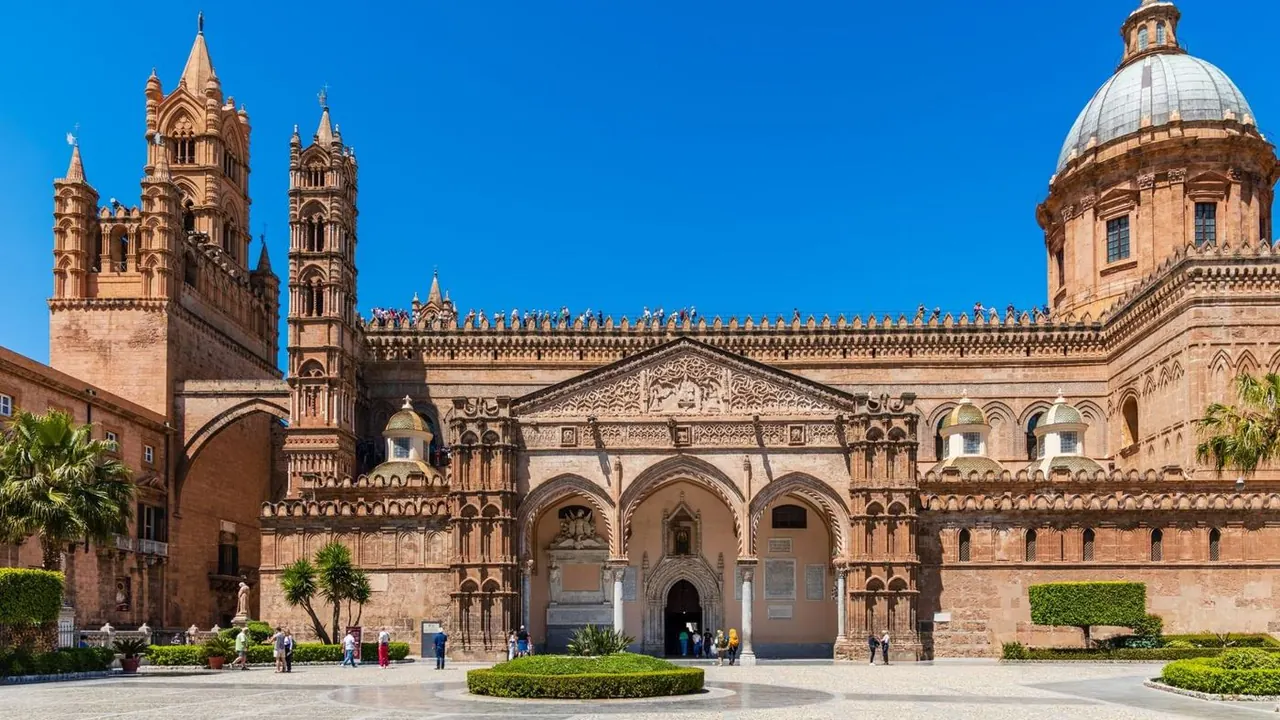
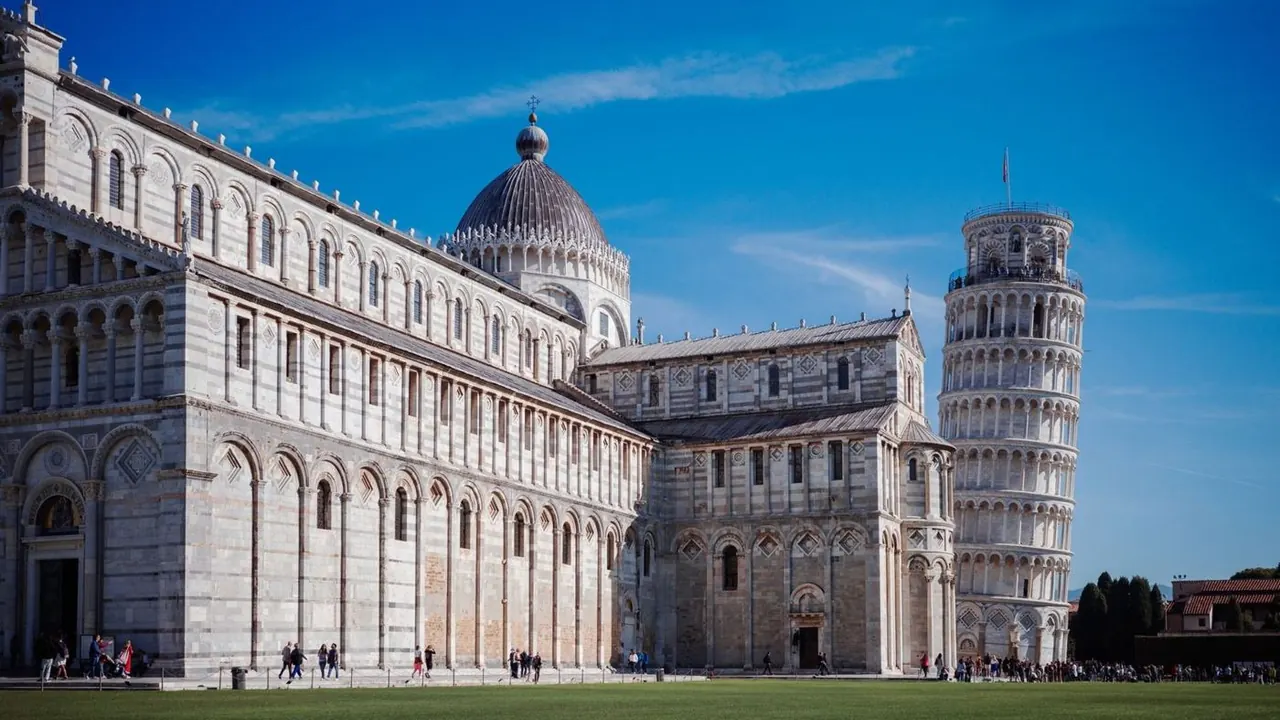
Photos: Palermo by Antonino Giangrasso, Pexels License; Pisa by Bruno Kraler, Pexels License.
Palermo or Pisa?
Our verdict in twelve categories, each scored against the same fixed benchmark cities, and the climate month by month, so you can choose for your trip.
Choose Palermo for
- food and drink
- live music and the arts
- beaches
Palermo is for travellers who want a big, layered southern city: the gold mosaics of the Arab-Norman churches, market lanes full of fryers and pastry, late evenings drinking outdoors in the Vucciria, and a proper sandy bay at Mondello for the hot afternoons. For food, sights, swimming, nights out and the opera, it gives more and costs less day to day. In return you have to put up with slow buses, scooters in the lanes and an old centre that is crumbling in places and takes some patience.
Choose Pisa for
- getting around
- wellness
- day trips
If the trip is really about Tuscany, Pisa is the better base. It is small, flat and easy to walk, and the airport is minutes from the station. Trains reach Florence, Lucca and the Cinque Terre without a car, so for getting around and for day trips it beats Palermo. Families and anyone after a quieter, more restful stay, with thermal springs just outside town, will find it simpler, even if the food, the evenings and the beaches are plainer than Palermo's.
Scoreboard
Twelve categories on one fixed scale from 0 to 100. The shaded stretch is the gap between the two.
Your match
Pick a travel style or drag the sliders, and both match scores follow your weighting.
Wins on food and drink and live music and the arts with your weighting.
Wins on getting around and wellness with your weighting.
What matters to you?
Category by category
What the scores mean for a trip.
Beaches & swimming
Palermo has the better swimming. Mondello's pale sand and shallow, clear water under Monte Pellegrino is a real beach resort within the city's reach, and the rocks and ladders towards Sferracavallo and Capo Gallo give deep, clean water for stronger swimmers.
Pisa's coast is closer to the centre but less rewarding: the long sandy beaches of Tirrenia and Calambrone are easy for paddling, yet the water near the Arno mouth is rarely clear. Most visitors there use the sea as a summer afternoon off rather than a reason to stay.
Food & drink
This is one of the widest gaps between the two. Palermo's markets at Ballarò, the Capo and the Vucciria are a meal in themselves, and its cooking carries Arab flavours of saffron, raisins and sweet-and-sour sauces, followed by serious pastry and granita for breakfast.
Pisa eats honestly but simply: Tuscan soups, game, salt cod and hot cecina, best around Piazza delle Vettovaglie. Outside that pocket, and especially near the tower, the choice is limited, and neither city offers much fine dining.
Culture & sights
Pisa has one perfect ensemble in the Piazza dei Miracoli, but Palermo has more to see and greater variety. Its Arab-Norman churches, led by the mosaic-covered Palatine Chapel, sit among baroque oratories, Serpotta's stucco and two strong museums, the Salinas and Palazzo Abatellis, and the list keeps going for days.
Pisa's sights beyond the cathedral square, from Piazza dei Cavalieri to the San Matteo museum and Santa Maria della Spina, fill a pleasant second day. It is tidier and quicker to cover, where Palermo's old centre is grander but visibly crumbling in places.
Nightlife
Neither city is a clubbing destination, but Palermo has far more going on after dark. The Vucciria becomes an open-air drinking spot with grills and music, and the bars of the Kalsa and the streets off Via Maqueda keep people out well past midnight on warm nights.
Pisa's evenings depend on the students: lively squares around the old market in term time, an aperitivo along Borgo Stretto and the river, and an early, quiet city otherwise. Both move to the beach bars in summer.
Nature & outdoors
Palermo's setting is more dramatic. Limestone mountains ring the city, Monte Pellegrino can be climbed straight from town, and the Zingaro coastal trail and the Madonie peaks near 2,000m give real hiking, though a car helps.
Pisa's outdoors is gentler and closer to hand: the pine forests, wetlands and empty dunes of San Rossore start at the city's edge and suit cycling, riding and deer-spotting. The Apuan Alps and the Cinque Terre paths are further afield.
Day trips
Both cities are fine bases, but Pisa has the edge, mostly because of its trains. Florence is an hour away, Lucca under half an hour, and the Cinque Terre a little over an hour, all without a car, with Volterra, San Gimignano and Siena reachable by road.
Palermo's day trips are superb in quality: Monreale's mosaics, Cefalù, the lonely temple at Segesta, Erice and the Valley of the Temples at Agrigento. The difference is effort, since most of the ancient sites are far easier with a hire car.
Good for families
Pisa is the easier city with children, mainly because it is small and flat, the tower lawn gives them room to run, and the beaches and the San Rossore park are close by. Older children can climb the tower, although younger ones are not allowed up.
Palermo is warm towards children and Mondello's shallow bay is ideal, and the puppet shows appeal to older ones. Narrow lanes without pavements, scooters, uneven stone and long summer heat make the old town harder work with a pushchair.
Getting around
Pisa is much simpler. You can walk from the station to the cathedral square in about half an hour, the airport shuttle train is quick, and the station is a hub for western Tuscany.
Palermo's main sights are also walkable along Via Maqueda and Corso Vittorio Emanuele, but beyond that the buses crawl through traffic, driving is stressful and parking is scarce. Even so, you will still want a car for Segesta and the interior.
Shopping & style
Palermo has more worth carrying home. Painted ceramics, including the moor's-head vases, marionettes from the puppet workshops, coral and filigree jewellery, and market goods such as capers and pistachio pesto give an afternoon's browsing a local character. Via Libertà adds Italian fashion among nineteenth-century buildings.
Shopping in Pisa is everyday: chains along the pedestrian Corso Italia, smarter clothes and old pastry shops under the arcades of Borgo Stretto, and a monthly antiques market by the river. For fashion or crafts of any depth, people take the train to Florence or Lucca.
Affordability
Palermo goes further for the money. Street food can replace sit-down meals, trattorie and pastries are cheap by Italian standards, and many churches charge little. July and August at the coast, and a hire car, are where costs climb.
Pisa is moderately priced, with student trattorias and walking that costs nothing, but the tower climb and the cafés beside the monuments add up, and the beach establishments charge seaside rates.
Live music & performing arts
Palermo is the stronger stage. The Teatro Massimo is one of Italy's great opera houses, with a full season of opera, ballet and concerts, the Politeama hosts the Sicilian symphony orchestra, and the Opera dei Pupi offers puppet shows of knights and Saracens you will not see in Tuscany.
Pisa's Teatro Verdi gives a pleasant, unfussy night of opera from autumn to spring, backed by university chamber concerts, but bigger productions mean a trip to Florence.
Wellness & relaxation
Pisa is the more restful choice. Away from the tower it is quiet and slow, and the Roman-era springs of San Giuliano Terme, with a spa in an eighteenth-century bath palace, lie just outside town, with Casciana Terme's thermal pool further inland.
Palermo is loud with scooters and markets, and its nearest thermal waters are a train ride away at Termini Imerese. Rest there comes from the Orto Botanico, the cloisters and the evening walk on the Foro Italico, or from a stay outside the city.
When should you go?
Pick your month. The climate figures are measured averages, not a forecast.
Palermo in July
Pisa in July
Daytime high, °C
Rainfall in the month, mm
Where the figures come from
Palermo has no rain gauge within 25 km of the centre, so its rainfall comes from a gridded climate dataset read at the city rather than from a gauge further away.
Palermo's sunshine is measured 67 km from the centre, at Ustica.
Temperature and rainfall are climate normals, averaged over the years shown. Palermo: 1991-2020 (sunshine 1961-1990) normals, Palermo / Punta Raisi (24.1 km from centre). Pisa: 1991-2020 normals, Pisa / S. Giusto (3.9 km from centre).
Both seas are warm enough to swim in by June. In July and August Pisa's plain gets the hotter days, at about 30°C, and in either city it is too hot for long walks at midday. Palermo is the sunnier and drier of the two all summer, and its sea keeps its warmth longer. In October it is still around 23°C, against 20°C off Pisa, so a late swim is realistic in Sicily after the Tuscan coast has cooled.
Autumn is when the two differ most. In Palermo the rain arrives in October and stays at about 62mm a month until December, then eases in January and February, and winter days are mild enough for sightseeing in a light jacket. Pisa gets much wetter from September, with October and November near 130mm, and its winters are cooler and greyer. Spring is pleasant for walking in both cities, and drier in Palermo. Late May and June suit both best, and Palermo stays good through September too.
Which traveller are you?
On a food and nightlife trip, Palermo is the clear choice. Its markets turn street food into a whole meal, from panelle to sfincione and cannoli, and by night the Vucciria and the Kalsa stay lively outdoors far later than Pisa's student squares.
For a short city break, Pisa is easier. The airport shuttle reaches the station in minutes, everything is walkable on flat streets, and two unhurried days cover the Piazza dei Miracoli and the old town, with Lucca close enough for an extra afternoon.
On a beach and sun trip, Palermo wins. Mondello's clear turquoise bay is a short bus ride away, the sea stays warm for longer into the autumn, and the rocky coves of Capo Gallo add quieter swimming that Pisa's river-mouth coast cannot match.
Before you go
| Measure | Palermo | Pisa |
|---|---|---|
| Official language | Italian | Italian |
| Currency | Euro (EUR) | Euro (EUR) |
| Sockets | CFL230 V, 50 Hz | CFL230 V, 50 Hz |
| Driving side | Right | Right |
| Time zone | UTC+1, UTC+2 in summer | UTC+1, UTC+2 in summer |
| Emergency number | 112 | 112 |
| Elevation | 14 m | 4 m |
| Main airport | Falcone–Borsellino Airport (PMO)25 km from centre106 non-stop destinations | Pisa International Airport (PSA)4 km from centre82 non-stop destinations |
| Public holidays this year | 13 days | 13 days |
By the numbers
| Measure | Palermo | Pisa |
|---|---|---|
| City population | 630,167 | 88,737 |
| People per km² | 3,924 | 479 |
| Museums within 10 km | 42 | 27 |
| UNESCO World Heritage sites within 50 km | 1 | 3 |
| Swim season, months above 21 °C | 5 months | 4 months |
Where else could you go?
Every comparison below shares a destination with this one, so you can follow Palermo or Pisa somewhere new.