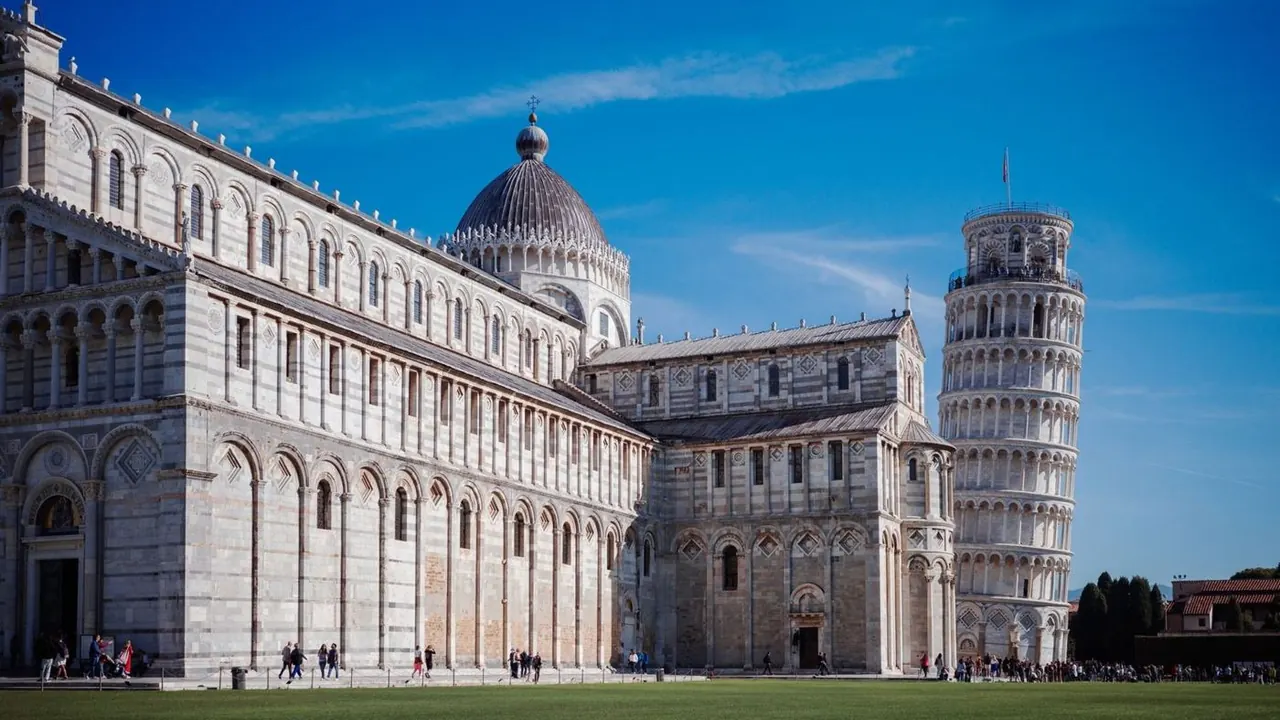
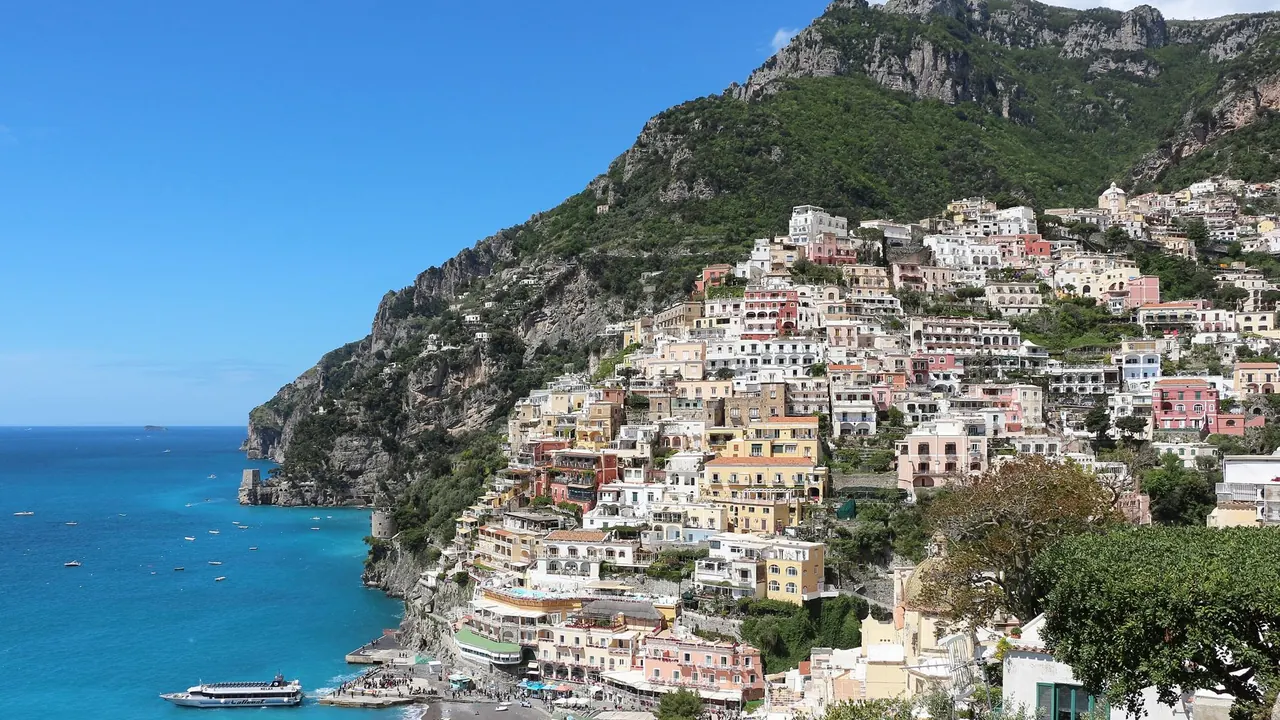
Photos: Pisa by Bruno Kraler, Pexels License; Positano by Bernard Gagnon, CC BY 4.0, cropped.
Pisa or Positano?
Our verdict in twelve categories, each scored against the same fixed benchmark cities, and the climate month by month, so you can choose for your trip.
Choose Pisa for
- culture and sights
- prices
- getting around
Pisa suits the traveller who wants to see things and keep moving. The cathedral square is one of Italy's great sights, the old town around the market feeds you well for little, and the station puts Florence, Lucca and the Cinque Terre within easy reach by train. It is flat, walkable, workable with children and far kinder to a budget, though the beach is a side trip rather than the point.
Choose Positano for
- beaches
- nature and the outdoors
- shopping
Positano is for a slower, more expensive trip built around the sea and the cliffs. You come for clear deep-blue water, boat days to Capri and the Path of the Gods, and for the view from a terrace at lunch. There is little to visit in the town itself and almost every errand involves stairs, so it rewards couples and walkers far more than families or anyone counting costs.
Scoreboard
Twelve categories on one fixed scale from 0 to 100. The shaded stretch is the gap between the two.
Your match
Pick a travel style or drag the sliders, and both match scores follow your weighting.
Wins on culture and sights and prices with your weighting.
Wins on beaches and nature and the outdoors with your weighting.
What matters to you?
Category by category
What the scores mean for a trip.
Beaches & swimming
Positano is the better swimming place by some distance. The sea is the reason to be there: clear, deep water below the town at Spiaggia Grande and Fornillo, with boats running to Arienzo, Laurito and coves further along the cliffs. The catch is the shore itself, which is coarse grey sand and pebbles shelving steeply and crowded by mid-morning in high summer.
Pisa's beaches are softer underfoot but less of a draw. Tirrenia and Calambrone have long, wide sand backed by pine woods and shallow water for paddling, but they are 12km or more from the centre and the water near the Arno mouth is rarely clear. A seaside afternoon there is a break from sightseeing.
Food & drink
Pisa gives you more to eat and more ways to eat it. The streets around Piazza delle Vettovaglie mix a morning produce market with trattorias and wine bars, and the cooking is plain Tuscan: ribollita, wild boar, salt cod and hot cecina from wood ovens. It is honest rather than ambitious, and the menus by the tower are best avoided.
Positano's strength is narrower: seafood pasta, grilled fish and lemon desserts on a terrace above the sea, with a few hotel dining rooms aiming higher. The same dishes repeat from menu to menu, there is little everyday or market eating, and many kitchens close through the winter.
Culture & sights
This is the widest gap between the two. Pisa has the cathedral, baptistery, Leaning Tower and Camposanto standing together on one lawn, and beyond them Piazza dei Cavalieri, Santa Maria della Spina on the river and the medieval collection at San Matteo.
In Positano the town is the sight: pastel houses stacked up a ravine, the majolica dome of Santa Maria Assunta and the painted rooms of a Roman villa beneath it, buried by Vesuvius. That is a pleasant morning, and anyone wanting museums heads to Naples.
Nightlife
Neither is a place to go out, but Pisa has more life after dark. In term time students fill the small squares around the old market until past midnight, and Borgo Stretto and the riverbanks draw the aperitivo crowd, though the city quietens early once term ends.
Positano's evenings are an aperitivo with a view and a long dinner, plus a few summer cocktail bars and one dressed-up cave club at the end of the main beach. Out of season even that fades.
Nature & outdoors
Positano has the more dramatic landscape: the Lattari mountains fall straight into the sea, and the Path of the Gods runs along the cliffs above Nocelle with views to Capri. Steeper trails climb through chestnut woods to ridges over 1,000m, and kayaks follow the shore to grottoes and the Li Galli islets.
Pisa's outdoors is gentler and flatter. The San Rossore park of pine forest, wetland and dunes starts at the city's edge and suits bikes and horses, Monte Pisano has olive-terrace paths, and the Apuan Alps offer real mountain hiking further out.
Day trips
Both are superb bases, and the difference is in how you travel. From Pisa the trains do the work all year: Lucca in under half an hour, Florence in about an hour, the Cinque Terre a little beyond, with Volterra, San Gimignano and Siena by car.
Positano's outings go by sea, to Amalfi, Ravello and Capri, with Pompeii and Herculaneum via Sorrento and the temples of Paestum further south. Most ferries run only from spring to autumn, and the coast road is slow, so winter trips take more patience.
Good for families
Pisa is much easier with children. The centre is small and flat, the lawn by the tower is a place to run about, older children can climb the tower, and the shallow sand at Tirrenia and cycling in San Rossore fill the other days.
Positano is built of stairs, so pushchairs are useless, and its pebbly beaches drop off quickly. Older children who love boats and swimming will be happy, but families with toddlers struggle.
Getting around
Pisa is simple: a flat walk of about half an hour links the station to the cathedral square, the airport is a short shuttle-train hop away, and the station is a rail hub for western Tuscany.
Positano is small but vertical, so every walk means hundreds of steps. Buses on the single coast road fill up and crawl in summer, a car is a burden with scarce parking, and the ferries that make life easier mostly run in season.
Shopping & style
Positano has more reason to shop, because it sells a look you will not find in Pisa: loose white linen and printed resort wear, sandals cut to fit while you wait, hand-painted ceramics and lemon goods. It is all one style, though.
Pisa offers everyday Italian shopping on Corso Italia and the arcades of Borgo Stretto, plus the monthly antiques market by the river. For serious fashion, people take the train to Florence.
Affordability
Pisa costs far less. Central rooms are mid-range, student trattorias are good value and you can walk everywhere, so the main expenses are the tower climb and the cafés right beside the monuments.
Positano is one of the most expensive places to stay in Italy, with sea-view rooms, loungers, terraces, boats and transfers all priced high. Staying in Praiano or Sorrento, or coming in May or October, softens it considerably.
Live music & performing arts
Pisa has a real if modest season at the Teatro Verdi, its 19th-century horseshoe opera house, with opera, concerts, ballet and drama from autumn to spring, plus university chamber music and church recitals.
Positano itself offers little beyond occasional summer concerts. Its draw is nearby: the Ravello festival of classical music, played on a terrace above the sea, makes a fine summer evening, and Naples handles opera.
Wellness & relaxation
The two are about level for rest, but the calm comes from different places. Near Pisa there are thermal waters used since Roman times, at the bath palace of San Giuliano Terme and the larger public pool at Casciana Terme, and the city itself is quiet away from the tower.
Positano has no bathing tradition. Its rest comes from cliffside hotel spas and pools and from long afternoons on a terrace, though the summer crowds and the stairs make May, June and late September the restful months.
When should you go?
Pick your month. The climate figures are measured averages, not a forecast.
Pisa in July
Positano in July
Daytime high, °C
Rainfall in the month, mm
Where the figures come from
Positano's temperatures are measured 25 km from the centre, at Capri.
Positano has no rain gauge within 25 km of the centre, so its rainfall comes from a gridded climate dataset read at the city rather than from a gauge further away.
Positano's sunshine is measured 59 km from the centre, at Grazzanise.
Temperature and rainfall are climate normals, averaged over the years shown. Pisa: 1991-2020 normals, Pisa / S. Giusto (3.9 km from centre). Positano: 2005-2025 (sunshine 1991-2020, rainfall 1991-2020) normals, Capri (25.3 km from centre).
Both places are summer swimming destinations, with the sea warm enough from June to September and at its warmest in August. Pisa's plain turns hot and humid in July and August, with highs around 30°C, so May and late September are better for walking the streets. Autumn rain arrives sharply there: September and October are wet, and November is the wettest month at around 130mm.
Positano holds its warmth longer and is a little milder in winter. In October its sea is still near 22°C, against 20°C off Pisa, and the coast gets more October sunshine. High summer is almost dry, but from December to March it is wetter than Pisa. For the cliff paths and the town's endless stairs, May, June and late September are far more comfortable than the midsummer heat.
Which traveller are you?
On a culture and arts trip, Pisa is the clear choice. The Piazza dei Miracoli, San Matteo's medieval painting and the palazzi along the Arno fill two full days, and Florence is an hour away. Positano's sights take a couple of hours.
For a trip on a tight budget, Pisa again. Student trattorias, mid-range rooms and a centre you can walk keep costs modest. Positano is among the priciest places to stay in Italy, and the view is added to every bill.
On a beach and sun trip, Positano wins. Its water is clear and deep blue, boats reach coves and Capri, and the sea stays warm into early October. Pisa's beaches are a bus ride away and the water near the river mouth is murky.
Before you go
| Measure | Pisa | Positano |
|---|---|---|
| Official language | Italian | Italian |
| Currency | Euro (EUR) | Euro (EUR) |
| Sockets | CFL230 V, 50 Hz | CFL230 V, 50 Hz |
| Driving side | Right | Right |
| Time zone | UTC+1, UTC+2 in summer | UTC+1, UTC+2 in summer |
| Emergency number | 112 | 112 |
| Elevation | 4 m | 142 m |
| Main airport | Pisa International Airport (PSA)4 km from centre82 non-stop destinations | Naples International Airport (NAP)33 km from centre131 non-stop destinations |
| Public holidays this year | 13 days | 13 days |
By the numbers
| Measure | Pisa | Positano |
|---|---|---|
| City population | 88,737 | 3,729 |
| People per km² | 479 | 429 |
| Museums within 10 km | 27 | 10 |
| UNESCO World Heritage sites within 50 km | 3 | 5 |
| Swim season, months above 21 °C | 4 months | 5 months |
Where else could you go?
Every comparison below shares a destination with this one, so you can follow Pisa or Positano somewhere new.