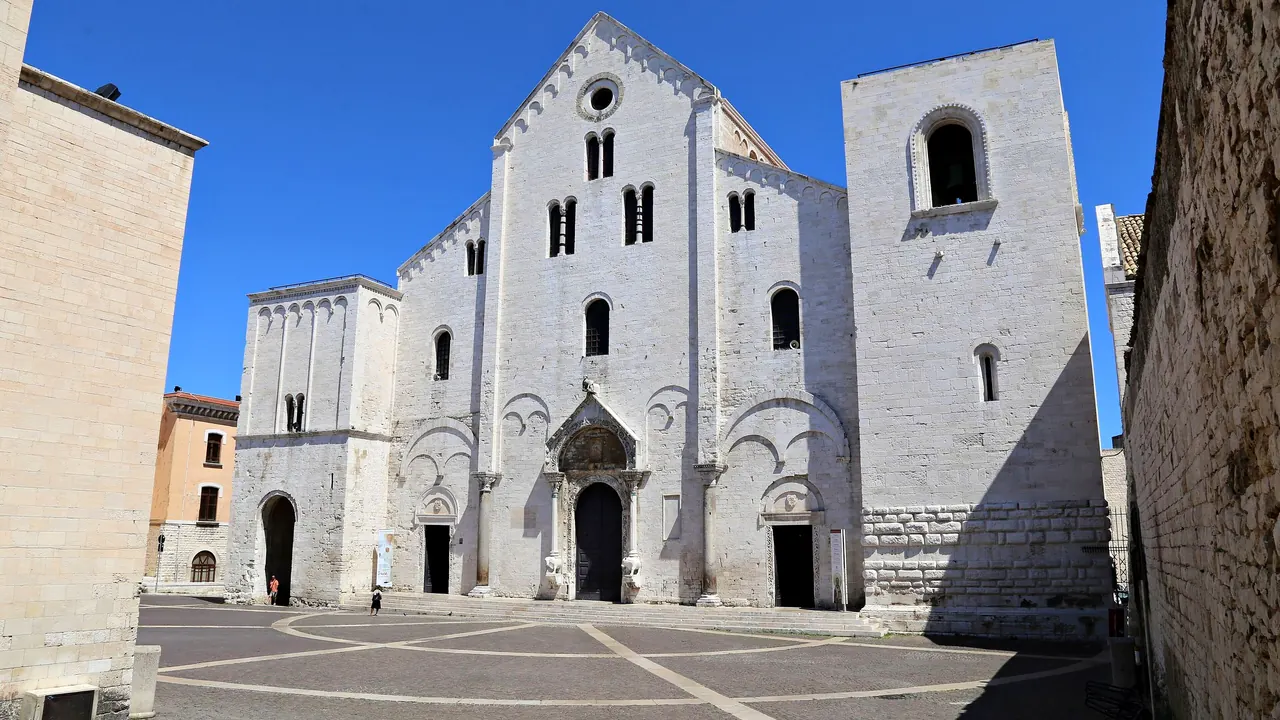
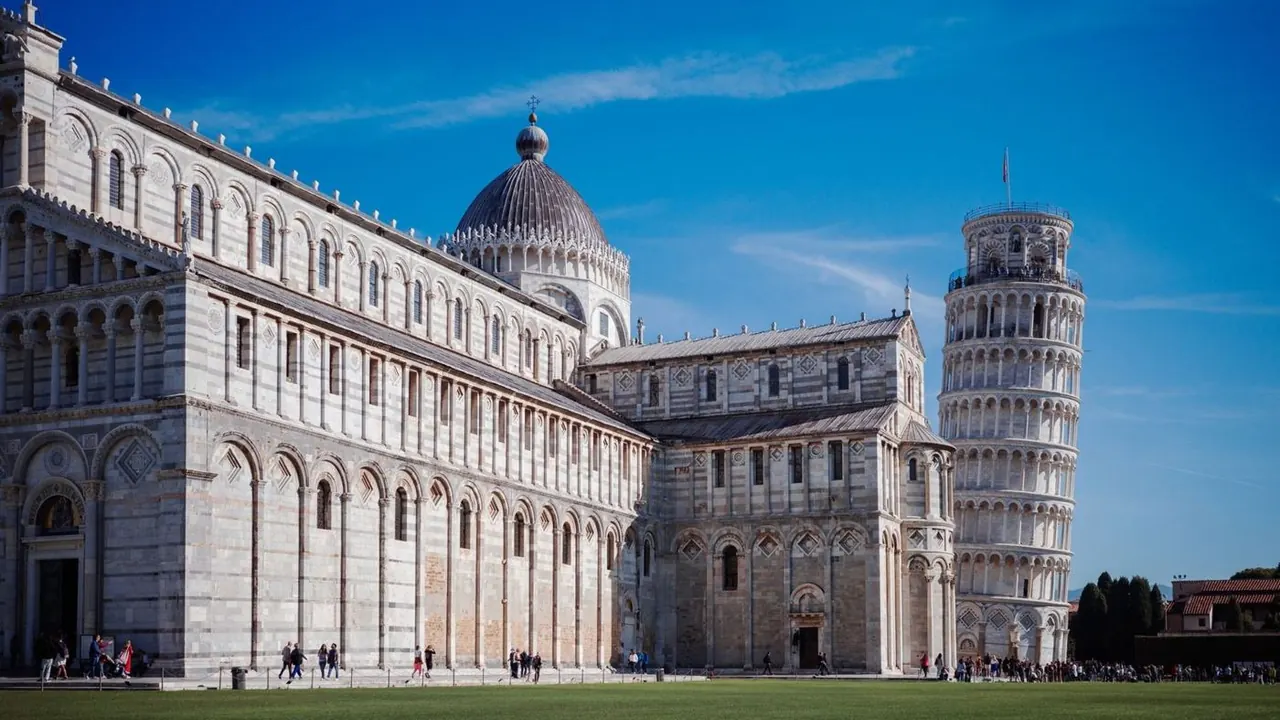
Photos: Bari by Sailko, CC BY-SA 4.0, cropped; Pisa by Bruno Kraler, Pexels License.
Bari or Pisa?
Our verdict in twelve categories, each scored against the same fixed benchmark cities, and the climate month by month, so you can choose for your trip.
Choose Bari for
- food and drink
- nightlife
- live music and the arts
Bari suits travellers who plan their days around eating and want a southern city that stays out late. The orecchiette rolled in old-town doorways, raw seafood by the fishermen's pier and warm, calm water within easy reach make it a sensual, unhurried base. Evenings run long in the piazzas and on the seafront, and the Petruzzelli gives you a proper night at the opera. Its real strength is the run of trips into Puglia and Basilicata: Matera, the trulli and the white towns of the Valle d'Itria.
Choose Pisa for
- wellness
- getting around
- nature and the outdoors
Pisa is the better pick if you want sights, ease and green space more than late nights. The Piazza dei Miracoli and the quieter riverside city behind it are richer than anything in Bari's old town. The airport is almost in town, everything is walkable, and the station puts Florence, Lucca and the Cinque Terre within reach without a car. Forest, dunes and hill paths start at the city's edge, and there are Roman-era thermal springs just outside. Expect simpler food and early evenings.
Scoreboard
Twelve categories on one fixed scale from 0 to 100. The shaded stretch is the gap between the two.
Your match
Pick a travel style or drag the sliders, and both match scores follow your weighting.
Too close to call, level with your weighting
Wins on food and drink and nightlife with your weighting.
Wins on wellness and getting around with your weighting.
What matters to you?
Category by category
What the scores mean for a trip.
Beaches & swimming
Bari has the edge for swimming. Its sandy city beach, Pane e Pomodoro, is a walk from the centre. The real draw is half an hour south, where Polignano's cliff-walled cove and the clear rocky inlets around Monopoli offer the kind of water Puglia is known for.
Pisa's coast at Tirrenia and Calambrone has long, wide sand backed by pines and shallow water that suits paddlers. The water near the Arno mouth is rarely clear, though, and much of the shore is given over to rented loungers. Clear water is the main difference between the two.
Food & drink
Food is one of the main reasons to choose Bari over Pisa. Bari's cooking is distinctive and everywhere: hand-rolled orecchiette, tiella of rice, potatoes and mussels, burrata, and raw urchins at the old pier, washed down with Primitivo or Negroamaro.
Pisa eats well but plainly. Expect ribollita, game and hot cecina from wood ovens, and look for the trattorias around Piazza delle Vettovaglie rather than the tired menus near the tower. Neither city does much fine dining, but Bari's everyday food is more memorable.
Culture & sights
Pisa offers more to see. The marble cathedral, the baptistery, the Leaning Tower and the frescoed Camposanto stand together on one lawn. Beyond them you have Piazza dei Cavalieri, Santa Maria della Spina on the river and the medieval painting of San Matteo, which together fill two full days.
Bari's old town is atmospheric, with whitewashed lanes and shrines, and the Basilica di San Nicola is a fine piece of Apulian Romanesque that still draws Orthodox pilgrims. Beyond that, the castle, the cathedral and the Murat palazzi make a pleasant but shorter round.
Nightlife
Bari is the livelier place after dark. Students and young locals pack Piazza Ferrarese and the old-town steps, the Umbertino bars stay open past midnight, and in summer the crowd heads to open-air clubs along the coast.
Pisa's evenings are a glass of wine in the market squares during term and an aperitivo on Borgo Stretto. The tower district is empty at night, and the city goes quiet early outside term time.
Nature & outdoors
Pisa has much more open country close by. The San Rossore park starts at the edge of the city, with pinewoods, wetland, wild dunes and fallow deer to explore by bike or on horseback. The olive-terrace paths of the Monte Pisano and the marble peaks of the Apuan Alps add proper hiking.
Bari sits on a flat plain of olive groves. The nearest wild country is the open karst of the Alta Murgia, about an hour away, which suits quiet walks and cycling but has no mountains.
Day trips
Both are excellent bases, and the difference lies in where they lead. From Bari you head into the rural south: the cave city of Matera, the trulli of Alberobello, the white towns of the Valle d'Itria, Baroque Lecce and Castel del Monte. A car makes many of these easier.
From Pisa the trips are Tuscany's best-known names: Florence and Lucca by fast train, the Cinque Terre a little over an hour north, and San Gimignano, Volterra and Siena by road. Pisa's trips are easier to do by rail.
Good for families
The two are equally manageable with children, and neither has much built specifically for them. In Bari, the draws are the sandy city beach, the traffic-free lanes and the evening passeggiata, plus outings to the Grotte di Castellana or the Fasano safari park.
Pisa offers the tower lawn and the classic photo, a climb for older children only, and shallow beaches or bike rides in San Rossore. In both, the midday summer heat shapes the day.
Getting around
Pisa is the easier city to get around. You can walk from the station to the cathedral square in about half an hour, and a shuttle train reaches the airport in minutes. Its rail hub sends trains across western Tuscany, so a car is rarely needed.
Bari's centre is also flat and walkable, and a rail link serves the airport. Its regional lines are slower and less frequent, though, and the buses are confusing for visitors, so many people hire a car for the Valle d'Itria and Castel del Monte.
Shopping & style
Neither city is a shopping destination, but Bari has slightly more to offer. Via Sparano has chains and a few upmarket boutiques, and you can take home dried orecchiette, taralli, olive oil and Puglian ceramics.
Pisa's Corso Italia and the arcaded Borgo Stretto cover everyday fashion and old pastry shops, and the monthly riverside antiques market is worth catching. Serious shoppers usually go on to Florence or Lucca.
Affordability
Costs are broadly similar, and both give fair value for well-known Italian cities. Bari's savings come from cheap street food, local wine and free sights, offset by tight summer rooms and car hire for day trips.
In Pisa, the student trattorias and the walkable centre keep everyday spending low. The main extra costs are the tower climb, the cafés beside the monuments and seaside rates at the beach establishments.
Live music & performing arts
Bari has the stronger stage. The Teatro Petruzzelli is one of Italy's largest opera houses and runs a full season of opera, ballet and symphony. In summer, jazz and open-air concerts fill the piazzas and the castle.
Pisa's Teatro Verdi is a charming horseshoe house with a modest autumn-to-spring season, and university chamber concerts add a little more. For anything bigger, people go to Florence.
Wellness & relaxation
Pisa is the better choice for relaxation. The thermal springs of San Giuliano Terme, in use since Roman times, sit just outside the city in an 18th-century bath palace, and Casciana Terme has a large public pool. The small, quiet city adds to the calm.
Bari has no bathing tradition. Its relaxation is the long lunch, the afternoon break and the evening walk along the promenade, and anyone wanting real pampering books a country estate outside the city.
When should you go?
Pick your month. The climate figures are measured averages, not a forecast.
Bari in July
Pisa in July
Daytime high, °C
Rainfall in the month, mm
Where the figures come from
Bari has no rain gauge within 25 km of the centre, so its rainfall comes from a gridded climate dataset read at the city rather than from a gauge further away.
Bari's sunshine is measured 77 km from the centre, at Marina Di Ginosa.
Temperature and rainfall are climate normals, averaged over the years shown. Bari: 1991-2020 (sunshine 1961-1990) normals, Bari / Palese Macchie (7 km from centre). Pisa: 1991-2020 normals, Pisa / S. Giusto (3.9 km from centre).
Both cities follow the same warm curve, with daytime highs around 30°C in July and August. Midday sightseeing is hard work in that heat, but it is ideal for swimming, and the sea stays warm enough from June into September in both places. May and late September are the most comfortable months for walking the streets in either city. Winters are mild but grey and cool rather than cold.
Where they differ is rain. Bari stays fairly dry for most of the year, and even its wettest month, November, brings about 83mm. Pisa is noticeably wetter in autumn, with October and November each bringing over 120mm, so a late-season trip there carries a real risk of washed-out days. In summer Pisa is very sunny, at around 320 hours of sunshine in July. For a spring or autumn city break Bari is the safer bet on weather, while in high summer there is little to choose between them.
Which traveller are you?
On a food and nightlife trip, Bari is the clear choice. Its street food is cheap and distinctive, from focaccia barese to sgagliozze, and its home cooking is generous. After dinner, Piazza Mercantile and the seafront bars carry on well past midnight, while Pisa winds down early.
For a culture and arts trip, Pisa offers more to look at. The cathedral, baptistery, tower and Camposanto form one of Italy's great ensembles, with San Matteo and the Lungarni beyond. Florence is about an hour by train. Bari's old town and basilica fill a day or two.
On an outdoors trip, Pisa gives you far more within reach. San Rossore's forest and dunes begin at the edge of the city, the Monte Pisano has terrace paths, and the Apuan Alps offer proper mountain hiking. Around Bari the land is mostly flat plain, and the Alta Murgia plateau is the nearest wild country.
Before you go
| Measure | Bari | Pisa |
|---|---|---|
| Official language | Italian | Italian |
| Currency | Euro (EUR) | Euro (EUR) |
| Sockets | CFL230 V, 50 Hz | CFL230 V, 50 Hz |
| Driving side | Right | Right |
| Time zone | UTC+1, UTC+2 in summer | UTC+1, UTC+2 in summer |
| Emergency number | 112 | 112 |
| Elevation | 5 m | 4 m |
| Main airport | Bari Karol Wojtyła International Airport (BRI)9 km from centre104 non-stop destinations | Pisa International Airport (PSA)4 km from centre82 non-stop destinations |
| Public holidays this year | 13 days | 13 days |
By the numbers
| Measure | Bari | Pisa |
|---|---|---|
| City population | 315,473 | 88,737 |
| People per km² | 2,687 | 479 |
| Museums within 10 km | 12 | 27 |
| UNESCO World Heritage sites within 50 km | 1 | 4 |
| Swim season, months above 21 °C | 4 months | 4 months |
Where else could you go?
Every comparison below shares a destination with this one, so you can follow Bari or Pisa somewhere new.