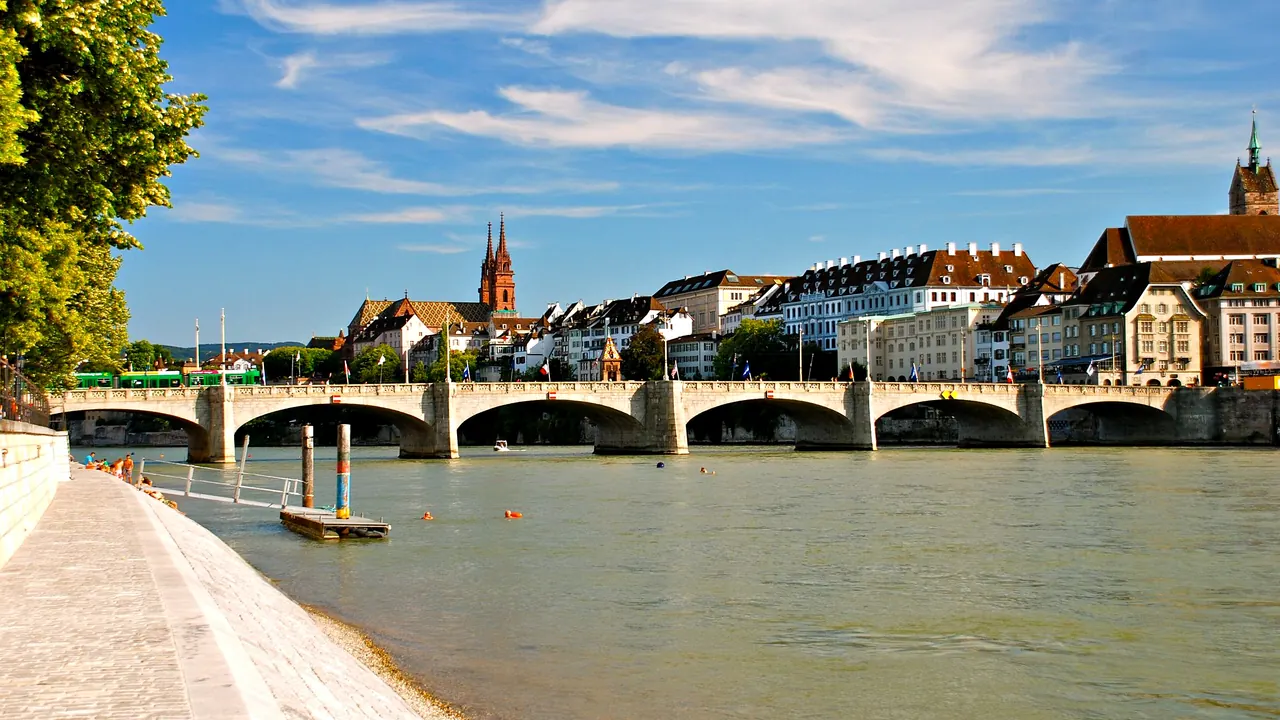
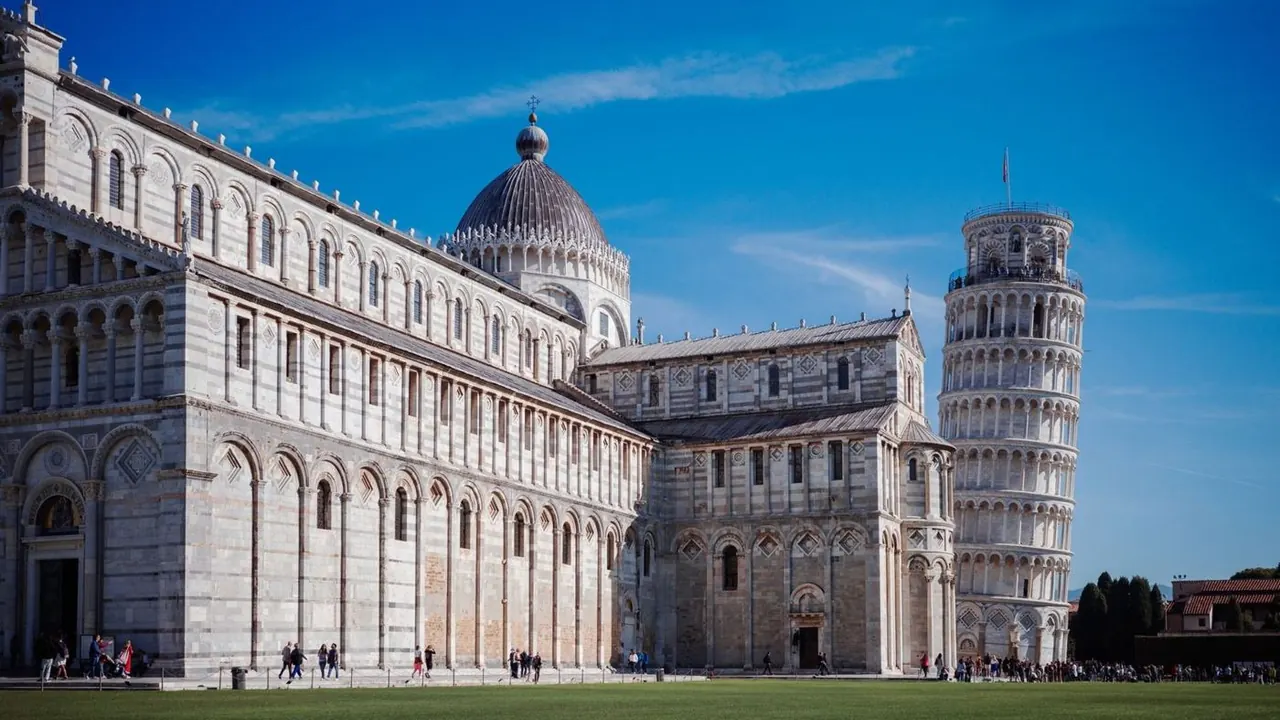
Photos: Basel by Lucazzitto, CC BY-SA 3.0, cropped; Pisa by Bruno Kraler, Pexels License.
Basel or Pisa?
Our verdict in twelve categories, each scored against the same fixed benchmark cities, and the climate month by month, so you can choose for your trip.
Choose Basel for
- live music and the arts
- getting around
- families
Basel suits the traveller who wants a museum-rich city that runs like clockwork. The art collections run deep, the opera and concert halls are serious, and the trams and fast trains put Alsace, the Black Forest, Lucerne and Bern within easy reach. It is a calm, comfortable base for a week of culture and day trips, as long as Swiss costs are not a worry.
Choose Pisa for
- prices
- beaches
- food and drink
Pisa makes more sense for anyone who wants sun, sea and Tuscany on a moderate budget. The cathedral square is one of Italy's great sights, sandy beaches lie just west of town, and Florence, Lucca and the Cinque Terre are close by train. Its long, dry summers and simple trattoria food make an easy, relaxed trip that costs far less than Basel.
Scoreboard
Twelve categories on one fixed scale from 0 to 100. The shaded stretch is the gap between the two.
Your match
Pick a travel style or drag the sliders, and both match scores follow your weighting.
Too close to call, 2 points apart
Wins on live music and the arts and getting around with your weighting.
Wins on prices and beaches with your weighting.
What matters to you?
Category by category
What the scores mean for a trip.
Beaches & swimming
Pisa has a real coast about 12km away. The long, pine-backed sands of Tirrenia and Calambrone have shallow water that is warm in high summer, and Versilia is a short train ride north. The water near the Arno mouth is rarely very clear, but this is still a proper beach afternoon.
Basel's version is the Rhine. You walk upstream along the Kleinbasel bank, then drift back past the old town in a swim bag. It is memorable, but it is only for confident swimmers and only in the warmer months, with no sand in sight.
Food & drink
Neither city is worth the trip for its food alone, but Pisa eats with more local character and far less strain on the wallet. Hot cecina from wood ovens, ribollita and wild boar, and the trattorias around the Piazza delle Vettovaglie market make simple Tuscan meals easy to find, as long as you keep away from the menus by the tower.
Basel borrows much of its table from its neighbours: tarte flambée from Alsace, Baden wines and Swiss-German comfort dishes. It has a small, fine top tier, but everyday meals feel costly for what they are. The Markthalle is the best casual stop.
Culture & sights
The two are evenly matched, but in different ways. Basel offers depth. Holbein and the Old Masters at the Kunstmuseum, the modern art of the Fondation Beyeler, Tinguely's machines and the Vitra architecture campus add up to three or four days of galleries, framed by the sandstone Münster and the guild houses of the Spalenberg.
Pisa offers one overwhelming set piece. The cathedral, baptistery, Camposanto and the climbable tower stand together on their lawn, and the quieter city beyond adds Piazza dei Cavalieri, Santa Maria della Spina and the medieval painting of San Matteo. Two unhurried days are enough.
Nightlife
Both cities are quiet after dark, and neither is a reason to go. Basel's best evenings are summer ones on the steps of the Kleinbasel riverside, with a few weekend electronic clubs in old harbour buildings and Swiss prices for drinks. Its real exception is Fasnacht, three days and nights of drums and lanterns that start before dawn.
Pisa's evenings depend on its students. During term, the squares by the old market fill with people drinking outside small wine bars, and in summer the action moves to the beach bars. Outside those times, the city goes to bed early.
Nature & outdoors
The outdoors is equally good in both, but the scenery is very different. From Basel you reach wooded uplands in three countries: the Jura ridges, the Black Forest summits over 1,400m and the Vosges. Flat Rhine paths lead into Germany and France, so it suits walkers and touring cyclists.
Pisa has the San Rossore park at its edge, with pine forest, wetland and wild dunes to explore by bike or on horseback, and plenty of fallow deer. Behind it rise the Monte Pisano and, further off, the Apuan Alps for real mountain hiking. Spring and autumn are best here, because summer on the plain is humid.
Day trips
Both are superb bases, and Pisa edges ahead because its list is so strong. Florence is close enough for a full day at the Uffizi, walled Lucca is under half an hour away, and the Cinque Terre, Viareggio and the marble towns of Carrara and Pietrasanta are all on the railway. Volterra, San Gimignano and Siena are worth hiring a car for.
Basel's advantage is variety across borders, all by train. Colmar and the Alsace wine villages, Freiburg, Lucerne, Bern and the Rhine Falls each make an easy day.
Good for families
Basel is the easier city with children. The Zolli is one of Europe's best zoos and sits near the station, the natural history and toy museums cover rainy days, and the river ferries pulled across by the current delight small children. Europa-Park is about an hour's drive away. Trams take prams, and the city is safe and clean.
Pisa gives children the tower photo and a lawn to run on. Older children will remember the climb, but younger ones are not allowed up. Its main family asset is the shallow sand at Tirrenia and Calambrone, which Basel cannot match. Midsummer heat is the thing to plan around.
Getting around
Basel is the smoother of the two. Dense green tram lines reach every corner, and some cross into Germany and France. Hotel guests ride free, and the main station has direct trains in three directions. The little river ferries make crossing the Rhine a pleasure.
Pisa is small and flat enough to walk, and its airport is unusually close, linked by a shuttle train. Its slow buses are the weak spot, and the inland hill towns really need a car.
Shopping & style
Basel gives a browser rather more to do. Swiss watches and jewellery on Freie Strasse, chocolatiers and Läckerli, the small design shops of the Spalenberg and a pretty Christmas market around the Münster make an enjoyable afternoon, even if few people come here just to shop.
In Pisa you get everyday Italian shopping: chains along Corso Italia, smarter clothes and old pastry shops under the arcades of Borgo Stretto, and a monthly antiques market by the river. For serious fashion you go to Florence.
Affordability
This is the widest gap between the two. Basel is very expensive in every respect, from rooms and meals to drinks and museum tickets, and fair weeks such as Art Basel make it worse. Free transport for hotel guests and cheaper meals over the border only take the edge off.
Pisa is moderately priced for a famous Italian city. Rooms are mid-range, student trattorias keep meals reasonable, and walking costs nothing. Only the tower climb, the cafés beside it and summer beach loungers cost noticeably more.
Live music & performing arts
Basel has much more to offer on an evening out. Theater Basel stages bold opera, ballet and drama under one roof, and the Stadtcasino is home to the city's symphony and chamber orchestras. A strong early-music tradition and a jazz school add further depth, from autumn to early summer.
Pisa's stage life centres on the horseshoe-shaped Teatro Verdi, a charming and unpretentious place to hear Italian opera, plus university chamber concerts and church recitals. For anything bigger, you have to go to Florence.
Wellness & relaxation
For a spa day, Basel has the wider choice close by. The saline baths at Rheinfelden are about twenty minutes away, and German spa towns such as Badenweiler and Bad Krozingen are just over the border, with Baden-Baden possible for a longer day. In town, quiet Sundays and the riverside set an unhurried pace.
Pisa's springs at San Giuliano Terme, used since Roman times, sit in an 18th-century bath palace just outside town, and Casciana Terme has a larger thermal pool. Beyond these, its calm comes from long lunches and its small scale.
When should you go?
Pick your month. The climate figures are measured averages, not a forecast.
Basel in July
Pisa in July
Daytime high, °C
Rainfall in the month, mm
Temperature and rainfall are climate normals, averaged over the years shown. Basel: 1991-2020 (sunshine 1961-1990) normals, Basel / Binningen (1.9 km from centre). Pisa: 1991-2020 normals, Pisa / S. Giusto (3.9 km from centre).
Basel is a late spring to early autumn city. July peaks at around 26°C, which is pleasant for walking and warm enough for floating down the Rhine from June to early September, but summer is also its wettest stretch, with heavy showers from May to August. Winter is grey and cold, with highs near 5°C and little sun, so it is mainly for museums and the Christmas market.
Pisa is warmer all year and runs the opposite way on rain. Summers are dry and very sunny, with highs around 30°C in July and August, which is fine for the beach but heavy for sightseeing on the humid plain. The sea reaches about 25°C in August and stays swimmable into September. The rain arrives in autumn, peaking near 132mm in November. For walking the streets, April to early June and late September in Pisa beat anything Basel offers outside its short summer.
Which traveller are you?
On a beach and sun trip, Basel can offer only a summer float down the Rhine in a strong current, so Pisa is the clear pick. The wide sands of Tirrenia and Calambrone are a short bus ride west, the sea is warm through high summer, and July and August are dry and sunny.
On a trip on a tight budget, Basel is hard going. Its best free pleasures, the river swim and the riverside steps, sit among costly meals and museum tickets. In Pisa, hot cecina, a picnic from the Vettovaglie market, the free stretches of beach and an evening stroll by the cathedral lawn cost very little.
For a culture and arts trip, Basel is the richer choice. The Kunstmuseum, the Fondation Beyeler and the Vitra campus fill several days, and evenings can go to Theater Basel or the Stadtcasino. Pisa has its magnificent cathedral square but a much thinner stage calendar.
Before you go
| Measure | Basel | Pisa |
|---|---|---|
| Official language | French, German, Italian, Romansh | Italian |
| Currency | Swiss Franc (CHF) | Euro (EUR) |
| Sockets | CJ230 V, 50 Hz | CFL230 V, 50 Hz |
| Driving side | Right | Right |
| Time zone | UTC+1, UTC+2 in summer | UTC+1, UTC+2 in summer |
| Emergency number | 112 | 112 |
| Elevation | 247 m | 4 m |
| Main airport | EuroAirport Basel–Mulhouse–Freiburg (BSL)7 km from centre112 non-stop destinations | Pisa International Airport (PSA)4 km from centre82 non-stop destinations |
| Public holidays this year | 10 days | 13 days |
By the numbers
| Measure | Basel | Pisa |
|---|---|---|
| City population | 176,329 | 88,737 |
| People per km² | 7,378 | 479 |
| Museums within 10 km | 61 | 27 |
| UNESCO World Heritage sites within 50 km | 2 | 4 |
| Swim season, months above 21 °C | - | 4 months |
Where else could you go?
Every comparison below shares a destination with this one, so you can follow Basel or Pisa somewhere new.