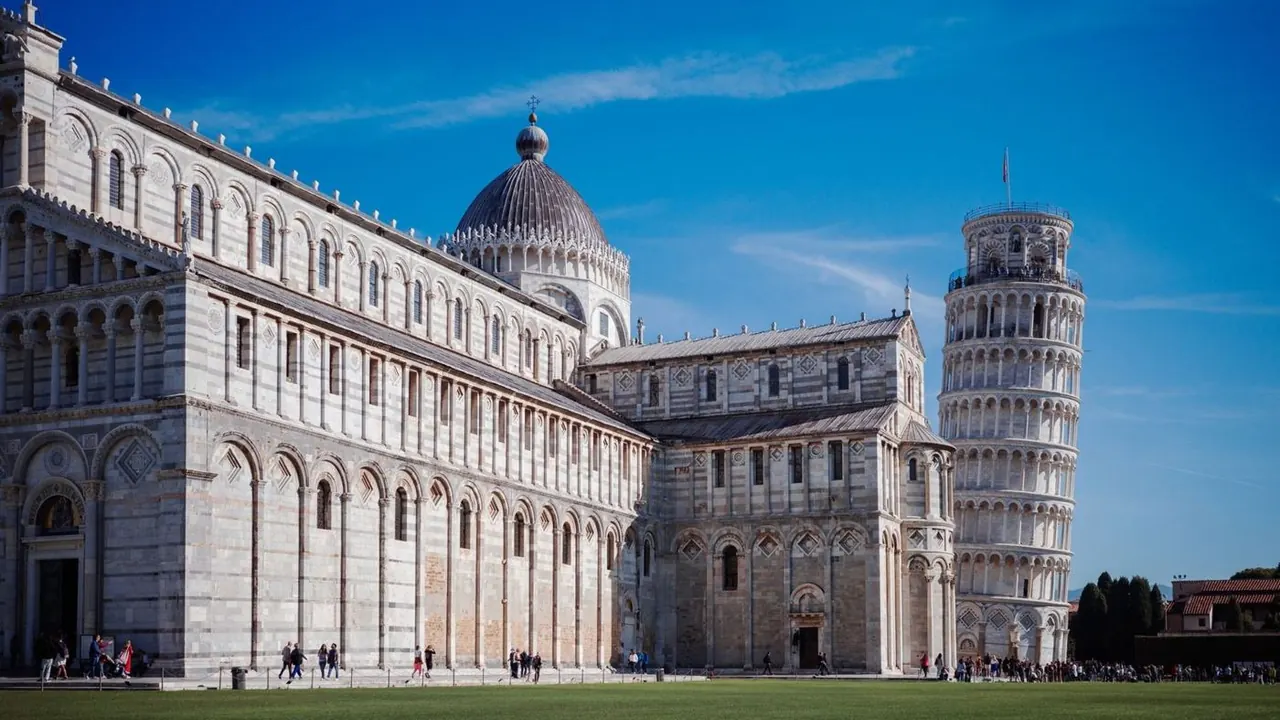
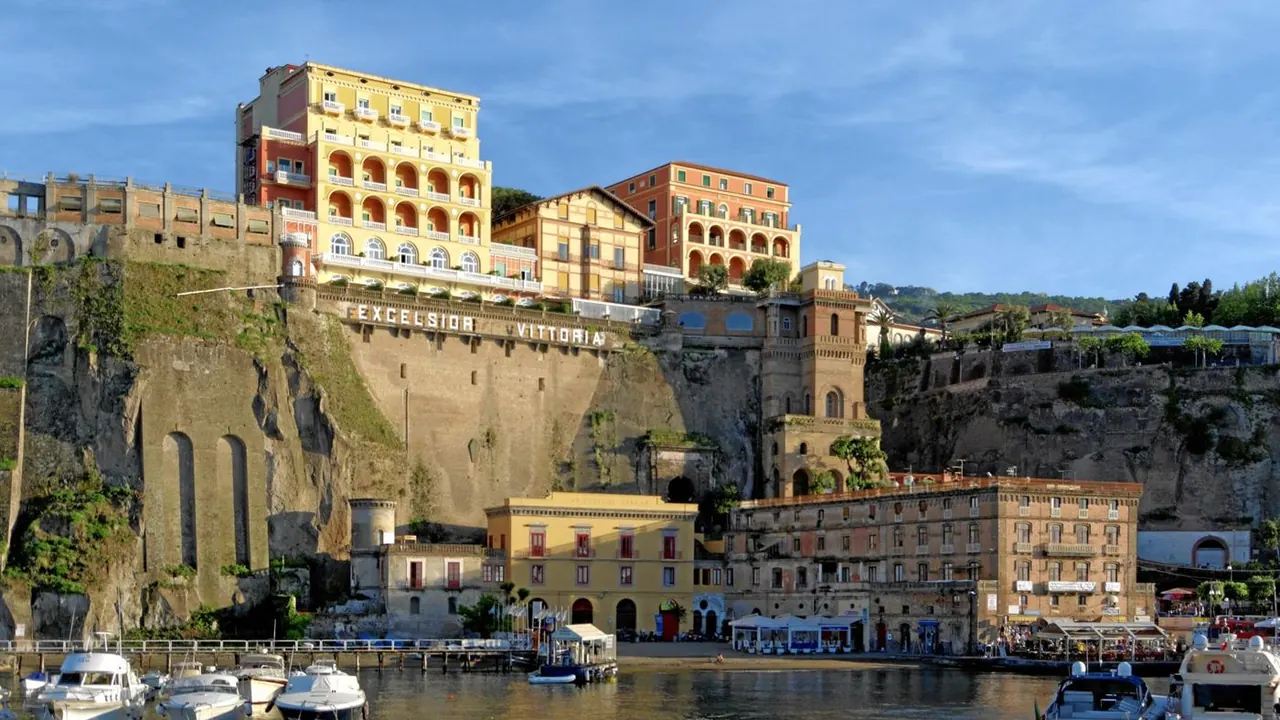
Photos: Pisa by Bruno Kraler, Pexels License; Sorrento by Berthold Werner, CC BY-SA 3.0, cropped.
Pisa or Sorrento?
Our verdict in twelve categories, each scored against the same fixed benchmark cities, and the climate month by month, so you can choose for your trip.
Choose Pisa for
- culture and sights
- prices
- getting around
Pisa suits a traveller who wants great architecture on the doorstep and the rest of Tuscany on a train timetable. The cathedral square and the quieter city along the Arno fill two good days of sightseeing. The station puts Florence and Lucca within easy reach, and the flat centre, student trattorias and shallow sandy beaches make it the easier and cheaper choice for families and anyone watching the budget.
Choose Sorrento for
- nature and the outdoors
- food and drink
- day trips
Choose Sorrento for scenery and the sea. It looks across the bay to Vesuvius, with cliff paths, lemon terraces and boat trips to Capri's grottoes close at hand, and Pompeii and the Amalfi Coast within a short ride. The town has fewer sights of its own and charges resort rates in summer, so it rewards travellers who come for landscape, swimming and excursions rather than museums or evenings out.
Scoreboard
Twelve categories on one fixed scale from 0 to 100. The shaded stretch is the gap between the two.
Your match
Pick a travel style or drag the sliders, and both match scores follow your weighting.
Wins on culture and sights and prices with your weighting.
Wins on nature and the outdoors and food and drink with your weighting.
What matters to you?
Category by category
What the scores mean for a trip.
Beaches & swimming
The two are about level for swimming, but the experience is entirely different. Pisa has sand. A bus ride out from the centre takes you to the long, wide beaches of Tirrenia and Calambrone, backed by pine woods and with shallow water that is easy for paddling, though near the Arno mouth the sea is rarely clear.
Sorrento has almost no beach in the usual sense. You swim off wooden piers at Marina Piccola and Marina Grande into deep, clear water, or sunbathe on the rocks at the Bagni della Regina Giovanna. For pebbles you go by bus or boat to Marina del Cantone or the coves of Capri.
Food & drink
Both eat well and simply, but from different kitchens. Pisa cooks plain Tuscan dishes, ribollita, game and salt cod, plus its own hot cecina. The best tables are the student-priced trattorias around the Piazza delle Vettovaglie market.
Sorrento has the southern larder: gnocchi alla sorrentina, fish cooked all'acqua pazza, dairy from the hills and lemons in everything. Its fish restaurants at Marina Grande and the fine dining in the peninsula's hill villages give it the edge for a special meal. In both, skip the menus aimed at day-trippers near the main sights.
Culture & sights
Pisa is far the richer of the two. The Piazza dei Miracoli alone, with its cathedral, baptistery, cemetery and climbable tower, outweighs everything in Sorrento's old town. Beyond the square there are the Piazza dei Cavalieri, Santa Maria della Spina and the Museo Nazionale di San Matteo.
Sorrento's own sights are pleasant but modest: the Roman street grid, the cloister of San Francesco, the Museo Correale and the ravine of the Vallone dei Mulini. A gentle day covers them. The area's real heritage lies out of town.
Nightlife
Neither is a place to come for nights out, but Pisa has more life after dark. During term, students fill the small squares around the old market with drinks and talk until past midnight, and Borgo Stretto and the riverbanks draw the aperitivo crowd.
Sorrento's evenings are a stroll along Corso Italia, a drink on a terrace over the bay and perhaps a piano bar with Neapolitan songs. Since the last trains and ferries leave early, a real night in Naples or on Capri means staying over.
Nature & outdoors
Sorrento has much the more dramatic outdoors. The peninsula is a steep ridge of olive and lemon terraces dropping to sheer coast. You can walk out to Punta Campanella or down to the protected bay of Ieranto, and the Path of the Gods, Monte Faito and Vesuvius are within reach. On the water there are kayaks and boat trips around Capri's grottoes.
Pisa's nature is gentler and flatter. It has the pine forest, wetlands and dunes of San Rossore with its fallow deer, birdwatching on Lake Massaciuccoli and olive-terrace paths on Monte Pisano. Real mountain hiking means going out to the Apuan Alps.
Day trips
Both are superb bases, and the difference is what you go to see. From Pisa the excursions are mostly Renaissance and medieval and mostly by rail: Florence in about an hour, walled Lucca in under half that, the Cinque Terre a little further. A car opens up Volterra, San Gimignano and Siena.
From Sorrento they are Roman, volcanic and maritime. Pompeii and Herculaneum are close on the Circumvesuviana, and there are ferries to Capri and boats along the Amalfi Coast. Naples is an hour away with its archaeological museum, and Paestum makes a longer day.
Good for families
Pisa is the easier choice with children. The centre is flat and compact, the tower lawn gives them room to run, and the beaches at Tirrenia and Calambrone shelve gently into shallow water. San Rossore adds cycling and riding.
Sorrento is warm towards children, and boat trips and Pompeii go down well. But the swimming is off piers and rocks into deep water, many hotels sit on steep lanes without pavements, and the coastal bus rides are long. Families with small children usually rely on a hotel pool.
Getting around
Pisa is simpler in every way. You can walk from the station to the cathedral square in about half an hour, an automatic shuttle train links the airport to the station, and frequent trains make car-free day trips easy.
Sorrento's centre is just as walkable, with lifts down to the marinas, but leaving town is harder. The Circumvesuviana is cheap but crowded and unreliable, the Amalfi buses crawl round the hairpins in summer, and ferries are often the most comfortable option. Hotels in the hills depend on shuttles or taxis.
Shopping & style
Neither is a shopping destination, but they offer different things. Pisa has ordinary Italian high-street shopping on Corso Italia, smarter clothes and old pastry shops under the arcades of Borgo Stretto, and a monthly antiques market by the river.
Sorrento is about local crafts and souvenirs: intarsia boxes and trays, leather sandals made to measure while you wait, linen, cameos and endless limoncello. For fashion, Pisa shoppers go to Florence, and Sorrento's go to Naples or Capri.
Affordability
Pisa is clearly the cheaper stay. Rooms are mid-range rather than premium, student trattorias keep meals good value, and walking costs nothing. The main expenses are the tower climb and summer sunbeds on the coast.
Sorrento sits on one of Italy's most sought-after coasts, and in summer sea-view rooms, terrace dinners, lido sunbeds and private boats all cost a lot. Cheap trains and buses help, and spring or late autumn bring hotel rates down considerably.
Live music & performing arts
Pisa has the stronger offer, mainly thanks to the Teatro Verdi. Its horseshoe auditorium runs an autumn-to-spring season of opera, concerts, ballet and drama, and university chamber music and church recitals add to it.
Sorrento's performances are mostly Neapolitan song and tarantella shows staged for visitors, along with summer concerts in the cloister of San Francesco. For opera you take the train to the Teatro di San Carlo in Naples.
Wellness & relaxation
For a restful stay they are broadly level, though the calm comes from different places. Pisa has genuine thermal waters on its doorstep: San Giuliano Terme, used since Roman times, with a spa in its 18th-century bath palace, and the larger public pool at Casciana Terme. The city itself is quiet once you leave the cathedral square.
Sorrento has no spring of its own. Its restfulness is in the cliff-top hotel spas, the pools and terraces over the bay and the old villa gardens, with Ischia's thermal gardens a ferry ride away. It is best in spring or autumn, since midsummer crowds make the centre noisy.
When should you go?
Pick your month. The climate figures are measured averages, not a forecast.
Pisa in July
Sorrento in July
Daytime high, °C
Rainfall in the month, mm
Where the figures come from
Sorrento has no rain gauge within 25 km of the centre, so its rainfall comes from a gridded climate dataset read at the city rather than from a gauge further away.
Sorrento's sunshine is measured 54 km from the centre, at Grazzanise.
Temperature and rainfall are climate normals, averaged over the years shown. Pisa: 1991-2020 normals, Pisa / S. Giusto (3.9 km from centre). Sorrento: 2005-2025 (sunshine 1991-2020, rainfall 1991-2020) normals, Capri (17 km from centre).
Both have a hot, dry Mediterranean summer, and on either coast the sea is warm enough to swim from June to September. Pisa's water peaks at about 25°C in August. Sorrento runs a degree or two warmer through the year, and its sea stays pleasant well into October. July and August reach about 30°C in Pisa, and on the humid plain that heat makes long days in the streets tiring. Sorrento is just as hot, and its exposed hill trails are hard going at midday. Both get their most sunshine in July.
Rain comes back sooner in Pisa. September brings about 102mm, and October and November are wetter still. Pisa's best months for sightseeing are therefore May and June, which are warm, fairly dry and long in daylight. Sorrento stays drier through September and is good for walking from late September into October, though showers are returning by then. After that it has the wetter November of the two, at about 151mm. Winters in both are mild but grey, and slightly softer on the bay of Naples.
Which traveller are you?
On a culture and arts trip, Pisa is the clear pick. The Piazza dei Miracoli, the medieval painting at San Matteo and the palazzi along the Lungarni give it far more to see than Sorrento. Then there is a night of opera at the Teatro Verdi, and Florence an hour away.
For an outdoors trip, Sorrento wins. The peninsula has coastal trails to Punta Campanella and the bay of Ieranto, the Path of the Gods and the crater of Vesuvius. Kayaks and small boats explore the coves, while Pisa's own outdoors is mostly flat parkland and easy cycling.
On a trip on a tight budget, Pisa goes further. Student trattorias, mid-range rooms and a centre you can walk keep costs down. Sorrento in summer charges like the sought-after resort it is, and only its cheap trains and off-season hotel rates soften that.
Before you go
| Measure | Pisa | Sorrento |
|---|---|---|
| Official language | Italian | Italian |
| Currency | Euro (EUR) | Euro (EUR) |
| Sockets | CFL230 V, 50 Hz | CFL230 V, 50 Hz |
| Driving side | Right | Right |
| Time zone | UTC+1, UTC+2 in summer | UTC+1, UTC+2 in summer |
| Emergency number | 112 | 112 |
| Elevation | 4 m | 50 m |
| Main airport | Pisa International Airport (PSA)4 km from centre82 non-stop destinations | Naples International Airport (NAP)30 km from centre131 non-stop destinations |
| Public holidays this year | 13 days | 13 days |
By the numbers
| Measure | Pisa | Sorrento |
|---|---|---|
| City population | 88,737 | 15,407 |
| People per km² | 479 | 1,541 |
| Museums within 10 km | 27 | 6 |
| UNESCO World Heritage sites within 50 km | 3 | 5 |
| Swim season, months above 21 °C | 4 months | 5 months |
Where else could you go?
Every comparison below shares a destination with this one, so you can follow Pisa or Sorrento somewhere new.