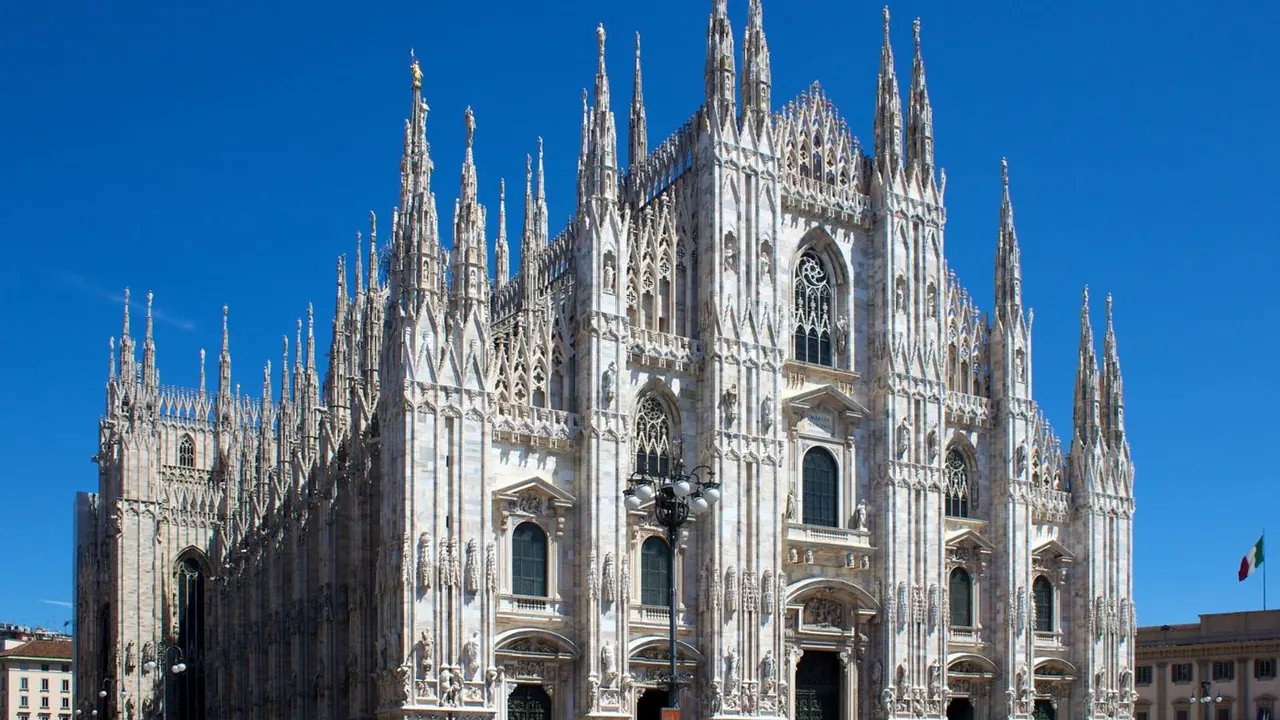
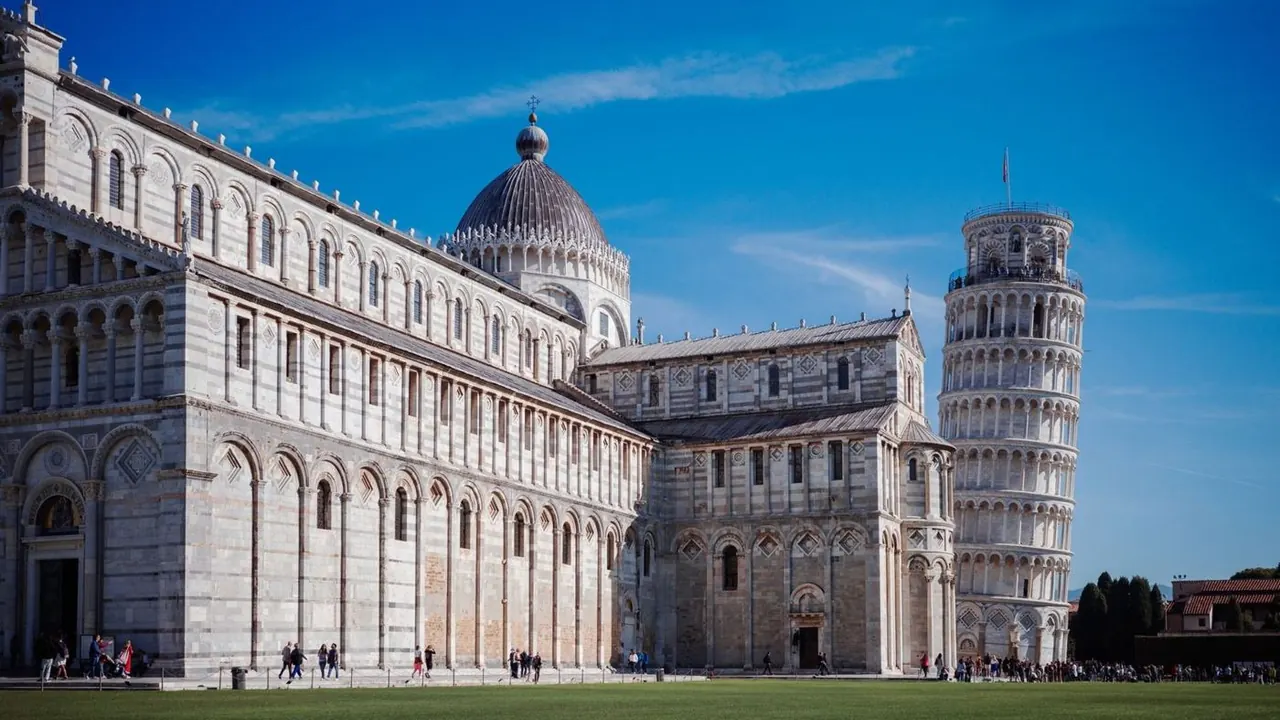
Photos: Milan by Jiuguang Wang, CC BY-SA 3.0, cropped; Pisa by Bruno Kraler, Pexels License.
Milan or Pisa?
Our verdict in twelve categories, each scored against the same fixed benchmark cities, and the climate month by month, so you can choose for your trip.
Choose Milan for
- shopping
- live music and the arts
- nightlife
Milan suits travellers who want a big city with a full evening programme: opera at La Scala, the fashion houses of the Quadrilatero, aperitivo along the Navigli and a serious restaurant table. It costs more and has no sea of its own. The lakes and the fast trains across northern Italy make up for both.
Choose Pisa for
- beaches
- prices
- wellness
Pisa is the better choice for a slower, cheaper Tuscan stay. The Piazza dei Miracoli takes a morning, sandy afternoons at Tirrenia are a bus ride away, and Florence and Lucca are short train trips. Nights are quiet and the shops are ordinary, but you get the sea and lower prices.
Scoreboard
Twelve categories on one fixed scale from 0 to 100. The shaded stretch is the gap between the two.
Your match
Pick a travel style or drag the sliders, and both match scores follow your weighting.
Wins on shopping and live music and the arts with your weighting.
Wins on beaches and prices with your weighting.
What matters to you?
Category by category
What the scores mean for a trip.
Beaches & swimming
Milan is landlocked. Summer swimming means the Idroscalo basin near Linate, the open-air city pools, or an hour on the train to the pebbly lidos of Lake Como and Lake Maggiore. That makes a swim an occasional outing, not part of the day.
Pisa has the coast on its doorstep. Tirrenia and Calambrone have wide sandy beaches backed by pine woods, with shallow, warm water that suits paddling, and Versilia is a short train ride north. The water near the Arno mouth is rarely clear, but a beach afternoon fits easily into a sightseeing stay.
Food & drink
Milan has the richer and more varied table. There is buttery northern cooking such as saffron risotto, ossobuco and cotoletta, and because people come from all over Italy, there is good Neapolitan pizza and Sicilian pastry as well. Fine dining is serious here. Aperitivo in Brera, Isola or along the canals is a meal in itself.
Pisa eats plainly and well, but within a narrow range. Expect hot cecina from wood ovens, ribollita and game in the trattorias around the Piazza delle Vettovaglie market. Avoid the tourist menus by the tower.
Culture & sights
Milan has the heavier art. Leonardo's Last Supper, the Brera's Italian paintings, Michelangelo's Rondanini Pietà and the rooftop of the marble Duomo give it greater depth. These sights come in clusters within a modern business city, and the Last Supper must be booked well ahead.
Pisa has one of Italy's great ensembles in the Piazza dei Miracoli, where cathedral, baptistery, tower and Camposanto stand together on the lawn. Beyond it, Piazza dei Cavalieri, Santa Maria della Spina and the medieval works in San Matteo complete a city that two unhurried days cover.
Nightlife
Milan has a proper night out. Navigli bars spill onto the towpaths, Porta Venezia is the centre of the gay scene, and the clubs range from dressy Corso Como venues with strict doors to warehouse nights on the edge of the city. It is stylish rather than wild, and it goes quiet in August.
In Pisa, evenings mean students drinking wine in the small squares around the old market during term, and beach bars in summer. There are few clubs, and the tower district is empty after dark.
Nature & outdoors
The two are broadly level, but the landscapes differ. Milan sits on a flat, hazy plain. Its reward lies an hour north by train: steep wooded slopes around Como and Maggiore, sailing on the lakes, and via ferrata on the Grigne above Lecco.
Pisa's outdoors starts at the city's edge. The San Rossore park has pine forest, wetland and wild dunes to explore by bike or on horseback, with fallow deer about. The olive-terrace paths of Monte Pisano rise just east, and the Apuan Alps offer tougher hiking further out.
Day trips
Both are excellent bases, but they lead to different places. From Milan, high-speed trains reach Verona, Turin and Bologna, and Bergamo's upper town, Bellagio on Lake Como and Swiss Lugano are all within easy reach. That makes it a base for exploring northern cities and lakes.
Pisa is a base for Tuscany and the Ligurian coast. Florence is about an hour away and Lucca under half an hour, with the Cinque Terre a little further. Volterra and San Gimignano are best reached by car.
Good for families
Milan's best day with children is indoors, among the submarine and trains of the science and technology museum. Pisa's is on the sand at Tirrenia. In Milan, the small aquarium sits next to the playgrounds of Parco Sempione, and older children can be taken to Leolandia, under an hour away, or to Gardaland on Lake Garda.
Pisa has fewer attractions but the outdoor days are easier. There is the photo propping up the tower and shallow water at Tirrenia and Calambrone, and you can cycle or ride horses in San Rossore. Only older children can climb the tower. Midsummer heat is the thing to plan around in both cities.
Getting around
Milan works best with its metro and trams, while in Pisa you can walk everywhere. Milan's five metro lines take a contactless card at the gates, and the old orange trams fill the gaps, though the Duomo, Brera and the Castello are close enough to walk between. The weak points are the hot platforms in summer and the long ride in from Malpensa.
In Pisa, the walk from the station along Corso Italia and up Borgo Stretto reaches the cathedral square in about half an hour. A shuttle train from the airport reaches the station in moments. The buses to the tower and the beaches are slow, so a bike on the flat streets is often quicker.
Shopping & style
Milan is one of the world's fashion capitals. The great Italian houses have flagships in the Quadrilatero della Moda, La Rinascente stands by the Duomo, and the Galleria's old shops sit under the glass roof. Add independent boutiques in Brera and Porta Ticinese, design showrooms and the Navigli antique markets, and shopping alone could justify the trip.
In Pisa, shopping is everyday: high-street chains on Corso Italia, smarter shoes and pastry shops under the arcades of Borgo Stretto, and a monthly antiques market by the river.
Affordability
Milan is Italy's most expensive city. Hotels are dear, and they become hard to find at sensible rates during trade fairs and fashion weeks. Aperitivo snacks, office-worker lunch menus and a room near a metro stop outside the centre ease the cost.
Pisa is noticeably kinder to a budget. Rooms are mid-range, and the trattorias that feed the students keep meals honest. The main extra costs are the tower climb and summer beach loungers.
Live music & performing arts
Milan has La Scala, one of the world's great opera houses. Its season opens on the feast of Sant'Ambrogio, and gallery seats are within reach of a determined visitor. The Piccolo Teatro, a symphony orchestra at the Auditorium, jazz rooms and big summer concerts at San Siro complete the programme.
Pisa's stage is mainly the Teatro Verdi, a 19th-century horseshoe theatre. It offers an unpretentious night of opera between autumn and spring. For anything bigger, Pisans go to Florence.
Wellness & relaxation
Neither city is somewhere people go mainly to unwind, and the real difference is where the water is. Milan keeps its spa inside the city. The thermal complex on the southern side of the centre, and the open-air Bagni Misteriosi in summer, let you fit an afternoon in a pool between sights. Real quiet is further away, though: an hour on the train north to the lakes.
Pisa works the other way round. The city has no bathing culture of its own, but it is small enough to feel calm without trying, and the old springs of San Giuliano Terme are a short hop out at the foot of Monte Pisano. Here the slow pace comes with the town, and a soak is an easy half-day outing.
When should you go?
Pick your month. The climate figures are measured averages, not a forecast.
Milan in July
Pisa in July
Daytime high, °C
Rainfall in the month, mm
Where the figures come from
Milan has no rain gauge within 25 km of the centre, so its rainfall comes from a gridded climate dataset read at the city rather than from a gauge further away.
Milan's sunshine is measured 41 km from the centre, at Novara / Cameri.
Temperature and rainfall are climate normals, averaged over the years shown. Milan: 1991-2020 normals, Milano / Linate (8 km from centre). Pisa: 1991-2020 normals, Pisa / S. Giusto (3.9 km from centre).
Milan has a continental climate. Winters are cold and grey, with January highs around 7°C, and the driest weeks fall between December and March, which suits museums and the opera more than long walks. From April the rain picks up and stays frequent through the autumn, peaking at 128mm in November. June is Milan's most comfortable month for the streets, warm and long-days sunny without the full weight of summer. July and August are the sunniest months but hot and humid on the plain, and with no sea, a swim means the train to the lakes.
Pisa is milder in winter and much drier and sunnier in summer, with only about 32mm of rain in July. Highs near 30°C in July and August make midday sightseeing hard work, but the sea is warm enough for swimming from June to September. Pisa's wet season is October and November, so its best stretch is late spring and early summer, from May into June, when it is warm, sunny and still fairly dry.
Which traveller are you?
On a beach and sun trip, Pisa is the obvious pick. Long sandy beaches backed by pine woods begin about 12km from the centre, and summers are sunnier. Milan can only offer pools, or lake lidos an hour away by train.
For a shopping trip, Milan is in a different league. The flagships around Via Montenapoleone, the century-old Rinascente and the design showrooms make shopping a reason to go. In Pisa, serious shoppers end up taking the train to Florence.
On a trip on a tight budget, Pisa goes further. Rooms are mid-range, the student trattorias near the old market are good value and walking costs nothing. Milan's hotels are among Italy's dearest, and prices rise sharply during trade fairs.
Before you go
| Measure | Milan | Pisa |
|---|---|---|
| Official language | Italian | Italian |
| Currency | Euro (EUR) | Euro (EUR) |
| Sockets | CFL230 V, 50 Hz | CFL230 V, 50 Hz |
| Driving side | Right | Right |
| Time zone | UTC+1, UTC+2 in summer | UTC+1, UTC+2 in summer |
| Emergency number | 112 | 112 |
| Elevation | 138 m | 4 m |
| Main airport | Milan Malpensa International Airport (MXP)40 km from centre208 non-stop destinations | Pisa International Airport (PSA)4 km from centre82 non-stop destinations |
| Public holidays this year | 13 days | 13 days |
By the numbers
| Measure | Milan | Pisa |
|---|---|---|
| City population | 1,354,196 | 88,737 |
| People per km² | 7,453 | 479 |
| Museums within 10 km | 88 | 27 |
| UNESCO World Heritage sites within 50 km | 4 | 3 |
| Swim season, months above 21 °C | - | 4 months |
Where else could you go?
Every comparison below shares a destination with this one, so you can follow Milan or Pisa somewhere new.