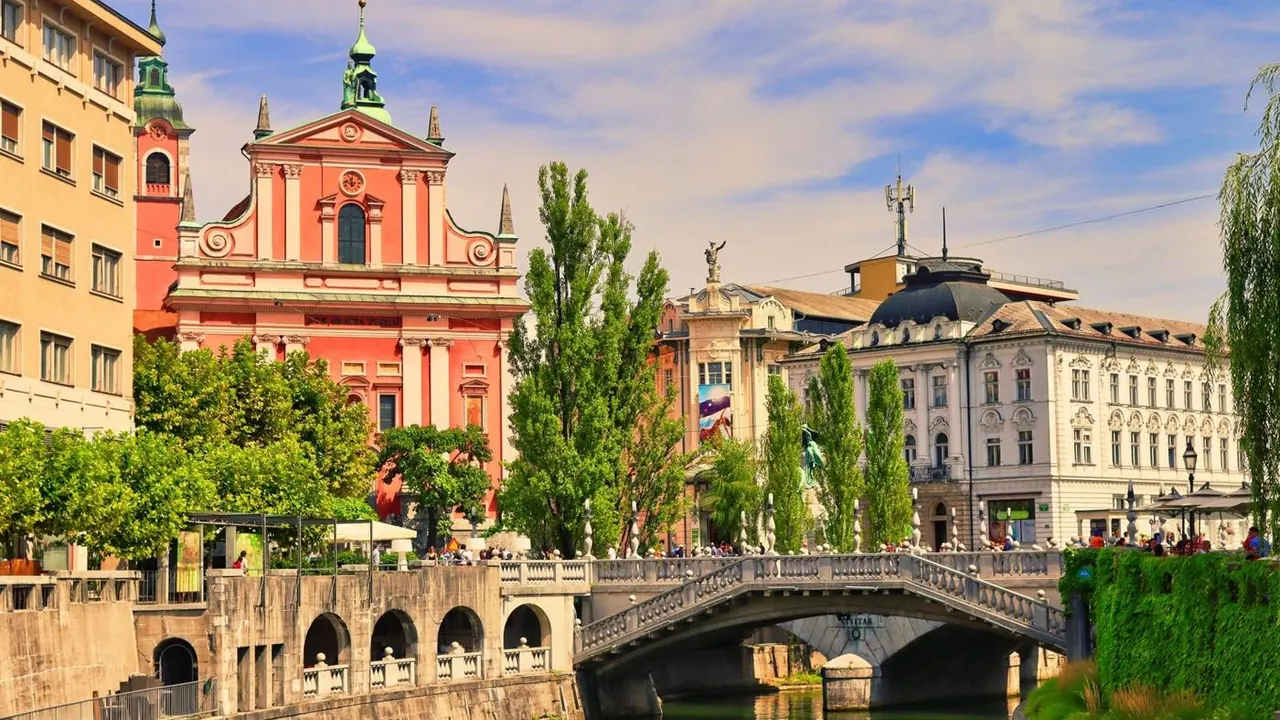
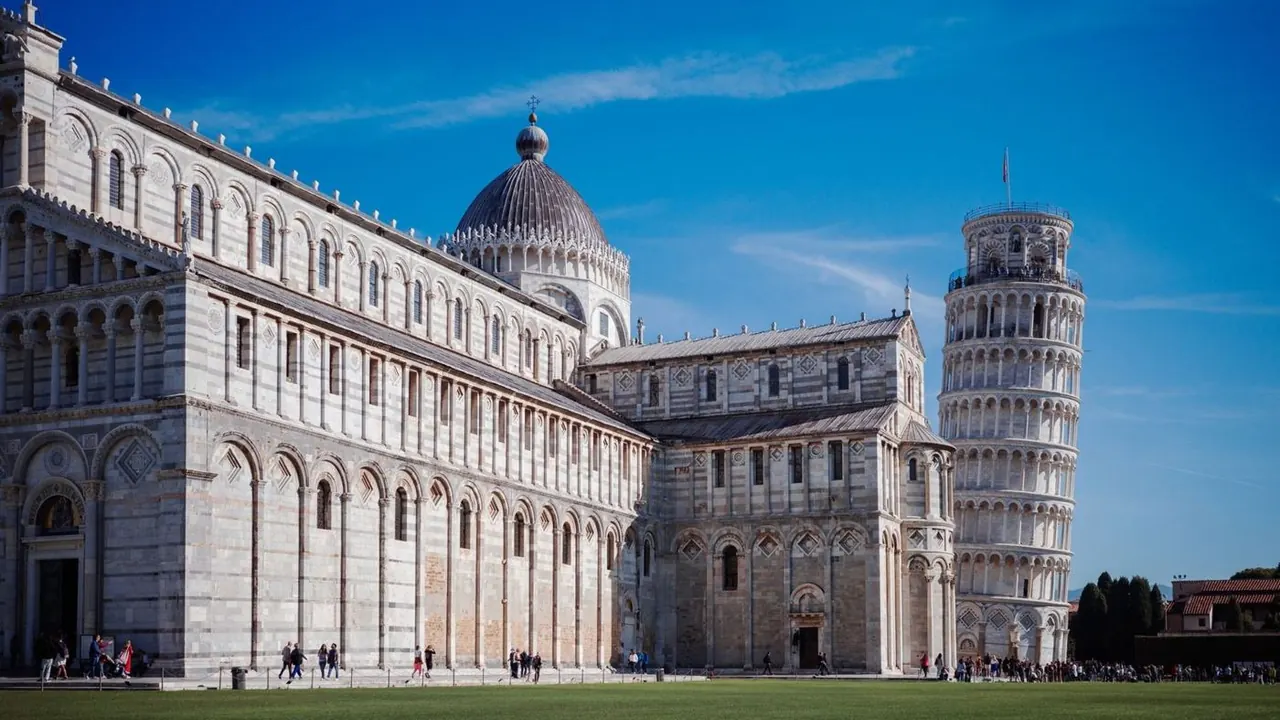
Photos: Ljubljana by detait, Pexels License; Pisa by Bruno Kraler, Pexels License.
Ljubljana or Pisa?
Our verdict in twelve categories, each scored against the same fixed benchmark cities, and the climate month by month, so you can choose for your trip.
Choose Ljubljana for
- nature and the outdoors
- live music and the arts
- families
Ljubljana is for travellers who want the mountains close at hand. The Julian Alps, Lake Bled, the Soča valley and the karst caves are all within easy reach of a small, car-free capital, and summer evenings bring orchestras to Plečnik's open-air courtyard. Come here for hiking, lakes and a calm city base, not for a beach.
Choose Pisa for
- beaches
- day trips
- culture and sights
Pisa makes more sense if you want sand, sea and the rest of Tuscany. The sandy coast is a short bus ride from the centre, Florence and Lucca are easy train trips, and the cathedral square is one of Italy's great sights. It suits a warm-weather trip that mixes famous art with afternoons at the beach.
Scoreboard
Twelve categories on one fixed scale from 0 to 100. The shaded stretch is the gap between the two.
Your match
Pick a travel style or drag the sliders, and both match scores follow your weighting.
Wins on nature and the outdoors and live music and the arts with your weighting.
Wins on beaches and day trips with your weighting.
What matters to you?
Category by category
What the scores mean for a trip.
Beaches & swimming
Ljubljana has no coast of its own. A summer swim means the Sava, Lake Bled about an hour away, or a longer trip to Piran, where the shore is mostly concrete platforms and small pebble strips.
Pisa is far better placed. Sandy coves at Marina di Pisa are about 12km away, and the long pine-backed sands of Tirrenia and Calambrone have shallow water that is easy for children to paddle in. Most of this coast is given over to rented umbrella-and-lounger establishments, and the water near the river mouth is rarely very clear, but an afternoon at the beach is easy to fit around sightseeing.
Food & drink
The two cities are evenly matched at the table, but the food is quite different. Ljubljana cooks Alpine and Central European dishes such as Carniolan sausage, štruklji and jota stew, and its real strength is wine: Vipava, Brda and orange wines poured by the glass along the river.
Pisa's cooking is plain Tuscan, with ribollita, game, salt cod and the hot chickpea flatbread cecina, best eaten in the student trattorias around Piazza delle Vettovaglie. In Pisa, eat well away from the tower. In Ljubljana, head for the Central Market and the riverside wine bars.
Culture & sights
Pisa has the stronger sights, because the Piazza dei Miracoli puts a cathedral, baptistery, the Leaning Tower and the Camposanto together on one lawn, a set piece Ljubljana cannot match. Beyond it, Piazza dei Cavalieri, Santa Maria della Spina and the medieval painting in San Matteo reward a second day.
Ljubljana's appeal is the whole townscape rather than one great monument. Plečnik's bridges, colonnades and library, the baroque old town and the castle on its hill make a pleasant walk, but the museums are modest. Both cities take about two days to see.
Nightlife
Both are student towns where evenings mean drinks outdoors rather than big clubs. The difference is in the late hours. Ljubljana has Metelkova, the former barracks where scruffy little clubs run late at weekends.
Pisa's nights are a crowd in the piazzas around the old market and aperitivo on Borgo Stretto, then a move to the beach bars in summer. The city goes quiet out of term.
Nature & outdoors
Ljubljana has much more landscape on its doorstep. You can climb Šmarna Gora before breakfast, reach the Kamnik Alps in about 40 minutes and Triglav National Park in about an hour, then add rafting on the Soča, the Vintgar gorge, the karst caves and winter skiing.
Pisa's outdoors are gentler. The San Rossore park of pine forest, wetland and dunes begins at the city's edge and is good for cycling and spotting deer, and Monte Pisano has olive-terrace paths. For proper mountains you go further out to the Apuan Alps or the Cinque Terre cliffs, and summers on the plain are humid.
Day trips
Pisa is the better base for day trips. Florence is about an hour away by train, Lucca under half an hour, and the Cinque Terre a little over an hour, all without a car. Volterra, San Gimignano and Siena are within reach by road.
Ljubljana's trips are good too. Bled, Škofja Loka, Predjama Castle, Idrija and Piran are all close, and Trieste and Zagreb are about two hours away. Its destinations are smaller places than Pisa's, though, and a car helps more often.
Good for families
With children, the real difference is where the fun happens. Ljubljana keeps it in town: the funicular up to the castle, the dragons on the Dragon Bridge, a small zoo on a wooded hill, a science centre and a puppet theatre whose shows need no Slovene. Neither city has anything large built for children, and both centres are small and flat enough for pushchairs.
Pisa has less to offer in the centre beyond running about on the tower lawn, and younger children are not allowed up the tower. Its family days happen out of town, on the sands of Tirrenia and Calambrone or riding bikes and horses in San Rossore, with the midsummer heat to plan around.
Getting around
Both cities are easily walked, but they work differently once you want to leave. Ljubljana's car-free centre has electric shuttles and bike-share, but trips out mostly mean intercity buses or a hired car, as the railway is slow.
Pisa is the better rail base. A shuttle train links the airport to the station, which is a hub for western Tuscany, and the walk from the station to the tower takes about half an hour.
Shopping & style
Neither city is a shopping destination. Ljubljana's best buys are local goods: pumpkin-seed oil, coastal salt and honey from the Central Market, Idrija lace and the Sunday flea market on the embankment.
Pisa has more ordinary high-street shopping, with chains on Corso Italia and smarter shoe and clothes shops under the arcades of Borgo Stretto. Serious fashion means a trip to Florence.
Affordability
Costs are much the same, but the money goes on different things. In Ljubljana, set lunch menus and cheap sights keep daily spending down, but central summer rooms cost as much as in Western Europe.
Pisa's rooms are mid-range, and student trattorias are good value. The extra costs are the tower climb, the cafés beside it, and the beach establishments' charges for umbrellas and loungers in summer.
Live music & performing arts
Ljubljana is clearly the stronger choice for an evening of music. It has a philharmonic with roots in 1701, a national opera and ballet, the Cankarjev dom arts centre and the summer Ljubljana Festival in the Križanke courtyard, with alternative gigs at Metelkova as well.
Pisa depends almost entirely on the Teatro Verdi. Its autumn-to-spring season makes a charming night of Italian opera in a historic house, but there is little else, and bigger productions mean going to Florence.
Wellness & relaxation
Both cities feel restful because they are small and quiet, and neither has a bathing tradition within the city itself. Pisa's thermal springs are closer, with San Giuliano Terme's Roman-era waters and 18th-century bath palace just beyond the city.
Ljubljana has an indoor water park with saunas on its eastern edge. Slovenia's mineral-spa towns are mostly about an hour's drive away.
When should you go?
Pick your month. The climate figures are measured averages, not a forecast.
Ljubljana in July
Pisa in July
Daytime high, °C
Rainfall in the month, mm
Temperature and rainfall are climate normals, averaged over the years shown. Ljubljana: 1991-2020 normals, Ljubljana / Bezigrad (1.9 km from centre). Pisa: 1991-2020 normals, Pisa / S. Giusto (3.9 km from centre).
Ljubljana is at its best from late May to September. June to August are warm, peaking around 28°C, with long sunny days and the Alpine lakes at their most swimmable. Summer is not dry, though, as thunderstorms come often, and September and October are wetter still. Winter is properly cold, with highs around 4°C in December and January, so May and early September are the best months for long walks through the streets.
Pisa is milder all year and much drier in summer. July and August reach about 30°C on the plain, which is hot for sightseeing but ideal for the beach, with the sea around 25°C. June and September give the best balance of warm water and comfortable streets. The rain arrives in autumn and peaks at about 132mm in November. Winter stays mild, with moderate rain and rooms easier to find than in summer, so it works well for an unhurried city break.
Which traveller are you?
For a beach and sun trip, Pisa is the clear choice. The long sandy beaches at Tirrenia and Calambrone are a short ride away and summers are sunnier and drier. Ljubljana's nearest sea is a day trip to a concrete-and-pebble shore.
On an outdoors trip, Ljubljana wins. Triglav National Park and the Kamnik Alps are within about an hour, and the rafting water of the Soča lies roughly two hours west. Pisa offers gentler walking and cycling in San Rossore and on Monte Pisano.
For a culture and arts trip, Pisa has the greater sights, with the Piazza dei Miracoli in town and Florence an hour away by train. Ljubljana is the better pick if an orchestra concert or an opera night matters more than monuments.
Before you go
| Measure | Ljubljana | Pisa |
|---|---|---|
| Official language | Slovene | Italian |
| Currency | Euro (EUR) | Euro (EUR) |
| Sockets | CF230 V, 50 Hz | CFL230 V, 50 Hz |
| Driving side | Right | Right |
| Time zone | UTC+1, UTC+2 in summer | UTC+1, UTC+2 in summer |
| Emergency number | 112 | 112 |
| Elevation | 309 m | 4 m |
| Main airport | Ljubljana Jože Pučnik Airport (LJU)20 km from centre32 non-stop destinations | Pisa International Airport (PSA)4 km from centre82 non-stop destinations |
| Public holidays this year | 21 days | 13 days |
By the numbers
| Measure | Ljubljana | Pisa |
|---|---|---|
| City population | 284,293 | 88,737 |
| People per km² | 1,736 | 479 |
| Museums within 10 km | 14 | 27 |
| UNESCO World Heritage sites within 50 km | 3 | 3 |
| Swim season, months above 21 °C | - | 4 months |
Where else could you go?
Every comparison below shares a destination with this one, so you can follow Ljubljana or Pisa somewhere new.