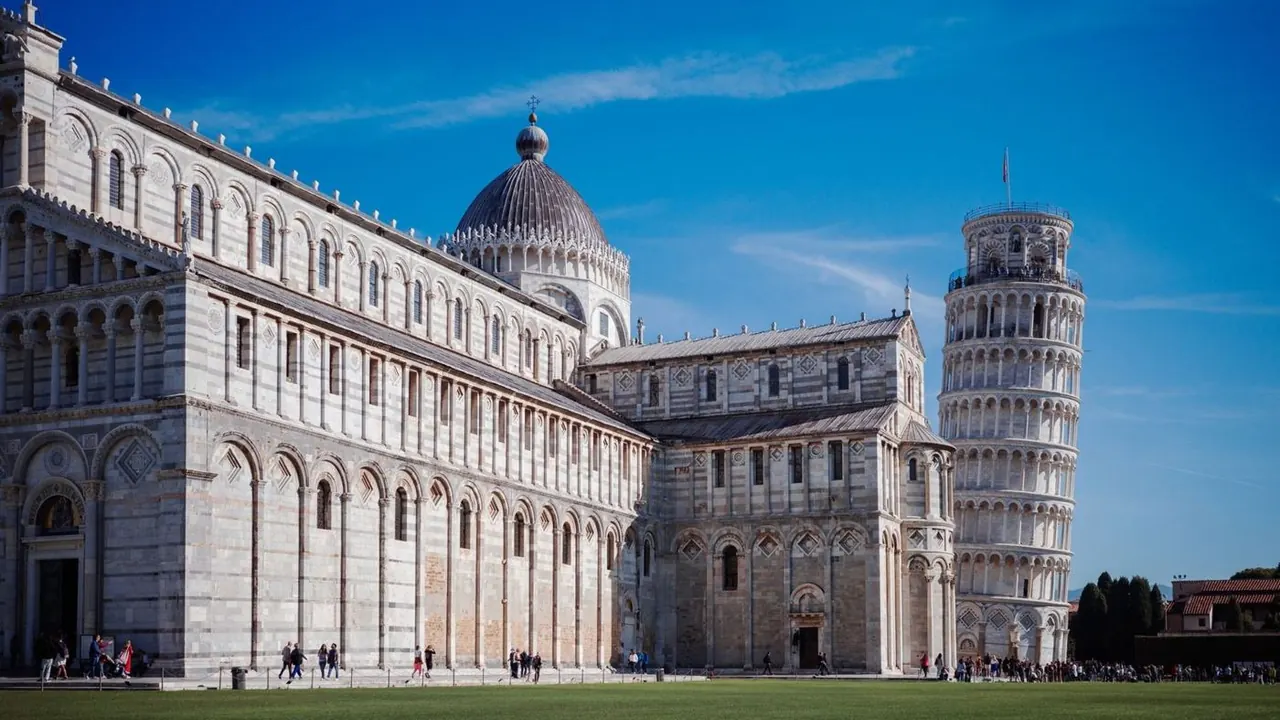
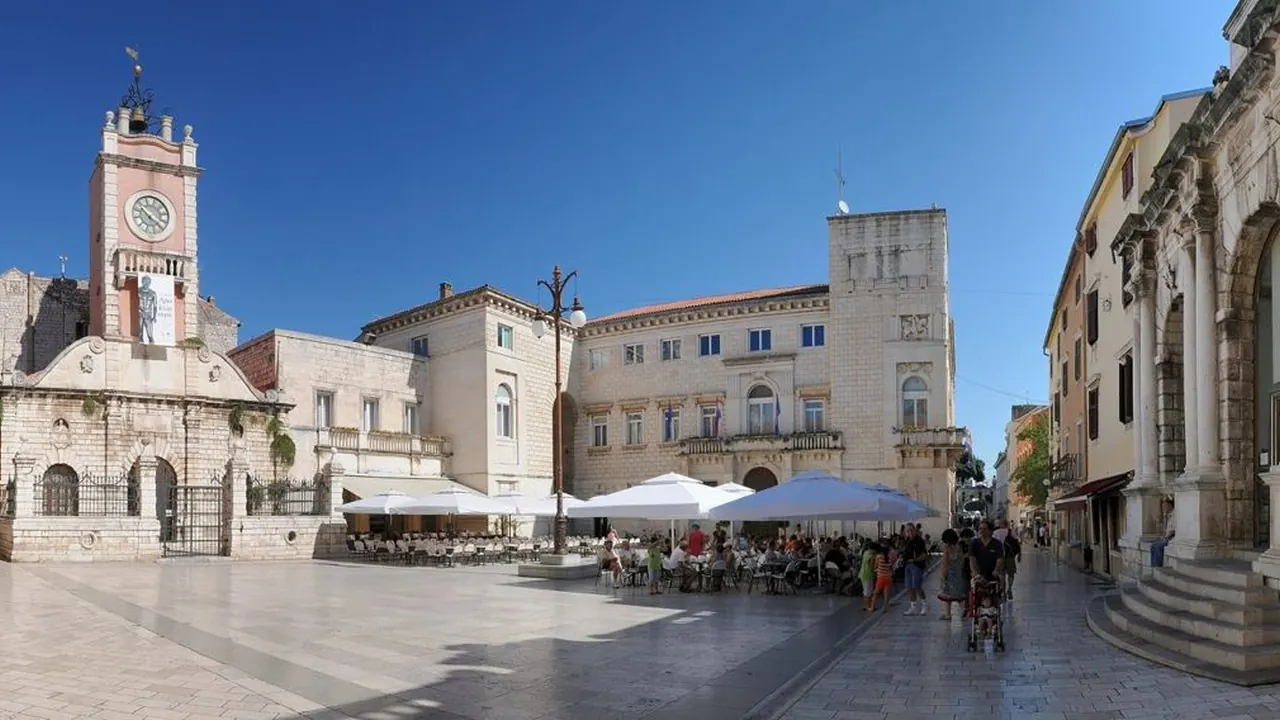
Photos: Pisa by Bruno Kraler, Pexels License; Zadar by Böhringer Friedrich, CC BY-SA 2.5, cropped.
Pisa or Zadar?
Our verdict in twelve categories, each scored against the same fixed benchmark cities, and the climate month by month, so you can choose for your trip.
Choose Pisa for
- day trips
- getting around
- culture and sights
Pisa suits a traveller who wants to see Tuscany on foot and by train. The cathedral square and the quieter city beyond it fill two days, and then Florence, Lucca and the Cinque Terre are all an easy rail ride away, with no car needed. It also eats a little better, in a simple trattoria way, and has an opera house and thermal baths for slower evenings.
Choose Zadar for
- nature and the outdoors
- beaches
- families
Choose Zadar if the sea and wild country are the point of the trip. You can swim in clear water straight off the old-town promenade, and ferries go out to island coves. The gorges of Paklenica and the stark Kornati islands are close by, so it makes the stronger base for swimming, sailing and hiking. Hire a car or book excursions to get the most out of it.
Scoreboard
Twelve categories on one fixed scale from 0 to 100. The shaded stretch is the gap between the two.
Your match
Pick a travel style or drag the sliders, and both match scores follow your weighting.
Wins on day trips and getting around with your weighting.
Wins on nature and the outdoors and beaches with your weighting.
What matters to you?
Category by category
What the scores mean for a trip.
Beaches & swimming
In Zadar the sea is part of daily life. People swim in clear water straight off the stone promenade, or from the pebble and concrete platforms at Kolovare and Borik. Ferries go out to the coves of Ugljan and Pašman, and to the pale sand of Sakarun on Dugi Otok, while Nin's shallow sandy beaches suit small children.
Pisa's coast is a bus ride away, but it has the long sandy beaches that Zadar's city shore lacks, at Tirrenia and Calambrone under the pines. Most of that shore is divided into paid establishments with loungers. The water near the Arno mouth is murky, and most visitors treat the beach as an afternoon off from sightseeing.
Food & drink
Neither city is a place for serious dining, but Pisa gives you more to explore. Its plain Tuscan cooking includes ribollita, game and cecina, a chickpea flatbread eaten hot from wood ovens. It is at its best in the student trattorias and wine bars around Piazza delle Vettovaglie, with wine from the nearby hills.
Zadar's strength is the Adriatic: grilled fish, black risotto, octopus slow-cooked under the peka, Pag cheese to start and a glass of Maraschino to finish. The konobas serve much the same menu from one to the next, though, so a week there feels more repetitive than a week in Pisa.
Culture & sights
Pisa has the grander single sight. The cathedral, baptistery, Leaning Tower and Camposanto stand together on one lawn, and beyond the square there is medieval painting at San Matteo, Vasari's palace on Piazza dei Cavalieri and the little Gothic church of Santa Maria della Spina on the river.
Zadar's appeal lies in its layers of history on a small walled peninsula. The Roman forum, the round church of St Donatus and the Venetian walls all sit close together, and the Museum of Ancient Glass and the Sea Organ add things Pisa has nothing like. Each city takes about two days to see, but Pisa's two days are the richer.
Nightlife
Both are quiet places to go out, but they keep different calendars. Pisa's evenings follow the university year. During term, students drink outside the small bars around the old market and the aperitivo crowd fills Borgo Stretto. Once term ends, the city winds down early, apart from the beach bars on the coast on summer weekends.
Zadar's calendar is the summer. Evenings start at sunset by the Sea Organ and move on to the café-bars of Kalelarga and the terrace bars on the walls. For real clubbing, people go to Zrće on Pag, and Pisa has nothing like it.
Nature & outdoors
Zadar has wilder country on every side. Paklenica's limestone gorges, about 45 minutes away, offer serious hiking and rock climbing. Boats run to the bare Kornati islands and to Telašćica's cliffs and salt lake, and Krka's waterfalls are an hour south.
Pisa's outdoors are gentler. The pine forest, wetland and dunes of San Rossore begin at the edge of town and are made for cycling and spotting deer. The olive terraces of Monte Pisano give easy walks, and proper mountains mean travelling out to the Apuan Alps.
Day trips
From Pisa, the trains do the work. Florence is about an hour away, Lucca under half an hour and the Cinque Terre a little over an hour, and Volterra, San Gimignano and Siena can be reached by car. Few bases put so much of Tuscany and Liguria within a day's reach.
Zadar's outings are good but more spread out. Šibenik's cathedral and tiny Nin are close, and ferries reach car-free Silba. Split and Trogir make long days on the motorway, though, and most trips need a car or an organised tour.
Good for families
Both cities are flat, easy to manage with children and offer little built just for them. In Pisa, the highlights are the tower lawn and the photo of holding the tower up, plus sandy beaches and bike rides in San Rossore. Children under the age limit cannot climb the tower.
Zadar's car-free old town and wide promenade are good for pushchairs. The Sea Organ and the tiles of the Greeting to the Sun, which light up after dark, delight most children, and Nin has shallow sand for toddlers. Pisa gives children one memorable sightseeing day, while Zadar settles more easily into a seaside routine.
Getting around
Pisa is the easier city to get around. You can walk from the station to the tower in about half an hour, an automatic shuttle train links the airport to the station, and the station is a rail hub for western Tuscany.
Zadar's peninsula takes only a quarter of an hour to cross on foot, and island ferries leave from the edge of the old town. Beyond that the buses are basic, so the national parks and Šibenik need a hire car, and parking near the old town is tight in summer.
Shopping & style
Pisa has a fuller high street. There are chains along Corso Italia, smarter clothes and old pastry shops under the arcades of Borgo Stretto, a monthly antiques market by the river, and Florence nearby for serious fashion. Zadar's shopping is mostly about what to take home: Maraschino, Pag cheese and lace, and olive oil and figs from the market by the walls.
Affordability
The two cities cost about the same, at mid-range rates for well-known destinations. In Pisa, the savings come from student trattorias and walking everywhere. The tower climb and summer beach loungers are the main extra costs.
In Zadar, private apartments are good value outside July and August, and ferries and buses are cheap. National park entry and boat trips add up quickly, though, and high-summer rooms on the peninsula cost much more.
Live music & performing arts
Pisa has a proper opera house, the 19th-century Teatro Verdi. It runs opera, ballet and symphonic concerts from autumn to spring, and the university adds chamber music. Zadar's moment comes in summer, with the Musical Evenings in St Donatus and klapa singing in the squares, and little else the rest of the year. Go to Pisa for a winter night at the opera, and to Zadar for one memorable concert in a ninth-century church.
Wellness & relaxation
Pisa has real thermal water close by. The bath palace at San Giuliano Terme stands below Monte Pisano on springs used since Roman times, and Casciana Terme has a large public pool. Zadar has no spa tradition beyond the hotel spas at Borik and the mud lagoon at Nin. Its calm comes from long café mornings and watching the sun set over the islands from the Sea Organ steps.
When should you go?
Pick your month. The climate figures are measured averages, not a forecast.
Pisa in July
Zadar in July
Daytime high, °C
Rainfall in the month, mm
Where the figures come from
Zadar has no rain gauge within 25 km of the centre, so its rainfall comes from a gridded climate dataset read at the city rather than from a gauge further away.
Temperature and rainfall are climate normals, averaged over the years shown. Pisa: 1991-2020 normals, Pisa / S. Giusto (3.9 km from centre). Zadar: 1999-2020 (rainfall 1991-2020) normals, Zadar / Zemunik (9.9 km from centre).
The two cities have much the same Mediterranean year. In both, the sea is warm enough for swimming from June to September and is warmest in August, at about 25°C. July and August bring highs of around 30°C, which is hot work for sightseeing on Pisa's plain or in Zadar's stone lanes. Those are also Pisa's sunniest months.
For walking the streets, Pisa is at its best in May and early June, when it is warm and still fairly dry. The rain sets in heavily from September, and October and November are its wettest months, at about 130mm each. Zadar's autumn is wet too, with rain rising sharply after a dry August, but it is less wet than Pisa's, at around 80mm in September and again in October. September there is still warm, at 26°C, and good for a last swim, while October turns mild. Winter is cool in both and suits museums and old-town walks better than the coast.
Which traveller are you?
On a beach and sun trip, Zadar is the better choice. Clear water starts right at the old-town promenade, short ferry rides reach quieter island coves, and Nin or Sakarun on Dugi Otok have sand when you want it. Pisa's beaches need a bus ride.
For a culture and arts trip, choose Pisa. The Piazza dei Miracoli, the San Matteo museum and Palazzo Blu fill two days, the Teatro Verdi stages opera, and the Uffizi in Florence is an hour away by train.
On an outdoors trip, Zadar has far more to offer. Hiking and climbing in Paklenica's gorges, sailing among the Kornati islands, Krka's waterfalls and sea kayaking are all close at hand. Pisa's outdoors are gentler: cycling in San Rossore and walks on Monte Pisano.
Before you go
| Measure | Pisa | Zadar |
|---|---|---|
| Official language | Italian | Croatian |
| Currency | Euro (EUR) | Euro (EUR) |
| Sockets | CFL230 V, 50 Hz | CF230 V, 50 Hz |
| Driving side | Right | Right |
| Time zone | UTC+1, UTC+2 in summer | UTC+1, UTC+2 in summer |
| Emergency number | 112 | 112 |
| Elevation | 4 m | 5 m |
| Main airport | Pisa International Airport (PSA)4 km from centre82 non-stop destinations | Zadar Airport (ZAD)10 km from centre66 non-stop destinations |
| Public holidays this year | 13 days | 14 days |
By the numbers
| Measure | Pisa | Zadar |
|---|---|---|
| City population | 88,737 | 70,779 |
| People per km² | 479 | - |
| Museums within 10 km | 27 | 1 |
| UNESCO World Heritage sites within 50 km | 3 | 2 |
| Swim season, months above 21 °C | 4 months | 4 months |
Where else could you go?
Every comparison below shares a destination with this one, so you can follow Pisa or Zadar somewhere new.