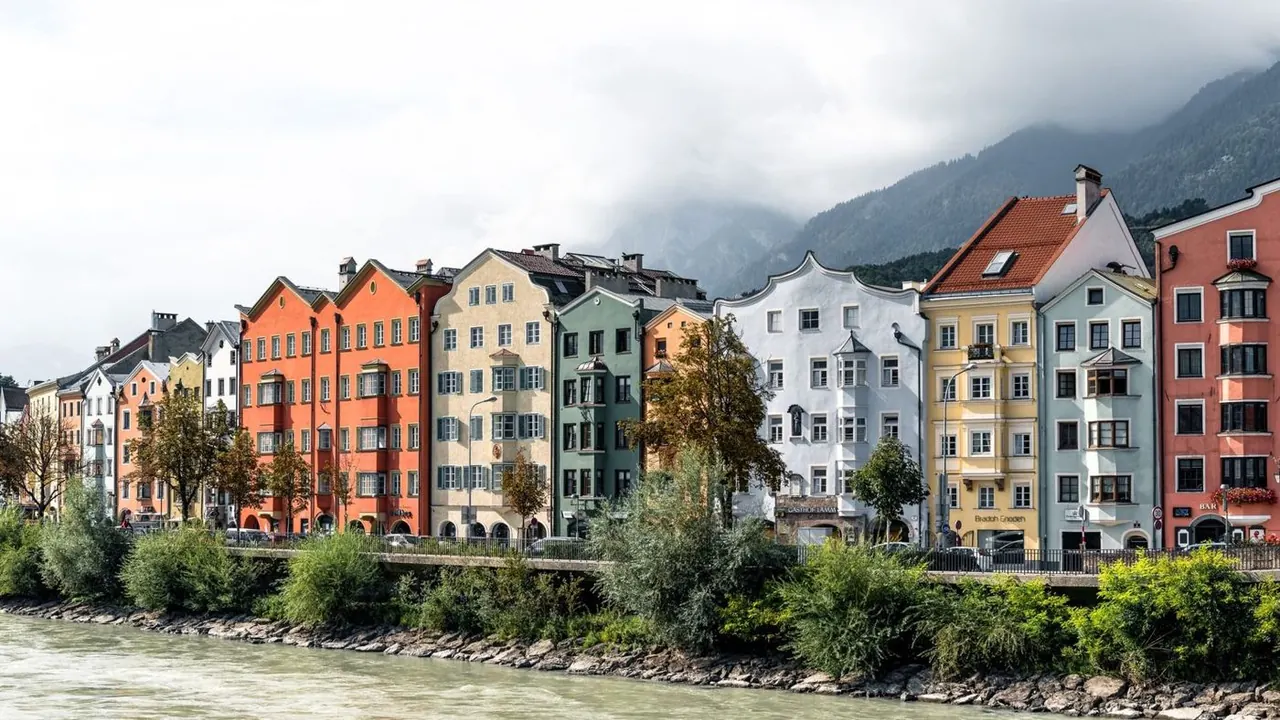
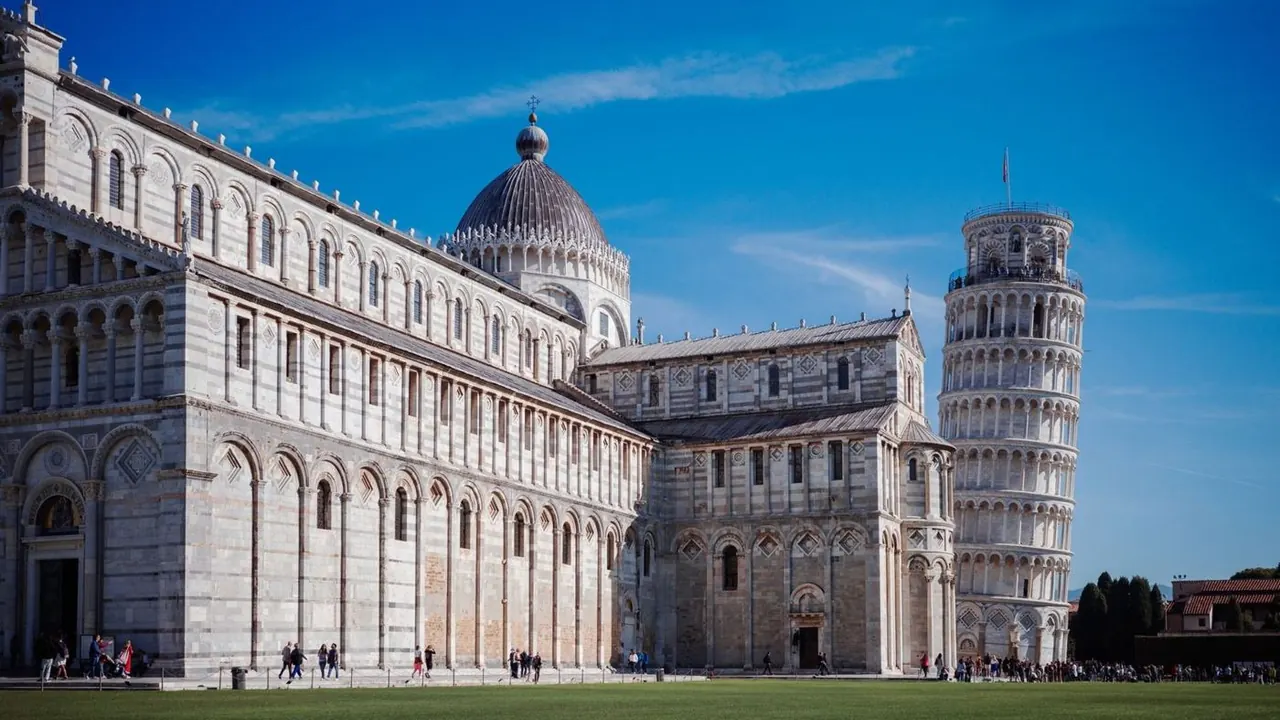
Photos: Innsbruck by Wolfgang Weiser, Pexels License; Pisa by Bruno Kraler, Pexels License.
Innsbruck or Pisa?
Our verdict in twelve categories, each scored against the same fixed benchmark cities, and the climate month by month, so you can choose for your trip.
Choose Innsbruck for
- nature and the outdoors
- families
- live music and the arts
Innsbruck is for people who want mountains straight from the town centre. A funicular from the edge of the old town reaches the high ridges in under half an hour, and in winter skiing and in summer hiking, climbing and biking start almost at the hotel door. Families who like the outdoors do well here too, with the Alpenzoo, trails and ski schools close by. It costs more, though, and the food and the city sights are modest beside the scenery.
Choose Pisa for
- beaches
- day trips
- prices
Choose Pisa if you want Tuscany, with the sea close by. The cathedral square is one of the great sights of Italy, Florence and Lucca are short train rides away, and sandy beaches are a bus ride from the centre. The cooking is simple and regional and the prices are gentler, so it suits a sightseeing trip on a budget, or a summer trip that mixes art and the beach.
Scoreboard
Twelve categories on one fixed scale from 0 to 100. The shaded stretch is the gap between the two.
Your match
Pick a travel style or drag the sliders, and both match scores follow your weighting.
Wins on nature and the outdoors and families with your weighting.
Wins on beaches and day trips with your weighting.
What matters to you?
Category by category
What the scores mean for a trip.
Beaches & swimming
For swimming, Innsbruck has only lakes: the shallow Lanser See and Natterer See on the plateaus above town, which warm up in July and August, and the beautiful but chilly Achensee further out. It is a pleasant summer afternoon, not a reason to come.
Pisa has the real sea about 12km away. The beaches at Tirrenia and Calambrone are wide and sandy, with pine woods behind and shallow water that suits paddling, and Viareggio's beaches are a short train ride north. Near the river mouth the water is rarely clear, but the sea is warm through high summer.
Food & drink
Innsbruck's food is hearty mountain cooking such as Gröstl, Kaspressknödel, Speck and Kaiserschmarrn. It tastes best in a hut on the slopes after a long walk. Beyond the traditional inns and the coffee houses the choice is narrow, and the city has no market or street food culture.
Pisa eats better day to day. Cecina, the chickpea flatbread hot from a wood oven, is the thing to try, and the trattorias and wine bars around the produce market at Piazza delle Vettovaglie serve plain, seasonal Tuscan food with local wine. Neither city is a place for serious dining, and in both the tables beside the famous landmark are the ones to skip.
Culture & sights
Both cities have compact historic centres that take two or three days to see, but Pisa's main sight is much bigger. The Piazza dei Miracoli, with its marble cathedral, baptistery, Camposanto and the Leaning Tower, is one of the great ensembles of Italian architecture. Beyond the square are Piazza dei Cavalieri, Santa Maria della Spina by the river and the medieval painting in the Museo Nazionale di San Matteo.
Innsbruck's heritage is Habsburg rather than medieval Pisan. The Hofkirche, with Maximilian I's tomb ringed by bronze giants, is its finest sight. Add the Hofburg, the Golden Roof and the cabinet of curiosities at Ambras Castle, and the result is rewarding but quieter.
Nightlife
Both cities rely on their students after dark, and neither is a reason to come for nights out. What differs is the kind of night. Innsbruck's evenings happen indoors, in the bars and small clubs in the brick arches under the railway viaduct that stay open late at weekends, and in winter a lot of the partying moves out to après-ski in the resorts.
Pisa's evenings happen outdoors: drinks in the small squares around the old market, aperitivo along Borgo Stretto and the river, and beach bars on the coast in summer. It has fewer clubs, and outside term time it goes quiet early.
Nature & outdoors
Here Innsbruck is in another league. From a coffee in the old town you can be on the Nordkette ridge at about 2,300m in under half an hour, with the Karwendel nature park behind it and the Stubai glaciers across the valley. It offers skiing for much of the year and, in summer, hiking, via ferratas, mountain biking and rafting.
Pisa's outdoors is gentler and flatter. The San Rossore park of pine forest, wetland and dunes begins at the edge of the city and is best seen by bike or on horseback, and the olive terraces of Monte Pisano give wide views over the plain. Proper mountain walking means travelling out to the Apuan Alps.
Day trips
Both cities are good bases, but from Pisa the famous names are closer. Florence is about an hour away by train and Lucca under half an hour, the Cinque Terre is a little over an hour, and San Gimignano and Volterra are within reach by car.
Innsbruck's day trips cross borders. Hall in Tirol is ten minutes away and Kitzbühel about an hour, while Munich, Salzburg and the South Tyrolean towns of Bolzano and Merano are nearer two hours. Neuschwanstein makes a long day by car. The range is wide, but the big destinations take longer to reach.
Good for families
Innsbruck gives children more to do. The funicular to the Alpenzoo, with its bears, wolves and ibex, is an adventure in itself, and the mountains add adventure trails, playgrounds by the huts and ski schools in winter. Rainy days take more planning, as most of the sights in town are aimed at adults.
Pisa is easy in practical terms, with a flat centre and a lawn to run on by the tower. Younger children are not allowed up the tower, though, so the best family days are spent on the shallow beaches at Tirrenia or cycling in San Rossore, with the midsummer heat to plan around.
Getting around
Both centres are small and flat, so walking covers almost everything. The difference is where the transport takes you. In Innsbruck it takes you up: the Hungerburg funicular leaves from the old town for the Nordkette, and trams and ski buses reach Igls, the Stubai valley and the slopes. In Pisa it takes you out: an automatic shuttle train links the airport to the station, which is one of the rail hubs of western Tuscany, and bikes suit the streets and the park roads.
Shopping & style
Neither city is a shopping destination, and each fills an afternoon. In Innsbruck, buy something Tyrolean: loden jackets, dirndls, woodcarvings, Speck and schnapps, and kit from its excellent outdoor and ski shops. Pisa's shopping is everyday Italian, with chains on Corso Italia and smarter shoes and clothes under the arcades of Borgo Stretto, plus a monthly antiques market along the river. For serious fashion, people go to Florence.
Affordability
Pisa is the cheaper stay. Student trattorias keep meals reasonable, rooms are mid-range and the city costs nothing to walk. The tower climb and the beach loungers in summer are the main extra costs.
Innsbruck adds an Alpine resort premium to Western European prices, and it peaks in ski season and around the Christmas markets. Cable car tickets mount up on an active trip, though the city and guest cards, which bundle transport with lifts and sights, take some of the sting out. Spring and autumn are noticeably cheaper.
Live music & performing arts
Innsbruck has a little more on. The Landestheater runs opera, operetta, drama and dance, and the Tyrolean Symphony Orchestra gives concerts. Its summer Festival of Early Music, held in settings such as the Spanish Hall at Ambras Castle, is the event of its year, and folk evenings with yodelling add local colour.
Pisa centres on the 19th-century Teatro Verdi, a charming and unpretentious place to see Italian opera. Its season runs from autumn to spring, so summer visitors will find little beyond the occasional church recital.
Wellness & relaxation
Both cities are calm once you step away from the main sights, but they relax you in different ways. Pisa has real thermal water. San Giuliano Terme, just outside the city, has springs used since Roman times and an 18th-century bath palace, and Casciana Terme has a large public pool. Innsbruck has no springs of its own. Its version is mountain air and a hotel sauna in Igls after a day outdoors, with the big thermal spas of the Ötztal and Zillertal about an hour away.
When should you go?
Pick your month. The climate figures are measured averages, not a forecast.
Innsbruck in July
Pisa in July
Daytime high, °C
Rainfall in the month, mm
Temperature and rainfall are climate normals, averaged over the years shown. Innsbruck: 1991-2020 normals, Innsbruck-Flughafen (3.3 km from centre). Pisa: 1991-2020 normals, Pisa / S. Giusto (3.9 km from centre).
The two cities have their rain at opposite times of year. Innsbruck is warm from June to August, reaching about 26°C, but those are also its wettest months, with up to 144mm in August, often as afternoon showers in the mountains. May, June and September are the most comfortable months for hiking and for walking around town. From December to February the city is cold and the slopes are snowy, which is the ski season. The plateau lakes are only warm enough for swimming in high summer.
Pisa is dry and sunny in July and August, but highs of around 30°C on the plain make long afternoons of sightseeing hard work. The sea reaches about 25°C then, and it stays warm enough for swimming from June into September. The rain arrives in autumn and peaks at around 132mm in November. April, May and early October are the best months for walking the city, and the winters are mild and grey rather than cold.
Which traveller are you?
On an outdoors trip, Innsbruck is the clear choice, because the mountains belong to the city rather than to an excursion. You can ski or hike in the morning and be back in the old town by evening, in any season and without a car.
For a beach and sun trip, choose Pisa. It has the sea itself, a long dry summer and plenty of sunshine, and an afternoon on the sand fits easily around a morning of sightseeing. Innsbruck offers a few lake swims in a short season.
On a trip on a tight budget, Pisa makes the money go further. Most of its big costs, like the tower climb, are optional. In Innsbruck the mountains you came for are the expensive part, and the town carries resort prices on top.
Before you go
| Measure | Innsbruck | Pisa |
|---|---|---|
| Official language | German, Austrian Sign Language | Italian |
| Currency | Euro (EUR) | Euro (EUR) |
| Sockets | CF230 V, 50 Hz | CFL230 V, 50 Hz |
| Driving side | Right | Right |
| Time zone | UTC+1, UTC+2 in summer | UTC+1, UTC+2 in summer |
| Emergency number | 112 | 112 |
| Elevation | 574 m | 4 m |
| Main airport | Innsbruck Airport (INN)4 km from centre40 non-stop destinations | Pisa International Airport (PSA)4 km from centre82 non-stop destinations |
| Public holidays this year | 16 days | 13 days |
By the numbers
| Measure | Innsbruck | Pisa |
|---|---|---|
| City population | 132,499 | 88,737 |
| People per km² | 1,263 | 479 |
| Museums within 10 km | 28 | 27 |
| UNESCO World Heritage sites within 50 km | 1 | 3 |
| Swim season, months above 21 °C | - | 4 months |
Where else could you go?
Every comparison below shares a destination with this one, so you can follow Innsbruck or Pisa somewhere new.