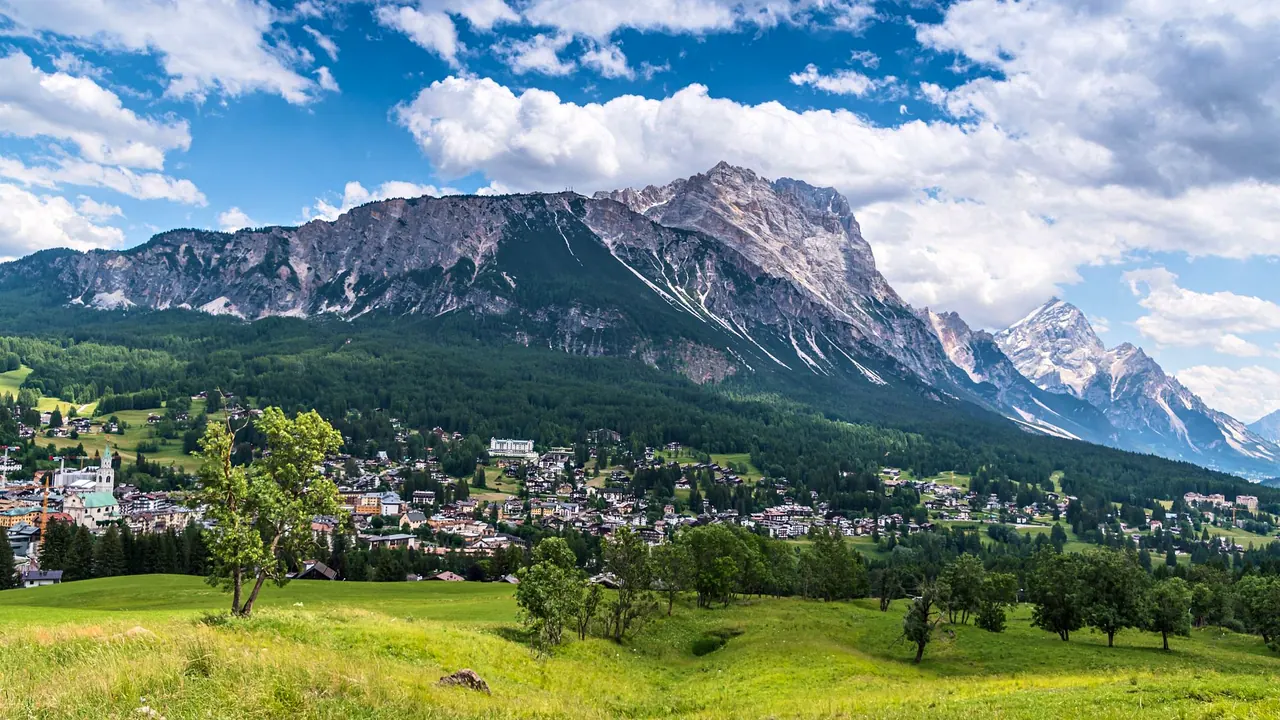
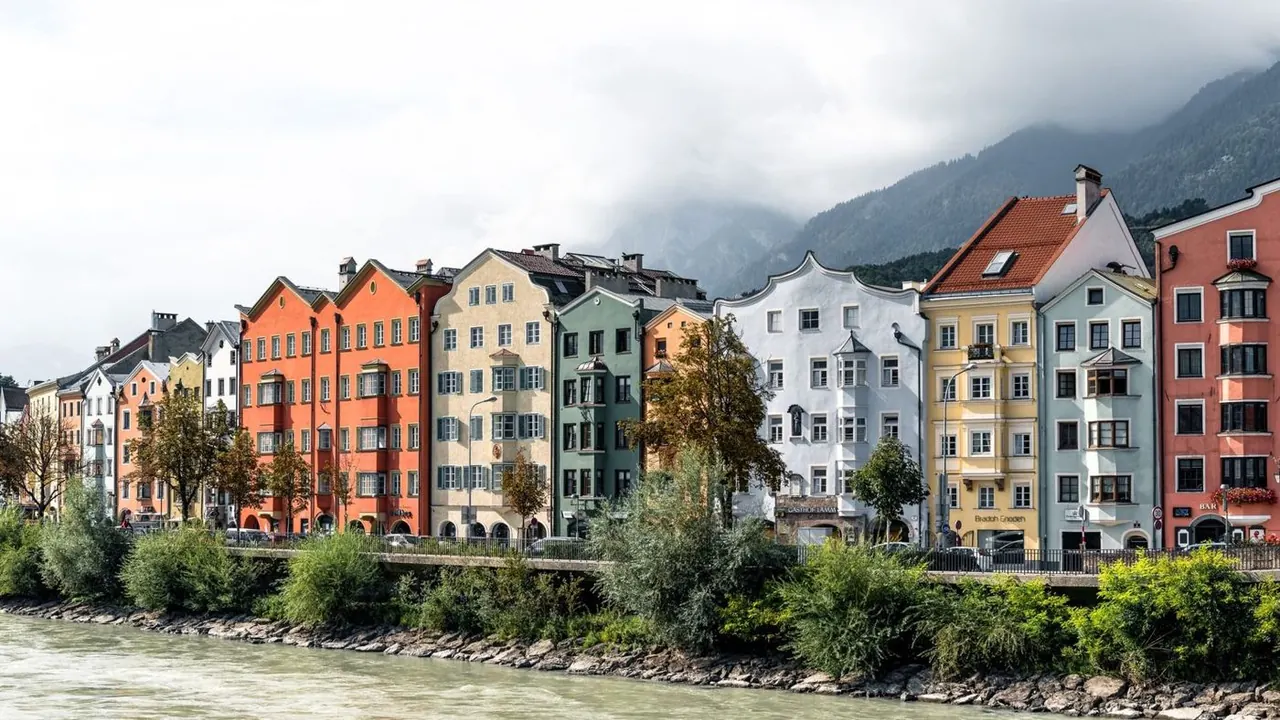
Photos: Cortina d'Ampezzo by Andreas Neubauer, Pexels License; Innsbruck by Wolfgang Weiser, Pexels License.
Cortina d'Ampezzo or Innsbruck?
Our verdict in twelve categories, each scored against the same fixed benchmark cities, and the climate month by month, so you can choose for your trip.
Choose Cortina d'Ampezzo for
- food and drink
- shopping
Cortina d'Ampezzo suits travellers who want the mountains to be the whole vacation and are happy to pay for it. The ring of pale Dolomite peaks, the lifts straight out of town, the rifugi terraces and the First World War routes on Lagazuoi make a superb base for skiing, hiking and via ferrata. Evenings are dinners and a stroll on the Corso Italia, not culture or nightlife. A car makes the wider Dolomites much easier to reach.
Choose Innsbruck for
- culture and sights
- getting around
- live music and the arts
Innsbruck is the better choice if you want mountains and a real city in the same trip. The Nordkette rises above an old town full of Habsburg sights, trams and trains replace the hire car, and Munich, Salzburg and South Tyrol are all in reach by rail. It also has a theatre season, livelier evenings and a gentler bill, which makes it easier for families and anyone on a budget.
Scoreboard
Twelve categories on one fixed scale from 0 to 100. The shaded stretch is the gap between the two.
Your match
Pick a travel style or drag the sliders, and both match scores follow your weighting.
Wins on food and drink and shopping with your weighting.
Wins on culture and sights and getting around with your weighting.
What matters to you?
Category by category
What the scores mean for a trip.
Beaches & swimming
Neither place is for a swimming vacation, but Innsbruck at least gives you warm water on a summer afternoon. The shallow Lanser See and Natterer See on the plateaus above the city reach about 22°C in high summer, and the long, clear Achensee is there to admire.
Cortina's lakes, Ghedina and Pianozes, are lovely to walk around, but they are fed by snowmelt and only tempt the hardy. In practice, a swim there means a hotel pool.
Food & drink
The two are broadly level, and the real difference is which side of the Alps you are eating on. Cortina's Ampezzan cooking has a Venetian accent: beetroot casunziei with poppy seeds, polenta with game, and Veneto wines, served to a wealthy crowd with little cheap or international food on offer.
Innsbruck is Austrian through and through, with Gröstl, Kaspressknödel and Kaiserschmarrn, plus coffee houses serving strudel. Its student districts add cheaper and more varied places. In both, the best meals are often at the mountain huts.
Culture & sights
Innsbruck has far more to see. Its time as a Habsburg seat left an arcaded old town, the Golden Roof, the Hofburg and the Hofkirche, where Maximilian I's tomb is ringed by bronze figures. Ambras Castle, with its cabinet of curiosities, is just outside town, and the sights fill two or three good days.
Cortina gives you a handsome basilica bell tower, painted houses, the 1956 Olympic ice stadium and three small museums, with the Rimoldi art collection the best of them. Its most striking history is the First World War front up on Lagazuoi and the Cinque Torri, and that takes a day in the mountains.
Nightlife
Innsbruck has the livelier evenings, all year round, because of its university. Bars and small clubs fill the brick arches under the railway viaduct and stay open late at weekends, and the old town has pubs and wine bars.
Cortina's nightlife is seasonal and dressy. It means après-ski, a passeggiata on the Corso Italia and long dinners. A few smart late venues open in the peak winter weeks, and in summer the town is quiet by late evening.
Nature & outdoors
Both rank among the finest mountain bases in Europe, but the landscapes differ. Cortina sits inside a ring of pale, jagged Dolomites, with the Tre Cime and Lago di Misurina under an hour away. It has the Alta Via 1, some of the oldest via ferratas in the Alps, and in winter the huge Dolomiti Superski area.
Innsbruck's strength is how close the mountains are to the city. The Nordkette ridge at about 2,300m is under half an hour from a café in the centre, with the vast Karwendel park behind it. The Stubai Glacier keeps snow for most of the year, and the rivers add rafting.
Day trips
Innsbruck is much the better base for days out because it sits on the main Alpine rail lines. Medieval Hall in Tirol is ten minutes away, Munich and Salzburg are each a little under two hours, and Bolzano and Merano lie over the Brenner. Neuschwanstein is within reach by car.
From Cortina, most outings are into the mountains. The charming towns of South Tyrol, such as San Candido and Brunico, are the best choice. Bolzano is about two hours by road, and Venice is a long day by coach.
Good for families
Innsbruck is easier with children, mainly because it has more to do off the slopes. The Alpenzoo, with its ibex, bears and wolves, is on the funicular line. The Swarovski Crystal Worlds have a big play tower, and the plateau lakes are good for a family swim.
Cortina works well for families who ski or hike. It has ski schools, beginner slopes at Socrepes, skating at the Olympic stadium and a forest rope park. Rainy days are harder to fill, though, and the costs climb quickly.
Getting around
Innsbruck is far easier to manage without a car. The flat centre is walkable, trams and buses reach Igls and the Stubai valley, the funicular links the old town to the Nordkette cable cars, and regional trains run along the valley from a central station.
Cortina's centre is just as easy on foot, but the town has had no railway since 1964. Getting there means a coach from Venice or a long drive, and buses up to the passes are limited. Most visitors end up hiring a car.
Shopping & style
Neither is a shopping destination, but they cater to different wallets. Cortina's Corso Italia is a short luxury strip of fashion, jewellers and furriers, anchored by the Cooperativa, a store that dates from 1893.
Innsbruck has high-street chains on Maria-Theresien-Strasse and no luxury district. It is better for loden jackets, dirndls, Speck and schnapps, and its outdoor and ski shops are excellent.
Affordability
Innsbruck is clearly the cheaper of the two, though it is not cheap. Spring and autumn bring noticeably lower hotel rates, the city and guest cards bundle transport with lifts and sights, and student cafés and bakeries help on food.
Cortina is among the most expensive places to stay in Italy, especially in the winter peak and in August, and lift passes add to the bill. The rifugi are fair value for the setting, and early summer and late September are easier. Many budget visitors sleep in cheaper valleys and drive in.
Live music & performing arts
Innsbruck has a proper season, which Cortina lacks. The Tiroler Landestheater stages opera, drama and dance, and the Tyrolean Symphony Orchestra gives concerts. In summer, the Festival of Early Music brings concerts to settings such as the Spanish Hall at Ambras.
Cortina has no theatre and no regular venue. Its music comes from summer chamber and classical festivals in churches, halls and sometimes the mountains themselves, with little else for most of the year.
Wellness & relaxation
Neither has thermal springs, and in both wellness means Alpine hotel spas and mountain air. Cortina's spas offer hay baths and indoor pools. Its valley is calm in June, September and the quieter winter weeks, but traffic and crowds take the edge off in the peak weeks.
Innsbruck's best spas are up in Igls and the plateau villages, often with mountain views. If you want a full thermal complex, the ones in the Ötztal and the Zillertal are about an hour away.
When should you go?
Pick your month. The climate figures are measured averages, not a forecast.
Cortina d'Ampezzo in July
Innsbruck in July
Daytime high, °C
Rainfall in the month, mm
Temperature and rainfall are climate normals, averaged over the years shown. Cortina d'Ampezzo: 1991-2020 normals, Dobbiaco (22.5 km from centre). Innsbruck: 1991-2020 normals, Innsbruck-Flughafen (3.3 km from centre).
Both are mountain places with cold, dry winters and green, showery summers, but Cortina sits higher and is noticeably cooler all year. Its summer days peak at about 22°C, which is ideal for hut-to-hut hiking but never beach weather. Summer is also when the rain falls, with July the wettest month at around 130mm, and June not far behind. Midwinter highs hover around 0°C with little precipitation, so the ski season tends to be cold and settled. June brings mild days and long light for the trails, but September is the better pick if you want drier weather, with 76mm and still pleasant walking temperatures.
Innsbruck is a few degrees warmer in every season. July and August reach about 26°C, warm enough for an afternoon at the plateau lakes, and they are also the sunniest months, though August is the wettest of the year. Spring and autumn are pleasant for walking the old town, while winter is grey and short on sunshine but milder in town than in Cortina.
Which traveller are you?
For a short city break, Innsbruck is the obvious pick. The Golden Roof, the Hofburg and the Hofkirche are all within a short walk, the funicular goes up the Nordkette from the old town, and the station is central. Cortina is hard to reach and has few sights.
On an outdoors trip, both are outstanding, so it depends on the scenery you want. Cortina puts you in the heart of the Dolomites, with the Tre Cime, the Alta Via 1 and the historic wartime via ferratas. Innsbruck trades that drama for easy, car-free access to the Karwendel and the Stubai Glacier.
On a tight budget, Innsbruck stretches the money further. Spring and autumn rates are clearly lower, the guest cards bundle transport and lifts, and students keep cheap cafés going. Cortina is among Italy's priciest resorts, and budget visitors often end up sleeping in other valleys.
Before you go
| Measure | Cortina d'Ampezzo | Innsbruck |
|---|---|---|
| Official language | Italian | German, Austrian Sign Language |
| Currency | Euro (EUR) | Euro (EUR) |
| Sockets | CFL230 V, 50 Hz | CF230 V, 50 Hz |
| Driving side | Right | Right |
| Time zone | UTC+1, UTC+2 in summer | UTC+1, UTC+2 in summer |
| Emergency number | 112 | 112 |
| Elevation | 1,224 m | 574 m |
| Main airport | Venice Marco Polo Airport (VCE)116 km from centre103 non-stop destinations | Innsbruck Airport (INN)4 km from centre40 non-stop destinations |
| Public holidays this year | 13 days | 16 days |
By the numbers
| Measure | Cortina d'Ampezzo | Innsbruck |
|---|---|---|
| City population | 5,546 | 132,499 |
| People per km² | 22 | 1,263 |
| Museums within 10 km | 3 | 28 |
| UNESCO World Heritage sites within 50 km | 1 | 1 |
Where else could you go?
Every comparison below shares a destination with this one, so you can follow Cortina d'Ampezzo or Innsbruck somewhere new.
- Munichvs Innsbruck
- Venicevs Cortina d'Ampezzo
- Salzburgvs Innsbruck
- Veronavs Cortina d'Ampezzo
- Bledvs Cortina d'Ampezzo
- Salzburgvs Cortina d'Ampezzo