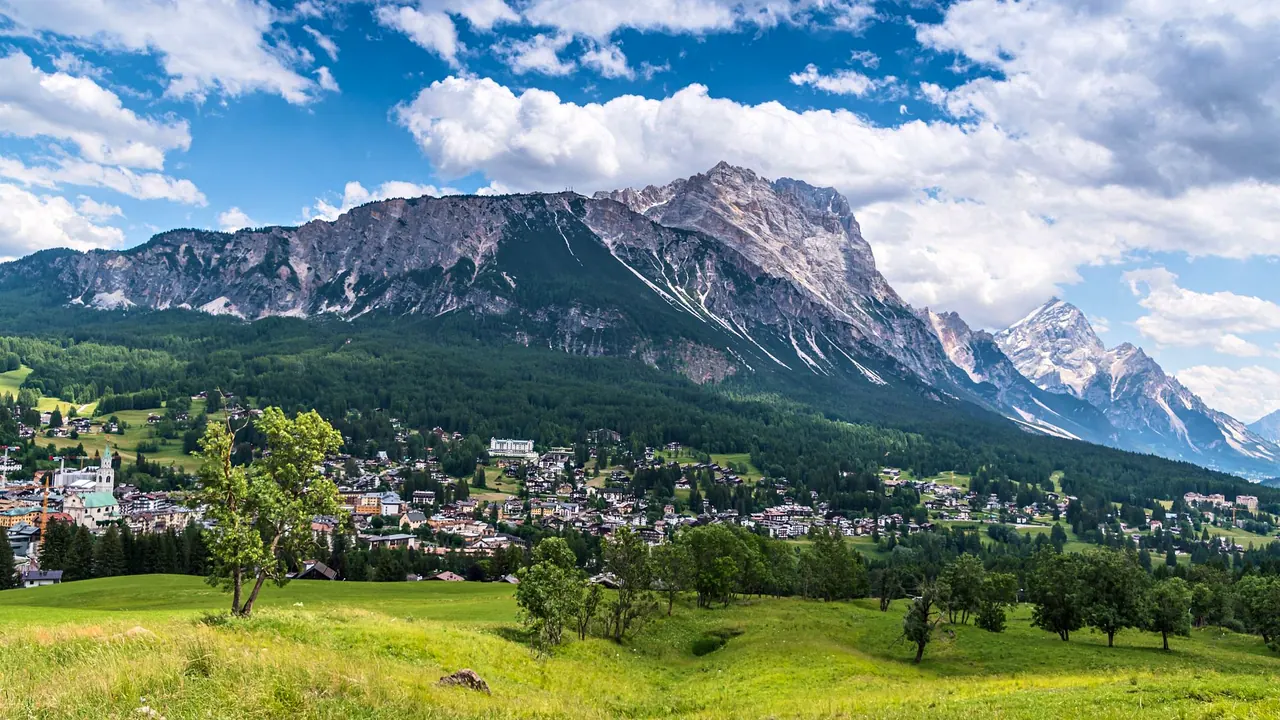
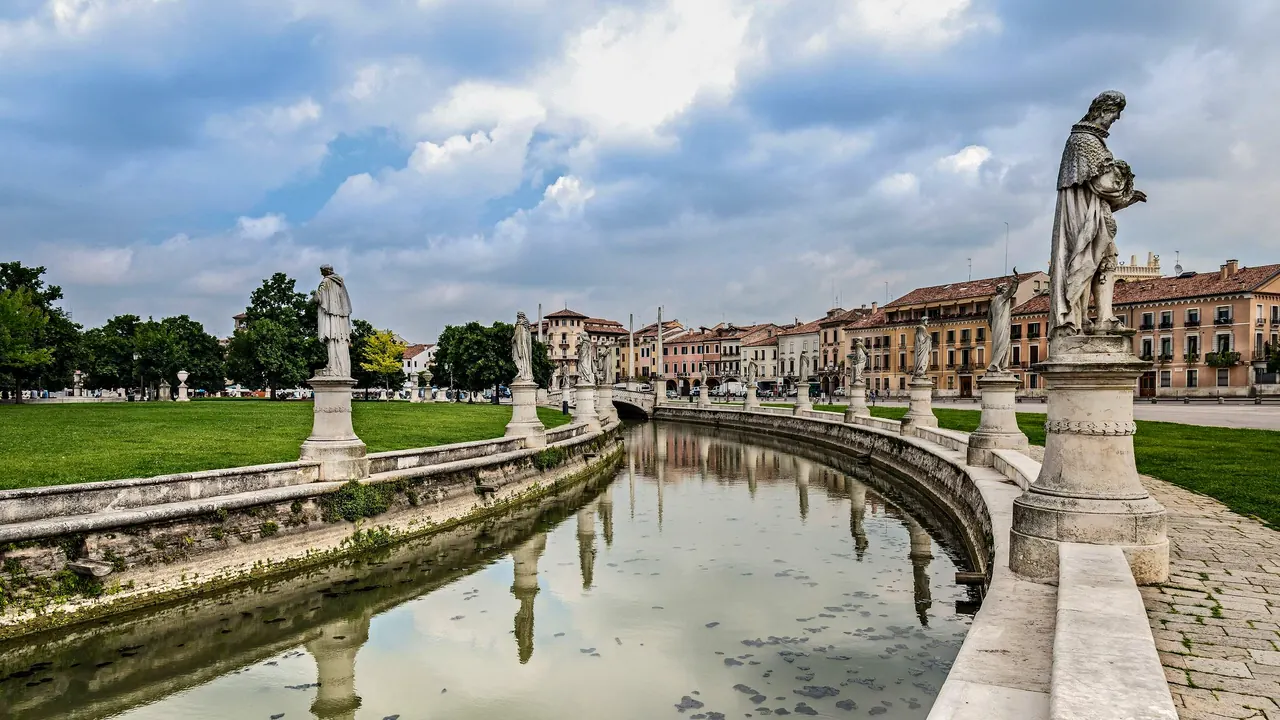
Photos: Cortina d'Ampezzo by Andreas Neubauer, Pexels License; Padua by Didier Descouens, CC BY-SA 4.0, cropped.
Cortina d'Ampezzo or Padua?
Our verdict in twelve categories, each scored against the same fixed benchmark cities, and the climate month by month, so you can choose for your trip.
Choose Cortina d'Ampezzo for
- nature and the outdoors
- families
Cortina d'Ampezzo is for travellers who come for the mountains themselves. In winter that means skiing within the Dolomiti Superski area. In summer it means hut-to-hut walks, via ferrata and terrace lunches at the rifugi, with lifts rising straight from town. It suits people who judge a trip by their days outdoors and are happy with a quiet evening, few sights and a high bill.
Choose Padua for
- culture and sights
- day trips
- prices
Padua is the better pick for a city trip built on art, food and trains. Giotto's Scrovegni Chapel and the Basilica of Saint Anthony anchor a compact centre, and the market squares and spritz hour shape the evenings. Fast trains reach Venice, Vicenza, Verona and Bologna. It costs far less to stay, and the thermal pools of Abano are close by for a slow afternoon.
Scoreboard
Twelve categories on one fixed scale from 0 to 100. The shaded stretch is the gap between the two.
Your match
Pick a travel style or drag the sliders, and both match scores follow your weighting.
Wins on nature and the outdoors and families with your weighting.
Wins on culture and sights and day trips with your weighting.
What matters to you?
Category by category
What the scores mean for a trip.
Beaches & swimming
Cortina has no beach at all. The Adriatic is more than two hours away by road, and alpine lakes such as Ghedina and Pianozes stay cold from snowmelt even in midsummer. In practice, swimming means a hotel pool.
Padua is no beach town either, but the sea is a manageable day out. Sottomarina and the Lido of Venice are about an hour away, with shallow, calm water that suits paddling children. The shore is flat sand lined with umbrellas, practical rather than scenic.
Food & drink
Cortina eats well for a small town. Its Ampezzan dishes include casunziei with beetroot and poppy seeds, and polenta with game. The best meals are often on hut terraces among the peaks. The choice is narrow and rarely cheap, though, with almost no street food.
Padua offers more variety and more of daily life around food. Venetian home cooking such as bigoli with duck sauce and baccalà sits beside the morning markets in Piazza delle Erbe and Piazza della Frutta. Add the early-evening spritz ritual, Euganean wines and the old coffee house Caffè Pedrocchi, and eating becomes part of the sightseeing.
Culture & sights
In Cortina, the sights fill a rainy afternoon: the basilica and its bell tower, painted houses, the 1956 Olympic ice stadium and the Rimoldi collection of modern Italian art. Its most moving heritage is the First World War tunnels and trenches on Lagazuoi and the Cinque Torri, but reaching them takes a day in the mountains.
Padua is in another league. Giotto's Scrovegni cycle, which needs a timed booking, leads a UNESCO-listed group of fourteenth-century frescoes. Beyond those come the Basilica of Saint Anthony with Donatello's work, the frescoed hall of the Palazzo della Ragione, the world's oldest permanent anatomical theatre and a botanical garden founded in 1545.
Nightlife
Evenings in Cortina start with après-ski and a stroll along the Corso Italia, then turn into long dinners. Late bars and a club or two open only in the peak winter weeks. In summer the town is quiet by late evening.
Padua has a livelier evening most of the year, but it is built around the aperitivo rather than dancing. Students and locals crowd Piazza delle Erbe and Piazza dei Signori over spritz glasses, and wine bars fill the old ghetto during term. It goes quiet in high summer, so in August neither place offers much after dark.
Nature & outdoors
Cortina is one of the finest mountain bases anywhere. Pale Dolomite peaks ring the valley, and the Fanes-Sennes-Braies park begins at its edge. Lago di Misurina and the Tre Cime are under an hour away. Winter brings the Sella Ronda and long descents, while summer brings hiking, climbing, biking and paragliding.
Padua's outdoors is gentler and starts a little way out. The volcanic Euganean Hills, about 15km away, offer vineyard trails and road cycling, and the Brenta towpaths make level rides through villa country. Real mountain walking means driving out to Monte Grappa or the Asiago plateau.
Day trips
From Cortina, most outings lead to more mountains. The towns within reach, from San Candido and Brunico to Bolzano with its Iceman, are pleasant rather than essential, and Venice means a long coach journey each way.
Padua is one of the best bases in northern Italy. Venice is under half an hour by train, close enough to visit on several days. Vicenza's Palladian palaces, Verona, Treviso, Bologna and Ferrara are all easy train trips, and the Brenta villas and the walled towns of Este, Monselice and Montagnana are closer still.
Good for families
Cortina comes out ahead for active families. Ski schools take all ages, there are beginner slopes at Socrepes and skating at the Olympic stadium, and summer brings a rope park and easy walks to huts with meadows to run in. Wet days with small children are harder, and the costs add up quickly.
Padua is safe and flat, and children are welcome in any trattoria, but its main sights are churches and frescoes. Prato della Valle and the botanical glasshouses help. Otherwise, families rely on outings to Gardaland, Lake Garda or the Adriatic beaches.
Getting around
Both centres are small enough to walk, but beyond them the two are very different. Cortina has had no railway since 1964, so arriving means a coach from Venice or a long drive. Buses to the passes and the Tre Cime are infrequent, and most visitors end up hiring a car.
Padua is easy without one. Arcades shelter much of the walk between its sights, a tram runs from the station to Prato della Valle, and main-line trains leave in every direction. A car is only needed for the hills.
Shopping & style
Neither is a shopping destination, but they sell very different things. Cortina's Corso Italia is a short, polished strip of luxury fashion, jewellers, furriers and high-end mountain wear. The Cooperativa di Cortina, founded in 1893, anchors it, and there are local wood carving and filigree too.
Padua is more everyday. Its arcades hold Italian shoe and fashion shops and university bookshops, and its markets and delicatessens are the place for cheese and Euganean wine. A large antiques market fills Prato della Valle one Sunday a month.
Affordability
Cortina is among the most expensive places to stay in Italy, especially in the winter peak and in August. Lift passes and equipment hire add to the cost. Meals at the rifugi and the quieter weeks of June and late September soften it, but many budget travellers sleep in cheaper valleys nearby.
Padua costs what a mid-sized northern Italian city usually does, and many visitors stay there because it is a reasonably priced base for Venice and the region. Watch for dearer rooms during the big trade fairs and graduation season.
Live music & performing arts
Cortina has no theatre season and no regular venue. Its music comes mainly in summer, when chamber and classical festivals hold concerts in churches, halls and sometimes on the mountainsides.
Padua offers something all year. The horseshoe-shaped Teatro Verdi stages plays and some opera, and a chamber orchestra plays in the frescoed Sala dei Giganti and the Basilica of Saint Anthony. For grand opera, La Fenice in Venice and the summer Arena in Verona are within easy reach.
Wellness & relaxation
In Cortina, relaxation happens in the hotels: Alpine spas with saunas, hay baths and indoor pools after a day outdoors. Its calm is real in June, September and the quieter winter weeks, but in peak season traffic and crowds take much of it away.
Padua has one of Europe's largest thermal districts on its doorstep. At Abano Terme and Montegrotto Terme, about 12km away, hot mineral water and mud have been used since Roman times, and many spa hotels accept day visitors. A soak after a morning of frescoes is easy.
When should you go?
Pick your month. The climate figures are measured averages, not a forecast.
Cortina d'Ampezzo in July
Padua in July
Daytime high, °C
Rainfall in the month, mm
Where the figures come from
Padua's temperatures are measured 35 km from the centre, at Treviso / Istrana.
Padua has no rain gauge within 25 km of the centre, so its rainfall comes from a gridded climate dataset read at the city rather than from a gauge further away.
Padua's sunshine is measured 36 km from the centre, at Treviso / S. Angelo.
Temperature and rainfall are climate normals, averaged over the years shown. Cortina d'Ampezzo: 1991-2020 normals, Dobbiaco (22.5 km from centre). Padua: 1991-2020 normals, Treviso / Istrana (35.4 km from centre).
Cortina is a summer and winter resort. July and August are its warmest months, at about 22°C by day, with June close behind, which is ideal for walking. June to August is also its wettest stretch, peaking at 130mm in July, so set out early on hiking days. September is cooler and drier, and still good for the trails if you bring a warm layer. In midwinter the daytime high stays around 0°C, which suits skiing rather than sitting outdoors. Spring and late autumn fall between the two seasons.
Padua is the opposite. July and August climb to 31°C, which makes walking the streets hard going. They are also the sunniest months of the year, and the nearby Adriatic warms to 26°C, so a beach day works well then. For sightseeing, April to early June and September to October are milder and more pleasant. November brings the most rain. The warmest months, when Cortina's trails are at their best, are when Padua is least comfortable.
Which traveller are you?
For an outdoors trip, Cortina is the obvious choice. The Tofane, Cristallo and Cinque Torri ring the town, lifts go straight up from the centre, and the Tre Cime, the Alta Via 1 and some of the Alps' oldest via ferrata routes are all close by.
On a culture and arts trip, choose Padua. Giotto's frescoes in the Scrovegni Chapel, Donatello's bronzes at the Basilica of Saint Anthony and the old university's anatomical theatre are in a walkable centre. Venice, Vicenza and Verona are short train rides away.
On a tight budget, Padua makes far more sense. Hotels are moderately priced, and a standing spritz with market food costs little. You can walk the centre, or take the train out. Cortina charges luxury-resort rates, and lift passes and equipment hire add more.
Before you go
| Measure | Cortina d'Ampezzo | Padua |
|---|---|---|
| Official language | Italian | Italian |
| Currency | Euro (EUR) | Euro (EUR) |
| Sockets | CFL230 V, 50 Hz | CFL230 V, 50 Hz |
| Driving side | Right | Right |
| Time zone | UTC+1, UTC+2 in summer | UTC+1, UTC+2 in summer |
| Emergency number | 112 | 112 |
| Elevation | 1,224 m | 12 m |
| Main airport | Venice Marco Polo Airport (VCE)116 km from centre103 non-stop destinations | Venice Marco Polo Airport (VCE)39 km from centre103 non-stop destinations |
| Public holidays this year | 13 days | 13 days |
By the numbers
| Measure | Cortina d'Ampezzo | Padua |
|---|---|---|
| City population | 5,546 | 206,496 |
| People per km² | 22 | 2,220 |
| Museums within 10 km | 3 | 29 |
| UNESCO World Heritage sites within 50 km | 1 | 5 |
| Swim season, months above 21 °C | - | 4 months |
Where else could you go?
Every comparison below shares a destination with this one, so you can follow Cortina d'Ampezzo or Padua somewhere new.
- Venicevs Padua
- Veronavs Padua
- Innsbruckvs Cortina d'Ampezzo
- Bolognavs Padua
- Venicevs Cortina d'Ampezzo
- Piranvs Padua