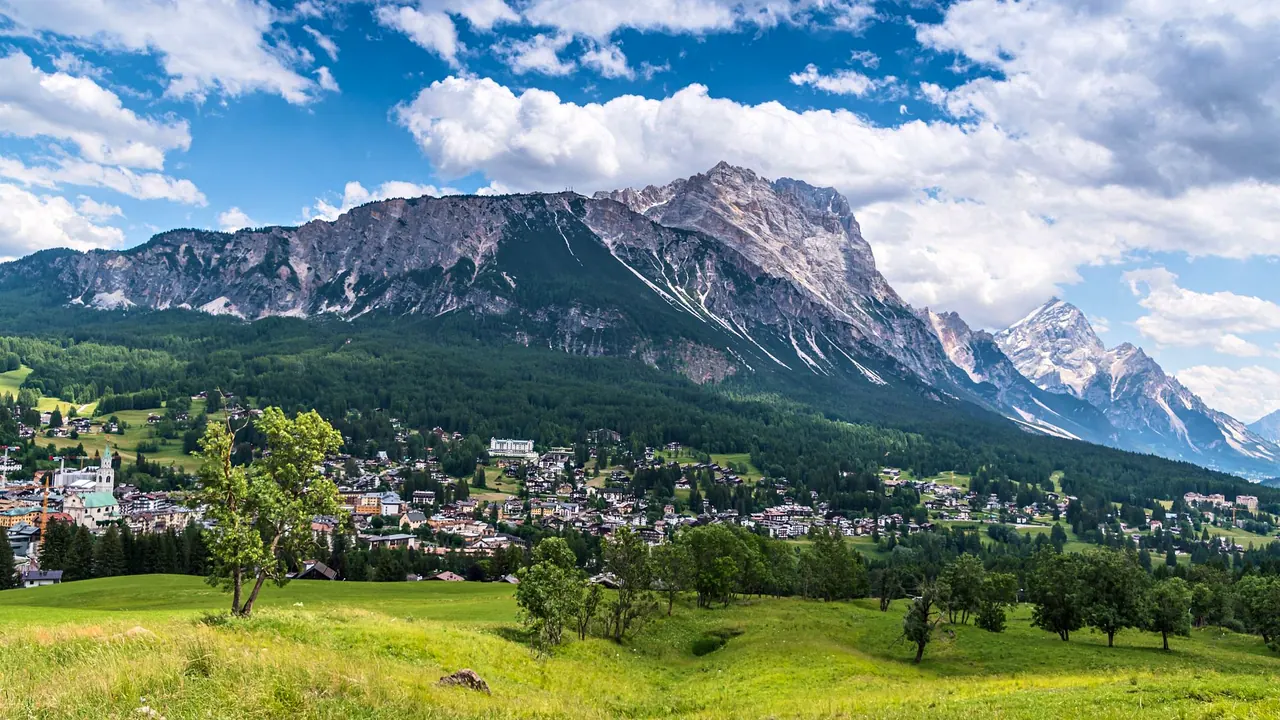
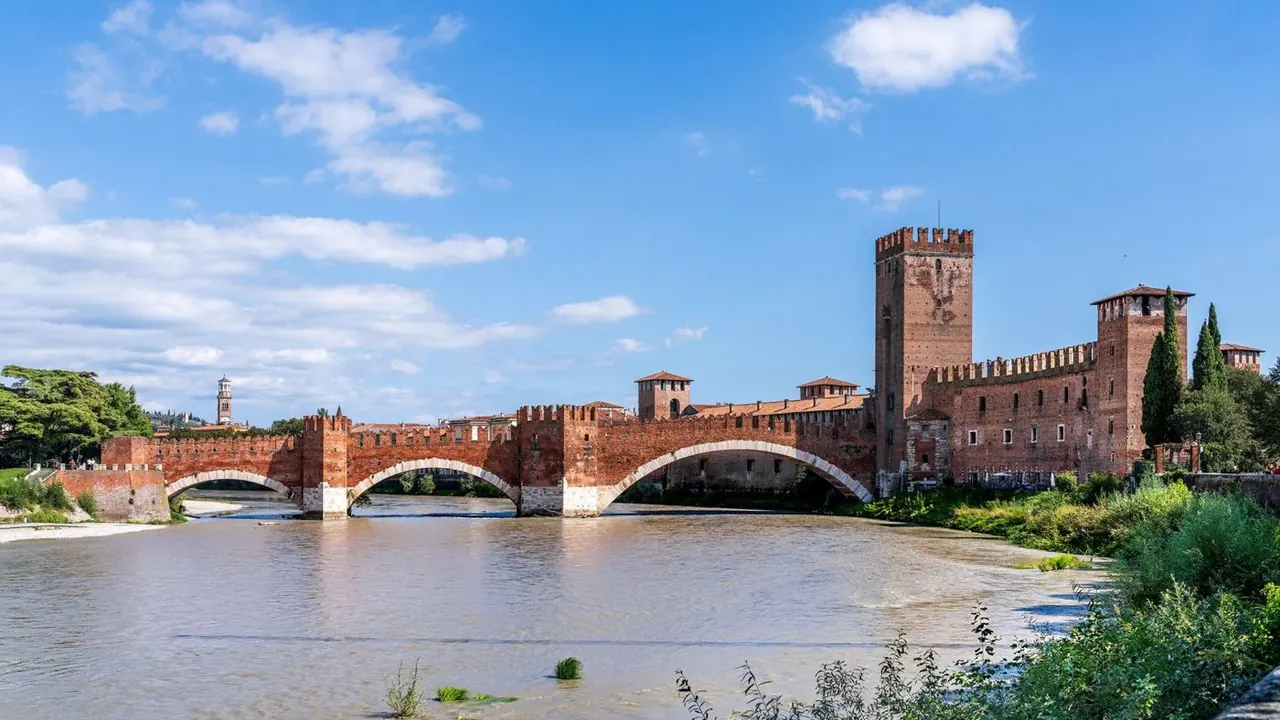
Photos: Cortina d'Ampezzo by Andreas Neubauer, Pexels License; Verona by NorbertNagel, CC BY-SA 4.0, cropped.
Cortina d'Ampezzo or Verona?
Our verdict in twelve categories, each scored against the same fixed benchmark cities, and the climate month by month, so you can choose for your trip.
Choose Cortina d'Ampezzo for
- nature and the outdoors
Cortina d'Ampezzo is for travellers whose vacation is the mountains themselves. Skiers, hikers and climbers step from the hotel door into the Dolomites, then end the day with a rifugio lunch on a sunny terrace or an evening in a hotel spa. In return they accept high prices, quiet nights and little to see in town.
Choose Verona for
- culture and sights
- live music and the arts
- day trips
Choose Verona for Roman and medieval history, opera in the Arena and Venetian wine country on the doorstep. It suits a trip with plenty of variety: art cities and Lake Garda are within an hour, the centre is easy to cover on foot, and the bills are not low but are far gentler than in the Alps.
Scoreboard
Twelve categories on one fixed scale from 0 to 100. The shaded stretch is the gap between the two.
Your match
Pick a travel style or drag the sliders, and both match scores follow your weighting.
Wins on nature and the outdoors with your weighting.
Wins on culture and sights and live music and the arts with your weighting.
What matters to you?
Category by category
What the scores mean for a trip.
Beaches & swimming
Neither city has a coast, but Verona comes much closer to offering a swim. Cortina's water means the snowmelt lakes of Ghedina and Pianozes, which are lovely to walk round but cold even in midsummer, so most swimming happens in a hotel pool.
From Verona, the southern shore of Lake Garda is about half an hour away. In high summer the lake is warm and calm, with lidos, lawns and Sirmione's flat limestone shelves to swim from. It is a day out rather than a reason to stay, but a real one.
Food & drink
Both draw on the cooking of the inland Veneto, but Verona has more depth, with its wine country on the doorstep. In Cortina d'Ampezzo the highlight is mountain food, such as casunziei with poppy seeds or polenta with game, best eaten on a rifugio terrace. The valley adds a few ambitious kitchens and wood-panelled stube, but the choice stays narrow and the bills high.
Verona's osterie around Piazza delle Erbe and in Veronetta serve Amarone risotto, bigoli with duck and bollito with pearà. Valpolicella, Soave and Bardolino are made nearby and poured by the glass at counters. Street food and international cooking are scarce in both.
Culture & sights
The gap here is wide. Cortina's sights fit into a rainy afternoon: the basilica and its bell tower, the ice stadium from the 1956 Winter Olympics and the Rimoldi art collection. The First World War trenches on Lagazuoi and the Cinque Torri are its most striking heritage, but they take a full day in the mountains.
Verona is a city people visit for its history alone. The Arena, the Roman theatre, San Zeno's bronze doors, the Scaliger tombs and Castelvecchio's galleries designed by Scarpa fill two or three unhurried days, all inside one loop of the Adige.
Nightlife
Evenings run later in Verona, though dancing until dawn is not really on offer in either town. In Cortina d'Ampezzo a night out means après-ski drinks, a stroll along the Corso Italia and a long dinner. Its few smart late bars come alive only in the peak winter weeks, and in summer the town is quiet by late evening.
Verona has the aperitivo crowd in Piazza delle Erbe and student wine bars in Veronetta that stay busy in term time. On summer opera nights the centre fills again close to midnight as the audience leaves the Arena.
Nature & outdoors
Cortina d'Ampezzo is far ahead. Lifts rise from the town into a ring of pale Dolomite peaks, and the Tre Cime and Lago di Misurina are under an hour away. The same valley offers some of the Alps' oldest via ferrata routes and the Alta Via 1 in summer, and the Dolomiti Superski network in winter.
Verona's outdoors is gentler and further from the door: vineyard walks in the Valpolicella, the cycle route up the Adige, Monte Baldo's ridges and the reliable wind at the north end of Lake Garda. It is enough for a day or two of activity, not for a trip built around mountains.
Day trips
Verona is much the better base. Venice, Vicenza, Padua and Mantua are all within about an hour by train. The Garda towns and the cellars of Valpolicella and Soave are closer still, so a week of outings need never repeat itself.
From Cortina, the trips that matter lead into the mountains. San Candido, Brunico and Bolzano with its Iceman make pleasant drives into South Tyrol, but Venice is a long day by coach.
Good for families
Verona has more for children, though most of it lies outside town: Gardaland, the water parks on Garda's southern shore and the drive-through safari at Parco Natura Viva. In the centre, the Arena gives children a ready-made gladiator story. Summer afternoons are hot, and a car helps.
Cortina suits families who come to ski or walk, with ski schools at Socrepes, public skating at the Olympic stadium and easy trails to huts with meadows to run around in. Wet days with young children are harder to fill, because nothing there is built purely for them.
Getting around
Both centres are easy on foot, but Verona is far better connected. In its largely traffic-free core, the Arena, the piazzas and Castelvecchio are a short stroll apart, and trains run often to Venice, Milan and the lake at Peschiera.
Cortina has had no railway since 1964, so arriving means a coach or a long drive, and buses up to the passes and the Tre Cime are sparse. Most visitors who want to explore the wider Dolomites hire a car.
Shopping & style
Each town has one smart street, and Verona offers a little more range. Via Mazzini and the streets off it carry Italian labels, jewellers and shoe shops. The best things to take home are edible: Amarone, Garda olive oil and pandoro.
Cortina's Corso Italia is shorter and more expensive, with furriers, jewellers and luxury mountain wear, anchored by the Cooperativa department store that dates from 1893. Wood carving and filigree are the local crafts to look for.
Affordability
Cortina d'Ampezzo is much the dearer, and its costs pile up on every front at once. In the ski weeks and high summer, both rooms and dinners in the valley are priced for a luxury resort, a day on the slopes adds passes and hire on top, and with no railway a hire car often joins the bill. The main relief comes up on the mountain, where a rifugio lunch costs less than the view would suggest.
In Verona the weight falls mainly on the room, especially inside the river loop on opera nights and during the big trade fairs, when a bed near the station or across the Adige is the sensible fallback. Food, wine and travel cost far less than in the Alps, because trains do the work a car does in the mountains, and only the tables facing the Arena charge for the view.
Live music & performing arts
Verona has one of Europe's great summer spectacles: opera in the Arena, with Verdi and Puccini performed to thousands on Roman stone tiers on most evenings from June to early September. Shakespeare and jazz in the Roman theatre and a cool-season programme at the Teatro Filarmonico add to it.
Cortina has no theatre and no regular venue. It offers only summer chamber concerts in churches and halls, now and then out in the mountains.
Wellness & relaxation
The two are close here, but they relax you in different ways. In Cortina, wellness lives inside the hotels, with Alpine spas, hay baths and indoor pools after a day outdoors, and in the quiet, clear-aired valley of June and September.
Verona's comes from the warm springs around it: Sirmione's lakeside thermal pools, the spring-fed lake near Lazise and the springs at Caldiero, used since Roman times. In town, the Giardino Giusti and the riverside walk make for slow afternoons.
When should you go?
Pick your month. The climate figures are measured averages, not a forecast.
Cortina d'Ampezzo in July
Verona in July
Daytime high, °C
Rainfall in the month, mm
Temperature and rainfall are climate normals, averaged over the years shown. Cortina d'Ampezzo: 1991-2020 normals, Dobbiaco (22.5 km from centre). Verona: 1991-2020 normals, Verona / Villafranca (11.6 km from centre).
Cortina d'Ampezzo has two distinct seasons. From December to February daytime highs stay close to freezing, and that is the snow season. July and August bring highs of about 22°C, ideal for hiking, but summer is also the wettest time, with around 130mm of rain in July and June not much drier. September is the gentler choice, still mild for walking and noticeably less wet. Spring is cool and sits between the two seasons.
Verona is warmer all year. July and August reach about 30°C under long, sunny skies, which is fine for a day at Lake Garda but hard going in the streets at midday. May and October are the most comfortable months for sightseeing, although autumn brings Verona's heaviest rain, peaking in September. Winters are cool and grey rather than truly cold, with highs around 7°C. In high summer the two complement each other: heat in the city, fresh air in the valley.
Which traveller are you?
On an outdoors trip, Cortina d'Ampezzo is the obvious choice. Lifts climb straight from town into the Dolomites. Summer brings via ferrata, hut-to-hut routes and the Alta Via 1, and winter brings the Dolomiti Superski area. Verona's hills and lake are gentler.
For a culture and arts trip, Verona wins clearly. It has a UNESCO-listed centre with the Arena, San Zeno and Castelvecchio, opera under the stars in summer, and Venice, Padua and Vicenza a short train ride away. Cortina's sights fill an afternoon.
On a tight budget, Verona is much the kinder of the two. Student osterie in Veronetta, good-value local wine and a centre you can walk keep the costs down. Cortina charges luxury-resort prices for rooms, meals and lift passes.
Before you go
| Measure | Cortina d'Ampezzo | Verona |
|---|---|---|
| Official language | Italian | Italian |
| Currency | Euro (EUR) | Euro (EUR) |
| Sockets | CFL230 V, 50 Hz | CFL230 V, 50 Hz |
| Driving side | Right | Right |
| Time zone | UTC+1, UTC+2 in summer | UTC+1, UTC+2 in summer |
| Emergency number | 112 | 112 |
| Elevation | 1,224 m | 59 m |
| Main airport | Venice Marco Polo Airport (VCE)116 km from centre103 non-stop destinations | Verona Villafranca Valerio Catullo Airport (VRN)10 km from centre96 non-stop destinations |
| Public holidays this year | 13 days | 13 days |
By the numbers
| Measure | Cortina d'Ampezzo | Verona |
|---|---|---|
| City population | 5,546 | 255,588 |
| People per km² | 22 | 1,285 |
| Museums within 10 km | 3 | 18 |
| UNESCO World Heritage sites within 50 km | 1 | 5 |
Where else could you go?
Every comparison below shares a destination with this one, so you can follow Cortina d'Ampezzo or Verona somewhere new.
- Innsbruckvs Cortina d'Ampezzo
- Venicevs Verona
- Bolognavs Verona
- Venicevs Cortina d'Ampezzo
- Milanvs Verona
- Bledvs Cortina d'Ampezzo