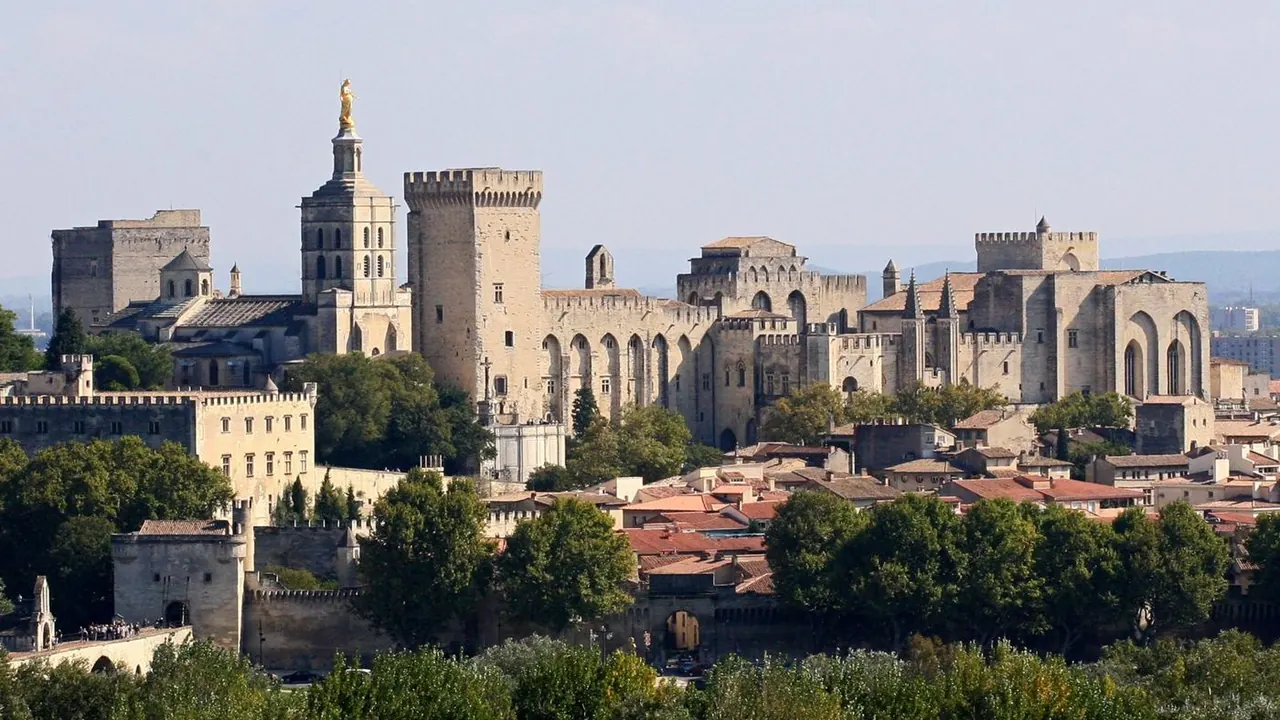
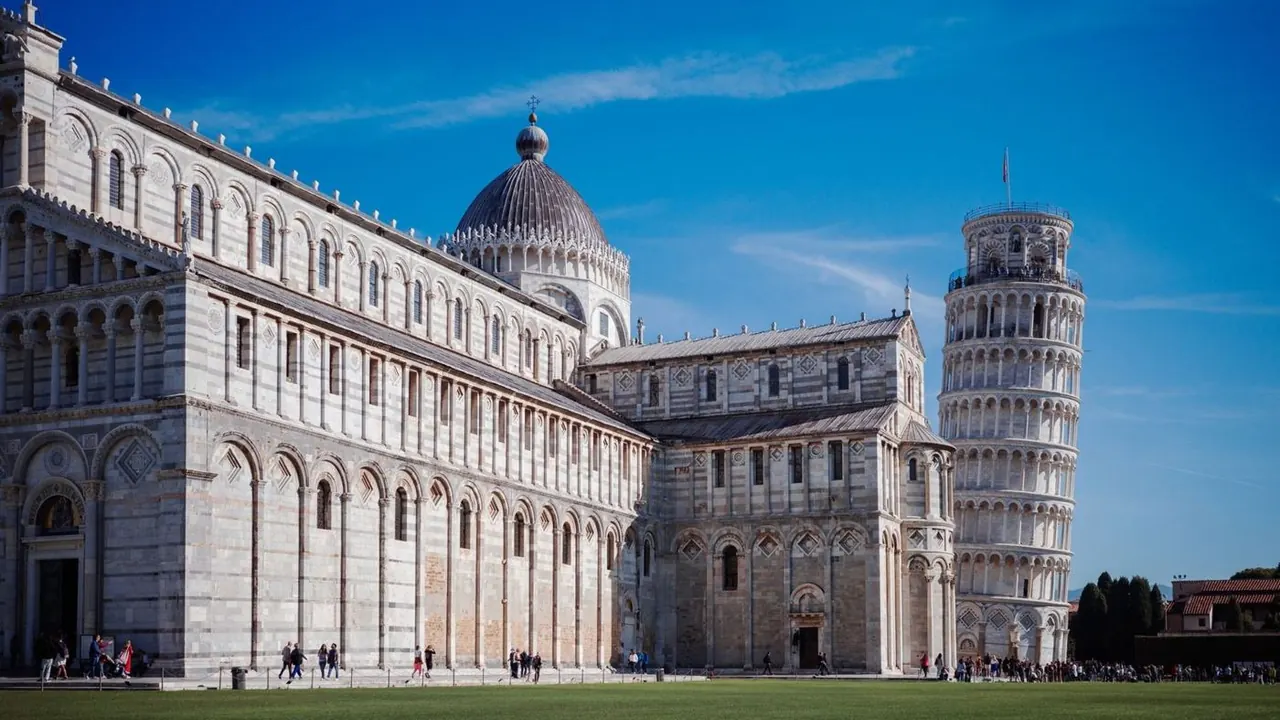
Photos: Avignon by BlueBreezeWiki, CC BY-SA 3.0, cropped; Pisa by Bruno Kraler, Pexels License.
Avignon or Pisa?
Our verdict in twelve categories, each scored against the same fixed benchmark cities, and the climate month by month, so you can choose for your trip.
Choose Avignon for
- live music and the arts
- nature and the outdoors
- food and drink
Avignon suits travellers drawn to theatre, wine and the countryside of Provence. In July it hosts one of the world's great theatre festivals, and all year it has more stage life than Pisa. The Rhône vineyards, the Luberon villages, Mont Ventoux and the Roman monuments of Nîmes and Arles are all close by. It rewards a slower stay, ideally with a hire car, and someone who doesn't mind that the sea is far away.
Choose Pisa for
- beaches
- getting around
- prices
Pisa is the easier, lighter choice. Its sandy beaches are a short bus ride away, the airport is right by the city, and trains reach Florence, Lucca and the Cinque Terre without any driving. It costs a little less, is simpler with children and has a livelier student evening, so it fits a short break or a Tuscan trip where you change base and want swimming as part of it.
Scoreboard
Twelve categories on one fixed scale from 0 to 100. The shaded stretch is the gap between the two.
Your match
Pick a travel style or drag the sliders, and both match scores follow your weighting.
Wins on live music and the arts and nature and the outdoors with your weighting.
Wins on beaches and getting around with your weighting.
What matters to you?
Category by category
What the scores mean for a trip.
Beaches & swimming
Pisa clearly comes out ahead. Its coast starts about 12km from the centre, with the long sandy beaches of Tirrenia and Calambrone backed by pine woods. The shallow water there is easy for children, and the beach fits neatly into an afternoon off from sightseeing.
Avignon has no sea of its own. The best local swim is in the green pools of the Gardon below the Pont du Gard. The Camargue beaches are well over an hour's drive away, so most visitors use the hotel pool.
Food & drink
Neither city is a place to travel for serious dining, but they eat quite differently. Avignon cooks Provençal food, like daube, tians and herb-roasted lamb. Its real strength is wine: Châteauneuf-du-Pape and the Côtes du Rhône villages are so close that bistros pour them by the glass.
Pisa's cooking is plainer Tuscan food shaped by its students. Hot cecina comes out of wood ovens, and the trattorias around Piazza delle Vettovaglie serve ribollita and game. In both cities, skip the tables beside the famous monument.
Culture & sights
Each city is built around one famous group of monuments, and each takes about two unhurried days. Avignon's is a fortress: the papal palace, the cathedral, the broken bridge and nearly 4km of ramparts. Its museums run from the Italian primitives of the Petit Palais to the contemporary art of the Collection Lambert.
Pisa's is a set of white marble buildings on a lawn: the cathedral, baptistery, tower and Camposanto. Walk a little further and the city is quieter, with Piazza dei Cavalieri, Santa Maria della Spina on the Arno and the medieval Pisan art of San Matteo.
Nightlife
Neither is a city for a big night out, but Pisa has the livelier ordinary evening. During term its students fill the squares around the old market until after midnight, and in summer people move to the beach bars on the coast.
Avignon is quieter for eleven months of the year: an aperitif on Place Pie, then home before midnight. In July the festival keeps the old town up every night, so timing matters much more there.
Nature & outdoors
Avignon has the grander country around it. Mont Ventoux, the ochre trails of the Luberon, the Dentelles and the Alpilles offer real hiking and famous road cycling. The Camargue adds flamingos, white horses and lagoons.
Pisa's best nature starts right at the edge of the city. The San Rossore park of pine forest, wetland and wild dunes is ideal for easy cycling or riding, often with deer in sight. Mountain walking means going further out, to the Apuan Alps or the Cinque Terre.
Day trips
Both are excellent bases, and the difference lies in where you go and how you get there. From Avignon the highlight is Roman Provence: the arenas of Nîmes and Arles, the theatre at Orange and the Pont du Gard. The Luberon hill villages and the wine country really need a car.
From Pisa the trains do most of the work. Florence is about an hour away, Lucca under half an hour, and the Cinque Terre a little further, with Siena also within reach by rail. Driving is mainly for the hilltops of Volterra and San Gimignano and the Chianti countryside.
Good for families
Pisa is a little easier with children. The centre is flat, the lawn by the tower gives them room to run, and the shallow beaches and the San Rossore park can be reached without a car. Younger children are not allowed up the tower.
Avignon has some fun moments, like the tablet tour of the palace and dancing on the bridge from the song. But the cobbled lanes are hard work with a pushchair, and the best family days, canoeing at the Pont du Gard or visiting the Camargue, all depend on driving.
Getting around
Pisa is simpler to get around. It is small and flat, a shuttle train links the airport to the central station, and that station is a main rail hub for western Tuscany, so a car is optional.
Avignon's walled centre is just as walkable, though it is cobbled and the open squares catch the mistral. Trains reach Arles, Nîmes and Marseille easily. Buses to the vineyards, the hill villages and Ventoux are sparse, so a hire car usually becomes part of the plan.
Shopping & style
Shopping is a sideline in both cities, but you bring home different things. Avignon's best buys are Provençal: printed cottons, lavender and olive-wood, plus tapenade, olive oil and wine from Les Halles or straight from the producers. For serious antiques, people go out to L'Isle-sur-la-Sorgue.
Pisa has everyday Italian fashion along Corso Italia, smarter shoe shops and old pastry shops under the arcades of Borgo Stretto, and a monthly antiques market by the river.
Affordability
Pisa is the gentler of the two on a budget. Its student trattorias keep meals good value, central rooms are mid-range, and with walking and trains, getting around costs little. The tower climb and the beach loungers are the main extra costs.
Avignon costs more. Seeing its countryside usually means hiring a car, and rooms inside the walls during the July festival are booked far ahead at steep rates. Set lunches away from the main squares and wine bought from producers are where it offers fair value.
Live music & performing arts
Avignon is far ahead here. In July it stages the Festival d'Avignon, founded in 1947, with productions in the Cour d'honneur of the papal palace, while the Off fringe puts on shows in every cellar and courtyard. Out of season it still has the opera house on Place de l'Horloge, a dozen small theatres and a jazz club.
In Pisa, almost everything happens at the Teatro Verdi, a 19th-century horseshoe-shaped opera house with a season from autumn to spring. University chamber concerts and church recitals add to it, but for bigger productions you go to Florence.
Wellness & relaxation
Pisa has the edge because of its thermal springs. The waters of San Giuliano Terme, just outside the city, have been used since Roman times and have an 18th-century bath palace, and Casciana Terme has a larger public pool.
Avignon has no bathing tradition and relies on hotel spas. To relax, you sit in its shaded squares or stay in a farmhouse among the vineyards and lavender. The July crowds and a mistral that blows for days both get in the way of calm.
When should you go?
Pick your month. The climate figures are measured averages, not a forecast.
Avignon in July
Pisa in July
Daytime high, °C
Rainfall in the month, mm
Where the figures come from
Avignon has no rain gauge within 25 km of the centre, so its rainfall comes from a gridded climate dataset read at the city rather than from a gauge further away.
Avignon's sunshine is measured 65 km from the centre, at Marseille / Marignane.
Temperature and rainfall are climate normals, averaged over the years shown. Avignon: 2005-2020 (sunshine 1991-2020, rainfall 1991-2020) normals, Avignon / Morières-lès-Avignon (8.6 km from centre). Pisa: 1991-2020 normals, Pisa / S. Giusto (3.9 km from centre).
The two follow a similar temperature curve. Summer highs reach about 32°C to 32°C in July and August, which is too hot for long afternoons of walking, and winters are cool in both. April, May and the end of September into early October are the comfortable months for sightseeing in either city. Avignon is clearly the sunnier of the two all year round, while the summers are about equally dry.
The rain comes at different times. In Avignon it arrives in September, with October the wettest month at 109mm, and stays fairly wet until November. In Pisa the wet season comes later and heavier, peaking in October and November. Only Pisa has a sea to swim in. The water is warm enough from June and reaches about 25°C in August, so June to September is its beach season.
Which traveller are you?
On a beach and sun trip, Pisa is the clear choice. The pine-backed sands of Tirrenia and Calambrone are a short bus ride away and the sea is warm all summer. From Avignon the coast is a long day out, so a swim usually means a river or a pool.
For a culture and arts trip, Avignon comes out ahead. Its papal monuments match Pisa's cathedral square, and it adds the July theatre festival, an opera house and small theatres all year. The Roman sites of Nîmes, Arles and Orange are also close by.
For a short city break, Pisa is the more practical choice. The airport is unusually close to the city, the flat centre is easy on foot and Lucca or Florence can be done by train. Avignon's best countryside needs a car and more days.
Before you go
| Measure | Avignon | Pisa |
|---|---|---|
| Official language | French | Italian |
| Currency | Euro (EUR) | Euro (EUR) |
| Sockets | CE230 V, 50 Hz | CFL230 V, 50 Hz |
| Driving side | Right | Right |
| Time zone | UTC+1, UTC+2 in summer | UTC+1, UTC+2 in summer |
| Emergency number | 112 | 112 |
| Elevation | 10 m | 4 m |
| Main airport | Marseille Provence Airport (MRS)65 km from centre126 non-stop destinations | Pisa International Airport (PSA)4 km from centre82 non-stop destinations |
| Public holidays this year | 11 days | 13 days |
By the numbers
| Measure | Avignon | Pisa |
|---|---|---|
| City population | 92,188 | 88,737 |
| People per km² | 1,420 | 479 |
| Museums within 10 km | 11 | 27 |
| UNESCO World Heritage sites within 50 km | 6 | 3 |
| Swim season, months above 21 °C | - | 4 months |
Where else could you go?
Every comparison below shares a destination with this one, so you can follow Avignon or Pisa somewhere new.