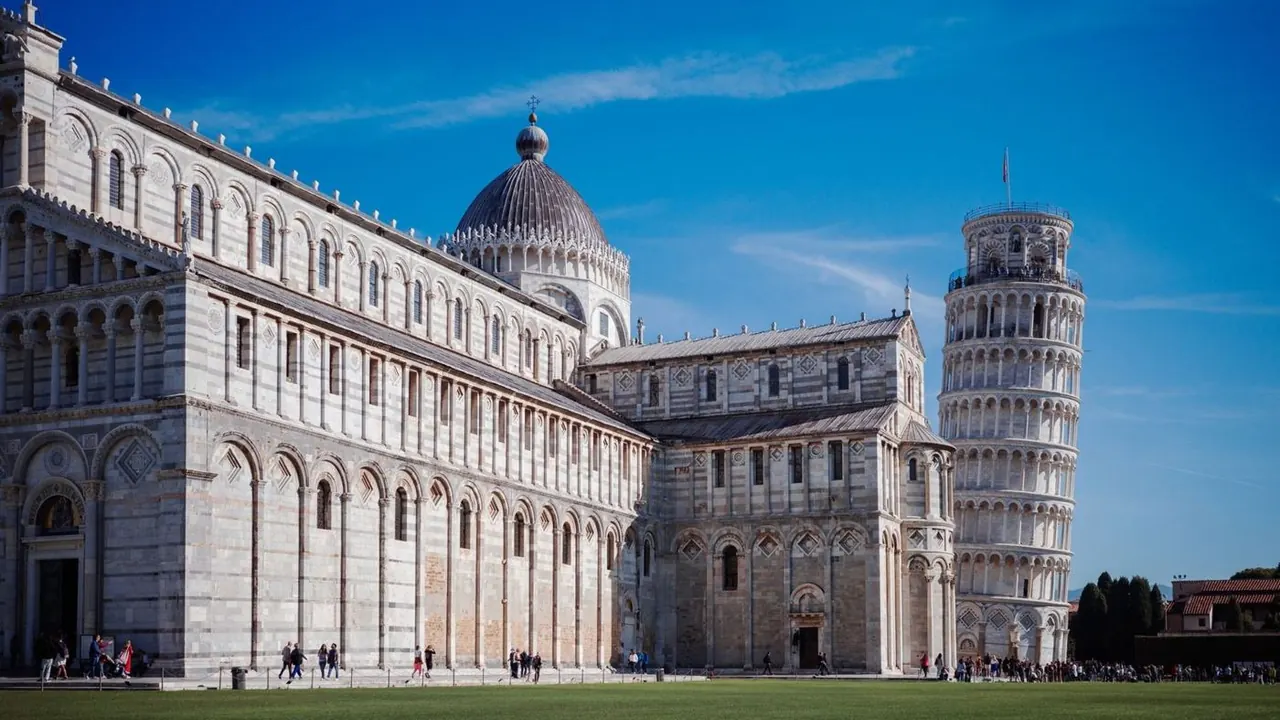
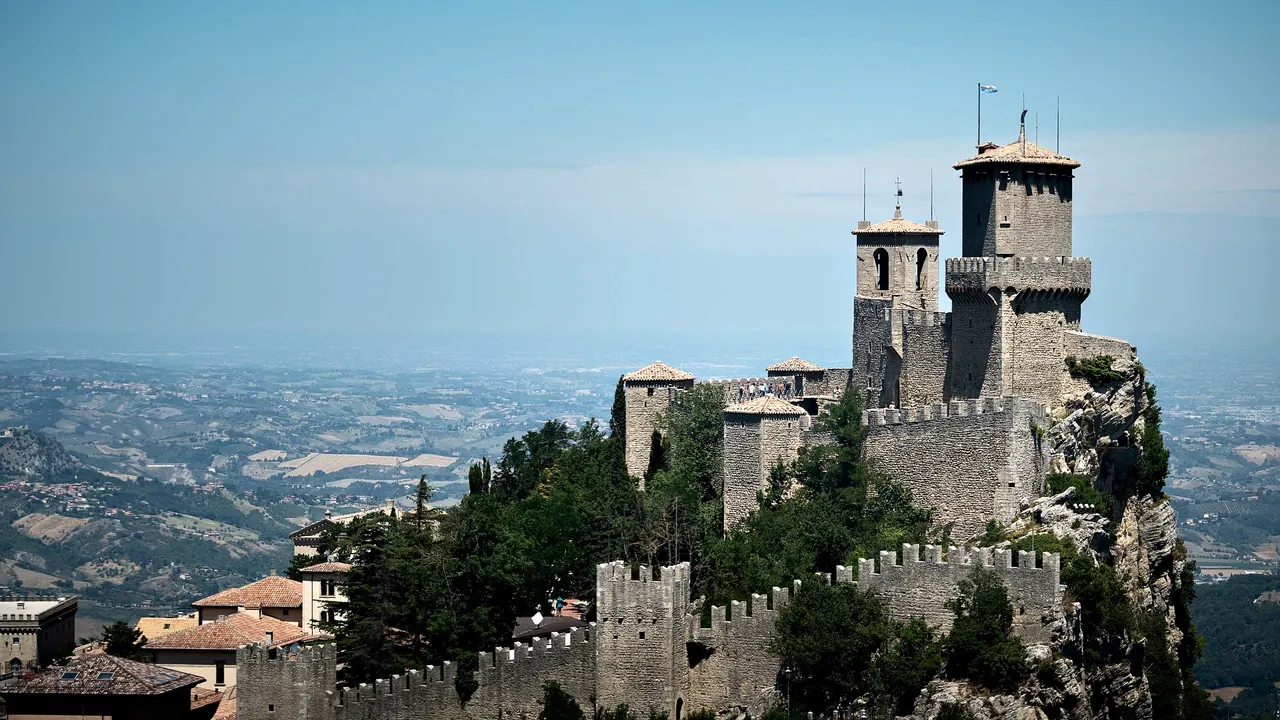
Photos: Pisa by Bruno Kraler, Pexels License; San Marino by Tibor Szabo, Pexels License.
Pisa or San Marino?
Our verdict in twelve categories, each scored against the same fixed benchmark cities, and the climate month by month, so you can choose for your trip.
Choose Pisa for
- getting around
- nightlife
- live music and the arts
Pisa is the better base for most trips. It is a flat, walkable town with a rail hub and an airport on its edge, and it pairs the Piazza dei Miracoli with student trattorias, a lively evening in the old market squares and easy trains to Florence, Lucca and the Cinque Terre. A week there rarely runs short of things to do, and it works well for travellers without a car who want art, history and the sea in one stay.
Choose San Marino for
San Marino does not lead in any category we score.
San Marino is for the setting and the story. It is a tiny walled republic strung along a cliff-edged ridge, quiet once the coaches leave, with the Adriatic laid out below. It suits a night or two rather than a long stay, ideally with a car, so the towers can be combined with San Leo, Urbino and afternoons on the Rimini shore. It fits travellers who want calm evenings on the walls more than a full programme.
Scoreboard
Twelve categories on one fixed scale from 0 to 100. The shaded stretch is the gap between the two.
Your match
Pick a travel style or drag the sliders, and both match scores follow your weighting.
Wins on getting around and nightlife with your weighting.
Has no clear advantage with the weighting you have chosen.
What matters to you?
Category by category
What the scores mean for a trip.
Beaches & swimming
Pisa has its own coast about 12km from the centre. There are rocky breakwaters and small coves at Marina di Pisa, and long sandy beaches backed by pine woods at Tirrenia and Calambrone, with free stretches between the rented establishments. Viareggio's beaches are a short train ride north.
San Marino has no coast at all. A beach day means about half an hour by car down to Rimini or Riccione, where the shore is the classic Romagna strip of numbered umbrellas and very little wild coast. The water is shallow and warm in midsummer on both coasts, but Pisa offers more variety and a much shorter trip to the sand.
Food & drink
Pisa eats better. Around Piazza delle Vettovaglie, a morning produce market is ringed by trattorias and wine bars kept honest by students, and cecina, the hot chickpea flatbread, is the local thing to try. Seafood improves towards the coast.
San Marino serves the hearty cooking of Romagna and Montefeltro: passatelli in broth, strozzapreti, piadina and the layered Tre Monti cake, with wine from its own small vineyards. The summit is where it falls down, as many terraces rely on the view. The better meals are down in Borgo Maggiore and the lower villages. Neither place is for serious dining.
Culture & sights
Pisa has far more to see. The cathedral, baptistery, tower and Camposanto make one of Italy's great architectural ensembles. Beyond them are Piazza dei Cavalieri, the little Gothic Santa Maria della Spina on the Arno and the medieval collection at San Matteo, enough for two full days.
San Marino's appeal is the place as a whole: a medieval town on the crest of Monte Titano, with climbable towers joined by a cliffside path and the Palazzo Pubblico standing for one of the world's oldest surviving republics. The visit is atmospheric but compact, and half a day covers it well.
Nightlife
Neither place is built for big nights, but Pisa at least has an evening scene. During term, students drink outside small bars in the squares around the old market until past midnight, and Borgo Stretto and the riverbanks draw an aperitivo crowd. Clubs are few.
San Marino has almost nothing once the day visitors leave, beyond dinner and a glass of wine on a terrace above the lights of the coast. A real night out means driving down to the Riviera clubs of Rimini and Riccione.
Nature & outdoors
Wilder country starts much closer to Pisa. The San Rossore park begins at the city's edge, with pine forest, wetland and undeveloped dunes to explore by bike, on foot or on horseback, and fallow deer are a common sight. The olive-terrace paths of Monte Pisano are just east of town, and the Apuan Alps offer proper mountain hiking further out.
San Marino's outdoors is its own ridge, with paths linking the towers, dropping through woods to Borgo Maggiore and circling the mountain, all with wide views to the Adriatic. Beyond the border, the Marecchia valley has quiet cycling roads. The walks are short, though, and there are no long trails.
Day trips
Both make good bases, but Pisa is outstanding and needs no car. Florence is about an hour away by train, Lucca under half an hour, and the Cinque Terre a little over an hour up the coast. Volterra and San Gimignano are a drive away.
San Marino's list is strong too: the rock fortress of San Leo, Urbino's Renaissance court and the mosaics of Ravenna. The catch is that most of it needs a car, since the only regular link is the bus down to Rimini.
Good for families
These two are fairly even for families, but in different ways. Pisa is flat and small, the tower lawn is a natural place for children to run about, and the shallow beaches and park bike paths are close. Younger children cannot climb the tower, though.
In San Marino, the battlements, cliff edges and cable car do the entertaining, but the steep streets and steps are hard with a pushchair. The theme parks, waterparks and marine park all lie on the coast below, so families there depend on a car.
Getting around
Pisa is far easier. It is flat and walkable from the station to the cathedral square, an automatic shuttle train runs to the airport, and the station is a western Tuscan rail hub.
San Marino's centre is small and car-free, but nearly every street climbs or drops by steps, and a cable car does the work between summit and valley. The bus from Rimini is the only real public link, and the surrounding hill towns realistically need a car.
Shopping & style
For shopping, Pisa is the better of the two, because it has proper town streets where local people shop, not just stalls for visitors. Corso Italia is a long pedestrian street of chains and mid-range fashion, the medieval arcades of Borgo Stretto have smarter clothes, shoe shops and old pastry shops, and a monthly antiques market sets up by the river.
San Marino's old town is mostly souvenirs. Its draw is lower taxes on perfume, watches, leather and spirits, along with an outlet centre in the valley and the stamps and coins that collectors seek out. Serious shoppers go to Florence or Lucca from Pisa, and to Bologna from San Marino.
Affordability
Costs are much the same in both, middling for Italy. Pisa's savings come from its student trattorias and from walking everywhere, while the tower climb and summer beach loungers are the main costs.
In San Marino, the summit charges a premium for views and convenience, but the sights are inexpensive and lower taxes make fuel and spirits cheaper.
Live music & performing arts
For an evening of music or theatre, Pisa is clearly the stronger of the two. The horseshoe-shaped Teatro Verdi stages opera, ballet, symphonic concerts and drama from autumn to spring, which makes it an easy way to see Italian opera in a historic house. University chamber series and church recitals add to the programme.
San Marino has only a small theatre and occasional concerts, with open-air music in the squares in summer. Its best-known event is the Medieval Days festival, with costumed musicians, crossbow contests and flag-throwers. For opera or a concert season, visitors have to go to Pesaro or Bologna.
Wellness & relaxation
Thermal water is just outside Pisa. San Giuliano Terme, used since Roman times, has a spa in an 18th-century bath palace below Monte Pisano. Casciana Terme, with its larger public thermal pool, is under an hour inland.
San Marino has only a few hotel spas. What it offers instead is quiet on the summit once the crowds leave, with evening walks along the walls and long views over the plain.
When should you go?
Pick your month. The climate figures are measured averages, not a forecast.
Pisa in July
San Marino in July
Daytime high, °C
Rainfall in the month, mm
Where the figures come from
San Marino's temperatures are measured 52 km from the centre, at Frontone.
San Marino has no rain gauge within 25 km of the centre, so its rainfall comes from a gridded climate dataset read at the city rather than from a gauge further away.
Temperature and rainfall are climate normals, averaged over the years shown. Pisa: 1991-2020 normals, Pisa / S. Giusto (3.9 km from centre). San Marino: 1991-2020 normals, Frontone (51.5 km from centre).
The two are close in high summer. Both reach about 30°C in July and August, too hot for long afternoons of sightseeing, and both seas are warm enough for swimming from June into September. The Adriatic below San Marino is a touch warmer at its August peak of about 26°C. Pisa has long, sunny summer days and the driest weather from June to August.
They differ most in winter and autumn. Pisa is milder, with January highs around 11°C against San Marino's 7°C, so the Tuscan city is more comfortable for winter walking. Both get wetter from September, and Pisa's autumn is the heavier of the two, with about 132mm in November. For walking either city, May, June and late September are the best months.
Which traveller are you?
For a culture and arts trip, Pisa is the clear choice. The cathedral square, San Matteo's medieval painting and an opera season at the Teatro Verdi fill two days, and Florence is an easy train ride away. San Marino's towers take half a day.
On a food and nightlife trip, Pisa wins as well. Its cecina, market-side trattorias and term-time evenings in student-filled squares are modest but real. On San Marino's summit, the terraces sell the view more than the cooking, and after dark the town goes almost silent.
On a family trip with children, the choice depends on transport. Without a car, Pisa's flat centre, tower lawn and shallow beaches at Tirrenia are easy to manage. With a car, San Marino's battlements and cable car pair well with the theme parks and waterparks near Rimini.
Before you go
| Measure | Pisa | San Marino |
|---|---|---|
| Official language | Italian | Italian |
| Currency | Euro (EUR) | Euro (EUR) |
| Sockets | CFL230 V, 50 Hz | CFL230 V, 50 Hz |
| Driving side | Right | Right |
| Time zone | UTC+1, UTC+2 in summer | UTC+1, UTC+2 in summer |
| Emergency number | 112 | 112 |
| Elevation | 4 m | 675 m |
| Main airport | Pisa International Airport (PSA)4 km from centre82 non-stop destinations | Bologna Guglielmo Marconi Airport (BLQ)114 km from centre98 non-stop destinations |
| Public holidays this year | 13 days | 18 days |
By the numbers
| Measure | Pisa | San Marino |
|---|---|---|
| City population | 88,737 | 4,040 |
| People per km² | 479 | 569 |
| Museums within 10 km | 27 | 19 |
| UNESCO World Heritage sites within 50 km | 4 | 2 |
| Swim season, months above 21 °C | 4 months | 4 months |
Where else could you go?
Every comparison below shares a destination with this one, so you can follow Pisa or San Marino somewhere new.