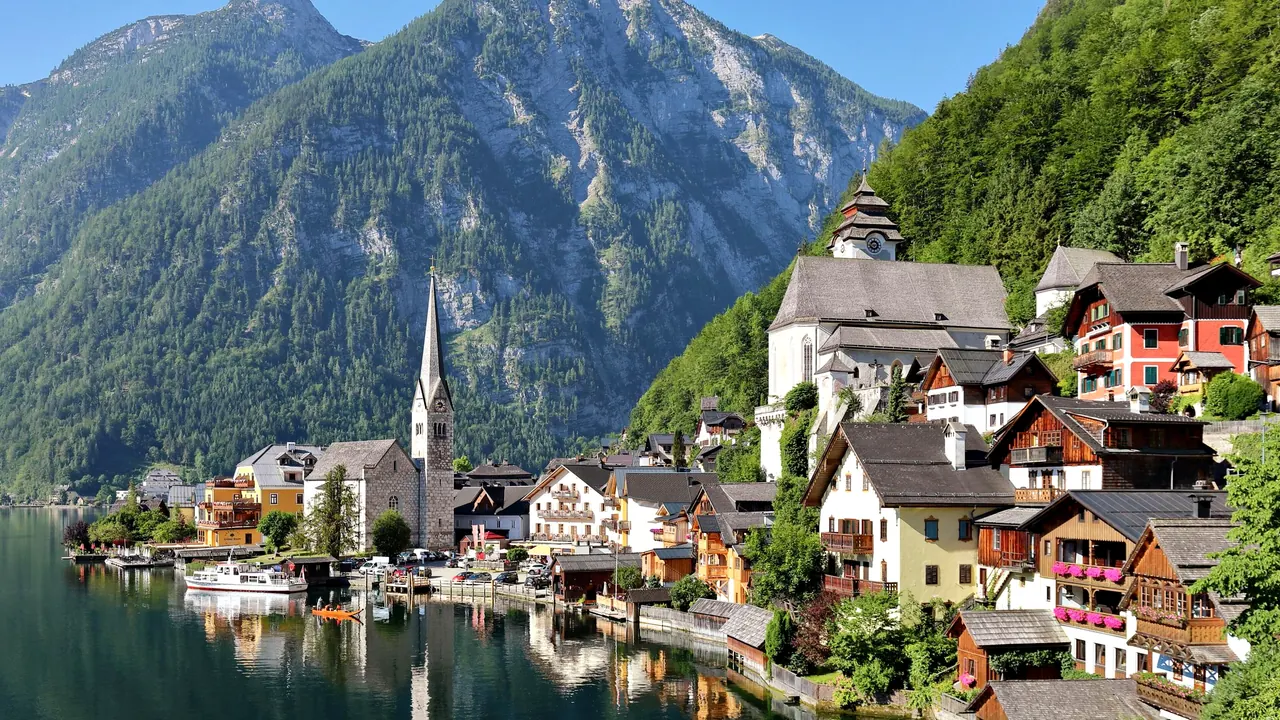
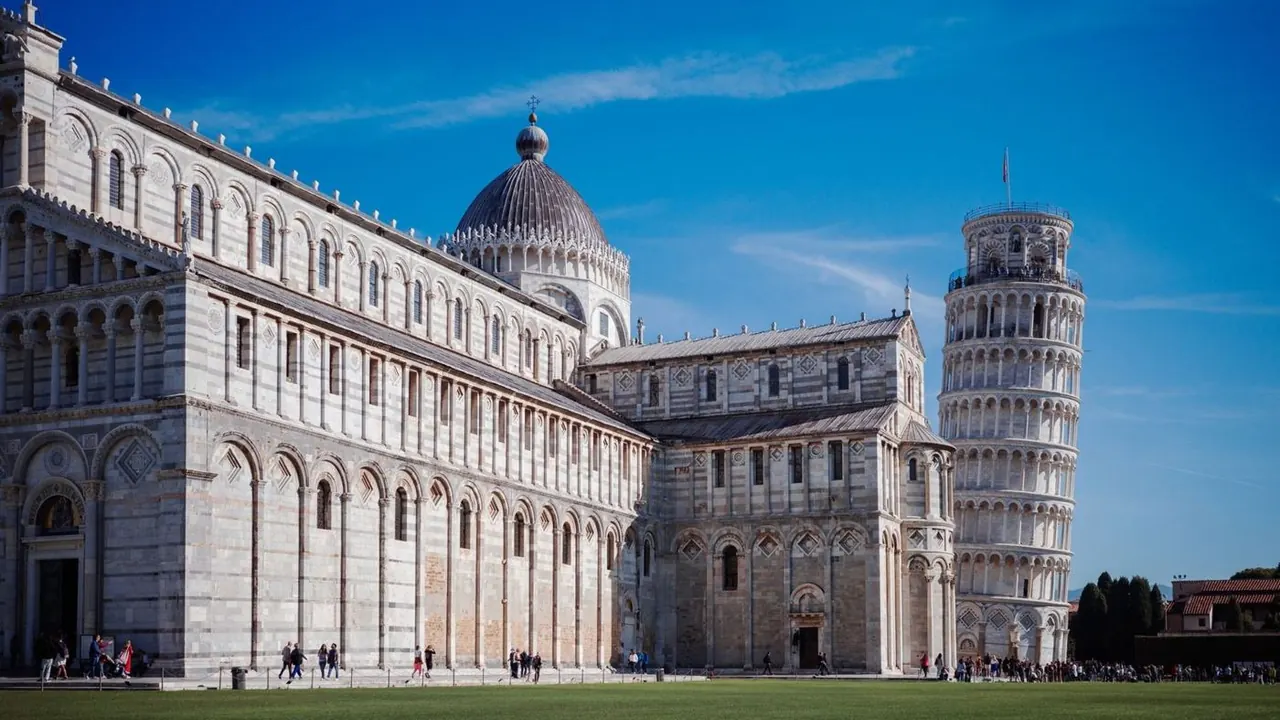
Photos: Hallstatt by C.Stadler/Bwag, CC BY-SA 4.0, cropped; Pisa by Bruno Kraler, Pexels License.
Hallstatt or Pisa?
Our verdict in twelve categories, each scored against the same fixed benchmark cities, and the climate month by month, so you can choose for your trip.
Choose Hallstatt for
- nature and the outdoors
Hallstatt is the choice for walkers and anyone who wants mountains at the door. The Dachstein plateau, the ice caves and the path to the Gosausee all start a short ride from the village, and once the day visitors leave, the evenings are quiet. It suits a short, slow stay built around the outdoors, as long as you accept simple food, high room prices and almost nothing to do after dark.
Choose Pisa for
- nightlife
- food and drink
- culture and sights
Pisa works better as a base than as a single sight. The cathedral square and the quieter city behind it fill two days. After that, the railway puts Florence, Lucca and the Cinque Terre within easy reach, and sandy beaches and a student food scene round out the stay. It is cheaper, flatter and easier without a car, but it has nothing like Hallstatt's mountain country.
Scoreboard
Twelve categories on one fixed scale from 0 to 100. The shaded stretch is the gap between the two.
Your match
Pick a travel style or drag the sliders, and both match scores follow your weighting.
Wins on nature and the outdoors with your weighting.
Wins on nightlife and food and drink with your weighting.
What matters to you?
Category by category
What the scores mean for a trip.
Beaches & swimming
Neither is a beach destination, but Pisa comes closer. Its coast at Tirrenia and Calambrone has long sandy beaches backed by pine woods, and the shallow sea is warm enough in midsummer for long, easy paddling. Viareggio is a short train ride away.
Hallstatt offers a cold, clear Alpine lake, with a jetty in the village and a lido at Obertraun. It is good for a bracing swim after a hike rather than an afternoon on the sand, and the steep shores leave little room to lie out.
Food & drink
Pisa eats noticeably better. The trattorias and wine bars around the morning market at Piazza delle Vettovaglie serve Tuscan staples such as ribollita and game. Hot cecina, the chickpea flatbread from wood ovens, is a cheap local habit worth picking up.
In Hallstatt you choose from a handful of guesthouse dining rooms serving schnitzel and dumplings, and kitchens may close early. Lake char or whitefish is the one local dish. For coffee and pastry, the imperial-era cafés of Bad Ischl make a better outing.
Culture & sights
Hallstatt's history goes back a long way but is quick to see. Seven thousand years of salt mining, the mine itself, the prehistoric finds that gave the Hallstatt culture its name and the painted skulls of the Beinhaus can all be covered in a day.
Pisa has much more to see. Beyond the marble buildings of the Piazza dei Miracoli are Vasari's palace on Piazza dei Cavalieri, the small Gothic church of Santa Maria della Spina on the Arno and the medieval painting in San Matteo. That is enough for two unhurried days.
Nightlife
Pisa has an evening life and Hallstatt essentially does not. During term, students fill the small squares around the old market late into the night, and Borgo Stretto and the riverbanks fill up for aperitivo, though there are few clubs.
An evening in Hallstatt is dinner, a glass of wine by the water and a walk along the lake in the dark. That quiet is exactly what overnight guests come for.
Nature & outdoors
Here Hallstatt is far ahead. The Dachstein massif rises straight from the lake, with the Five Fingers platform, the karst plateau, the ice caves and the Echerntal waterfalls all close by, and ski touring on the Krippenstein in winter.
Pisa's outdoors is gentler. The San Rossore park on the edge of the city has pine forest, wetland and dunes, the Monte Pisano has paths through olive terraces, and the Apuan Alps lie further out. It is good for cycling and spotting deer, but it is no match for Alpine country.
Day trips
Both make good bases, but Pisa reaches much further. From its rail hub, Lucca is under half an hour away, Florence about an hour and the Cinque Terre a little more, all without a car. Volterra and San Gimignano are within driving range.
From Hallstatt the outings are to the lake towns: the Kaiservilla in Bad Ischl, the altarpiece at St Wolfgang and the lake castle at Gmunden, with Salzburg as a long day. Buses are limited, so a car makes all of them much easier.
Good for families
Pisa is a little easier with children. The centre is flat, the lawn around the tower gives them room to run, and the shallow sandy beaches and cycling in the park fill whole days, though younger children cannot climb the tower.
Hallstatt has stronger single attractions: the slides and underground lake in the salt mine, the ice caves and the boats. But the steep, crowded lane is hard going with a pushchair, so families often stay in Obertraun and visit for a few hours.
Getting around
Both centres are walkable, but Pisa's is flat and well connected. A shuttle train runs from the airport, the station is a main rail hub for western Tuscany and buses run to the beaches, so a car is rarely needed.
Hallstatt is tiny, steep and largely closed to traffic. Getting there is harder: the station is on the far shore and you cross the lake by boat. Bus services are thin outside summer, so many visitors hire a car.
Shopping & style
Pisa has ordinary Italian shopping: chains along Corso Italia, smarter clothes, shoe shops and old pastry shops under the arcades of Borgo Stretto, and a monthly antiques market by the river. Hallstatt's lane is mostly souvenir shops, and salt from the local mine is the one thing worth taking home.
Affordability
Pisa is clearly the cheaper stay. Mid-range rooms, student trattorias and a walkable centre keep daily spending moderate. The main extras are the tower climb and beach loungers in summer.
Hallstatt has few rooms and visitors from all over the world, so prices are well above the Austrian norm, and the salt mine and cable car add up. Many visitors stay in Bad Goisern or Bad Ischl and come in for the day.
Live music & performing arts
Pisa has a real if modest programme. The horseshoe-shaped Teatro Verdi stages opera, ballet and concerts from autumn to spring, and the university runs chamber music series. Hallstatt has its brass band on feast days and the odd church concert, so music lovers staying there go to Salzburg or to Bad Ischl's summer operetta.
Wellness & relaxation
Neither town has a bathing culture of its own, so both rely on nearby springs. From Hallstatt it is Bad Ischl's salt-brine baths and thermal complex, with Bad Aussee close by. From Pisa it is the bath palace at San Giuliano Terme, whose waters were used in Roman times, and the public thermal pool at Casciana Terme.
The calm is different too. In Hallstatt it comes on misty mornings and in the empty evenings by the lake. In Pisa it comes from slow lunches and walks along the river, away from the tower.
When should you go?
Pick your month. The climate figures are measured averages, not a forecast.
Hallstatt in July
Pisa in July
Daytime high, °C
Rainfall in the month, mm
Where the figures come from
Hallstatt's temperatures are measured 56 km from the centre, at Salzburg.
Hallstatt has no rain gauge within 25 km of the centre, so its rainfall comes from a gridded climate dataset read at the city rather than from a gauge further away.
Temperature and rainfall are climate normals, averaged over the years shown. Hallstatt: 1991-2020 normals, Salzburg (55.5 km from centre). Pisa: 1991-2020 normals, Pisa / S. Giusto (3.9 km from centre).
Hallstatt's season for being outdoors runs from May to September. In July and August the days reach about 25°C, which is warm enough for hiking and a brisk swim in the lake. Those are also its wettest months, with up to 178mm of rain in July, so expect mist and showers on a summer stay. In winter, daytime highs sit only just above freezing. That suits snow on the Krippenstein better than wandering the village lane.
Pisa is warmer and drier through the summer. July and August reach around 30°C with the sea at 25°C. That is ideal for the beach but sticky for sightseeing on the plain, so May, June and September are the comfortable months for walking the city. The rain comes in autumn and peaks at about 132mm in November. Winter stays mild enough for days in churches and museums.
Which traveller are you?
On an outdoors trip, Hallstatt is the clear pick. The Krippenstein cable car, the Dachstein ice caves, hut-to-hut routes and the walk to the Gosausee give days of real mountain walking. Pisa offers gentler cycling in its park and walks on the Monte Pisano.
For a culture and arts trip, Pisa wins. The Piazza dei Miracoli, the San Matteo museum, Palazzo Blu and the opera season at the Teatro Verdi fill both days and evenings, and Florence is only an hour away by train.
On a trip on a tight budget, Pisa is far kinder. Student trattorias, mid-range rooms and a centre you can walk keep costs down. Hallstatt has few rooms and they are expensive, so thrifty visitors end up sleeping in Obertraun or Bad Ischl.
Before you go
| Measure | Hallstatt | Pisa |
|---|---|---|
| Official language | German, Austrian Sign Language | Italian |
| Currency | Euro (EUR) | Euro (EUR) |
| Sockets | CF230 V, 50 Hz | CFL230 V, 50 Hz |
| Driving side | Right | Right |
| Time zone | UTC+1, UTC+2 in summer | UTC+1, UTC+2 in summer |
| Emergency number | 112 | 112 |
| Elevation | 511 m | 4 m |
| Main airport | Salzburg Airport (SZG)55 km from centre64 non-stop destinations | Pisa International Airport (PSA)4 km from centre82 non-stop destinations |
| Public holidays this year | 16 days | 13 days |
By the numbers
| Measure | Hallstatt | Pisa |
|---|---|---|
| City population | 741 | 88,737 |
| People per km² | 12 | 479 |
| Museums within 10 km | 3 | 27 |
| UNESCO World Heritage sites within 50 km | 2 | 4 |
| Swim season, months above 21 °C | - | 4 months |
Where else could you go?
Every comparison below shares a destination with this one, so you can follow Hallstatt or Pisa somewhere new.