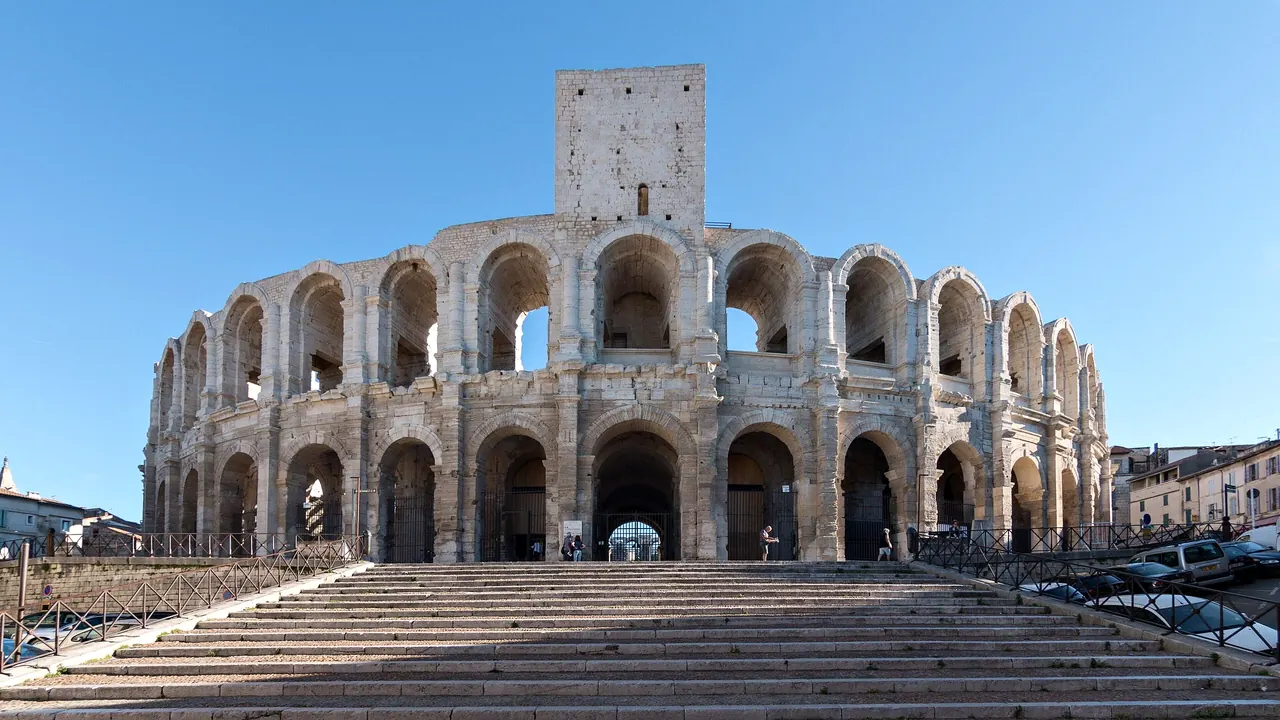
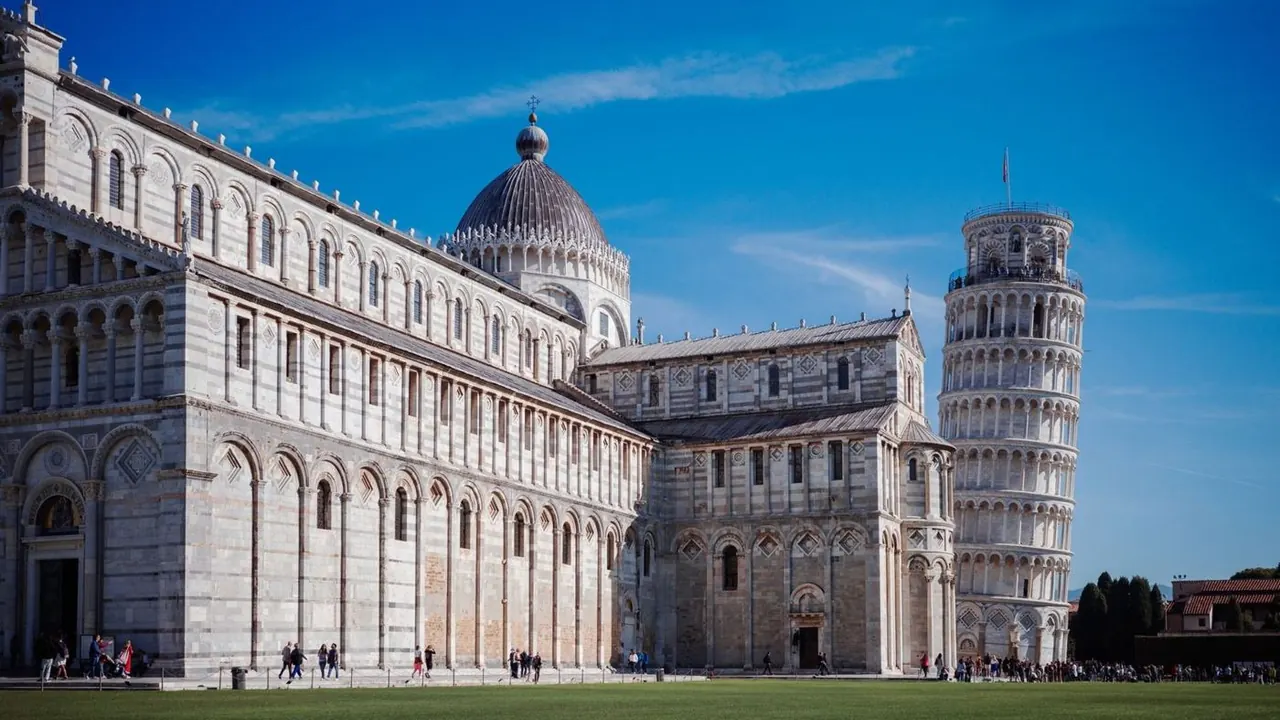
Photos: Arles by Martin Kraft, CC BY-SA 3.0, cropped; Pisa by Bruno Kraler, Pexels License.
Arles or Pisa?
Our verdict in twelve categories, each scored against the same fixed benchmark cities, and the climate month by month, so you can choose for your trip.
Choose Arles for
- nature and the outdoors
- culture and sights
Arles suits travellers who want Roman Provence and wild country in the same trip. The arena, the Alyscamps and Saint-Trophime are all a short walk apart, and the flamingo lagoons and horse ranches of the Camargue begin at the edge of town. It rewards a slow stay in spring or autumn with a hire car, long market lunches and quiet evenings.
Choose Pisa for
- getting around
- nightlife
- wellness
Pisa is the easier choice if you would rather not drive. The airport is minutes from the centre and the station puts Florence, Lucca and the Cinque Terre within an easy train ride. It also has more going on after dark thanks to its students, sandy beaches you can reach by bus, thermal baths just outside town, and lower costs overall.
Scoreboard
Twelve categories on one fixed scale from 0 to 100. The shaded stretch is the gap between the two.
Your match
Pick a travel style or drag the sliders, and both match scores follow your weighting.
Wins on nature and the outdoors and culture and sights with your weighting.
Wins on getting around and nightlife with your weighting.
What matters to you?
Category by category
What the scores mean for a trip.
Beaches & swimming
From Arles the sea is about 40km away across the Camargue. The beaches are long and wild, at Saintes-Maries-de-la-Mer and the open strands of Piémanson and Beauduc, with room to spread out but little shade or service, and the mistral and mosquitoes to contend with. You need a car, and it makes a good day out rather than a reason to come.
Pisa's coast is far closer, about 12km, and city buses run there. Tirrenia and Calambrone have wide sandy beaches backed by pines, with umbrellas and loungers to rent, and the Versilia resorts are a short train ride north. The water near the Arno mouth is not very clear, but for easy afternoon swims between sights Pisa is better placed.
Food & drink
Neither town is a serious dining destination, and both are best for simple regional cooking, though the cooking itself is very different. Arles cooks with Camargue produce: gardiane bull stew, red rice, tellines from the beaches. The Saturday market on the Boulevard des Lices is its great event, but many restaurants close in winter.
Pisa's best eating is in the student trattorias and wine bars around Piazza delle Vettovaglie, where you can have hot cecina, ribollita and game all year at fair prices. The thing to avoid there is the tourist menus near the tower.
Culture & sights
The two are well matched, and each takes about two days, but the sights are spread differently. In Arles the Roman town is scattered through the streets: the arena still in use, the theatre, the cryptoporticus galleries and the Alyscamps that Van Gogh painted, along with the Romanesque cloister of Saint-Trophime. Gehry's Luma tower and the summer photography festival add a modern side.
Pisa centres on one great composition, the cathedral, baptistery, Leaning Tower and Camposanto on their lawn. The rewards of the rest of the city are quieter: medieval painting at San Matteo, Santa Maria della Spina on the river, and Vasari's palace on Piazza dei Cavalieri.
Nightlife
Pisa has more life in the evenings, although neither has much of a club scene. During term the squares around the old market fill with students drinking outside small bars until past midnight, Borgo Stretto draws an aperitivo crowd, and in summer people head to the beach bars.
Arles usually ends the evening with a late dinner on the Place du Forum and then goes quiet. The exceptions are the Easter and September ferias, when bodegas take over the streets for a few days.
Nature & outdoors
Arles has the more striking landscape on its doorstep. The Camargue is a vast delta of lagoons, salt flats and rice fields, where flamingos feed and wading birds stop on migration, and you explore it on horseback from the ranches or by bike along the dykes. The limestone Alpilles give it hill walking as well.
Pisa has the San Rossore park, gentler pine and oak forest with fallow deer, dunes and wetland running to the sea, and the olive-terrace paths of the Monte Pisano. Its real mountains, the Apuan Alps, and the Cinque Terre cliff paths lie further off.
Day trips
Both make excellent bases, so the real question is how you will travel and which region you want to see. From Arles the trips are Roman and Provençal. Avignon and Nîmes are short train rides away, but the Pont du Gard, Les Baux and Saint-Rémy are much easier by car.
Pisa's best trips work without driving. Florence is about an hour by train and Lucca's walls under half an hour, and the Cinque Terre and Viareggio are also on the rail line. A car is only needed for the hill towns of Volterra and San Gimignano.
Good for families
Pisa is the easier choice with children. The centre is flat, the tower lawn gives them room to run about, and the sandy beaches at Tirrenia and the bike paths of San Rossore are close by. Only the tower climb is closed to younger children.
Arles has things children love, such as the arena towers, the dark cryptoporticus, Camargue pony rides and flamingos, but almost every outing needs a car. Cobbled streets are hard work with a buggy, and summer brings heat and mosquitoes.
Getting around
Pisa is much easier to get around. A shuttle train links the airport to the station, the whole centre is a flat walk, and the station is one of western Tuscany's main rail hubs, with buses out to the beaches.
The centre of Arles is just as compact, with a free shuttle and trains to Avignon, Nîmes and Marseille. Once you leave town, though, the regional buses are infrequent and the Camargue really calls for a car or a bike.
Shopping & style
Shopping is modest in both, and serious shoppers go to Aix or Marseille from one and to Florence or Lucca from the other. What sets Arles apart is its local character: printed Provençal cottons, santons, gardian shirts, Camargue salt and a strong showing of bookshops and photography books.
Pisa is more everyday Italian, with high-street chains on Corso Italia, smarter shoes and clothes under the arcades of Borgo Stretto, and a monthly antiques market by the river.
Affordability
Pisa is the cheaper stay. Its student trattorias are good value, rooms are mid-range, and you can walk or take the train almost everywhere. The main expenses are the tower climb and the beach loungers in high summer.
Arles is reasonable by Provençal standards and cheaper than the Luberon villages. But most visitors end up hiring a car, and rooms are scarce and dearer in July and during the ferias and the photography festival.
Live music & performing arts
Neither town is a strong draw for performance, and they peak in opposite seasons. Arles comes alive in summer and in the open air, with concerts in the Roman theatre and arena, the Les Suds world music festival in July, and the ferias and the bloodless course camarguaise.
Pisa's season runs from autumn to spring at the Teatro Verdi, a 19th-century horseshoe-shaped opera house with opera, ballet and symphonic concerts. Arles has nothing like it.
Wellness & relaxation
Pisa has real thermal baths close by. At San Giuliano Terme, used since Roman times, there is a spa in a grand 18th-century bath palace, and Casciana Terme adds a large public thermal pool.
Arles has no bathing tradition at all. Its calm comes from shaded squares, siestas and Camargue farmhouses run as quiet retreats with pools, which is restful but not a spa trip.
When should you go?
Pick your month. The climate figures are measured averages, not a forecast.
Arles in July
Pisa in July
Daytime high, °C
Rainfall in the month, mm
Where the figures come from
Arles's temperatures are measured 28 km from the centre, at Nimes / Courbessac.
Arles has no rain gauge within 25 km of the centre, so its rainfall comes from a gridded climate dataset read at the city rather than from a gauge further away.
Temperature and rainfall are climate normals, averaged over the years shown. Arles: 1991-2020 (sunshine 1981-2010) normals, Nimes / Courbessac (28 km from centre). Pisa: 1991-2020 normals, Pisa / S. Giusto (3.9 km from centre).
Through the year the two are close to twins for temperature. Both are mild in winter, warm by May and hot in July and August, when afternoons reach about 30°C and street sightseeing works best early or late. Late May, June and September are the most comfortable months for walking in either. For swimming, Pisa's sea is warmer, reaching about 25°C in August against 22°C off the Camargue, so its beach season runs a little longer into September.
Arles is the drier and sunnier of the two in every month, which helps most in winter and early spring. Both get wetter from September, but Pisa's autumn rain is heavier and lasts longer, peaking at around 132mm in November and staying wet through December. In Arles the wettest month is October, at about 105mm, and the rain eases sooner after that.
Which traveller are you?
For an outdoors trip, Arles is the better base. The Camargue delta has flamingos, white horses and black bulls, with dyke paths to ride or cycle around the Étang de Vaccarès, and the Alpilles add proper hiking among olives and pines.
For a short city break, Pisa wins easily. The airport shuttle train reaches the centre in minutes, everything is on foot along the flat Lungarni, and there are student bars around the old market for the evenings.
On a relaxing and wellness trip, Pisa has the edge. San Giuliano Terme, with its 18th-century bath palace under the Monte Pisano, is just outside town. Arles offers slow lunches and siestas but no thermal tradition and only a few hotel spas.
Before you go
| Measure | Arles | Pisa |
|---|---|---|
| Official language | French | Italian |
| Currency | Euro (EUR) | Euro (EUR) |
| Sockets | CE230 V, 50 Hz | CFL230 V, 50 Hz |
| Driving side | Right | Right |
| Time zone | UTC+1, UTC+2 in summer | UTC+1, UTC+2 in summer |
| Emergency number | 112 | 112 |
| Elevation | 0 m | 4 m |
| Main airport | Marseille Provence Airport (MRS)54 km from centre126 non-stop destinations | Pisa International Airport (PSA)4 km from centre82 non-stop destinations |
| Public holidays this year | 11 days | 13 days |
By the numbers
| Measure | Arles | Pisa |
|---|---|---|
| City population | 51,811 | 88,737 |
| People per km² | 68 | 479 |
| Museums within 10 km | 3 | 27 |
| UNESCO World Heritage sites within 50 km | 5 | 4 |
| Swim season, months above 21 °C | 2 months | 4 months |
Where else could you go?
Every comparison below shares a destination with this one, so you can follow Arles or Pisa somewhere new.
- Luccavs Pisa
- Avignonvs Arles
- Montpelliervs Arles
- La Speziavs Pisa
- Aix-en-Provencevs Arles
- Florencevs Pisa