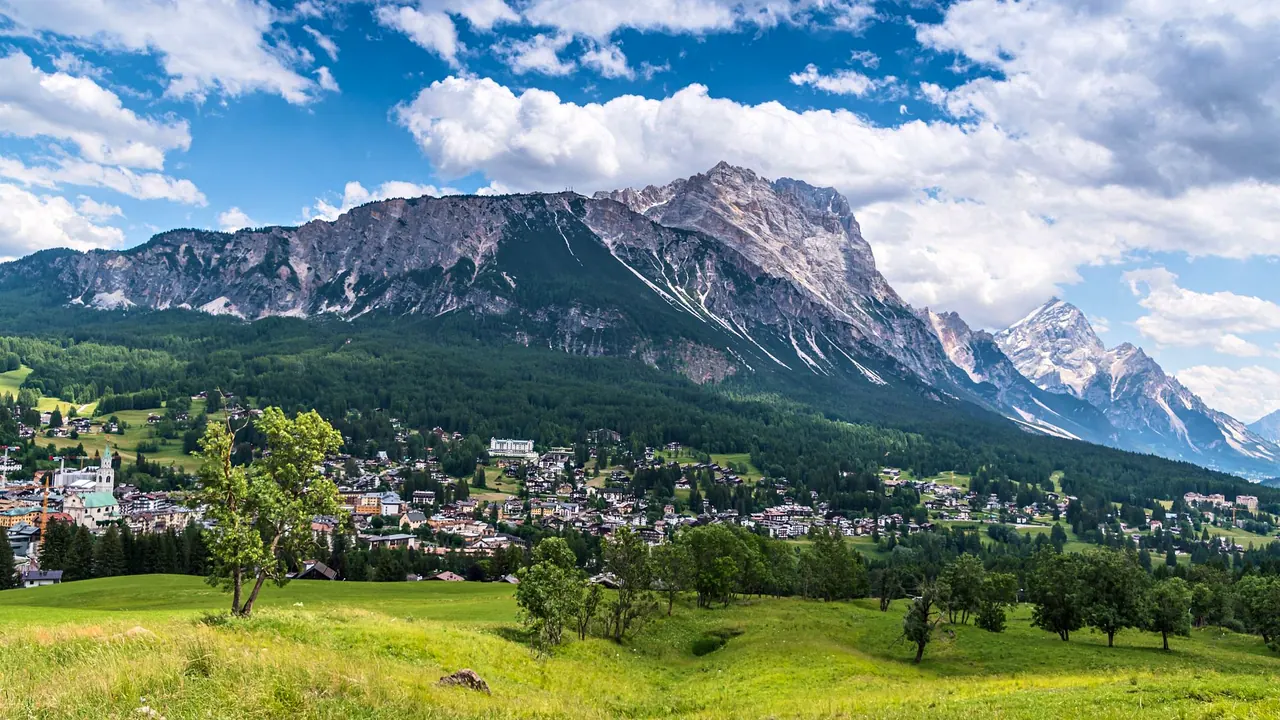
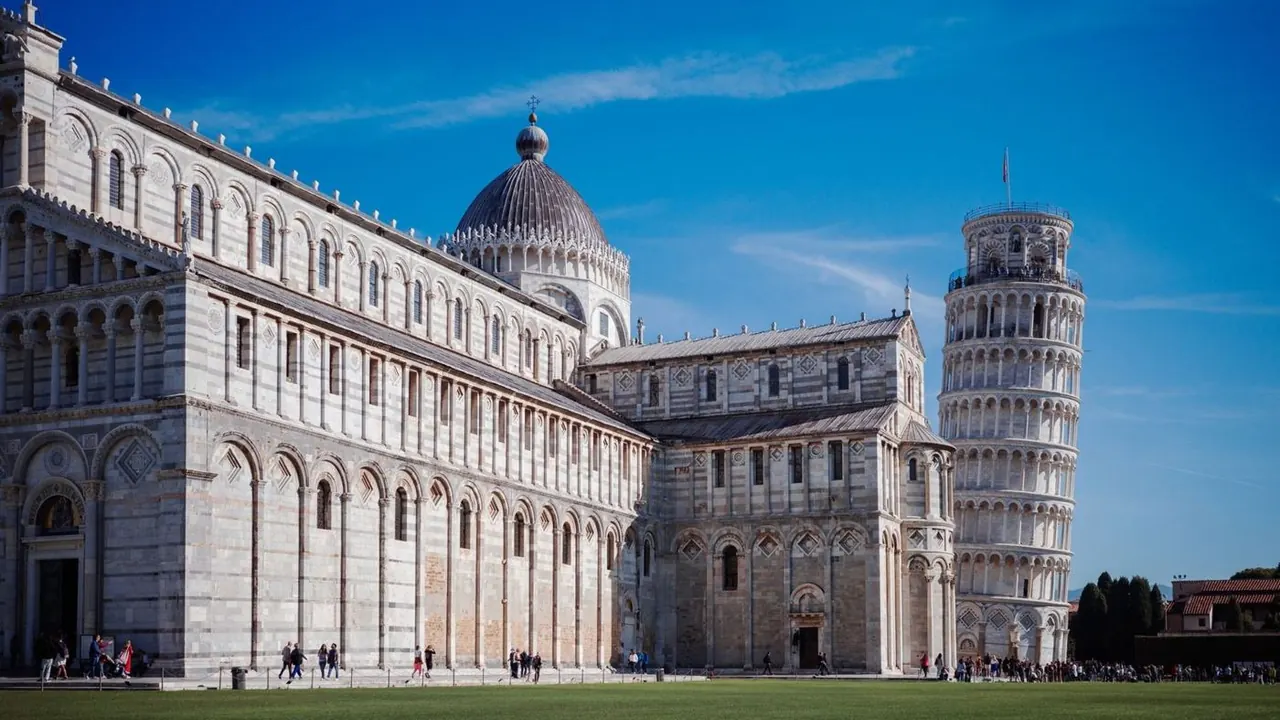
Photos: Cortina d'Ampezzo by Andreas Neubauer, Pexels License; Pisa by Bruno Kraler, Pexels License.
Cortina d'Ampezzo or Pisa?
Our verdict in twelve categories, each scored against the same fixed benchmark cities, and the climate month by month, so you can choose for your trip.
Choose Cortina d'Ampezzo for
- nature and the outdoors
- shopping
Cortina d'Ampezzo is for travellers who want the mountains to be the whole point. The pale Dolomite peaks start where the town ends, lifts rise straight from the centre, and the trip is built around skiing in winter or hut-to-hut hiking and via ferrata in summer. It suits people who are happy to pay resort prices and spend their evenings over a long dinner rather than out on the town.
Choose Pisa for
- beaches
- culture and sights
- day trips
Pisa makes more sense for anyone who wants Italian art, architecture and an easy base for Tuscany. Beyond the cathedral square there is a quiet old town to explore, and its station makes day trips to Florence, Lucca and the Cinque Terre simple without a car. Add sandy beaches a short bus ride away and much gentler prices, and it is the better choice for a varied first trip to Italy.
Scoreboard
Twelve categories on one fixed scale from 0 to 100. The shaded stretch is the gap between the two.
Your match
Pick a travel style or drag the sliders, and both match scores follow your weighting.
Wins on nature and the outdoors and shopping with your weighting.
Wins on beaches and culture and sights with your weighting.
What matters to you?
Category by category
What the scores mean for a trip.
Beaches & swimming
Only Pisa offers a real beach. Tirrenia and Calambrone have long sandy shores backed by pine woods about 12km from the centre, with shallow, warm water in high summer that suits children. Viareggio is a short train ride further.
In Cortina, swimming mostly means a hotel pool. Lakes such as Ghedina and Pianozes are beautiful to walk around but fed by snowmelt and too cold for more than a quick dip.
Food & drink
Pisa eats a little better and much more cheaply. Its strength is everyday Tuscan cooking in the trattorias and wine bars around the Piazza delle Vettovaglie market: ribollita, game, salt cod and hot cecina, priced for students, with good seafood towards the coast.
Cortina's best meals have a setting Pisa cannot match. Ampezzan dishes such as beetroot casunziei and polenta with game are served on rifugio terraces among the peaks, and the valley has some ambitious kitchens. The range is narrow and rarely cheap, though, and street food is scarce.
Culture & sights
Pisa is far ahead here. The cathedral, baptistery, Leaning Tower and Camposanto on a single lawn are among the great ensembles of Italian architecture, and the quieter city has Vasari's palace on Piazza dei Cavalieri, Santa Maria della Spina and medieval painting at San Matteo.
Cortina's centre is pleasant, with its basilica bell tower, painted houses and the 1956 Olympic ice stadium. The Rimoldi art collection is its best museum. Its most moving heritage is the First World War front on Lagazuoi and the Cinque Torri, and that is a mountain outing rather than a stroll through town.
Nightlife
Neither city is a place for big nights, but Pisa has more going on. During term, students fill the squares around the old market late into the evening, aperitivo draws people to Borgo Stretto and the river, and summer moves the crowd to the beach bars.
Cortina's evenings are après-ski and the passeggiata on the Corso Italia, followed by a long dinner. A few smart bars stay open late only in the peak winter weeks, and the town goes quiet early the rest of the year.
Nature & outdoors
Cortina is in a different league. The Ampezzo valley is ringed by the Tofane, Cristallo and Pomagagnon, the Tre Cime and Lago di Misurina are close, and the choice runs from world-class skiing to some of the oldest via ferrata routes in the Alps.
Pisa's outdoors are gentle by comparison: cycling and riding through the pine woods and dunes of San Rossore, olive-terrace paths on the Monte Pisano and birdwatching at Massaciuccoli. Proper mountain walking means a trip to the Apuan Alps or the Cinque Terre cliffs.
Day trips
Pisa is one of the best day-trip bases in Italy. Florence is an hour by train, Lucca under half an hour, and the Cinque Terre a little over an hour. Volterra, San Gimignano and Siena are within reach by car.
From Cortina, most outings head up into the peaks rather than to other towns. South Tyrol offers San Candido, Brunico and Bolzano with its Iceman, but these are charming rather than essential, and Venice means a long day on a coach.
Good for families
Both work about equally well for children, but the days look very different. Cortina suits active families, with ski schools for every age, skating at the Olympic stadium and easy summer walks to huts and meadows, though wet days drag and the bills mount.
In Pisa, the tower lawn and its famous photo, the shallow sandy beaches at Tirrenia and bike rides in San Rossore make the days. The midsummer heat and the crowds at the cathedral square are what parents have to plan around.
Getting around
Pisa is much easier. The airport is linked to the central station by a shuttle train, the flat centre is easy to walk, and the station is a rail hub for western Tuscany, so a car is rarely needed.
Cortina has had no railway since 1964. Getting there means a coach from Venice or a long drive. Its small centre is easy on foot, and ski buses work in winter, but buses to the passes run a limited service and most visitors hire a car.
Shopping & style
There is little to choose between them, but they sell very different things. Cortina's Corso Italia is short and upmarket, with luxury fashion, furriers, mountain wear and the old Cooperativa store, plus wood carving and filigree.
Pisa's shopping is everyday rather than exclusive: high-street chains on its own Corso Italia, smarter shops under the Borgo Stretto arcades, a produce market and a monthly antiques fair by the river.
Affordability
Pisa costs a great deal less. Rooms are mid-range, student trattorias feed people well for little, and walking is free. The main extra costs are the tower climb and summer beach loungers.
Cortina is among the most expensive places to stay in Italy, with luxury prices for rooms and restaurants in winter and August, plus lift passes and equipment hire. The rifugi and the shoulder months of June and late September soften the cost only a little.
Live music & performing arts
The two cities keep opposite calendars. Cortina has no theatre season, so its music arrives with the summer visitors: chamber and classical festivals in churches and halls, and the occasional concert played outdoors with the Dolomites as the backdrop. A winter ski trip finds almost nothing, apart from a concert or two around Christmas and New Year.
Pisa offers far more, and mostly in the months when Cortina is silent. From autumn to spring the Teatro Verdi, a horseshoe-shaped 19th-century house, puts on opera, ballet and symphonic concerts, and university chamber series and church recitals add to the choice. Anything on a larger scale still means the train to Florence.
Wellness & relaxation
Both are restful in their own way, though the rest takes different forms. Cortina's comes from Alpine hotel spas with saunas and hay baths, clear mountain air and afternoons on hut terraces, best in the quieter weeks.
Pisa has what Cortina lacks: thermal water. The springs at San Giuliano Terme have been used since Roman times and feed a spa in an 18th-century bath palace, and Casciana Terme has a larger public pool.
When should you go?
Pick your month. The climate figures are measured averages, not a forecast.
Cortina d'Ampezzo in July
Pisa in July
Daytime high, °C
Rainfall in the month, mm
Temperature and rainfall are climate normals, averaged over the years shown. Cortina d'Ampezzo: 1991-2020 normals, Dobbiaco (22.5 km from centre). Pisa: 1991-2020 normals, Pisa / S. Giusto (3.9 km from centre).
The two cities have opposite seasons. Cortina is a winter and high-summer resort. From December to February daytime highs hover around freezing, which is ideal for the ski season, and June to September brings mild hiking weather with highs of about 22°C. Summer is also the wettest part of the year in the valley, with around 130mm in July, so plan to start mountain days early. April, May, October and November fall between the two seasons and are best avoided.
Pisa is hot from June to August, with highs near 30°C, long sunny days and a sea of about 25°C. That is the time for the beach but hard work for sightseeing in the afternoons. Spring and early autumn are the best months for walking the city. From September the rain sets in, with October and November the wettest at up to 132mm. Winters are mild and grey but still fine for museums.
Which traveller are you?
On an outdoors trip, Cortina is the clear choice. Lifts from town reach the Tofane and Cinque Torri, the Tre Cime and Alta Via 1 are close, and winter brings the whole Dolomiti Superski area. Pisa's park and hills are pleasant but gentle by comparison.
For a culture and arts trip, Pisa wins easily. The Piazza dei Miracoli, the San Matteo museum and Piazza dei Cavalieri fill two days, the Teatro Verdi stages opera, and Florence is an hour away by train. Cortina's three small museums fill one rainy afternoon.
On a trip with a tight budget, Pisa is far kinder. Student trattorias keep meals honest, the centre is walkable, and trains make day trips cheap. Cortina charges luxury-resort prices for rooms and meals, and lift passes add more, so budget visitors often stay in other valleys.
Before you go
| Measure | Cortina d'Ampezzo | Pisa |
|---|---|---|
| Official language | Italian | Italian |
| Currency | Euro (EUR) | Euro (EUR) |
| Sockets | CFL230 V, 50 Hz | CFL230 V, 50 Hz |
| Driving side | Right | Right |
| Time zone | UTC+1, UTC+2 in summer | UTC+1, UTC+2 in summer |
| Emergency number | 112 | 112 |
| Elevation | 1,224 m | 4 m |
| Main airport | Venice Marco Polo Airport (VCE)116 km from centre103 non-stop destinations | Pisa International Airport (PSA)4 km from centre82 non-stop destinations |
| Public holidays this year | 13 days | 13 days |
By the numbers
| Measure | Cortina d'Ampezzo | Pisa |
|---|---|---|
| City population | 5,546 | 88,737 |
| People per km² | 22 | 479 |
| Museums within 10 km | 3 | 27 |
| UNESCO World Heritage sites within 50 km | 1 | 4 |
| Swim season, months above 21 °C | - | 4 months |
Where else could you go?
Every comparison below shares a destination with this one, so you can follow Cortina d'Ampezzo or Pisa somewhere new.