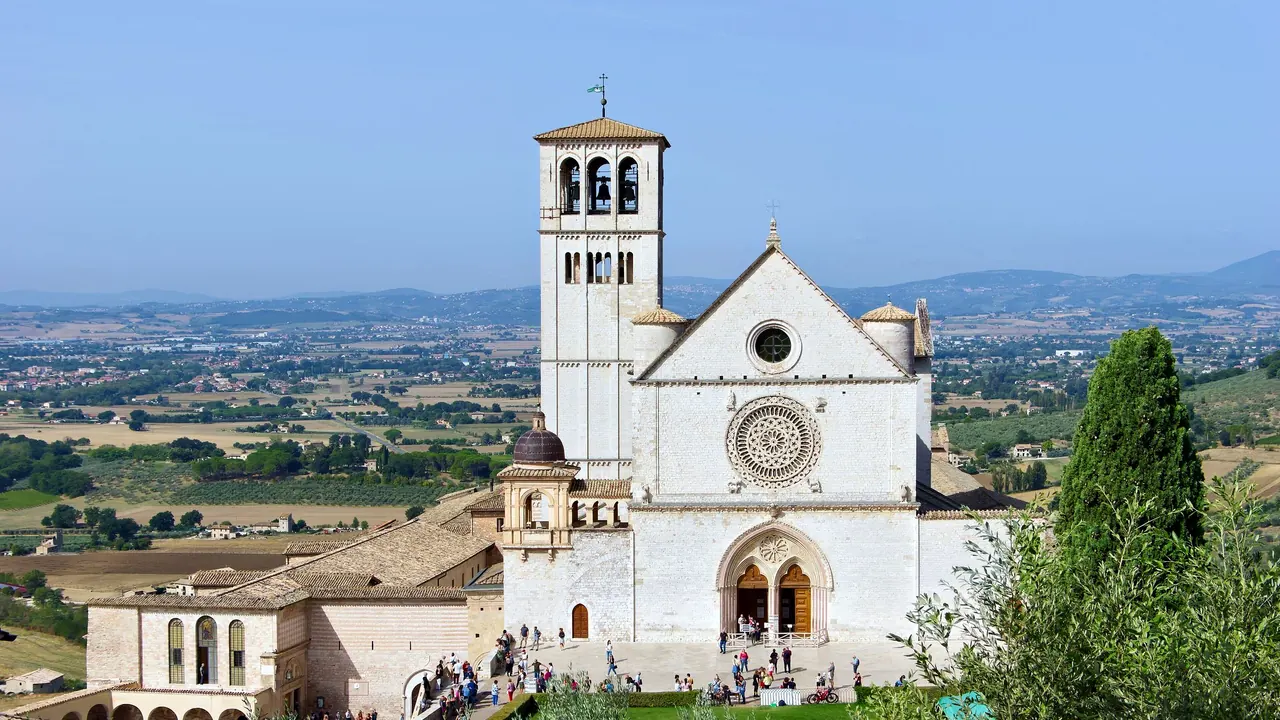
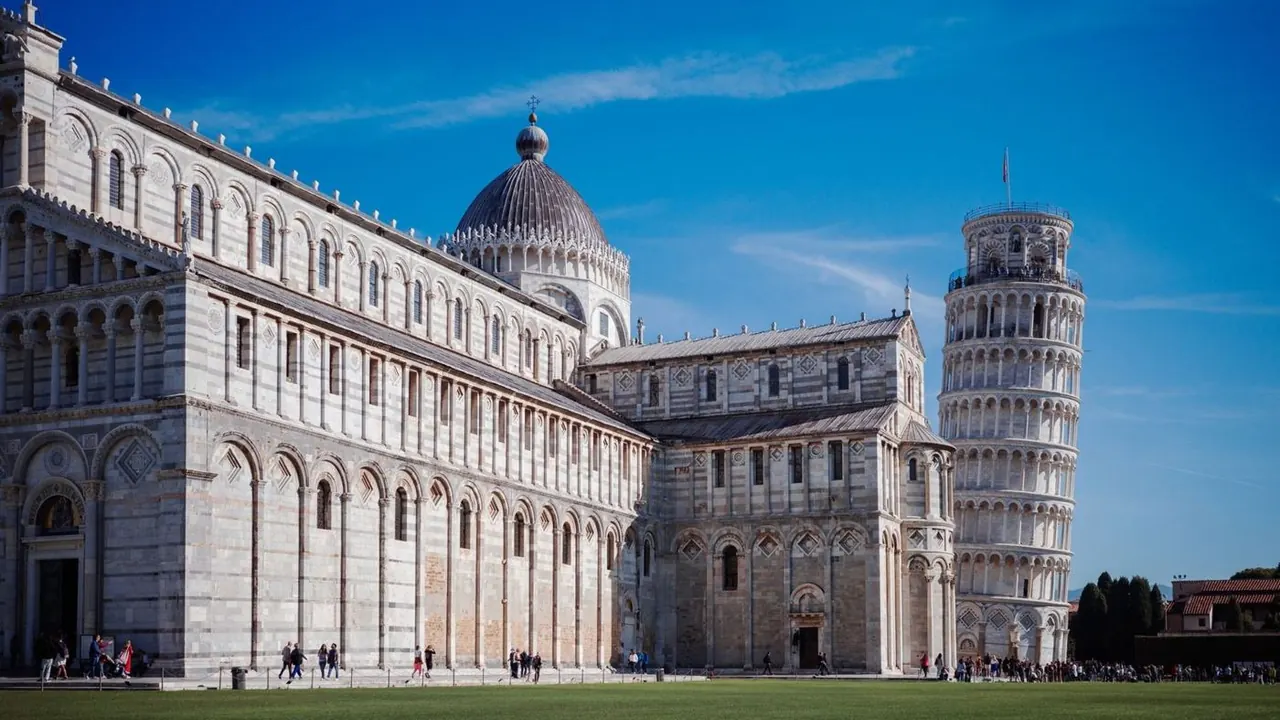
Photos: Assisi by Berthold Werner, CC BY-SA 4.0, cropped; Pisa by Bruno Kraler, Pexels License.
Assisi or Pisa?
Our verdict in twelve categories, each scored against the same fixed benchmark cities, and the climate month by month, so you can choose for your trip.
Choose Assisi for
- prices
- culture and sights
Assisi is for the traveller who comes for Saint Francis, the frescoes of the two stacked basilicas and the silence that settles on the stone lanes once the day-trippers leave. It suits a slow, contemplative stay: a morning walk up Monte Subasio to the hermitage, long Umbrian dinners, and a hired car for Spello, Montefalco, Gubbio and the other hill towns around it. Anyone wanting beaches, bars or an easy trip with small children will find little to hold them.
Choose Pisa for
- beaches
- nightlife
- families
Pisa gives a broader, easier trip. Its flat centre, an airport on the doorstep and a busy rail hub make it a car-free base for Florence, Lucca and the Cinque Terre, and in summer the sandy coast is a short bus ride away. Student squares keep the evenings going, the food is more varied, and families manage it far better. Choose it if you want a mix of famous sights, sea and everyday Tuscan life rather than one intense, quiet experience.
Scoreboard
Twelve categories on one fixed scale from 0 to 100. The shaded stretch is the gap between the two.
Your match
Pick a travel style or drag the sliders, and both match scores follow your weighting.
Wins on prices and culture and sights with your weighting.
Wins on beaches and nightlife with your weighting.
What matters to you?
Category by category
What the scores mean for a trip.
Beaches & swimming
Assisi lies in the hills of central Italy with no coast in reach for a day at the sea. The closest swimming is at Lake Trasimeno, about 45 minutes by car, where the lido beaches are shallow and only appealing in July and August, so most visitors settle for a pool at their agriturismo.
Pisa has the Tyrrhenian about 12km away. The long sandy beaches of Tirrenia and Calambrone, backed by pinewoods, have equipped beach establishments and free stretches, and Viareggio is a short train ride up the coast. The water near the Arno mouth is rarely clear, but for a summer afternoon off from sightseeing it is easily the better choice.
Food & drink
Assisi offers the rural cooking of Umbria: strangozzi with black truffle, Castelluccio lentils, torta al testo, olive oil from Monte Subasio and Sagrantino from Montefalco. The produce is excellent, but the choice is narrow, with tour-group set menus near the basilica and the better meals tucked away in side-lane trattorias or country agriturismi.
Pisa eats better day to day. Around the morning market in Piazza delle Vettovaglie, trattorias and wine bars feed students at honest prices, cecina comes hot from wood ovens, and the coast adds seafood. Neither is a gourmet destination, but Pisa has more places to try and an actual food scene in its old streets.
Culture & sights
Both towns have a monument of European rank and about two days of sightseeing, but the experience differs. In Assisi, the Basilica of San Francesco is about painting and devotion: the Giotto cycle, the frescoes by Cimabue and Lorenzetti, and a whole pink-stone town around it that shares the UNESCO listing, with Santa Chiara, the Temple of Minerva and the Rocca Maggiore close by.
Pisa's Piazza dei Miracoli is an architectural ensemble of white marble on a lawn, best seen as a whole, with the tower to climb and the Camposanto to walk. Beyond it the city has more to see in the way of museums, with San Matteo's medieval collection, the exhibitions at Palazzo Blu, Piazza dei Cavalieri and the palazzi along the Lungarni.
Nightlife
After dark Assisi is little more than a glass of Sagrantino and a stroll through floodlit lanes that are empty by eleven, and anyone wanting a bar crowd goes to Perugia.
Pisa has an actual evening life, carried by its university. During term the squares around the old market fill with students drinking outside small bars until past midnight, Borgo Stretto and the river draw the aperitivo crowd, and in summer the beach bars take over. Clubs are few, and it winds down outside term, but next to Assisi it feels lively.
Nature & outdoors
The outdoors is equally good in both, but different underfoot. In Assisi you walk straight out of town and uphill: Monte Subasio climbs through holm oaks to the Eremo delle Carceri and on to open summit meadows, and by car the Valnerina, Monte Cucco and the Sibillini offer wilder country.
Pisa's nature is flat and coastal. The San Rossore park spreads pine forest, wetland and dunes to the sea, with fallow deer, horse riding and easy cycling, and Lake Massaciuccoli suits birdwatchers. For proper climbs you head to Monte Pisano, the Apuan Alps or the Cinque Terre cliff paths.
Day trips
Both are superb bases, and Pisa edges ahead mainly through what its trains reach. Florence is about an hour away, Lucca under half an hour, and the Cinque Terre a little over an hour, all without a car, with Volterra, San Gimignano and Siena further inland.
From Assisi, Umbria's hill towns are close by: Spello, Perugia, Spoleto, Gubbio, Todi and Orvieto, plus Montepulciano and Cortona over the Tuscan border. The trains cover only the valley line, though, so this is a trip that works best with a hire car.
Good for families
Pisa is the easier place with children. The centre is flat and compact, the cathedral lawn is a natural playground, the tower photo is a guaranteed hit, and the beaches at Tirrenia and Calambrone and the bike paths of San Rossore fill whole days.
Assisi is safe and welcoming but built for adults: frescoed churches that need quiet, steep stepped streets that defeat pushchairs, and hot summer afternoons. Older children enjoy the Rocca Maggiore and the walk up Subasio, but families usually stay at an agriturismo with a pool and come up to the town in short visits.
Getting around
In Assisi, distances inside the walls are short but almost always uphill, with stairs between the Basilica of San Francesco and Piazza del Comune. The station is 4km below in Santa Maria degli Angeli, so a bus or taxi links you to the old town, and beyond the valley rail line most of Umbria needs a car.
Pisa is flat and walkable from the station to the tower in about half an hour, with buses and bikes for the rest. The airport is linked by a shuttle train, and the station is a regional rail hub, so a whole trip can be done without driving.
Shopping & style
Neither is a reason to shop, but Pisa offers more ordinary choice. Corso Italia has mid-range fashion and chains, Borgo Stretto has smarter clothes and old pastry shops under its arcades, and a monthly antiques market sets up along the river.
Assisi's streets are dominated by rosaries, Tau crosses and pilgrim souvenirs. The worthwhile buys are local: Assisi-embroidered linens, Deruta ceramics, Subasio olive oil, truffles and Sagrantino.
Affordability
Costs are much the same in both, and the savings come from different places. Assisi's basilicas are free to enter, convent guesthouses offer simple rooms cheaply and valley agriturismi are good value, although hotels inside the walls cost more around Easter and big feast days.
In Pisa, the student trattorias keep meals cheap and walking costs nothing, but the tower climb is a real expense and summer loungers on the coast charge seaside rates.
Live music & performing arts
Pisa has more to offer in the evenings. The 19th-century Teatro Verdi runs opera, symphonic concerts, ballet and drama from autumn to spring, and the university supports chamber music, though bigger productions mean Florence.
Assisi's music is mostly sacred: organ recitals and choirs in the basilicas around religious feasts, and the medieval song and processions of Calendimaggio in spring. For opera or Perugia's summer jazz festival, you leave town.
Wellness & relaxation
The two are close here, but the calm comes from different sources. Assisi offers stillness of a spiritual kind: convent retreats, silent walks to the Eremo and empty lanes at dawn, with only a few spas in valley hotels.
Pisa has actual thermal water. The 18th-century bath palace at San Giuliano Terme sits just outside the city, and Casciana Terme has a larger public pool, while easy evenings along the Arno supply the rest.
When should you go?
Pick your month. The climate figures are measured averages, not a forecast.
Assisi in July
Pisa in July
Daytime high, °C
Rainfall in the month, mm
Where the figures come from
Assisi's temperatures are measured 51 km from the centre, at Frontone.
Assisi has no rain gauge within 25 km of the centre, so its rainfall comes from a gridded climate dataset read at the city rather than from a gauge further away.
Temperature and rainfall are climate normals, averaged over the years shown. Assisi: 1991-2020 normals, Frontone (50.5 km from centre). Pisa: 1991-2020 normals, Pisa / S. Giusto (3.9 km from centre).
Assisi sits on a hillside inland, so its year runs colder at both ends: January highs of about 7°C make winter crisp and often grey, while July reaches around 30°C, hot work on stepped lanes in the afternoon. May, June and September are the comfortable months for walking the town and Monte Subasio, and the wettest stretch comes in autumn and early winter, peaking in November.
Pisa is milder in winter and has the same hot high summer, but it has the sea to take the heat off. The water warms to about 25°C in August, so July and August are the beach months, and they are also the sunniest. Autumn is the catch: from September the rain arrives heavily, with November seeing about 132mm, more than Assisi in any month. For sightseeing, late spring and early autumn suit both cities, while Pisa is the better winter choice.
Which traveller are you?
On a beach and sun trip, Pisa is the only real option. The sandy beaches of Tirrenia and Calambrone are a short ride from the centre, the sea is warm in high summer, and Viareggio is close by train, whereas Assisi means a drive to Lake Trasimeno.
On a family trip with children, Pisa is far easier. Its streets are flat, the lawn around the tower gives children room to run, and there are shallow beaches and bike rides in San Rossore. Assisi's steep steps and hushed churches test young legs and patience.
For a pilgrimage or spiritual retreat, Assisi has no rival here. Pilgrims come for the tomb of Saint Francis, the Porziuncola chapel and the Eremo delle Carceri, and they can stay in convent guesthouses. Pisa's cathedral is magnificent, but nobody goes there on pilgrimage.
Before you go
| Measure | Assisi | Pisa |
|---|---|---|
| Official language | Italian | Italian |
| Currency | Euro (EUR) | Euro (EUR) |
| Sockets | CFL230 V, 50 Hz | CFL230 V, 50 Hz |
| Driving side | Right | Right |
| Time zone | UTC+1, UTC+2 in summer | UTC+1, UTC+2 in summer |
| Emergency number | 112 | 112 |
| Elevation | 424 m | 4 m |
| Main airport | Perugia San Francesco d'Assisi – Umbria International Airport (PEG)9 km from centre17 non-stop destinations | Pisa International Airport (PSA)4 km from centre82 non-stop destinations |
| Public holidays this year | 13 days | 13 days |
By the numbers
| Measure | Assisi | Pisa |
|---|---|---|
| City population | 27,605 | 88,737 |
| People per km² | 147 | 479 |
| Museums within 10 km | 14 | 27 |
| UNESCO World Heritage sites within 50 km | 2 | 4 |
| Swim season, months above 21 °C | - | 4 months |
Where else could you go?
Every comparison below shares a destination with this one, so you can follow Assisi or Pisa somewhere new.