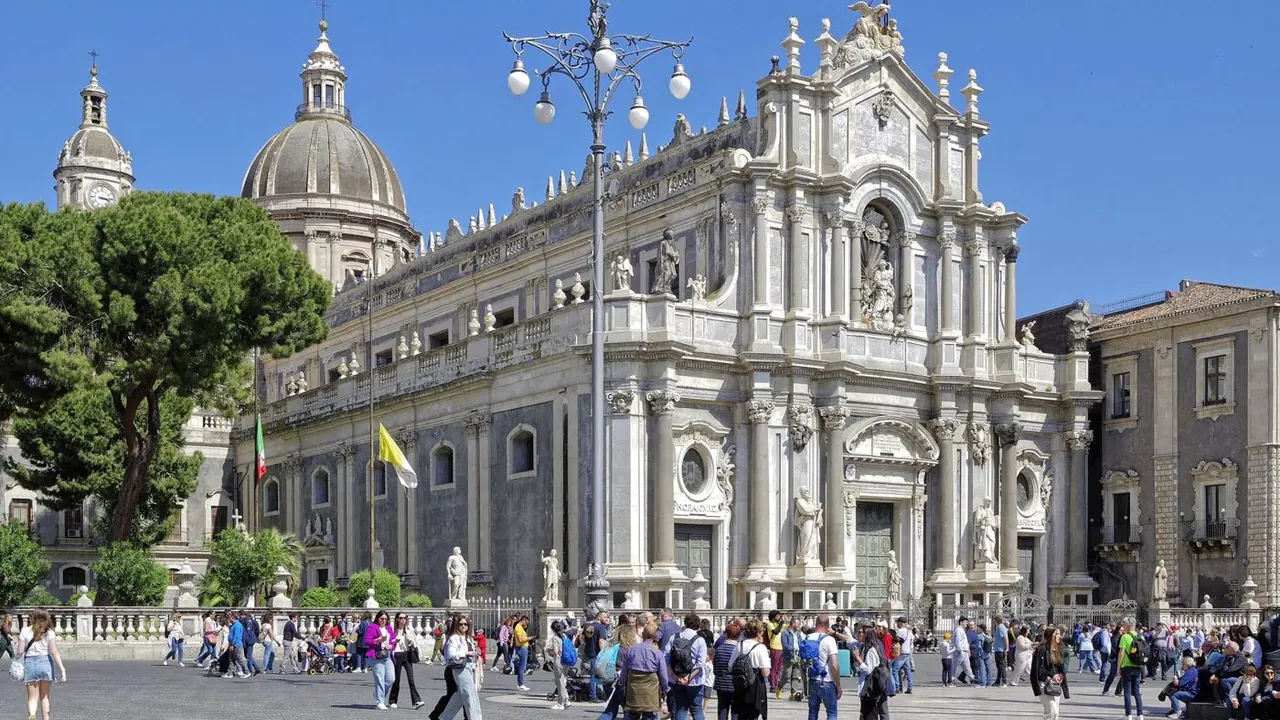
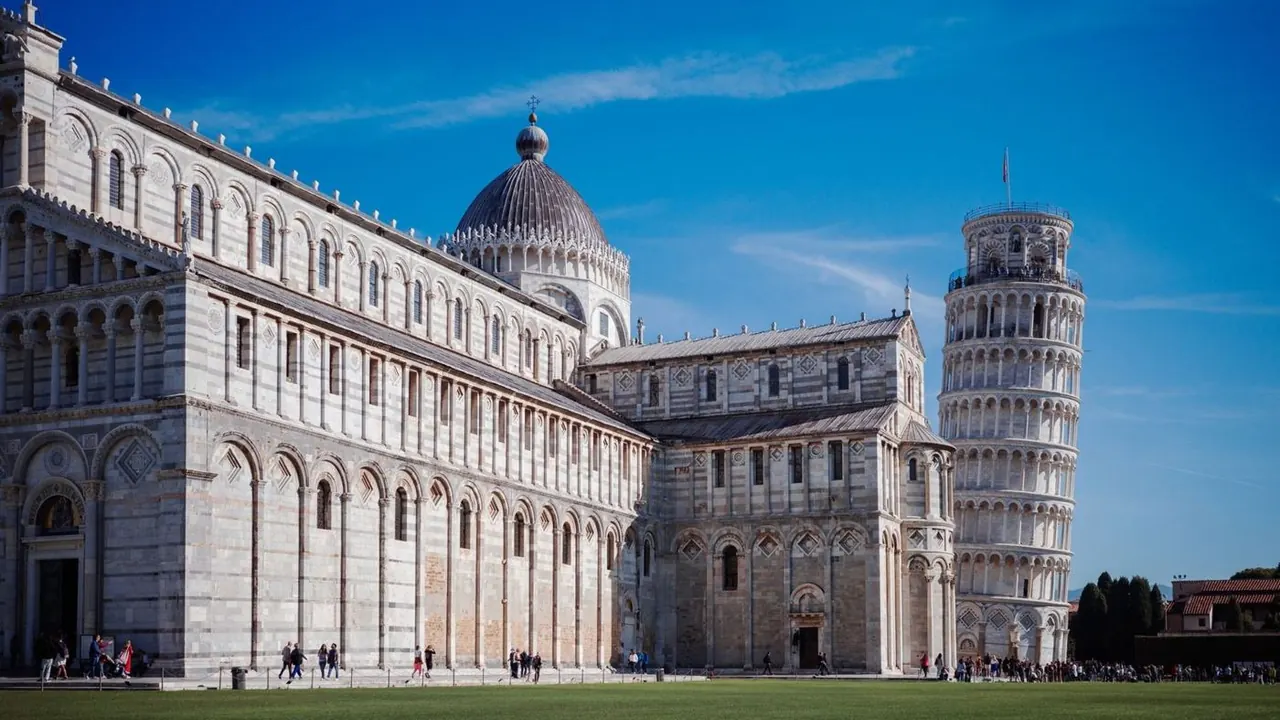
Photos: Catania by Berthold Werner, CC BY-SA 4.0, cropped; Pisa by Bruno Kraler, Pexels License.
Catania or Pisa?
Our verdict in twelve categories, each scored against the same fixed benchmark cities, and the climate month by month, so you can choose for your trip.
Choose Catania for
- food and drink
- nature and the outdoors
- nightlife
Catania suits travellers who want heat, a volcano and some of the best street food in Italy. Etna is under an hour away, the lava coast gives clear-water swimming, evenings run later and louder, and the sea stays warm well into autumn. In return you put up with a noisy city full of traffic, and you will probably need a hire car.
Choose Pisa for
- getting around
- wellness
- day trips
Pisa is the better pick if you want a compact, easy base for seeing a lot of Tuscany without driving. The cathedral square is one of Italy's great set pieces, the flat centre is walkable and the airport is a short shuttle ride away. Florence, Lucca and the Cinque Terre are all within a train ride. It is quieter at night and plainer at the table, which suits a calmer trip.
Scoreboard
Twelve categories on one fixed scale from 0 to 100. The shaded stretch is the gap between the two.
Your match
Pick a travel style or drag the sliders, and both match scores follow your weighting.
Wins on food and drink and nature and the outdoors with your weighting.
Wins on getting around and wellness with your weighting.
What matters to you?
Category by category
What the scores mean for a trip.
Beaches & swimming
Catania has two kinds of sea. La Playa is a long stretch of sand with beach clubs for an easy day, and on the Riviera dei Ciclopi at Aci Castello and Aci Trezza you swim off black lava platforms into much clearer water. Swimming is comfortable from June into October, and Taormina's Isola Bella is within reach if you want prettier coves.
In Pisa the coast is a sideline to the sightseeing. Tirrenia and Calambrone have wide sandy beaches backed by pine woods, with shallow water good for paddling. But near the mouth of the Arno the water is rarely clear, and most visitors spend a summer afternoon there rather than plan their stay around it.
Food & drink
Food is a real reason to choose Catania. Street food is the heart of it: ragù-filled arancini, fried crispelle, scacciata, granita with brioche for breakfast and horse meat grilled on Via Plebiscito. La Pescheria behind the cathedral supplies the trattorias around it, and Etna's volcanic wines add serious drinking to casual meals.
Pisa eats honestly but in a narrower range: Tuscan soups, game, salt cod and hot cecina, at their best in the student trattorias around Piazza delle Vettovaglie. Neither city is much for fine dining, but Catania gives a curious eater far more to try.
Culture & sights
Pisa has the stronger single draw. The Piazza dei Miracoli puts the cathedral, baptistery, Leaning Tower and Camposanto together on one lawn. Beyond it are Piazza dei Cavalieri, the little Gothic church of Santa Maria della Spina on the Arno and the medieval painting and sculpture in the San Matteo museum.
Catania's appeal is a whole townscape rather than one set piece. Its UNESCO-listed late baroque is built in black lava and pale limestone, with Via dei Crociferi, the vast San Nicolò l'Arena monastery and Roman ruins appearing between the streets. Its museums are modest. Both cities take two or three days to see.
Nightlife
Catania goes out much later. Its large university fills the lanes around Piazza Bellini and the Teatro Massimo with people drinking outside until well past midnight, and in summer the beach clubs at La Playa become open-air dance floors.
Pisa has a student evening too, but it is smaller and ends earlier: aperitivo on Borgo Stretto and the riverbanks, wine in the squares by the old market, and very little after that, especially outside term time. Neither city has a serious club scene.
Nature & outdoors
Etna gives Catania much the better outdoors. The volcano is under an hour away, with a cable car from Rifugio Sapienza towards the summit craters, trails over lava flows and through birch woods, and small ski slopes in winter. There is also the Alcantara Gorge to wade through, and snorkelling or kayaking around the sea stacks.
Pisa's nature is gentler and suits a bike. The pine forest, dunes and wetland of San Rossore park begin at the edge of the city, and Monte Pisano has paths through olive terraces. For proper hiking, the Apuan Alps and the Cinque Terre are further out.
Day trips
Both are fine bases, but Pisa's day trips are easier and more varied. Florence is about an hour away by train and Lucca under half an hour. The Cinque Terre, Viareggio and the marble towns lie along the coast railway, and with a car you can reach Volterra, San Gimignano and Siena.
Catania's reach is still impressive. Siracusa's Ortigia and Taormina's theatre are each about an hour away, Noto, Modica and Ragusa Ibla lie further out, and the Roman mosaics of Piazza Armerina are inland. The difference is that the baroque circuit really needs a car.
Good for families
Neither city is built around children, and the two come out about even. Catania's strengths are its outings: Etna's old craters for older children and Etnaland on a hot day. The city itself is hard going, with heavy traffic, narrow pavements and little shade.
Pisa is easier for pushing a buggy: it is small and flat, and the lawn by the tower is a good place to run about, though younger children are not allowed to climb the tower. Both cities rely on gently shelving sandy beaches, La Playa in Catania and Tirrenia or Calambrone in Pisa.
Getting around
Pisa is far simpler to get around. The whole centre is flat and walkable, a shuttle train links the airport to the central station, and from that station much of western Tuscany is within reach without a car.
Catania's old centre is compact enough on foot, but once you leave Via Etnea it gets harder. There is a single metro line, buses are slow in heavy traffic and drivers do not always stop for pedestrians. Many visitors hire a car for Etna and the baroque towns, and then struggle to park.
Shopping & style
Neither city is a shopping destination, but they differ in what is worth taking home. Catania's best buys are edible: Bronte pistachio cream, almond pastries and Etna wine, plus painted Caltagirone ceramics. Its noisy markets, La Fiera and La Pescheria, are worth a visit for the spectacle alone.
Pisa is more for browsing on a walk, with chains on Corso Italia, smarter shoes and old pastry shops under the arcades of Borgo Stretto, and a monthly antiques market by the river. For serious fashion, people go to Florence or Lucca.
Affordability
The two cost much the same. Catania is a little cheaper day to day, because street food makes a full meal and buses and the metro are inexpensive. The extra costs come from outings: guided trips to Etna's summit, a hire car and sunbeds in summer.
In Pisa, the student trattorias and a walkable centre keep spending down, and the train to Florence or Lucca saves hiring a car. The main expenses are the climb up the tower and the cafés right beside the cathedral square.
Live music & performing arts
Catania has more for an evening out. It is Bellini's birthplace, and the Teatro Massimo Bellini runs a full opera and symphonic season that visitors can attend. The Bellini museum keeps his manuscripts, and small companies still perform the opera dei pupi, the Sicilian marionette theatre. In summer, concerts move out into courtyards and ancient theatres.
Pisa's Teatro Verdi is a pleasant historic house with opera, ballet and concerts from autumn to spring. Beyond it, there are only chamber concerts and church recitals.
Wellness & relaxation
Pisa is the calmer choice. Away from the cathedral square it is small and quiet, and just outside the city San Giuliano Terme has a spa in its 18th-century bath palace below Monte Pisano, fed by thermal waters used since Roman times. Casciana Terme, further inland, has a larger public thermal pool.
Catania is loud and full of traffic, with no tradition of thermal bathing, and its spas are mostly in hotels on the coast or on Etna's slopes. Rest there comes from the rhythm of the day, with long lunches and the evening passeggiata, or from staying in a quieter village on the volcano.
When should you go?
Pick your month. The climate figures are measured averages, not a forecast.
Catania in July
Pisa in July
Daytime high, °C
Rainfall in the month, mm
Where the figures come from
Catania's sunshine is measured 88 km from the centre, at Messina.
Temperature and rainfall are climate normals, averaged over the years shown. Catania: 1991-2020 normals, Catania / Fontanarossa (5.2 km from centre). Pisa: 1991-2020 normals, Pisa / S. Giusto (3.9 km from centre).
Catania's summer is long, dry and very hot. There is almost no rain from May to August, and highs reach 32°C in August, which makes midday sightseeing hard work. The sea is warm from June to October and reaches about 26°C at its peak. April, May and October are the best months for walking the streets: warm and sunny, but not fierce. Winters are mild, and November and December bring the most rain.
Pisa is several degrees cooler all year and peaks around 30°C in July and August, when the sea is warm enough for an afternoon at Tirrenia. Its spring is wetter than Catania's, and autumn is the real rainy season, with October and November each bringing over 120mm. Late May, June and early September are Pisa's best months. For a trip in late autumn or winter, Catania is warmer, sunnier and drier.
Which traveller are you?
For a food and nightlife trip, Catania is the clear choice. Arancini, granita, the fish market and Etna wines give far more to explore than Pisa's simple Tuscan cooking, and students keep the old-centre lanes full long after Pisa has gone quiet.
On an outdoors trip, Catania wins too. Within an hour you can reach Etna for crater walks, a cable car and winter skiing, and there is also wading in the Alcantara Gorge and snorkelling off the lava coast. Pisa's San Rossore park and Monte Pisano are lovely, but much gentler.
For a short city break, Pisa works better. The airport is minutes from the centre by shuttle train, the flat streets are easy to walk, and two unhurried days cover the Piazza dei Miracoli and the old town. Lucca is a half-hour hop away.
Before you go
| Measure | Catania | Pisa |
|---|---|---|
| Official language | Italian | Italian |
| Currency | Euro (EUR) | Euro (EUR) |
| Sockets | CFL230 V, 50 Hz | CFL230 V, 50 Hz |
| Driving side | Right | Right |
| Time zone | UTC+1, UTC+2 in summer | UTC+1, UTC+2 in summer |
| Emergency number | 112 | 112 |
| Elevation | 7 m | 4 m |
| Main airport | Catania-Fontanarossa Airport (CTA)4 km from centre96 non-stop destinations | Pisa International Airport (PSA)4 km from centre82 non-stop destinations |
| Public holidays this year | 13 days | 13 days |
By the numbers
| Measure | Catania | Pisa |
|---|---|---|
| City population | 311,584 | 88,737 |
| People per km² | 1,704 | 479 |
| Museums within 10 km | 25 | 27 |
| UNESCO World Heritage sites within 50 km | 3 | 3 |
| Swim season, months above 21 °C | 5 months | 4 months |
Where else could you go?
Every comparison below shares a destination with this one, so you can follow Catania or Pisa somewhere new.