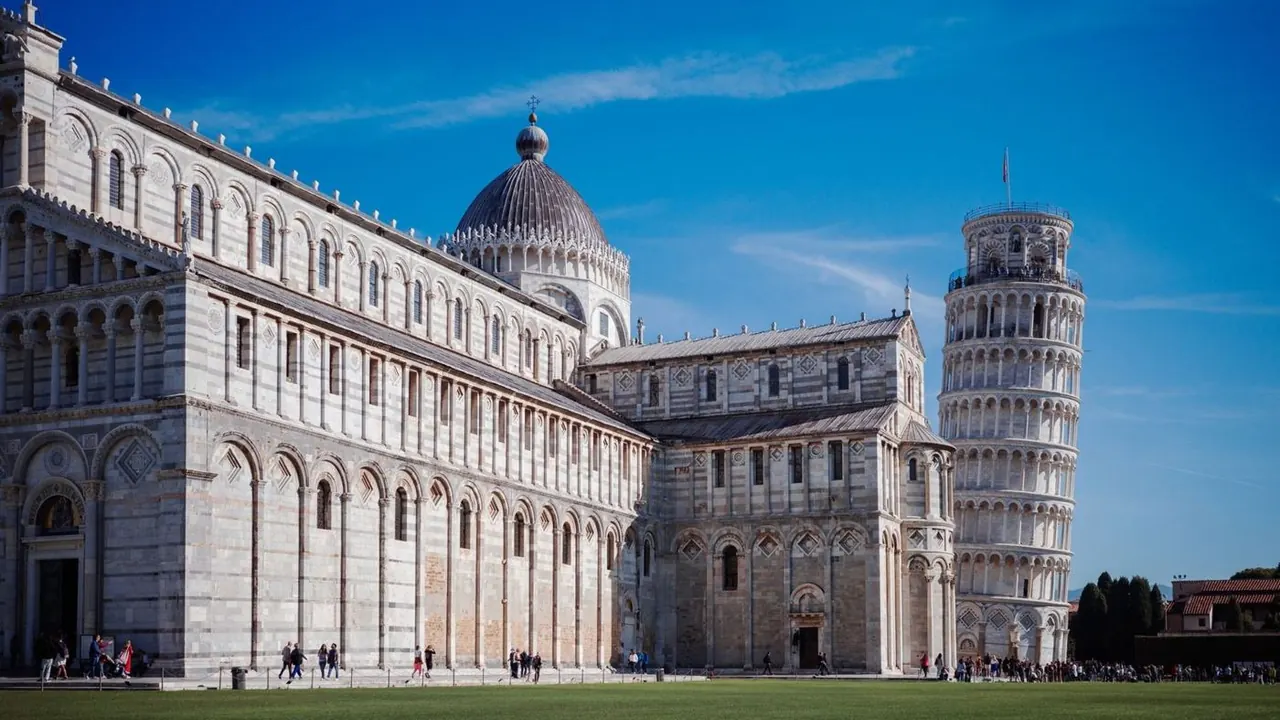
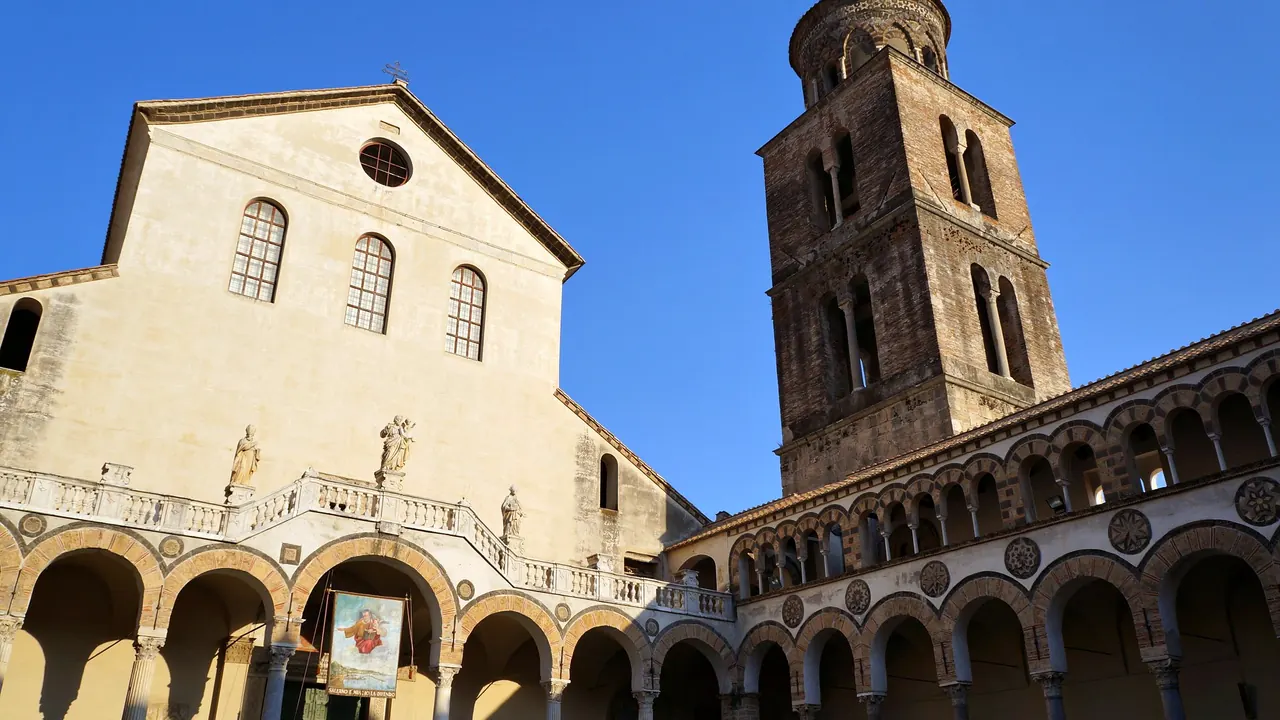
Photos: Pisa by Bruno Kraler, Pexels License; Salerno by Leandro Neumann Ciuffo, CC BY 2.0, cropped.
Pisa or Salerno?
Our verdict in twelve categories, each scored against the same fixed benchmark cities, and the climate month by month, so you can choose for your trip.
Choose Pisa for
- culture and sights
- getting around
- wellness
Pisa suits a traveller who wants great architecture and a calm, walkable base with trains in every direction. The cathedral square and the quieter city beyond it fill two unhurried days. The airport is minutes from the centre, and Florence, Lucca and the Cinque Terre are all easy days out without a car. Thermal baths at the foot of the Monte Pisano add a gentle option.
Choose Salerno for
- nature and the outdoors
- food and drink
- shopping
If your trip is about the coast and the cooking of the south, choose Salerno. It puts the Amalfi cliffs, the mule tracks of the Lattari mountains and the long beaches towards Paestum within reach, along with Pompeii and the Greek temples. The everyday food is better too, from buffalo mozzarella made that morning to Cetara's anchovy sauce. The city has fewer sights of its own, so expect to spend most days out of town.
Scoreboard
Twelve categories on one fixed scale from 0 to 100. The shaded stretch is the gap between the two.
Your match
Pick a travel style or drag the sliders, and both match scores follow your weighting.
Too close to call, level with your weighting
Wins on culture and sights and getting around with your weighting.
Wins on nature and the outdoors and food and drink with your weighting.
What matters to you?
Category by category
What the scores mean for a trip.
Beaches & swimming
Salerno has the better beaches, mainly because of what lies around it. Its own grey-sand city beaches are fine for a quick dip but murky near the port. Ferries reach the clear water and pebbly coves of Vietri, Cetara and the Amalfi Coast, and the coast south towards Paestum has kilometres of sand backed by pine woods for a full day by the sea.
From Pisa the sea is about 12km away. Tirrenia and Calambrone have wide, shallow sandy beaches under the pines, and the water near the Arno mouth is rarely clear. It works well as a summer afternoon off from sightseeing rather than a reason to come.
Food & drink
Salerno eats better. Campanian cooking brings fried seafood, pasta with clams, wood-fired pizza and buffalo mozzarella eaten fresh from the plain towards Paestum, along with colatura from Cetara and lemon pastries in the old-town shops.
Pisa's table is plainer Tuscan fare: ribollita, game, salt cod and hot cecina from wood ovens. The best of it is in the student trattorias around Piazza delle Vettovaglie, but the range is narrow and the menus near the tower are best avoided.
Culture & sights
Pisa is well ahead. The cathedral, baptistery, tower and Camposanto make one of Italy's great architectural set pieces, and the city beyond them adds Vasari's palace on Piazza dei Cavalieri, the Gothic jewel of Santa Maria della Spina and the medieval collections of San Matteo.
Salerno's heritage is medieval and on a smaller scale. It has a Norman cathedral with the relics of Saint Matthew, the medicinal garden linked to Europe's first medical school and the Arechi Castle above the gulf. The region's great ancient sites are all outside the city.
Nightlife
Neither city is a place for clubbing, and evenings in both mean drinks outside small bars in old-town squares. Pisa's rhythm follows the university: busy during term, quiet out of it, with the crowd moving to beach bars in summer. Salerno's lanes around Largo Campo fill at weekends and all summer, the seafront passeggiata adds a slow evening walk, and Naples is close for a bigger night.
Nature & outdoors
Pisa's outdoors are gentle and close by. The San Rossore park begins at the city's edge, with pine forest, wetland and undeveloped dunes, fallow deer, flat roads for cycling and Lake Massaciuccoli for birdwatching. East of the city, the low Monte Pisano has easy walks on olive-terrace paths above Calci and Vicopisano. Real mountain hiking is a separate, longer outing to the marble peaks of the Apuan Alps.
Salerno has the more dramatic landscape, and much more of it is right on the doorstep. It sits where the Amalfi Coast begins, with limestone cliffs dropping into the sea, terraced lemon groves and old mule tracks crossing the Lattari mountains. The Cilento's wooded hills, river gorges and wild headlands around Palinuro lie to the south, and boat trips along the coast make the sea part of an outdoor day as well.
Day trips
Both are superb bases, and the difference is in what you see. Pisa opens up Renaissance and medieval Tuscany: Florence in an hour, walled Lucca in half that, hill towns such as Volterra and San Gimignano, plus the Cinque Terre to the north.
From Salerno the days out are ancient and coastal: the temples of Paestum and the ruins of Pompeii each about half an hour away, Herculaneum, ferries to Amalfi and Positano, and Naples a short fast-train ride away.
Good for families
The two are about equal for children, for different reasons. Pisa is flat and compact, and the tower lawn gives children room to run and the famous photo, though only older children can climb. Salerno has a long car-free promenade with playgrounds, shallow sandy beaches to the south and the Luci d'Artista lights in winter. Its stepped old town and winding coast roads are harder with small children.
Getting around
Pisa is the simpler city to move around. It is small and flat, the airport is linked to the station by a shuttle train, and its role as a rail hub for western Tuscany means most day trips need no car.
Salerno's centre is a walkable strip along the sea, but the castle needs a bus. In summer the Amalfi Coast is best reached by ferry, as the coastal buses are slow and packed and parking is scarce.
Shopping & style
Salerno has the more interesting things to bring home: hand-painted majolica from Vietri, limoncello and lemon products from the coast, and colatura from Cetara, alongside the chains on Corso Vittorio Emanuele.
Pisa offers mid-range fashion on Corso Italia, smarter shoe shops under the arcades of Borgo Stretto and a monthly antiques market by the river. For serious fashion, visitors head to Florence.
Affordability
Costs are similar, but they rise in different places. Salerno charges local southern prices and is far cheaper to sleep in than the cliff villages nearby, though ferries, lido sunbeds and the entry fees at the archaeological sites add up over a summer stay. Pisa's rooms are mid-range and its student trattorias are good value. The expensive parts are the tower climb and the cafés next to the monuments.
Live music & performing arts
By coincidence, both cities' main stage is a nineteenth-century Teatro Verdi, each running a season of opera, concerts and ballet. Pisa's horseshoe house also stages Italian drama, and the university adds chamber music. Salerno's gilded theatre is modelled on the San Carlo, and in summer the Ravello Festival's cliff-top concerts are within reach. For bigger productions, you would go to Florence from Pisa and to Naples from Salerno.
Wellness & relaxation
Pisa is the more restful choice. San Giuliano Terme, just outside the city, has used its thermal waters since Roman times and has a spa in its grand 18th-century bath palace. The city itself is quiet away from the cathedral square.
Salerno's nearest springs are at Contursi Terme, about an hour inland, and its main roads carry port traffic and noise. What it offers instead is the slow sunset walk along its palm-lined seafront.
When should you go?
Pick your month. The climate figures are measured averages, not a forecast.
Pisa in July
Salerno in July
Daytime high, °C
Rainfall in the month, mm
Where the figures come from
Salerno's temperatures are measured 71 km from the centre, at Grazzanise.
Salerno has no rain gauge within 25 km of the centre, so its rainfall comes from a gridded climate dataset read at the city rather than from a gauge further away.
Temperature and rainfall are climate normals, averaged over the years shown. Pisa: 1991-2020 normals, Pisa / S. Giusto (3.9 km from centre). Salerno: 1991-2020 normals, Grazzanise (71.3 km from centre).
The two cities follow the same Mediterranean year, with Salerno a degree or two warmer. In both, the beach season runs from June to September. The sea peaks at about 25°C off Pisa and 26°C off Salerno in August, and Salerno's water stays pleasant for swimming into October. In July and August daytime highs reach about 30°C, which makes midday walking hard work in both places, and the humid plain around Pisa feels it most. April, May and early June are the comfortable months for sightseeing on foot.
The rain comes at different times. Pisa turns wet from September and is wettest in October and November. Salerno stays drier into early autumn and keeps more sunshine through autumn and winter, but its winter is the wetter of the two, with about 154mm in November and heavy rain through January. Pisa's winter days are a little cooler, with highs around 11°C in January.
Which traveller are you?
For a culture and arts trip, Pisa is the better choice. The Piazza dei Miracoli is one of Italy's great sights, the city beyond it has San Matteo's medieval painting and Santa Maria della Spina, and Florence's museums are only an hour away by train.
On an outdoors trip, choose Salerno. The Path of the Gods and the Valle delle Ferriere sit above the Amalfi Coast, the Cilento's gorges and headlands lie to the south, and kayaking and boat trips along the cliffs are classic summer days out.
For a short city break, Pisa is easier. The airport shuttle reaches the centre in minutes, the flat streets can all be walked, and the main sights fit into a weekend. Salerno's best things are out of town and need more days.
Before you go
| Measure | Pisa | Salerno |
|---|---|---|
| Official language | Italian | Italian |
| Currency | Euro (EUR) | Euro (EUR) |
| Sockets | CFL230 V, 50 Hz | CFL230 V, 50 Hz |
| Driving side | Right | Right |
| Time zone | UTC+1, UTC+2 in summer | UTC+1, UTC+2 in summer |
| Emergency number | 112 | 112 |
| Elevation | 4 m | 4 m |
| Main airport | Pisa International Airport (PSA)4 km from centre82 non-stop destinations | Naples International Airport (NAP)46 km from centre131 non-stop destinations |
| Public holidays this year | 13 days | 13 days |
By the numbers
| Measure | Pisa | Salerno |
|---|---|---|
| City population | 88,737 | 127,186 |
| People per km² | 479 | 2,123 |
| Museums within 10 km | 27 | 9 |
| UNESCO World Heritage sites within 50 km | 3 | 5 |
| Swim season, months above 21 °C | 4 months | 5 months |
Where else could you go?
Every comparison below shares a destination with this one, so you can follow Pisa or Salerno somewhere new.