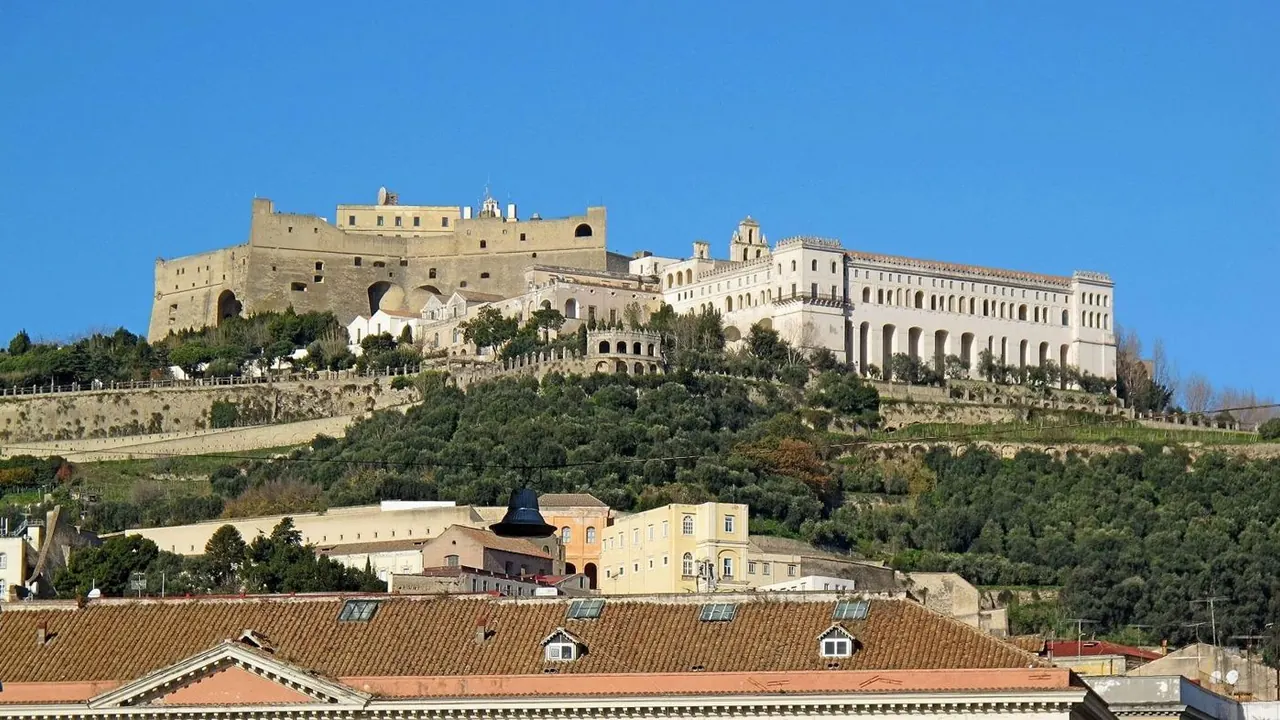
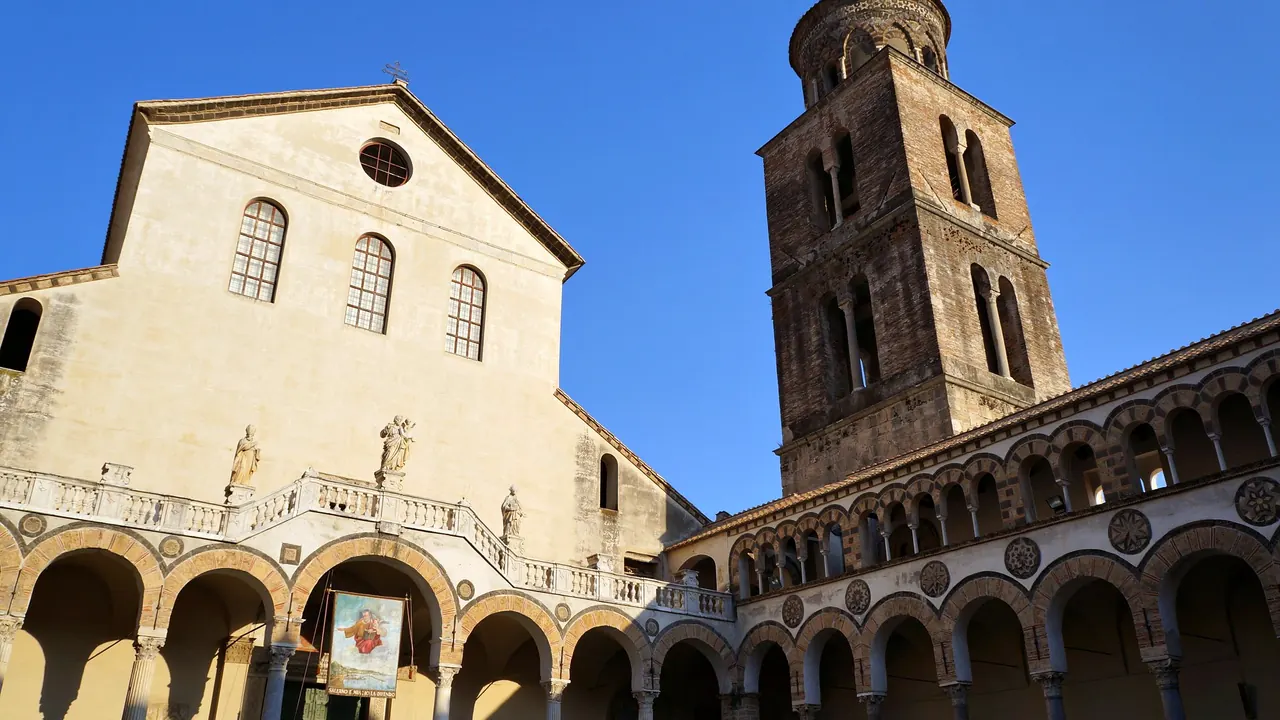
Photos: Naples by pietro scerrato, CC BY 3.0, cropped; Salerno by Leandro Neumann Ciuffo, CC BY 2.0, cropped.
Naples or Salerno?
Our verdict in twelve categories, each scored against the same fixed benchmark cities, and the climate month by month, so you can choose for your trip.
Choose Naples for
- culture and sights
- live music and the arts
- nightlife
Naples is the one for travellers who want a great city in its own right. Its Greek street plan, its churches, the Archaeological Museum and the tunnels underneath could fill a week. It is also where pizza and Neapolitan street food come from, and on a warm night the piazzas stay full until late. The cost is noise, scooters in the lanes and a city that is tiring to get around. Choose it if the streets are why you are going.
Choose Salerno for
- beaches
- getting around
- families
Salerno is easier on the nerves. It is a manageable seafront town with sandy beaches to the south, a flat promenade for children and ferries that take you straight to Amalfi and Positano. Its own sights take a day or two, so it suits a slower stay where most days are spent at Paestum, on the coast or on the sand. Naples is close enough by train for a day of museums and pizza.
Scoreboard
Twelve categories on one fixed scale from 0 to 100. The shaded stretch is the gap between the two.
Your match
Pick a travel style or drag the sliders, and both match scores follow your weighting.
Wins on culture and sights and live music and the arts with your weighting.
Wins on beaches and getting around with your weighting.
What matters to you?
Category by category
What the scores mean for a trip.
Beaches & swimming
Salerno lives closer to the sand. Its grey-sand city beaches run east from the centre, and to the south the coast towards Paestum has kilometres of wide beach backed by pine woods, which is good for a whole day. In both cities the water near the port is not the clearest.
In Naples, swimming in town usually means the rocks below the Lungomare or a small lido in Posillipo, and the nearby sandy stretches are paid and crowded. The clear coves around the bay are on Procida, Ischia and Capri, so a beach day there usually starts with a ferry.
Food & drink
Naples is the stronger place to eat. This is where pizza was born, and the soft, blistered Neapolitan pizza is eaten at shared tables all over the historic centre. Add fried pizza, cones of fried seafood, babà and the standing espresso, and the Pignasecca and Porta Nolana markets show what the kitchens cook with.
Salerno cooks from the same Campanian tradition, simply and well. Its best things come from next door: buffalo mozzarella eaten fresh from the plain towards Paestum, and colatura anchovy sauce from Cetara. Neither city offers much beyond Italian cooking.
Culture & sights
The gap here is wide. Naples has one of Europe's largest historic centres, laid out by the Greeks, with churches on almost every block along Spaccanapoli. On top of that come the National Archaeological Museum, the Cappella Sansevero, the underground city, the Royal Palace and Capodimonte, enough for a week.
Salerno's heritage is mostly medieval: the Norman cathedral with Saint Matthew's crypt, the Giardino della Minerva, linked to Europe's first medical school, and the Arechi Castle above the town. It is worth seeing, but one or two days covers it, and the great ancient sites lie outside the city.
Nightlife
Both cities go out in the street rather than in clubs, but Naples does it on a bigger scale. Students fill Piazza Bellini beside the old Greek walls, and the bars in the Chiaia lanes draw a smarter crowd past midnight.
Salerno's version is smaller: young locals drink outside wine bars around Largo Campo and Via dei Mercanti, then join the seafront passeggiata. For a bigger night out, Salernitans take the train to Naples.
Nature & outdoors
Both have superb landscapes, but of different kinds. Naples is volcanic: you can walk up to the crater rim of Vesuvius, explore the crater woods of Astroni and Lake Avernus in the Phlegraean Fields, and snorkel at the Gaiola underwater park below Posillipo.
Salerno looks onto limestone. The cliffs and lemon terraces of the Amalfi Coast, the Path of the Gods and Valle delle Ferriere trails are closer from here, and the Cilento national park, with its river gorges and wild headlands, lies to the south.
Day trips
Both are outstanding bases, and the real difference is which way each one faces. Naples looks at the Roman world and the bay: Pompeii and the better-preserved Herculaneum are each under an hour on the local train, Caserta's royal palace is an easy outing inland, and the islands are a hydrofoil ride from the port. It suits a trip built around ruins and island days.
Salerno faces the Amalfi Coast and the Greek south. Paestum's temples are half an hour away, and in summer a ferry goes straight to Amalfi. From Naples, the same day means the slow train to Sorrento and then a bus or boat along the cliffs. Salerno gives up little in return, since Pompeii is no further away and Naples is a fast train ride off, though Capri, Ischia and Procida are a longer journey from here.
Good for families
Salerno is the gentler choice with children. Its long, flat seafront has gardens, playgrounds and gelato, the beaches to the south shelve gently for small swimmers, and the Luci d'Artista Christmas lights are a winter treat. The steep, stepped old town and the winding Amalfi roads are the hard parts.
Naples welcomes children just as warmly, but scooters, broken pavements and cobbles make the centre hard work with a pushchair. It does have the attractions Salerno lacks: Edenlandia, the zoo and the science museum. Older children also enjoy the funiculars and the tunnels underground.
Getting around
Salerno is simpler. The station, the main shopping street, the seafront and the old town lie along one strip you can walk, and regional trains and Amalfi ferries leave from close by. Only the castle needs a bus.
Naples has more transport but less reliable transport. Metro Line 1, with stations decorated as art galleries, and four funiculars up to Vomero and Posillipo work well. The buses crawl through traffic, though, and the Circumvesuviana is old and crowded. Walking the centre means sharing the lanes with scooters.
Shopping & style
Naples has more to buy and more character. Chiaia's tailors make handmade suits and silk ties, the Galleria Umberto I and Via Toledo cover the high street, and the workshops on Via San Gregorio Armeno carve nativity figures all year. Coral and cameos come from Torre del Greco nearby.
Salerno's Corso Vittorio Emanuele is mainly a street of Italian chains for the evening stroll. The best buys come from the coast around it: majolica from Vietri, limoncello and Cetara's colatura.
Affordability
Day to day, the two cost much the same. Pizza, coffee at the bar, trattoria meals and local trains all come at southern Italian prices. Where the difference lies is in what each saves you. In Naples, cheap B&Bs in the historic centre keep costs down until you start paying for ferries to the islands.
Salerno's main advantage is as a base. It is far cheaper than sleeping in Positano or Amalfi while still a short ferry away. Summer rooms, lido sunbeds and several days of coast ferries add up, so spring and autumn are the cheaper times to stay.
Live music & performing arts
Naples has the real stage. The Teatro di San Carlo, the oldest working opera house in Europe, holds opera, ballet and concerts in its red-and-gold auditorium, and Neapolitan song is still heard in small theatres and from musicians who go from table to table in trattorias.
Salerno's Teatro Verdi was modelled on the San Carlo and puts on a respectable but smaller season. Its best special evening is out of town, at the Ravello Festival's cliff-top concerts above Amalfi.
Wellness & relaxation
Neither city is restful, but Naples is closer to real thermal water. The spa at Agnano, on the edge of town, uses springs known since Roman times, and Ischia, with its terraced thermal parks above the sea, is about an hour away by hydrofoil.
Salerno's nearest springs are at Contursi Terme, an hour inland, so in the city wellness means a hotel spa. Its calmer pace and the sunset walk along the palm-lined promenade are easier to enjoy than anything in central Naples.
When should you go?
Pick your month. The climate figures are measured averages, not a forecast.
Naples in July
Salerno in July
Daytime high, °C
Rainfall in the month, mm
Where the figures come from
Naples has no rain gauge within 25 km of the centre, so its rainfall comes from a gridded climate dataset read at the city rather than from a gauge further away.
Naples's sunshine is measured 28 km from the centre, at Grazzanise.
Salerno's temperatures are measured 71 km from the centre, at Grazzanise.
Salerno has no rain gauge within 25 km of the centre, so its rainfall comes from a gridded climate dataset read at the city rather than from a gauge further away.
Temperature and rainfall are climate normals, averaged over the years shown. Naples: 2005-2020 (sunshine 1991-2020, rainfall 1991-2020) normals, Napoli / Capodichino (4.6 km from centre). Salerno: 1991-2020 normals, Grazzanise (71.3 km from centre).
The two cities sit on neighbouring bays and their climate is almost the same. The sea is warm enough for proper swimming from June to September, reaching 26°C in August. July and August are also hot, about 31°C, so walking the streets of Naples or climbing the steps of Salerno's old town is best done in the morning and evening. Those months are also the driest and sunniest.
For sightseeing, May and late September to October are the most comfortable, warm without the midsummer heat. The rain comes in autumn and peaks in November, at about 150mm in both cities. Winter is mild at about 13°C, but grey and wet. Salerno gets a little more rain from December to February, which matters less if you are mainly visiting museums in Naples.
Which traveller are you?
For a culture and arts trip, Naples is clearly the better choice. It has the Pompeii frescoes in the Archaeological Museum, the Veiled Christ, the catacombs and an evening at the San Carlo opera house. Salerno's cathedral and castle are a pleasant day by comparison.
On a beach and sun trip, Salerno has the edge. Grey-sand city beaches start just east of the centre, and the long sandy shore towards Paestum is close by. From Naples, good swimming usually means a ferry to the islands or a crowded paid beach club.
On a family trip with young children, Salerno is easier. The flat, car-free promenade has playgrounds, and the beaches to the south are shallow. In Naples the lanes are full of scooters, the pavements are broken, and many families end up staying elsewhere and coming in for the day.
Before you go
| Measure | Naples | Salerno |
|---|---|---|
| Official language | Italian | Italian |
| Currency | Euro (EUR) | Euro (EUR) |
| Sockets | CFL230 V, 50 Hz | CFL230 V, 50 Hz |
| Driving side | Right | Right |
| Time zone | UTC+1, UTC+2 in summer | UTC+1, UTC+2 in summer |
| Emergency number | 112 | 112 |
| Elevation | 17 m | 4 m |
| Main airport | Naples International Airport (NAP)7 km from centre131 non-stop destinations | Naples International Airport (NAP)46 km from centre131 non-stop destinations |
| Public holidays this year | 13 days | 13 days |
By the numbers
| Measure | Naples | Salerno |
|---|---|---|
| City population | 913,462 | 127,186 |
| People per km² | 7,676 | 2,123 |
| Museums within 10 km | 65 | 9 |
| UNESCO World Heritage sites within 50 km | 5 | 5 |
| Swim season, months above 21 °C | 5 months | 5 months |
Where else could you go?
Every comparison below shares a destination with this one, so you can follow Naples or Salerno somewhere new.