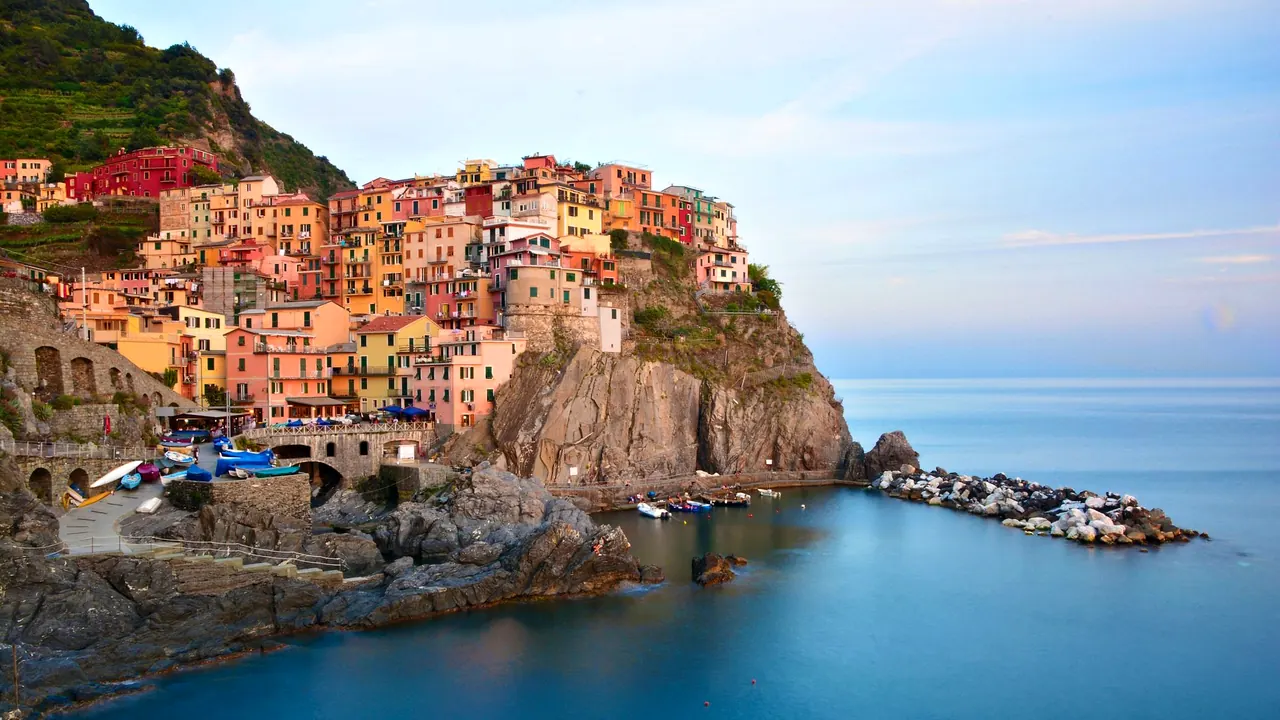
Photos: Cinque Terre by Narcisa Aciko, Pexels License.
Cinque Terre or French Riviera?
Our verdict in twelve categories, each scored against the same fixed benchmark cities, and the climate month by month, so you can choose for your trip.
Choose Cinque Terre for
- prices
Cinque Terre suits a walker's trip on one short stretch of coast. You spend the days on cliff paths between five car-free villages, swim off the rocks, eat pesto and anchovies, and watch the sunset from a harbour wall in a place that is quiet by ten. It is small, steep and narrow in what it offers, so it works best for a few days, for couples and for older children who like to hike, and much less well for anyone who needs a beach for every day or something to do at night.
Choose French Riviera for
- nightlife
- shopping
- live music and the arts
The French Riviera is the better choice for a longer and more varied vacation. Within a short train ride you have sandy beaches, the Matisse and Picasso museums, Niçois cooking, opera in Monaco, summer jazz and real nightlife, with the Alps behind for walking. Families, food lovers and anyone who wants a city as well as the sea will find far more here. What you give up is the intimacy of a few cliff villages you can walk between in a morning.
Scoreboard
Twelve categories on one fixed scale from 0 to 100. The shaded stretch is the gap between the two.
Your match
Pick a travel style or drag the sliders, and both match scores follow your weighting.
Wins on prices with your weighting.
Wins on nightlife and shopping with your weighting.
What matters to you?
Category by category
What the scores mean for a trip.
Beaches & swimming
Cinque Terre is a coast for swimming, not lying on the sand. Monterosso's Fegina is the only real beach, and elsewhere you lower yourself off the rocks at Manarola or the harbour at Vernazza, which is lovely between walks but no use for a full day on a beach.
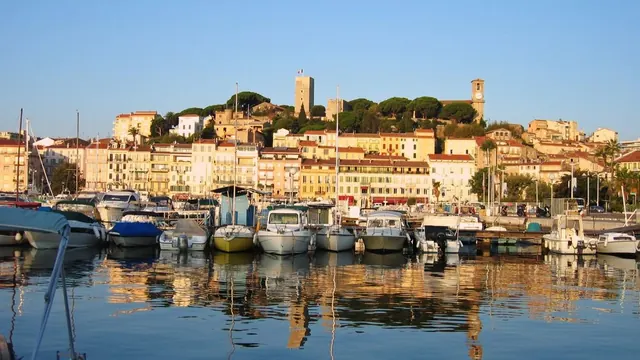
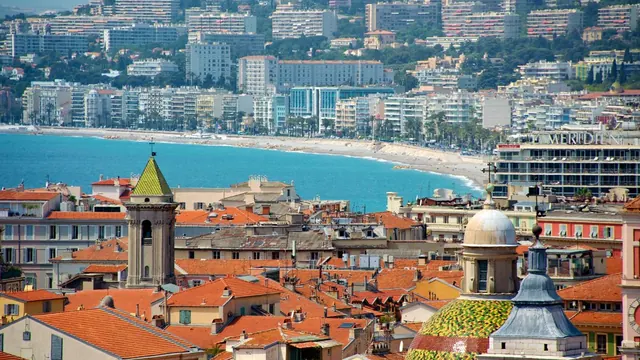
The Riviera gives you a real choice of shore: pebbles at Nice and Menton, easy sand at Cannes and Juan-les-Pins, the long beach at Pampelonne, and clear coves in the Esterel. The catch is that private concessions take much of the best sand, and the public stretches fill up in high summer.
Food & drink
The two coasts share a kitchen tradition, olive oil, anchovies and chickpea flatbread, since Nice's socca is a cousin of Ligurian farinata. In Cinque Terre that tradition stays simple: trofie with pesto, focaccia, fried fish in paper cones and a glass of Sciacchetrà, with many menus in the busiest villages pitched at day visitors.
The Riviera eats far more widely. Nice has a whole cuisine of its own and the Cours Saleya market, and between Menton and Cannes there are enough serious restaurants for a gastronomic trip. The seafront menus are often dull, but you only need to walk a street inland to eat well.
Culture & sights
In Cinque Terre the sight is the place itself: the UNESCO-listed terraces and the colour-washed villages, with striped Gothic churches and a watchtower or two. One or two days covers it, and there are no museums of note.
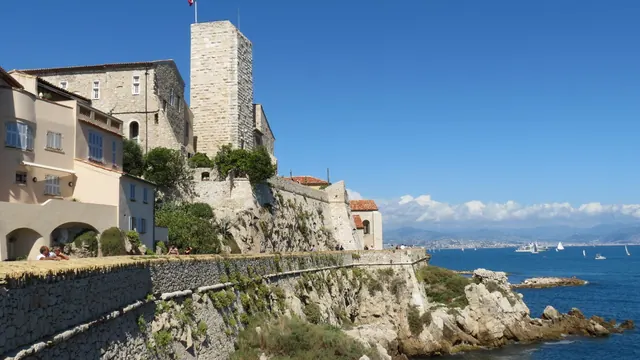
The Riviera is one of Europe's great coasts for modern art, with the Matisse and Chagall museums in Nice, Picasso at Antibes, the Fondation Maeght and Matisse's chapel at Vence. Add Monaco's palace and Oceanographic Museum, the Villa Ephrussi and the Roman trophy at La Turbie, and there is enough for a full week of sightseeing.
Nightlife
Evenings in Cinque Terre amount to a sunset glass of white and a late drink in Monterosso or Riomaggiore, and then the villages are asleep. Anyone hoping to go out ends up in La Spezia.
The Riviera has a proper night scene, in two styles. Summer brings the showy beach clubs and table-service clubs of Saint-Tropez and Monaco and the late strip at Juan-les-Pins, while Nice's old town and port offer ordinary bars that stay busy all year.
Nature & outdoors
Both coasts are fine for the outdoors, but on very different scales. Cinque Terre is a tight network of paths, the Sentiero Azzurro along the cliffs and the Sentiero Rosso on the ridge, where you can walk from village to village through vineyards and take the train back, inside a national park and marine reserve.
The Riviera spreads wider and climbs higher. There are easy paths around Cap Ferrat and Cap d'Antibes, red volcanic rock and sea kayaking in the Esterel, and the Mercantour's high trails and winter ski stations about an hour and a half inland. In summer both coasts suffer, from heat and crowds in Cinque Terre and from wildfire closures on the Riviera.
Day trips
Day trips from Cinque Terre run along the Italian railway in two directions. To the south are the Gulf of La Spezia, with Portovenere's church on its headland and the castle town of Lerici, then medieval Sarzana and the marble quarries above Carrara, with Pisa and Lucca a little over an hour away by train. To the north are Sestri Levante's two bays, Portofino and Genoa's painted palaces. A short stay can take in real heritage cities as well as other harbours.
The Riviera's outings are shorter hops between many small places. From Nice the coastal train reaches Villefranche, Monaco and Menton in well under an hour. Eze and Saint-Paul-de-Vence sit in the hills, Grasse has its perfume houses, and Sanremo and Dolceacqua are just over the Italian border. It suits a week filled with villages close together, though there is no single city of Genoa's or Pisa's weight within easy reach.
Good for families
Cinque Terre suits older children who enjoy a hike and swimming off rocks, but little else. With younger children it is a struggle of steps and packed trains, and only Monterosso, flat and with a shelving beach, really works.
The Riviera is set up for a seaside family vacation. The sandy beaches at Juan-les-Pins, Cannes and Fréjus shelve gently, and Monaco's aquarium, Parc Phoenix in Nice, the water parks near Antibes and the boat to the Lérins islands fill the days in between. Summer heat and hotel prices are the drawbacks, not the place itself.
Getting around
Both coasts are easiest without a car, along a single coastal railway. In Cinque Terre the train, the seasonal ferries and the footpaths link all five villages within minutes, and a car is a burden. The difficulty is the summer crush on the platforms and the climbs.
On the Riviera the train covers the Cannes to Menton stretch well, with a tram from Nice airport. Beyond the railway line it gets slower: buses to the hill villages, the jammed road to Saint-Tropez. A car does pay off here for exploring inland, which it never does in Cinque Terre.
Shopping & style
Cinque Terre's shopping fits in a suitcase pocket: pesto, jarred anchovies, lemon liqueur and a bottle of Sciacchetrà, plus some ceramics and linen.
The Riviera has both luxury and real craft. There are designer boutiques on the Croisette, around the Monte-Carlo casino and in Saint-Tropez, and department stores in Nice. Perfume from Grasse, bubbled glass from Biot, pottery from Vallauris and the Monday antiques market on the Cours Saleya give you more distinctive things to bring home.
Affordability
Both are expensive places to sleep and cheap places to move about. In Cinque Terre the problem is scarcity: there are few small rooms in the villages and you pay to use the park paths, so many budget travellers stay in La Spezia or Levanto. Focaccia and fried fish keep meals affordable.
On the Riviera the top end is among Europe's priciest, at Saint-Tropez, Monaco and Cannes. Nice, however, has a far wider range of rooms, and the beaches and coastal paths are free. Staying in Nice and visiting the glamour towns for the day is the sensible approach.
Live music & performing arts
Cinque Terre offers little beyond a church concert or a saint's-day procession with a band. For a play or an orchestra you go to La Spezia or Genoa.
The Riviera has a real season. Monaco's gilded opera house, its Philharmonic and the Ballets de Monte-Carlo fill the winter, and Nice has its own opera and orchestra. In summer the jazz festivals at Juan-les-Pins and in Nice's Place Masséna are the main events.
Wellness & relaxation
Rest in Cinque Terre comes only from the setting: no cars, a terrace over the sea, and quiet villages early in the morning or out of season. A massage at a guesthouse is about as far as pampering goes.
The Riviera has a long tradition of thalassotherapy, with seawater centres in Monaco and on the capes and large spas in the grand hotels' gardens on Cap Ferrat and Cap d'Antibes. In July and August, though, both coasts are too busy to feel restful.
When should you go?
Pick your month. The climate figures are measured averages, not a forecast.
Cinque Terre in July
French Riviera in July
Daytime high, °C
Rainfall in the month, mm
Where the figures come from
Cinque Terre's temperatures are measured 78 km from the centre, at Pisa / S. Giusto.
Cinque Terre has no rain gauge within 25 km of the centre, so its rainfall comes from a gridded climate dataset read at the destination rather than from a gauge further away.
Temperature and rainfall are climate normals, averaged over the years shown. Cinque Terre: 1991-2020 normals, Pisa / S. Giusto (77.8 km from centre). French Riviera: 1991-2020 normals, Nice (9.8 km from centre).
The two coasts follow the same Mediterranean year, and the sea is almost identical: swimmable from June, at its warmest in August around 25°C, and still pleasant into September. Cinque Terre runs a little hotter in high summer, reaching about 30°C in July and August, which makes the steep coastal path tiring at midday. The Riviera stays a couple of degrees cooler and gets noticeably more sunshine all year, so winter days there are brighter and better for walking the promenades and old towns.
Rain makes the bigger difference. Both coasts turn wet in autumn, but Cinque Terre is much wetter, with around 170mm in October and as much again in November, enough to close stretches of trail. For hiking, April to early June and September suit both coasts best. For beach days, June to September works in both, and the Riviera's drier autumn gives it a slightly longer shoulder season.
Which traveller are you?
On a food and nightlife trip, the French Riviera wins easily. Nice's socca, markets and old-town bars, the serious restaurants between Menton and Cannes and the summer clubs of Saint-Tropez and Juan-les-Pins outclass Cinque Terre's short menus and early nights.
On a culture and arts trip, choose the French Riviera. The museums to Matisse, Chagall, Picasso and Léger, Monaco's opera and ballet and the summer jazz festivals give you a week of things to see. Cinque Terre's heritage is mainly its villages and terraces.
On a family trip with children, the French Riviera is far easier. Gently shelving sand at Juan-les-Pins and Cannes, Monaco's aquarium and nearby water parks keep children busy. Cinque Terre's stairways defeat a pushchair, and only Monterosso has a proper beach.
Before you go
| Measure | Cinque Terre | French Riviera |
|---|---|---|
| Official language | Italian | French |
| Currency | Euro (EUR) | Euro (EUR) |
| Sockets | CFL230 V, 50 Hz | CE230 V, 50 Hz |
| Driving side | Right | Right |
| Time zone | UTC+1, UTC+2 in summer | UTC+1, UTC+2 in summer |
| Emergency number | 112 | 112 |
| Main airport | Pisa International Airport (PSA)82 non-stop destinations | Nice-Côte d'Azur Airport (NCE)130 non-stop destinations |
| Public holidays this year | 13 days | 11 days |
By the numbers
| Measure | Cinque Terre | French Riviera |
|---|---|---|
| Swim season, months above 21 °C | 4 months | 4 months |
Where else could you go?
Every comparison below shares a destination with this one, so you can follow Cinque Terre or French Riviera somewhere new.
- Portofinovs Cinque Terre
- Tuscanyvs Cinque Terre
- Lake Gardavs Cinque Terre
- Provencevs French Riviera
- Lake Comovs Cinque Terre
- Corsicavs French Riviera