France
Cannes
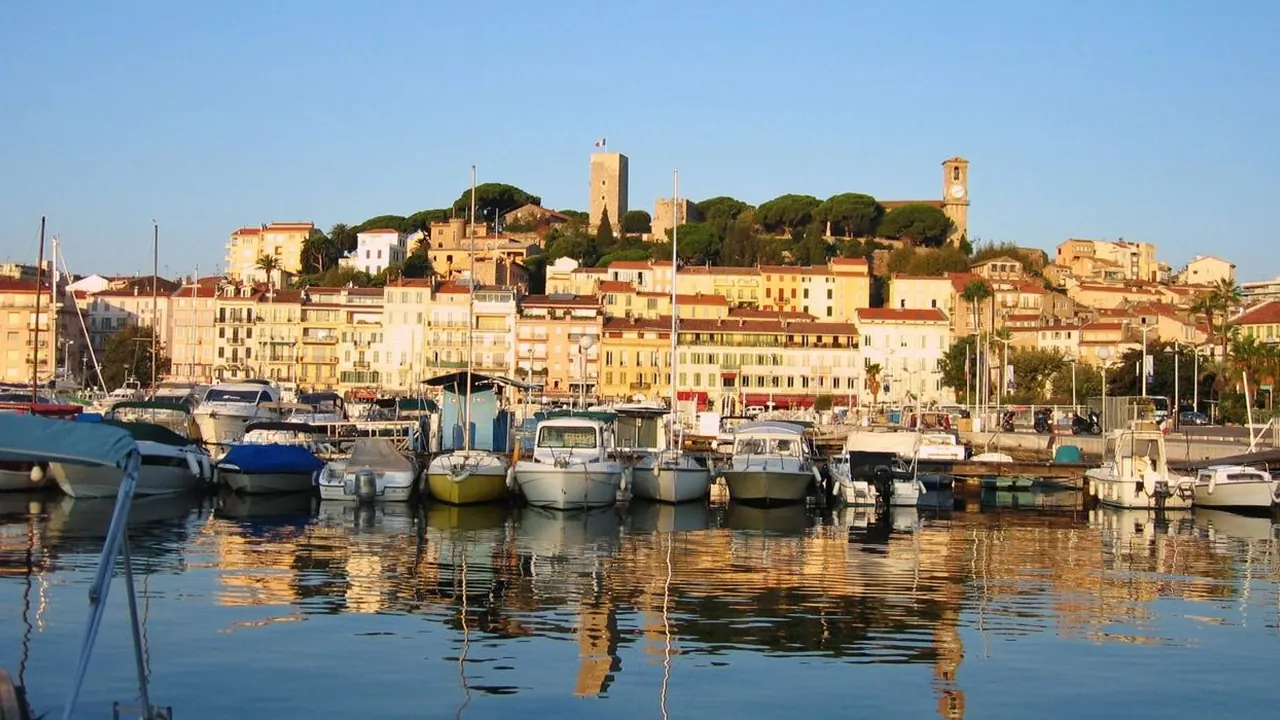
The Old Port and Le Suquet
- Day trips86
- Beaches80
- Nature & outdoors72
Photo: qwesy qwesy, CC BY 3.0, cropped
Match
55
Every category weighted equally
- Beach & sun57
- Culture & arts52
- Food & nightlife52
- Family trip58
- Outdoors61
- Relax & unwind57
- Shopping & style54
- On a budget51
Cannes in twelve categories
Our verdict on each, scored 0 to 100 against the same fixed benchmark cities, so a score means the same thing on every page.
Beaches & swimming. Scores 80 out of 100.
Food & drink. Scores 55 out of 100.
Culture & sights. Scores 38 out of 100.
Nightlife. Scores 42 out of 100.
Nature & outdoors. Scores 72 out of 100.
Day trips. Scores 86 out of 100.
Good for families. Scores 56 out of 100.
Getting around. Scores 68 out of 100.
Shopping & style. Scores 60 out of 100.
Affordability. Scores 22 out of 100.
Live music & performing arts. Scores 38 out of 100.
Wellness & relaxation. Scores 42 out of 100.
Cannes category by category
Beaches & swimming
80Beach life sits at the centre of a summer stay. The Croisette runs along a curve of fine sand on calm Mediterranean water that reaches about 24°C in August. A large share of the frontage belongs to private beach concessions with loungers and parasols, but public stretches lie between them, and the long Plage du Midi west of the old port is wider, plainer and mostly free. Swimming is comfortable from June to early October.
For clearer water, a short boat ride takes you to the Lérins islands, with rocky swimming spots under pines. The red-rock coves of the Esterel are about twenty minutes west, and the sandy bays of Golfe-Juan and Juan-les-Pins lie just east. In July and August the beaches near the centre are packed.
Food & drink
55Eating in Cannes rests on Provençal produce and the sea. The covered Forville market, just behind the old port, is the best place to see it: vegetables from the hinterland, local goat cheeses, olives and the morning catch. The streets of Le Suquet and Rue Meynadier hold bistros serving bouillabaisse, grilled fish, socca and stuffed vegetables. Pink Provence rosé is what everyone drinks on a terrace.
There is a real fine-dining tier, in the grand seafront hotels and in the hill villages towards Mougins. Below that, much of the Croisette and the old port serves predictable, expensive food to passing crowds. For a town of its size the range is narrow, and few dishes are Cannes's own.
Culture & sights
38Cannes is pleasant to look at but thin on sights. The old quarter of Le Suquet climbs a hill above the port to the medieval castle, which houses a museum of world ethnography and antiquities, and to the church of Notre-Dame d'Espérance, with wide views over the bay. Along the Croisette, the Belle Époque palace hotels and villas recall the town's beginnings as a winter retreat for British and Russian aristocrats. The Palais des Festivals, with its red-carpet steps and the handprints of film stars on the walkway, draws curious visitors.
All of this fits into a morning. Anyone after serious art or architecture will spend most of their time elsewhere on the coast.
Nightlife
42Nights out in Cannes depend on the season. From June to September, and during the big festivals, the beach clubs on the Croisette turn into evening party venues, a handful of clubs stay open until dawn, and the pedestrian streets behind the old port fill with cocktail and wine bars. The mood is glamorous and expensive: a place for champagne and dressing up rather than dive bars or underground clubs. Many of the most talked-about parties are private.
Outside the summer and the festival calendar, the town goes to bed early. Off-season it is a quiet place for an aperitif and dinner, and anyone wanting more heads to Nice or Juan-les-Pins.
Nature & outdoors
72The best landscape near Cannes is the Esterel massif to the west, about twenty minutes away. Its volcanic red rock drops into a deep blue sea, with trails to summits such as Pic de l'Ours and a corniche road above jagged inlets. The Lérins islands make an easy walk: eucalyptus and pine paths circle Sainte-Marguerite. To the east, the coastal footpath around Cap d'Antibes follows wild limestone shore.
On the water there is sailing, kayaking, paddleboarding and diving around the islands. Inland, the hills behind Grasse lead to the gorges and limestone plateaus of the pre-Alps within about two hours, and there is skiing in the Alpes-Maritimes in winter. In high summer, fire risk can close forest trails.
Day trips
86Day trips are one of Cannes's real strengths, because the whole Riviera is within easy reach. The coastal train runs to Antibes, with its ramparts and Picasso museum, in about fifteen minutes. Nice and its old town are about half an hour away, and Villefranche, Monaco and Menton follow along the same line. By bus or car you reach the perched villages: Saint-Paul-de-Vence with its art foundations, Èze above the sea, and the potters' town of Vallauris.
Grasse, the perfume capital, and the hill village of Mougins are close behind the town. Saint-Tropez is about an hour and a half west along the coast. The Lérins islands, a short ferry ride offshore, add a fortress and a working monastery with its own vineyards.
Good for families
56Families find Cannes easy, though not exciting. Gently sloping sandy beaches and calm water suit small children, and the long, flat Croisette works well for pushchairs and scooters, with carousels and play areas along the way. The boat to the Lérins islands, with shady pine woods for picnics, is a good outing. The centre is compact and feels safe.
Little in the town is made for children, though: the museums, festivals and shopping are aimed at adults. Families tend to combine beach days with outings along the coast, such as the aquarium in Monaco. In midsummer the heat and crowds call for early mornings and long lunches indoors.
Getting around
68Central Cannes is small and mostly flat. The Croisette, the old port, the Forville market and the shopping streets are all within a twenty-minute walk, though the climb up Le Suquet is steep. The main station sits in the heart of town, and regional trains along the coast make Antibes, Nice and Monaco simple to reach without a car. Ferries to the Lérins islands leave from the old port, and local buses cover the outer districts and nearby towns.
Things get harder inland. The perched villages, Grasse and the Esterel corniche are easier with a car, but summer traffic along the coast is heavy and parking in the centre is scarce.
Shopping & style
60For a town of its size, Cannes has an unusually concentrated luxury strip. The great Paris fashion and jewellery houses line the Croisette facing the sea, and their windows are as much a part of the promenade as the palm trees. One street back, Rue d'Antibes runs parallel for over a kilometre with mid-range French fashion, shoe shops and chocolatiers.
The narrow Rue Meynadier is good for food: olive oil, cheeses, Provençal fabrics and soaps. The Forville market adds a flea market on Mondays. Independent design and craft shopping is thin, and for perfume many visitors make the short trip to Grasse.
Affordability
22Cannes is an expensive place to stay. Hotel rooms near the Croisette cost a lot in summer and far more during the film festival and the big trade fairs, when the town fills with industry visitors. Seafront restaurants, cocktails and a lounger at a private beach are all priced for a wealthy crowd.
Costs fall back towards ordinary French levels away from the waterfront. Lunch menus in the backstreets, picnics from the Forville market, the public beaches and the cheap regional trains along the coast all help. Spring and autumn outside event weeks are far more reasonable, and some visitors stay in a cheaper neighbouring town and come in by train.
Live music & performing arts
38Cannes's fame rests on a festival most visitors cannot attend. The film festival is an industry event with accredited entry, although free open-air screenings on the beach let the public share some of it. Outside festival time, the Palais des Festivals hosts concerts, touring shows and comedy. The regional philharmonic orchestra performs through the season, and the town runs a respected dance festival.
In summer, classical concerts are held in the courtyard of the castle on Le Suquet, and there are open-air shows on the seafront. Jazz lovers can go to the long-established jazz festival at Juan-les-Pins, just along the coast. The rest of the year, the live programme is modest.
Wellness & relaxation
42Wellness in Cannes means luxury hotel spas rather than any bathing tradition. The palace hotels on the Croisette have polished spas with treatments based on sea minerals and Provençal plants, and seawater thalassotherapy centres are found along the coast. There are no public baths or thermal springs.
The town's pace does more for rest than its facilities. In spring and autumn the seafront is calm, mornings start slowly over coffee on a terrace, and evening walks along the bay are part of the routine. During festival weeks and in August, the noise and crowds make it a poor choice for anyone looking to unwind.
When should you go?
Pick a month to see what it is like. The climate figures are measured averages, not a forecast.
Cannes in July
Daytime high, °C
Rainfall in the month, mm
The whole year
Shaded against this city’s own year: the deepest cell is its best month for that figure and the palest its weakest.
Temperature and rainfall are climate normals, averaged over the years shown. Cannes: 2004-2020 (sunshine 1991-2020, rainfall 1991-2020) normals, Cannes (5.8 km from centre).
Before you go
| Measure | Cannes |
|---|---|
| Official language | French |
| Currency | Euro (EUR) |
| Sockets | CE230 V, 50 Hz |
| Driving side | Right |
| Time zone | UTC+1, UTC+2 in summer |
| Emergency number | 112 |
| Elevation | 0 m |
| Main airport | Nice-Côte d'Azur Airport (NCE)20 km from centre130 non-stop destinations |
| Public holidays this year | 11 days |
By the numbers
| Measure | Cannes |
|---|---|
| City population | 74,350 |
| People per km² | 3,793 |
| Museums within 10 km | 16 |
| UNESCO World Heritage sites within 50 km | 2 |
| Swim season, months above 21 °C | 4 months |
Compare Cannes with
Every comparison with a written verdict behind it.