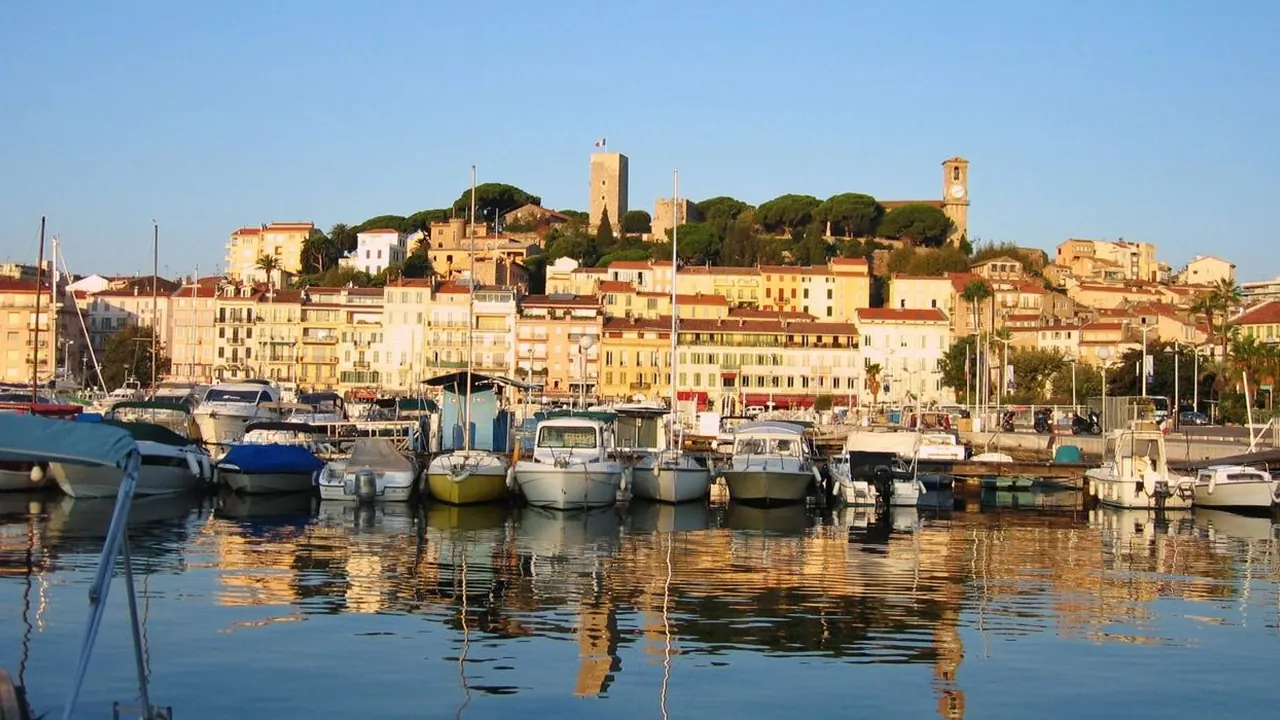
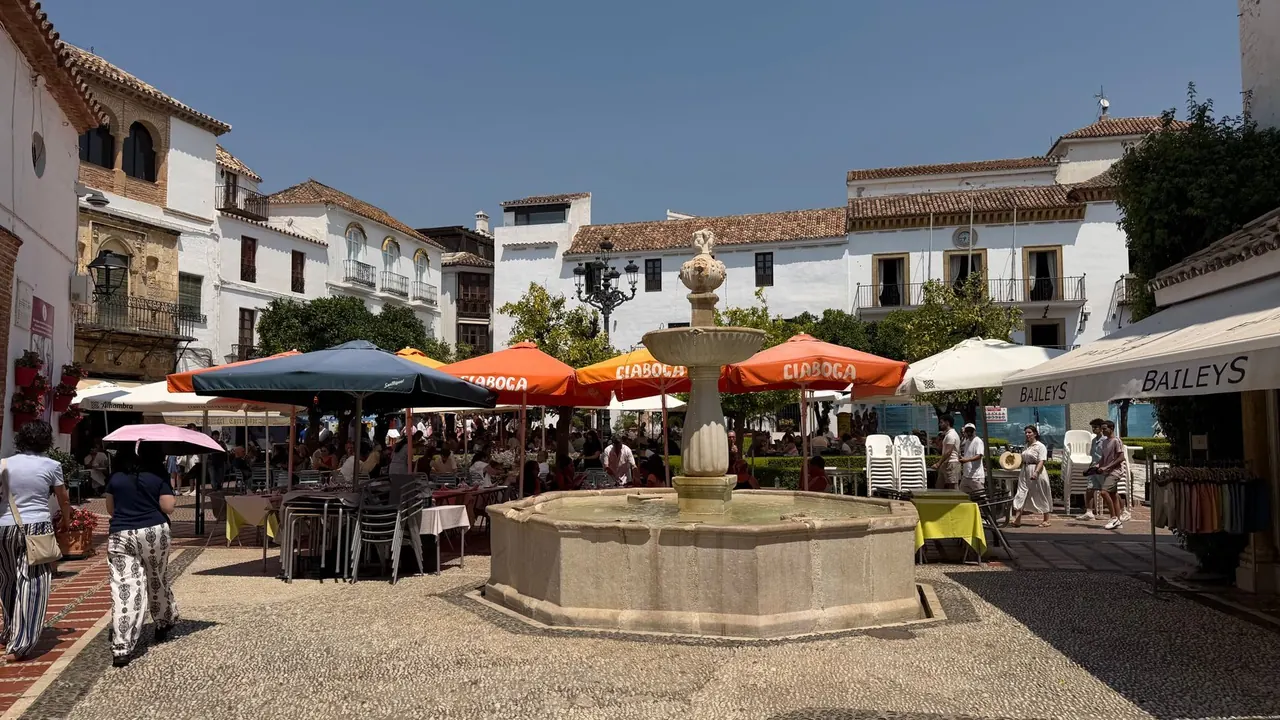
Photos: Cannes by qwesy qwesy, CC BY 3.0, cropped; Marbella by Décio Franchini, Pexels License.
Cannes or Marbella?
Our verdict in twelve categories, each scored against the same fixed benchmark cities, and the climate month by month, so you can choose for your trip.
Choose Cannes for
- getting around
- day trips
- live music and the arts
Cannes suits travellers who want the French Riviera as a whole rather than one resort. The town itself is compact, walkable and built around a station, so Antibes, Nice, Monaco and the perched villages become easy outings by train or a short drive. Add a warmer sea, a proper concert season and the Esterel on the doorstep, and it works best for couples and independent travellers who like moving along the coast without a car.
Choose Marbella for
- nightlife
- families
- wellness
Marbella is the better pick for a stay centred on the beach, especially with children or with late nights in mind. Its shoreline is long, family resorts with pools are common and the Spanish evening rhythm includes everyone. Puerto Banús gives it a far bigger summer party scene, the spa retreats in the hills suit a slow winter escape, and it costs a little less overall. The price is distance: almost everything beyond the old town needs a car or taxi.
Scoreboard
Twelve categories on one fixed scale from 0 to 100. The shaded stretch is the gap between the two.
Your match
Pick a travel style or drag the sliders, and both match scores follow your weighting.
Too close to call, level with your weighting
Wins on getting around and day trips with your weighting.
Wins on nightlife and families with your weighting.
What matters to you?
Category by category
What the scores mean for a trip.
Beaches & swimming
These are two well-matched beach towns with different kinds of shore. At Cannes the sand forms one tidy curve along the Croisette, much of it given over to private concessions, with the free Plage du Midi to the west. The sea is a little warmer and swimming spots are easy to vary: rocky swimming spots on the Lérins islands, red-rock coves in the Esterel and the sandy bays at Juan-les-Pins.
Marbella spreads its two dozen beaches over some 27km, so you can choose between the town beaches and the dunes at Cabopino. The sand is greyish rather than golden, and the chiringuitos grilling sardines on the shore give it a more Spanish beach-day rhythm. Its water runs cooler, and a westerly can chill it for a day or two.
Food & drink
Neither town is a great food destination, and both share the same trap of overpriced seafront menus. Cannes cooks Provençal: the Forville market, bouillabaisse and socca in Le Suquet, and rosé on the terraces. Its range is narrow, and the best tables are in the palace hotels or up in Mougins.
Marbella's range is a little wider. Old-town tapas bars and fish skewered over beach fires sit at one end, and acclaimed tasting-menu kitchens on the Golden Mile at the other. The rewarding meals are a few streets inland, away from the port.
Culture & sights
Sightseeing is thin in both, though Cannes has slightly more to hold your interest. The climb up Le Suquet ends at a castle museum of world ethnography and a church with views over the bay, and the Belle Époque palace hotels and the Palais des Festivals add a sense of the town's story.
Marbella's heritage fits into the whitewashed lanes around the Plaza de los Naranjos, a museum of Spanish prints and the Dalí bronzes on the Avenida del Mar, plus a Roman villa outside town. In both cases the serious art and monuments lie elsewhere, along the Riviera or in Andalusia.
Nightlife
Marbella is clearly the place for a night out. It keeps Spanish hours, with dinner late and clubs until dawn, and Puerto Banús, the Golden Mile and the beach clubs towards Elviria give a summer evening plenty of options, with old-town terraces for a calmer drink.
Cannes has the same champagne-and-dress-code style but on a smaller scale. Many of its famous parties are private, and outside summer and the festivals it turns into an aperitif-and-dinner town. Both scenes shrink sharply in winter.
Nature & outdoors
The outdoors is strong in both, though the landscapes differ. From Cannes you reach the volcanic red rock of the Esterel, the pine paths of Sainte-Marguerite and the Cap d'Antibes shore path, with the pre-Alps and winter skiing further inland. In high summer fire risk can close the forest trails.
Marbella has mountains rising straight behind the town: the hike up La Concha, the fir forests and ibex of Sierra de las Nieves, and the Caminito del Rey within reach. Its mild winters make it a better year-round walking base, though its own coastal strip is heavily built up.
Day trips
Cannes makes the better base for excursions. A single coastal railway strings together Antibes, Nice, Villefranche, Monaco and Menton, each a short ride away, and Grasse, Mougins and Saint-Paul-de-Vence are close behind the town.
Marbella's day trips are excellent too, with Ronda's gorge, Málaga's Alcazaba, Gibraltar and even the Alhambra in Granada within reach. With no train and slow buses, though, most of them depend on a hire car and longer drives.
Good for families
Marbella is the more natural family choice. The lifeguarded town beaches and long promenade are easy with young children, resorts are built around pools, and Spanish restaurants welcome children late in the evening. Animal parks, water parks and a cable car lie along the coast, though you will want a car to reach them.
Cannes manages well enough with calm, shelving sand, carousels on the Croisette and the boat to the Lérins pine woods. Beyond that, the town is aimed mostly at adults.
Getting around
Cannes is much easier without a car. The Croisette, the port, the market and the shops are all a short walk apart, the station sits in the centre, and trains and island ferries cover most outings. A car only becomes useful for the hill villages and the Esterel corniche.
Marbella stretches along the motorway from San Pedro to Cabopino. Only the old town and central seafront are walkable, there is no train, and most visitors end up hiring a car or relying on taxis.
Shopping & style
Both towns are strongest at the luxury end, and neither has much independent design. Cannes puts the Paris fashion and jewellery houses right on the seafront, with the long Rue d'Antibes behind for mid-range French labels and Rue Meynadier for olive oil, cheese and Provençal fabrics.
Marbella gathers its boutiques at Puerto Banús beside the yachts, backed by a department store and malls. Its old-town lanes sell linen, leather and ceramics, and weekly street markets are aimed at residents.
Affordability
Both are expensive resorts, but Marbella is a little gentler on the budget. Its old-town and inland tapas bars charge ordinary Andalusian prices, buses are cheap, and rates fall sharply outside summer.
Cannes is the costlier of the two, especially during the film festival and trade fairs, when rooms climb far beyond summer levels. In both places you save by eating in the backstreets, using the public beaches and staying in a neighbouring town.
Live music & performing arts
Cannes has the more serious stage of the two, even if the film festival that made its name is largely closed to the public. A regional philharmonic plays through the season, the town runs a respected dance festival, and on summer evenings classical concerts fill the castle courtyard on Le Suquet.
Marbella's live music leans towards big pop and rock nights in a summer quarry amphitheatre and DJs at the beach clubs, and its flamenco is staged for visitors. For an orchestra, opera or flamenco done properly, you drive to Málaga.
Wellness & relaxation
Marbella is the better choice for a restful stay. Spa resorts, yoga retreats and detox clinics fill the Golden Mile and the hills, a few Arab-style bathhouses offer hot and cold pools, and the mild, sunny months from October to May suit golf and slow lunches.
Cannes offers polished palace-hotel spas and seawater thalassotherapy along the coast, but its calm is mostly a spring and autumn quality. Festival weeks and August are noisy in both towns.
When should you go?
Pick your month. The climate figures are measured averages, not a forecast.
Cannes in July
Marbella in July
Daytime high, °C
Rainfall in the month, mm
Where the figures come from
Marbella's temperatures are measured 40 km from the centre, at Malaga / Aeropuerto.
Marbella has no rain gauge within 25 km of the centre, so its rainfall comes from a gridded climate dataset read at the city rather than from a gauge further away.
Temperature and rainfall are climate normals, averaged over the years shown. Cannes: 2004-2020 (sunshine 1991-2020, rainfall 1991-2020) normals, Cannes (5.8 km from centre). Marbella: 1991-2020 normals, Malaga / Aeropuerto (39.7 km from centre).
Both towns have dry, hot summers and wet late autumns, but Marbella runs warmer and sunnier at both ends of the year. Its winter days stay mild, around 17°C in January against Cannes's 13°C, which makes it the more comfortable place for walking in winter. In August Marbella reaches about 32°C, hot enough to make midday sightseeing hard work, while Cannes peaks a few degrees lower and stays pleasant for walking the streets. Marbella's summer is almost rainless, and its wettest months come in November and December.
For swimming the picture turns around. The sea at Cannes warms to about 25°C in August and holds up well into September, while Marbella's water, cooled by the Atlantic through the Strait, stays a few degrees cooler all summer. Cannes's rain arrives earlier and harder, with October and November the wettest months, so for a beach trip June to September is the safe window there. Late spring and early autumn suit sightseeing in both.
Which traveller are you?
For a culture and arts trip, Cannes is the stronger base. Its own sights are modest, but its summer concerts and festivals outdo Marbella's, and the coastal train puts Antibes's Picasso museum, Nice's old town and the art foundations of Saint-Paul-de-Vence within easy reach.
On a family trip with young children, Marbella suits parents who want to settle into one resort and hire a car. Beach and pool fill the days, bigger outings are a short drive along the coast, and Cannes offers children little beyond its sand.
For a food and nightlife trip, Marbella gives you much more to do after dark. Late Spanish dinners lead to drinks after midnight and clubs in Puerto Banús, with old-town tapas bars for the quieter evenings. Cannes goes to bed early outside summer.
Before you go
| Measure | Cannes | Marbella |
|---|---|---|
| Official language | French | Spanish |
| Currency | Euro (EUR) | Euro (EUR) |
| Sockets | CE230 V, 50 Hz | CF230 V, 50 Hz |
| Driving side | Right | Right |
| Time zone | UTC+1, UTC+2 in summer | UTC+1, UTC+2 in summer |
| Emergency number | 112 | 112 |
| Elevation | 0 m | 22 m |
| Main airport | Nice-Côte d'Azur Airport (NCE)20 km from centre130 non-stop destinations | Málaga-Costa del Sol Airport (AGP)39 km from centre166 non-stop destinations |
| Public holidays this year | 11 days | 12 days |
By the numbers
| Measure | Cannes | Marbella |
|---|---|---|
| City population | 74,350 | 159,786 |
| People per km² | 3,793 | 1,398 |
| Museums within 10 km | 16 | 6 |
| UNESCO World Heritage sites within 50 km | 2 | 0 |
| Swim season, months above 21 °C | 4 months | 3 months |
Where else could you go?
Every comparison below shares a destination with this one, so you can follow Cannes or Marbella somewhere new.